Every day on the calendar holds a mirror to the past, but April 8 stands out as a uniquely transformative date across centuries and continents. From the sparks of anti-colonial rebellion in the Indian subcontinent to the ink drying on world-altering treaties in Europe, the events of this day have continually shifted the trajectory of human history. Whether you are a history enthusiast, a student of cultural anthropology, or simply curious about the world, looking back at the triumphs and tragedies of April 8 provides profound context for the world we navigate today.
To truly understand the global resonance of this date, we must first examine its deep impact on South Asia, where the struggle for freedom and cultural identity reached boiling points on multiple occasions.
The Bangalee Sphere: Echoes of Undivided Bengal & India
The Indian subcontinent, particularly the Bengal region, has been the crucible of countless historical movements. April 8 is deeply etched into this narrative, marking moments of immense sacrifice, political restructuring, and profound literary loss.
Before we dive into the detailed accounts of these monumental events, let us look at a brief overview of the key South Asian milestones that occurred on this day.
| Year | Event/Figure | Significance |
| 1857 | Execution of Mangal Pandey | Sparked the Indian Rebellion of 1857 against British rule. |
| 1894 | Death of Bankim Chandra Chattopadhyay | Loss of the literary giant who penned Vande Mataram. |
| 1929 | Central Assembly Bombing | Bhagat Singh and Batukeshwar Dutt courted arrest for revolution. |
| 1950 | Liaquat–Nehru Pact Signed | A bilateral treaty to protect minority rights post-Partition. |
| 1982 | Birth of Allu Arjun | A milestone day for modern Pan-Indian cinema. |
The timeline above offers a glimpse, but the true weight of these events lies in their historical context and the brave individuals who orchestrated them.
Colonial Resistance and Political Upheaval
The Catalyst of 1857: On April 8, 1857, the British East India Company executed Mangal Pandey at Barrackpore.
Why We Remember Him: His defiance was not just an act of military insubordination; it was a cultural and religious uprising against the systemic disrespect of the colonizers. Pandey’s death catalyzed the Sepoy Mutiny, shifting the subcontinent’s history forever.
The Central Assembly Bombing of 1929: Fast forward to 1929, the freedom struggle had evolved. Bhagat Singh and Batukeshwar Dutt tossed non-lethal smoke bombs into the Central Legislative Assembly in Delhi.
Primary Motivation: They were protesting the draconian Public Safety Bill. By shouting “Inquilab Zindabad” and intentionally courting arrest, they used the British legal system as a platform to broadcast their anti-imperialist message to the masses.
The Liaquat-Nehru Pact of 1950: Following the devastating partition of 1947, the subcontinent was still bleeding. On April 8, 1950, Prime Ministers Jawaharlal Nehru and Liaquat Ali Khan signed a crucial pact in New Delhi.
Historical Impact: It established minority commissions and guaranteed safe passage for refugees. While historians debate its long-term efficacy, it successfully de-escalated the immediate threat of a full-scale war between the newly independent neighbors.
Beyond politics and rebellion, April 8 also marks the arrival and departure of significant cultural icons in the subcontinent.
Cultural Milestones and Icons
Loss of a Literary Emperor: April 8, 1894, saw the passing of Bankim Chandra Chattopadhyay.
Key Contribution: As the composer of Vande Mataram, he provided the linguistic and emotional fuel for the Swadeshi movement. His historical fiction fundamentally shaped modern Bengali literature.
Modern Cinematic Influence: On a lighter note, April 8 marks the birth of contemporary stars like Allu Arjun (1982) and Amit Trivedi (1979).
Industry Impact: Both have been instrumental in breaking down regional barriers in Indian entertainment, blending traditional Indian artistry with modern global appeal.
While the subcontinent was forging its modern identity, the rest of the world was simultaneously experiencing paradigm-shifting wars, political alignments, and cultural revolutions.
Global History: Triumphs, Treaties, and Tragedies
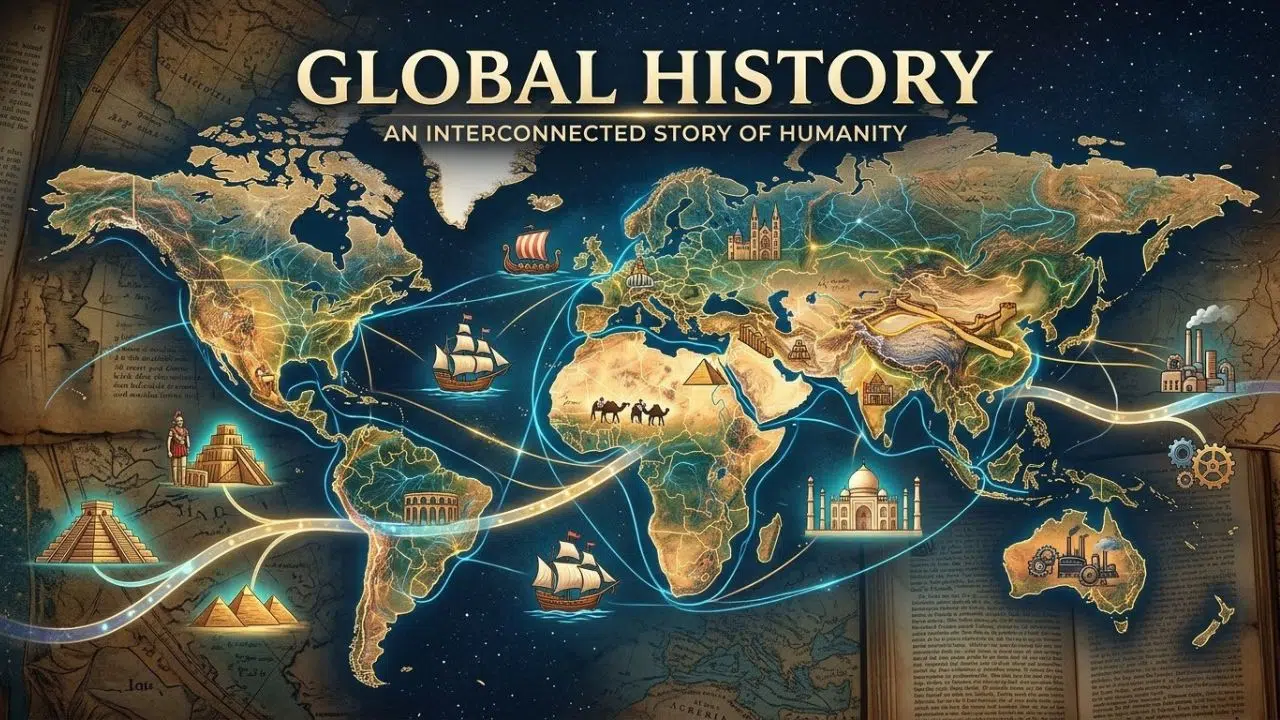
The world stage on April 8 has seen the drawing of modern borders, the breaking of seemingly impossible sports records, and the foundational acts of modern civil rights.
Here is a snapshot of the pivotal global events that transpired on this exact date throughout history.
| Year | Region | Event |
| 1820 | Greece/Europe | The Venus de Milo is discovered on the island of Milos. |
| 1904 | UK & France | The Entente Cordiale is signed, ending centuries of conflict. |
| 1913 | United States | The 17th Amendment is ratified, changing how Senators are elected. |
| 1935 | United States | The Works Progress Administration (WPA) is approved by Congress. |
| 1946 | Switzerland | The League of Nations assembles for the final time. |
| 1960 | United States | The Civil Rights Act of 1960 is signed into law. |
| 1974 | United States | Hank Aaron breaks Babe Ruth’s all-time home run record. |
| 2010 | Russia/USA | The New START nuclear arms reduction treaty is signed. |
Each of these events sent ripples across the globe, altering foreign policy, human rights, and the cultural zeitgeist.
Diplomacy and the Architecture of Modern Nations
The Entente Cordiale (1904): After nearly a thousand years of intermittent warfare, the United Kingdom and France signed a series of agreements on April 8.
Global Consequence: This resolved colonial disputes in Africa and the Americas and formed the diplomatic bedrock that would align the two powers against Germany in World War I.
The End of the League of Nations (1946): On this day, the League of Nations held its final assembly in Geneva.
Historical Lesson: Having failed to prevent World War II, the organization formally dissolved itself, transferring its assets to the newly minted United Nations in hopes that the new body would succeed where the League had fatally stumbled.
Civil Rights and American Milestones
The WPA is Born (1935): Congress approved the Emergency Relief Appropriation Act, creating the Works Progress Administration.
Economic Impact: It put millions of unemployed Americans back to work during the Great Depression, building the infrastructure that the US still relies on today.
Hank Aaron’s Triumph (1974): Baseball legend Hank Aaron hit his 715th home run, breaking Babe Ruth’s record.
Social Significance: Aaron achieved this under the shadow of intense racism and daily death threats. His quiet dignity and unparalleled skill made this a monumental victory for the American civil rights movement, extending far beyond the realm of sports.
History is not just made by broad political strokes; it is driven by individuals. Let us examine the brilliant minds born on this day who would go on to shape our culture and governance.
Birthdays of the Brilliant and Brave (April 8)
From Hollywood royalty to international peacekeepers, April 8 has welcomed a diverse array of global influencers.
To better understand the caliber of individuals born on this day, review the following notable figures and their disciplines.
| Year | Name | Nationality | Profession/Claim to Fame |
| 1892 | Mary Pickford | Canadian-American | Silent film actress, co-founder of United Artists. |
| 1912 | Sonja Henie | Norwegian | Olympic figure skater and Hollywood actress. |
| 1918 | Betty Ford | American | First Lady, women’s rights and addiction recovery advocate. |
| 1938 | Kofi Annan | Ghanaian | UN Secretary-General and Nobel Peace Prize laureate. |
| 1941 | Vivienne Westwood | British | Fashion designer and architect of the punk aesthetic. |
| 1968 | Patricia Arquette | American | Academy Award-winning actress and activist. |
The contributions of these individuals span diplomacy, advocacy, and the arts, leaving indelible marks on society.
Architects of Peace and Policy
Kofi Annan (1938): Born in Kumasi, Ghana, Annan rose through the ranks of the United Nations to become its seventh Secretary-General.
Key Contribution: He prioritized human rights, the fight against HIV/AIDS, and the Millennium Development Goals, earning him the Nobel Peace Prize in 2001.
Betty Ford (1918): As the 40th First Lady of the United States, she was revolutionary in her candor.
Legacy: By speaking openly about her breast cancer diagnosis and her struggles with addiction, she destigmatized these issues globally and founded the Betty Ford Center, saving countless lives.
Pioneers of Art and Culture
Mary Pickford (1892): Known as “America’s Sweetheart,” Pickford was not just a face on the screen; she was a shrewd businesswoman.
Industry Impact: She helped establish the Academy of Motion Picture Arts and Sciences and revolutionized the financial independence of actors in the studio system.
Vivienne Westwood (1941): The British fashion designer brought modern punk and new wave fashions into the mainstream.
Cultural Influence: Her provocative designs challenged the British establishment and forever altered the intersection of fashion and political rebellion.
Just as the world welcomed these visionaries on April 8, it also bid farewell to giants who left massive voids in human history.
Remembering the Legends: Notable Deaths on April 8
The date is marked by the passing of titans in the realms of art, industry, and global politics.
The table below outlines the monumental figures who took their final bow on April 8.
| Year | Name | Nationality | Legacy |
| 1492 | Lorenzo de’ Medici | Italian | Renaissance statesman and patron of the arts. |
| 1947 | Henry Ford | American | Industrialist who revolutionized mass production. |
| 1973 | Pablo Picasso | Spanish | Co-founder of Cubism, one of the greatest artists of the 20th century. |
| 1990 | Ryan White | American | Teenage poster child for HIV/AIDS awareness. |
| 1993 | Marian Anderson | American | Pioneering contralto and civil rights icon. |
| 2013 | Margaret Thatcher | British | The first female Prime Minister of the United Kingdom. |
Examining the lives of those we lost on this day reveals the sheer scale of human achievement across different eras.
Titans of Industry and Politics
Lorenzo the Magnificent (1492): The de facto ruler of the Florentine Republic died on this day.
Historical Impact: His death marked the end of the Golden Age of Florence. As a patron to Botticelli and Michelangelo, his legacy is essentially the flourishing of the Italian Renaissance.
Henry Ford (1947): The founder of the Ford Motor Company passed away at 83.
Enduring Influence: He did not invent the automobile, but he invented the assembly line technique that made it accessible to the masses, fundamentally changing the landscape of global infrastructure and labor.
Margaret Thatcher (2013): The “Iron Lady” died of a stroke at the age of 87.
Political Legacy: She broke the ultimate glass ceiling in British politics. Her uncompromising “Thatcherite” policies deregulated markets and reshaped the British economy, remaining a subject of intense admiration and fierce debate today.
Icons of Art and Advocacy
Pablo Picasso (1973): Passing away at 91 in France, Picasso left behind a staggering volume of work.
Artistic Imprint: From his Blue Period to Cubism, masterpieces like Guernica forced humanity to look at itself from entirely new, often fractured, perspectives.
Ryan White (1990): At just 18 years old, Ryan White succumbed to complications from AIDS.
Social Legacy: After being expelled from middle school due to his diagnosis (contracted via a blood transfusion), he became the courageous national face of HIV/AIDS education, forcing the world to dismantle its cruel prejudices regarding the disease.
While history focuses heavily on individuals and geopolitical shifts, April 8 is also a day dedicated to collective cultural celebrations and observances.
International Observances and Unique Holidays
Around the globe, communities gather on this day to celebrate their heritage, raise awareness for marginalized groups, or simply partake in joyful traditions.
The table below highlights what is being celebrated on April 8.
| Observance | Focus Area | Origin/Significance |
| International Romani Day | Cultural Awareness | Honors Romani culture and raises awareness of the systemic discrimination they face. |
| Draw a Bird Day | Art & Empathy | An obscure holiday originating from a WWII story, encouraging simple acts of creativity. |
| Hana Matsuri (Japan) | Religious | The Japanese Buddhist celebration of Gautama Buddha’s birth. |
These diverse observances remind us of the rich tapestry of human experience that happens concurrently on any given day.
A Closer Look at the Celebrations
International Romani Day: Officially declared in 1990, this day marks the anniversary of the first major international meeting of Romani representatives in 1971.
Core Purpose: It is a vital platform for the Romani people to celebrate their vibrant culture and history, while urgently advocating against the poverty, segregation, and prejudice they continue to endure across Europe and beyond.
Hana Matsuri: Known as the Floral Festival, April 8 marks the traditional Japanese celebration of the Buddha’s birthday.
Traditional Practice: Temples are decorated with flowers, and visitors pour amacha (a sweet tea) over statues of the infant Buddha, symbolizing the gentle rain that reportedly fell when he was born.
Final Thoughts
When we look at the complete canvas of April 8, a fascinating narrative emerges. It is a day defined by breaking barriers—whether it is Hank Aaron shattering a baseball record, Bhagat Singh shattering the illusion of British invincibility, or Pablo Picasso shattering the traditional rules of perspective. It is a day where treaties like the Entente Cordiale and the Liaquat-Nehru Pact attempted to heal deep geopolitical wounds, reminding us that diplomacy, though fragile, is always worth the effort.
By understanding what transpired on this day, we are better equipped to appreciate the hard-won freedoms, the invaluable art, and the complex international relationships that define our modern existence. History is not just a list of dates; it is the ongoing story of us, and April 8 holds some of its most compelling chapters.