April 13 is a date etched into the global archives with stories of profound tragedy, incredible human resilience, and monumental shifts in culture and politics. When we peel back the layers of history, we find that this single spring day has witnessed the fall of ancient empires, the darkest hours of colonial rule, miraculous survivals in outer space, and the birth of visionaries who would reshape art, politics, and science. Exploring the history of April 13 allows us to understand the interconnected tapestry of human civilization, from the Indian subcontinent to the vastness of the cosmos.
Every date on the calendar carries the weight of the past, but few possess the sheer emotional and historical spectrum of April 13. We invite you to journey through time as we unpack the critical milestones, celebrate the influential lives that began, and honor the legacies of those who departed on this day.
The Defining Moments of April 13
To truly grasp the significance of this date, we must dive deep into the specific events that altered the course of human history. The following historical landmarks demonstrate how decisions made on April 13 reverberated across generations.
The Jallianwala Bagh Massacre (1919)
The Indian independence movement was forever changed on April 13, 1919. In the city of Amritsar, Punjab, thousands of unarmed Indians gathered in the Jallianwala Bagh enclosure. They were there to celebrate the Baisakhi spring festival and to peacefully protest the oppressive Rowlatt Act imposed by the British colonial government. Without warning, British Indian Army troops, commanded by Brigadier-General Reginald Dyer, blocked the only narrow exit and opened fire on the dense crowd.
The troops fired over 1,600 rounds until their ammunition was nearly exhausted. The official British inquiry reported 379 deaths, but Indian estimates placed the tragic toll at over 1,000, with thousands more severely wounded. This brutal massacre shattered any remaining illusions of benevolent British rule. It galvanized the Indian populace, leading directly to Mahatma Gandhi’s Non-Cooperation Movement. In profound grief and protest, Nobel laureate Rabindranath Tagore renounced his British knighthood. The echoes of Jallianwala Bagh became the rallying cry that ultimately dismantled the British Raj.
Apollo 13: “Houston, We’ve Had a Problem” (1970)
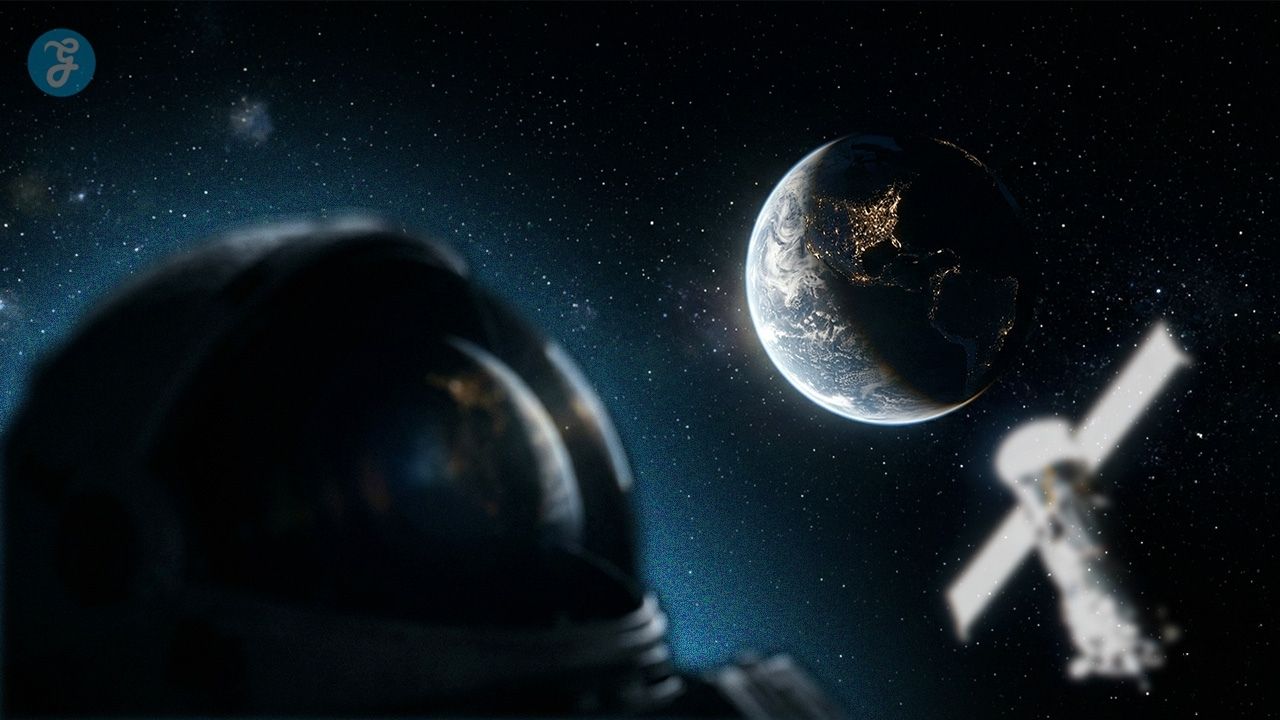
Decades later and hundreds of thousands of miles away, April 13 became synonymous with one of the most miraculous rescue missions in human history. The Apollo 13 lunar mission was intended to be the third human landing on the Moon. However, on April 13, 1970, roughly 200,000 miles from Earth, an oxygen tank in the spacecraft’s Service Module exploded, crippling the command craft. Astronaut Jack Swigert—and subsequently Commander James Lovell—radioed Mission Control with the now-immortal words: “Houston, we’ve had a problem here.”
The explosion caused a massive loss of oxygen and power, turning a lunar landing mission into a desperate fight for survival. The three-man crew, including Fred Haise, was forced to shut down the Command Module and use the fragile Lunar Module as a lifeboat. Through the sheer ingenuity of the astronauts and the tireless problem-solving of Mission Control on Earth, the crew survived freezing temperatures, carbon dioxide buildup, and immense psychological stress, splashing down safely in the South Pacific Ocean on April 17.
The Fall of Constantinople (1204)
Looking further back into the annals of time, April 13, 1204, marks the culmination of the Fourth Crusade. Originally intended to recapture Jerusalem from Muslim control, the Crusade was diverted by political and financial machinations. The Crusader army instead besieged and sacked Constantinople, the magnificent capital of the Byzantine Empire and the center of Eastern Christianity.
The Crusaders looted the city’s immense wealth, destroyed priceless ancient artifacts, and desecrated churches. This catastrophic event temporarily fractured the Byzantine Empire into several smaller states and established the Latin Empire. The sack of Constantinople irreparably damaged the relationship between the Catholic West and the Orthodox East, fundamentally shifting the geopolitical landscape of the Mediterranean and Europe for centuries to come.
Tiger Woods Makes Golf History (1997)
On a much different cultural front, April 13, 1997, saw a seismic shift in the world of sports. A 21-year-old Tiger Woods won the prestigious Masters Tournament at Augusta National Golf Club with a record-breaking score of 18-under-par and a massive 12-stroke margin of victory. More importantly, Woods became the youngest player and the first person of African and Asian descent to ever win the Masters. In a sport historically dominated by white, affluent men, Woods’ dominant victory on this day broke down racial barriers, revolutionized the game, and sparked a global explosion in golf’s popularity.
At a Glance: Major Global Events on April 13
While the events detailed above define the broad strokes of the day, numerous other treaties, milestones, and turning points occurred on April 13. The table below provides a reader-friendly snapshot of global history.
Here is a comprehensive overview of international events that took place on this monumental date.
| Year | Region | Event Description |
| 1598 | France | King Henry IV issues the Edict of Nantes, granting religious freedom to the Huguenots and ending decades of religious civil war. |
| 1742 | Ireland | George Frideric Handel’s iconic masterpiece, Messiah, makes its world premiere in Dublin. |
| 1829 | United Kingdom | The Roman Catholic Relief Act is passed by Parliament, granting Roman Catholics the right to vote and hold public office in the UK. |
| 1870 | United States | The New York City Metropolitan Museum of Art is officially incorporated. |
| 1941 | Russia / Japan | The Soviet Union and the Empire of Japan sign a Pact of Neutrality, profoundly impacting World War II strategies in the Pacific theater. |
| 1943 | Germany / Russia | The discovery of mass graves of Polish prisoners of war in the Katyn Forest is announced by Nazi Germany, exposing a massacre committed by Soviet forces. |
| 1953 | United States | CIA Director Allen Dulles launches the highly classified and controversial mind-control research program known as MKUltra. |
| 1960 | Space Exploration | The United States successfully launches Transit 1B, the world’s very first satellite navigation system, paving the way for modern GPS. |
| 1972 | China | The Universal Postal Union officially recognizes the People’s Republic of China as the sole legitimate representative of China. |
| 1975 | Lebanon | The Lebanese Civil War officially begins after a violent ambush on a bus carrying Palestinians in Beirut. |
| 2021 | Japan | The Japanese government announces its controversial decision to dump over one million tons of treated radioactive wastewater from the Fukushima nuclear plant into the Pacific Ocean. |
Global Observances and Cultural Festivals
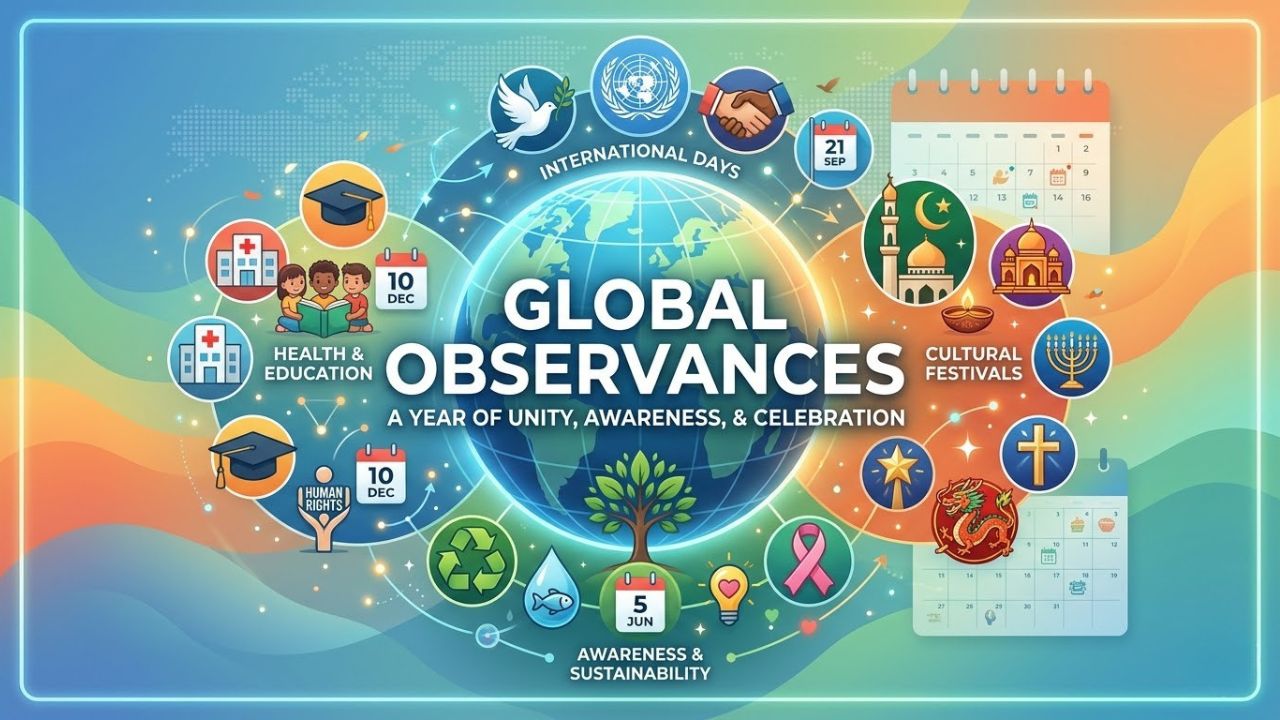
April 13 is not merely a collection of historical data points; it is a living, breathing day of celebration and observance across the globe. From religious new years to quirky international holidays, the day holds deep cultural resonance.
South Asian Harvest and New Year Festivals
In the Indian subcontinent, mid-April represents a massive transition. The Sikh community joyously celebrates Vaisakhi (or Baisakhi). Primarily a harvest festival in the Punjab region, it holds deep religious significance for Sikhs as it commemorates the formation of the Khalsa—the community of initiated Sikhs—by Guru Gobind Singh in 1699. It is marked by vibrant processions, singing of hymns, and community feasts (Langar).
Simultaneously, in the Bengali calendar, April 13 or 14 aligns with Chaitra Sankranti, the final day of the year. In Bangladesh and the Indian state of West Bengal, this is observed with the Gajan Festival and Charak Puja. Devotees participate in ascetic rituals and spectacular acrobatic feats to appease Lord Shiva, bidding farewell to the old year before welcoming the vibrant Pohela Boishakh (Bengali New Year).
Southeast Asian Water Festivals
Across Southeast Asia, April 13 marks the commencement of traditional New Year celebrations, most famously characterized by widespread water fighting. In Thailand, this is known as Songkran. What historically began as the gentle pouring of scented water over Buddha statues and the hands of elders as a sign of respect and spiritual cleansing has evolved into nationwide, multi-day water festivals. Myanmar celebrates a similar festival known as Thingyan, while Laos observes Pi Mai, and Cambodia celebrates Chol Chnam Thmey. The water symbolizes the washing away of the previous year’s misfortunes to start the new year fresh.
Unique Awareness and National Days
Beyond regional cultural shifts, April 13 hosts specific observances. In the United States, Thomas Jefferson Day is observed to honor the birth of the third U.S. President and primary author of the Declaration of Independence. On a global scale, it is International Plant Appreciation Day, a day dedicated to acknowledging the crucial role plants play in sustaining Earth’s ecosystems. It is also National Scrabble Day, honoring the birthday of the game’s inventor, Alfred Mosher Butts.
Famous Birthdays: Visionaries Born on April 13
The individuals born on this day have gone on to shape literature, politics, science, and entertainment. Below we explore the lives of the most famous figures who took their first breath on April 13.
Political Leaders and Thinkers
The most prominent political figure born on this date is undoubtedly Thomas Jefferson (1743). As the primary author of the Declaration of Independence, his philosophical writings laid the foundation for American democracy. Serving as the third President of the United States, he orchestrated the Louisiana Purchase, doubling the size of the country. Another notable leader born on this day is Guy Fawkes (1570). While infamous rather than revered, his role in the failed Gunpowder Plot of 1605—an attempt to blow up the English Parliament and assassinate King James I—solidified his name permanently into British folklore.
Literary Giants
April 13 has gifted the world with extraordinary literary talent. Samuel Beckett, born in 1906, was an Irish avant-garde novelist, playwright, and theatre director. His masterpiece, Waiting for Godot, remains a cornerstone of the “Theatre of the Absurd.” His profound exploration of human existence earned him the Nobel Prize in Literature in 1969. Sharing this birthday is Seamus Heaney (1939), another renowned Irish poet and playwright. Known for his lyrical beauty and deep connection to the history and landscapes of Ireland, Heaney was also awarded the Nobel Prize in Literature in 1995.
At a Glance: Notable April 13 Birthdays
To capture the vast array of talent born on this date, here is a detailed breakdown of historical figures, artists, and modern celebrities.
| Name | Year | Nationality | Profession & Legacy |
| Guy Fawkes | 1570 | English | Provincial Catholic involved in the infamous Gunpowder Plot. |
| Thomas Jefferson | 1743 | American | 3rd U.S. President and Founding Father. |
| Frank Winfield Woolworth | 1852 | American | Entrepreneur who founded the F.W. Woolworth Company, pioneering the “five-and-dime” retail format. |
| Butch Cassidy | 1866 | American | Infamous train and bank robber, and leader of the “Wild Bunch” gang in the Old West. |
| Alfred Mosher Butts | 1899 | American | Architect and the brilliant mind who invented the board game Scrabble. |
| Samuel Beckett | 1906 | Irish | Nobel laureate, playwright, and novelist famous for Waiting for Godot. |
| Eudora Welty | 1909 | American | Pulitzer Prize-winning author known for her profound fiction regarding the American South. |
| Seamus Heaney | 1939 | Irish | Acclaimed poet, translator, and 1995 Nobel Prize laureate in Literature. |
| Najma Heptulla | 1940 | Indian | Prominent politician and former Union Minister of India. |
| Christopher Hitchens | 1949 | British-American | Renowned author, polemicist, journalist, and prominent intellectual critic. |
| Ron Perlman | 1950 | American | Award-winning actor known for Hellboy and Sons of Anarchy. |
| Peabo Bryson | 1951 | American | Grammy Award-winning R&B and soul singer-songwriter. |
| Garry Kasparov | 1963 | Russian | Former World Chess Champion, widely considered one of the greatest chess players in history, and political activist. |
| Al Green | 1946 | American | Legendary soul singer known for hits like “Let’s Stay Together.” |
| Allison Williams | 1988 | American | Actress recognized for her roles in Get Out and the HBO series Girls. |
Notable Deaths: Legacies Left Behind on April 13
As much as April 13 is a day of beginnings, it is also a day of farewells. The individuals who passed away on this date left indelible marks on their respective fields, from the sciences to classical literature.
Pioneers in Science and Literature
On April 13, 1941, the scientific community lost Annie Jump Cannon, an American astronomer whose cataloging work was instrumental in the development of contemporary stellar classification. She co-created the Harvard Classification Scheme, which was the first serious attempt to organize and classify stars based on their temperatures and spectral types.
In the realm of literature, French poet and fabulist Jean de La Fontaine passed away in 1695. His Fables are considered among the greatest masterpieces of French literature, cleverly using anthropomorphic animals to deliver sharp moral and social critiques. More recently, in 2015, the world bid farewell to Günter Grass, the German novelist, poet, and playwright. His seminal novel, The Tin Drum, is a pivotal text in European magic realism, and his literary achievements earned him the Nobel Prize in Literature in 1999.
At a Glance: Notable April 13 Deaths
The legacies of those who departed on April 13 continue to influence the modern world. Here is a comprehensive list of notable figures who died on this day.
| Name | Year | Nationality | Legacy left behind |
| Boris Godunov | 1605 | Russian | Tsar of Russia who ruled during the turbulent “Time of Troubles.” |
| Jean de La Fontaine | 1695 | French | Legendary poet widely celebrated for his classic collection of Fables. |
| Hugh Clapperton | 1827 | Scottish | Naval officer and explorer of West and Central Africa. |
| John C. Pemberton | 1881 | American | Confederate general who famously surrendered Vicksburg to Ulysses S. Grant during the American Civil War. |
| Annie Jump Cannon | 1941 | American | Trailblazing astronomer who revolutionized stellar classification. |
| Shahid Abdur Rab | 1971 | Bangladeshi | Heroic student leader and martyr of the Bangladesh Liberation War, killed by Pakistani forces. |
| Balraj Sahni | 1973 | Indian | Highly acclaimed film and stage actor in Hindi cinema. |
| Wallace Stegner | 1993 | American | Pulitzer Prize-winning novelist and passionate environmentalist, often called “The Dean of Western Writers.” |
| John Wheeler | 2008 | American | Theoretical physicist who coined the terms “black hole” and “wormhole.” |
| Günter Grass | 2015 | German | Nobel Prize-winning author, best known for his novel The Tin Drum. |
| Miloš Forman | 2018 | Czech-American | Academy Award-winning film director of One Flew Over the Cuckoo’s Nest and Amadeus. |
| Paul Greengard | 2019 | American | Neuroscientist who was awarded the Nobel Prize for discoveries concerning signal transduction in the nervous system. |
Fascinating April 13 Trivia and Hidden Gems
Beyond the heavy historical texts and biographical data, April 13 harbors several intriguing pieces of trivia that highlight the quirky and innovative side of human nature.
Historical Novelties:
-
The Rebirth of the $2 Bill: During the United States Bicentennial in 1976, the U.S. Treasury strategically chose April 13 to reintroduce the $2 bill. This specific date was selected to directly honor Thomas Jefferson’s birthday, as his portrait adorns the face of the currency.
-
A Duel of Legends: In Japanese lore, April 13, 1612, is widely accepted as the date of the most famous samurai duel in history. Miyamoto Musashi famously defeated his bitter rival Sasaki Kojirō on the remote island of Funajima using a wooden sword (bokken) he supposedly carved from an oar on his boat ride to the duel.
-
The World’s Longest Musical Performance: The musical piece “As Slow as Possible” by avant-garde composer John Cage began a performance in a church in Halberstadt, Germany. While the performance started in 2001, a highly anticipated chord change occurred on April 13, 2021, drawing crowds from all over Europe. The performance is scheduled to conclude in the year 2640.
The Lasting Imprint of April 13
From the harrowing sacrifices witnessed at Jallianwala Bagh to the breath-taking ingenuity displayed during the Apollo 13 crisis, the history of April 13 serves as a vivid reminder of humanity’s capacity for both destruction and extraordinary triumph. It is a day that gave birth to architects of democracy and masters of literature, while also bidding farewell to pioneers of science and art. As we observe the cultural festivals that wash away the old year and ring in the new, we recognize that history is not a static concept—it is an ever-evolving narrative. By remembering the events of this day, we honor the struggles of the past, celebrate the innovations of the present, and carry the invaluable lessons of April 13 into the future.