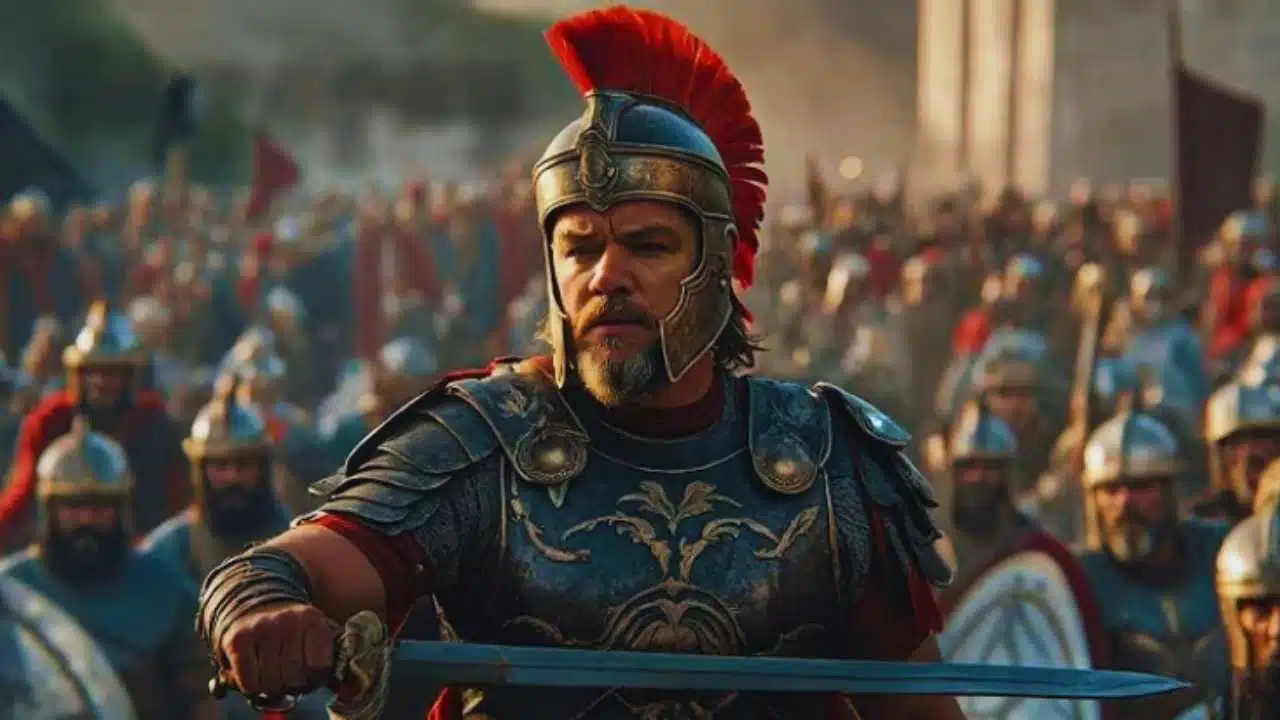
A gripping nearly six-minute prologue from Christopher Nolan’s highly anticipated epic The Odyssey surfaced online on December 12, 2025, just hours after its tightly controlled exclusive debut in select IMAX theaters around the world. This sneak peek was designed to play only ahead of premium 70mm IMAX screenings of the supernatural thriller Sinners—directed by Ryan Coogler and starring Michael B. Jordan—and the intense war drama One Battle After Another. Fans who caught it in theaters described the buildup of anticipation as electric, with audiences buzzing as the lights dimmed for this rare treat.
The footage didn’t stay contained for long. Within hours, high-quality clips began flooding social media platforms like X (formerly Twitter) and TikTok, shared by excited viewers who managed to record it despite theater warnings and strict no-phone policies. Universal Pictures, the studio behind the film, sprang into action with aggressive copyright takedowns, scrubbing videos from the platforms as fast as they appeared. Still, the leak generated massive online traction, with millions of views racked up before restrictions kicked in fully. This incident echoes past high-profile leaks, like early Avengers: Endgame footage, but underscores Nolan’s commitment to theatrical exclusivity in an era dominated by streaming spoilers.
Trojan Horse Sequence and Epic Cast Deliver Thrilling Action
At the heart of the leaked prologue lies a pulse-pounding recreation of the legendary Trojan Horse sequence, drawn straight from Homer’s Iliad and Odyssey—the ancient Greek epics that form the backbone of Western storytelling. Matt Damon takes center stage as the cunning hero Odysseus, channeling the quick-witted king of Ithaca who’s celebrated for his intellect as much as his bravery. The scene opens with Jon Bernthal’s rugged Menelaus—Helen of Troy’s vengeful husband—leaning in to ask Tom Holland’s young Telemachus, Odysseus’s loyal son, if he truly understands the horse’s story “from the inside.” This intimate exchange sets a tone of oral tradition passing down through generations, before the action explodes.
The camera then plunges viewers into the horse’s cavernous belly, where Greek soldiers huddle in tense silence as Trojan guards suspiciously jab their swords through the wooden planks. The near-misses build unbearable suspense, with blades whistling past limbs and armor, capturing the raw peril of the myth. Once inside Troy’s walls under cover of night, Odysseus bursts forth to lead a ferocious assault on the city gates, coordinating with his men to fling them open and signal the waiting Greek fleet. The choreography feels visceral and grounded, blending practical effects—like a towering, creaking horse constructed on massive soundstages—with Nolan’s signature practical stunts.
The prologue ramps up further with frenetic flashes of broader carnage clashing shields, flaming arrows raining down, and warriors scaling walls in the flickering torchlight. It culminates in a tantalizing tease of Odysseus’s post-Troy perils, including a shadowy glimpse of the one-eyed giant Cyclops Polyphemus, whose blinding by Odysseus is one of the epic’s most infamous episodes. Supporting the stars are heavy hitters like Anne Hathaway (rumored for a key goddess role, perhaps Athena), Zendaya (potentially as a siren or Nausicaa figure), Robert Pattinson (linked to a brooding antagonist like Poseidon), Charlize Theron (envisioned in a commanding warrior queen part), and Lupita Nyong’o (bringing intensity to a divine or mortal ally). This ensemble promises layered performances amid the spectacle, with Nolan’s script reportedly weaving psychological depth into the mythic framework.
Fans Praise the Intensity While IMAX Tech Ushers in a New Era
Social media erupted with overwhelmingly positive reactions, turning the leak into an unintended marketing boon. Viewers fixated on Ludwig Göransson’s thunderous score, which layers booming percussion, haunting strings, and choral swells to evoke ancient battlefields—much like his Oscar-winning work on Nolan’s Oppenheimer, where he masterfully blended tension with grandeur. One fan tweeted about the “earth-shaking” sound design that made theaters rumble, while another highlighted how the music amplified every sword thrust and war cry.
Film critic Dan Marcus captured the sentiment perfectly, tweeting that the prologue feels like “the closest in tone to Dunkirk out of Nolan’s films,” praising its interlocking timelines and relentless suspense across those six minutes—”some of the most suspenseful I’ve seen all year.” Casual viewers echoed this, calling it “ancient, heavy, and tense,” often comparing it favorably to Wolfgang Petersen’s 2004 blockbuster Troy for its grit but noting Nolan’s edge in realism and scale. Even skeptics admitted the footage silenced doubts about adapting a 3,000-year-old poem into a modern blockbuster.
The Odyssey cements its place in cinema history as the first narrative feature captured entirely on IMAX film cameras, a feat Christopher Nolan has championed since The Dark Knight in 2008. The breakthrough came from custom-engineered cameras that are 30 percent quieter than prior generations, solving the longstanding issue of their mechanical roar overpowering dialogue. This allowed Nolan to shoot intricate conversation scenes—like the Menelaus-Telemachus opener—without post-production fixes or ADR, preserving the format’s crystal-clear 70mm resolution and immersive aspect ratio. Building on successes in Dunkirk, Tenet, and Oppenheimer, this pushes IMAX into uncharted territory for epics.
For those who missed the initial screenings, a shorter cut of the prologue will precede every IMAX presentation of James Cameron’s Avatar: Fire and Ash starting December 19, 2025, bridging Nolan’s analog purism with Cameron’s digital wizardry. The full film retells Homer’s Odyssey in exhaustive detail: Odysseus’s grueling 10-year odyssey home after the Trojan War, battling storms stirred by Poseidon, outsmarting the Cyclops, navigating the seductive Sirens, resisting the enchantress Circe, and facing the monstrous Scylla and Charybdis. Slated for a massive theatrical rollout on July 17, 2026, it positions Nolan to redefine the swords-and-sandals genre with his nonlinear storytelling, practical effects obsession, and philosophical undertones.