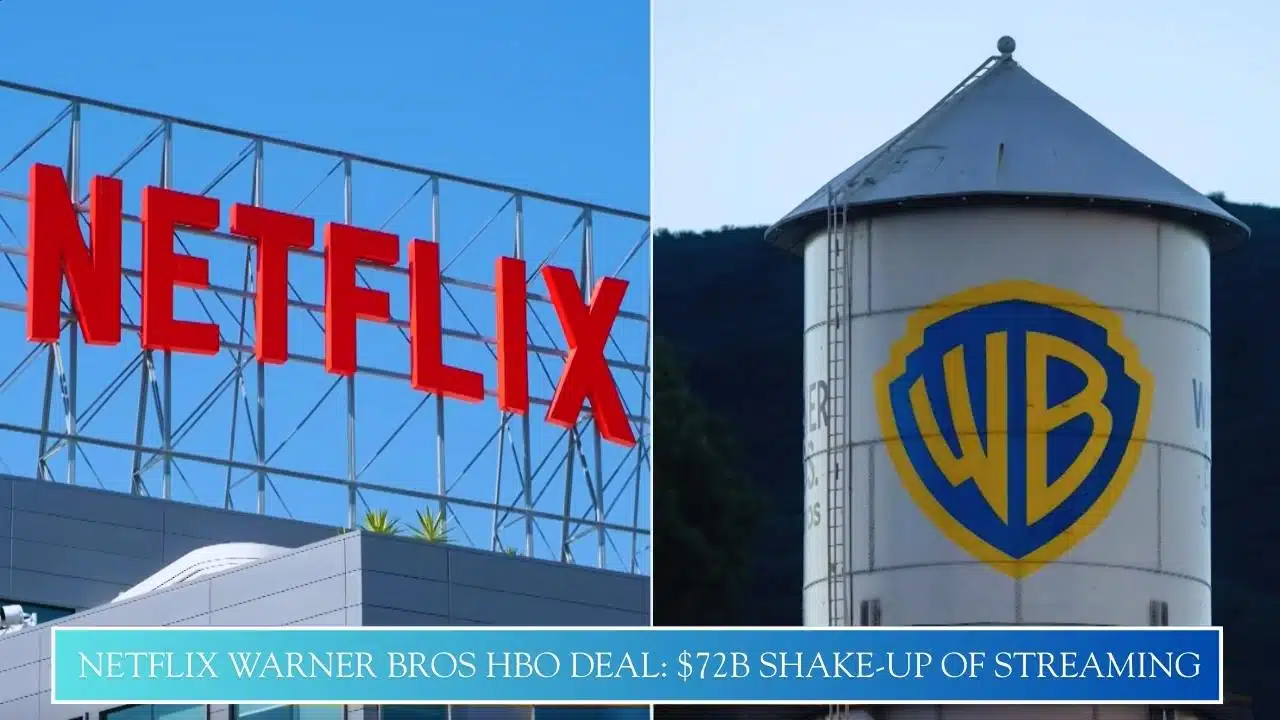
Netflix has emerged victorious in an intense bidding war, announcing a transformative agreement to acquire Warner Bros. Discovery’s studio and streaming assets, including the iconic Warner Bros. studio and HBO Max streaming service, in a massive transaction valued at $82.7 billion enterprise value, with $72 billion in equity. This blockbuster deal, revealed on Friday morning, represents Netflix’s boldest move yet, combining the streaming pioneer’s global platform with one of Hollywood’s most storied legacies in film and television production. Warner Bros. Discovery (WBD) will first proceed with its previously outlined plan to split into two separate publicly traded entities in the summer of 2026, allowing Netflix to purchase the Warner Bros. half that encompasses the studios, HBO content library, and Max streaming service, while the Discovery Global half retains CNN and other linear cable networks. The announcement sent shockwaves through Hollywood, upending expectations and signaling a potential end to the fierce streaming rivalries that have defined the past decade, as Netflix positions itself to dominate entertainment delivery worldwide.
The deal’s structure involves a mix of cash and stock, pricing WBD shares at $27.75 apiece, a premium that reflects Netflix’s aggressive pursuit after months of speculation and competing offers. Both companies’ boards unanimously approved the transaction, with Netflix lining up financial backing from major institutions like Wells Fargo, BNP Paribas, and HSBC to ensure smooth execution. Regulatory approvals remain a critical hurdle, requiring reviews from U.S. antitrust authorities under the Trump administration, as well as international regulators in Europe, Asia, and beyond, given the deal’s potential to consolidate massive market power in streaming and content creation. Netflix executives emphasize that the acquisition complements their existing strengths, promising to preserve Warner Bros.’ theatrical release traditions despite Netflix’s historical preference for direct-to-streaming models, thereby addressing early criticisms from theater chains worried about further erosion of cinema attendance.
Intense Bidding War and Netflix’s Bold Strategy
For weeks leading up to the announcement, Paramount appeared as the frontrunner, with executives confidently pushing a comprehensive $60 billion offer to buy all of WBD, including its cable assets, bolstered by perceived favorable ties to President Trump’s circle. Comcast also entered the fray with substantial bids, creating a high-stakes auction that began in earnest back in October when Netflix quietly hired investment banks like Moelis & Company to explore opportunities. Netflix surprised industry insiders by submitting two escalated proposals earlier this week, vaulting ahead of rivals and agreeing to a substantial breakup fee—potentially billions of dollars payable to WBD if regulatory or other issues derail the merger—mirroring terms Paramount had proposed to sweeten its pitch.
This strategic maneuvering underscores Netflix’s determination to “kill three birds with one stone,” as noted by Bank of America analysts: gaining Warner Bros.’ vast intellectual property portfolio, neutralizing a key streaming competitor in Max, and bolstering its content pipeline amid slowing subscriber growth and rising production costs. WBD’s decision to accelerate its corporate split to Q3 2026 aligns perfectly with Netflix’s timeline, expecting the full acquisition to close 12 to 18 months later, subject to shareholder approvals and standard closing conditions. The move also resolves uncertainties around WBD’s future, which had been grappling with debt loads and underperforming linear TV assets, allowing Discovery Global to focus on news and cable while handing off the high-growth studio and streaming operations.
Regulatory Challenges and Political Scrutiny
Intense regulatory review looms as the biggest obstacle, with U.S. authorities likely to scrutinize how the merger could stifle competition in the already concentrated streaming market, where Netflix already holds a leading position. Senator Mike Lee amplified concerns on social media, warning that acquiring a “real competitive threat” like WBD’s streaming business raises profound antitrust issues, potentially more severe than any deal in the past decade, prompting calls for global enforcers to intervene. International regulators, including the European Commission and bodies in key markets like India and Brazil, will examine impacts on local content distribution, advertising, and consumer choice, given Warner Bros.’ global franchises and HBO’s prestige programming.
Netflix counters these worries by framing the deal as pro-competitive, arguing that blending Warner Bros.’ century-old storytelling prowess with Netflix’s 300 million-plus global subscribers will expand creative opportunities, introduce iconic titles to broader audiences, and foster industry-wide growth rather than monopoly power. Co-CEO Greg Peters highlighted this synergy, noting Warner Bros. has “defined entertainment for more than a century,” and under Netflix, its worlds—from epic blockbusters to prestige series—will reach untapped fans, enhancing member options and shareholder returns. To mitigate theater industry backlash, Netflix explicitly pledged to uphold Warner Bros.’ commitment to cinematic releases, a nod to franchises like the DC Universe and upcoming Harry Potter projects that thrive on big-screen debuts.
Reshaping Hollywood and Ending Streaming Wars
If approved, this merger fundamentally alters Hollywood’s landscape at a pivotal moment, when traditional studios face cord-cutting, fragmented audiences, and ballooning content budgets amid economic pressures. Netflix would command over 20% of the U.S. streaming market, amassing an unparalleled library that fuses Warner Bros. classics like Casablanca, The Matrix, and Looney Tunes with HBO gems such as Game of Thrones, The Sopranos, The Big Bang Theory, and Friends, alongside Netflix originals including Stranger Things, Squid Game, Bridgerton, and Wednesday. This content fortress extends into gaming, merchandising, and live events, leveraging IP like the DC Comics universe, Lord of the Rings, and Casablanca for multifaceted revenue streams beyond subscriptions.
Analysts predict the “streaming wars” effectively conclude, crowning Netflix as the undisputed global powerhouse, far surpassing its current dominance and providing stability in a volatile sector plagued by mergers, layoffs, and password-sharing crackdowns. Cinema United and other trade groups express alarm over threats to the exhibition business, citing Netflix’s track record of bypassing theaters, though the company’s assurances aim to preserve that ecosystem. For creators, the pitch promises amplified reach and resources, potentially ushering in a new era where studio innovation thrives under a streaming-first giant, while shareholders anticipate significant value creation from synergies in technology, data analytics, and international expansion. This saga not only jolts expectations for WBD’s trajectory but redefines power dynamics, blending Silicon Valley efficiency with Tinseltown tradition.