Listen to the Podcast:
We discuss the history of the nature deficit syndrome, the advantages of establishing a connection with the natural world, and the contentious relationship between the rural and urban environments, which we hope can be resolved by implementing inclusive urban planning strategies.
Described by journalist and writer Richard Louv in his 2005 book Last Child in the Woods: Saving Our Children from Nature-Deficit Disorder but foreshadowed by various professionals in education and environmental psychology, the “nature deficit syndrome” is a concept that aims to highlight the deficiencies that derive from limited contact with nature, especially in children.
Read More: What is Attention Deficit Disorder?
Following that, we explain the origin and background of this concept integrated into environmental psychology, the benefits provided by connecting with nature, as well as the conflictive relationship that has maintained the rural environment with the urban environment since the Industrial Revolution and that aspires to be overcome with integrating urban approaches.
What is Nature Deficit Syndrome?
In his book Last Child in the Woods, Richard Louv collects the theories of numerous environmental education professionals. He captures them in a concept that, as he acknowledges, “does not pretend to be a medical term.
In this sense, the word “syndrome” should not be interpreted from a clinical point of view but works on a graphic level to bring an indisputable fact: contemporary society has turned its back on nature in parallel to the expansion of urban development.
In this way, Louv opts for a new point of view to bring an already traditional conflict back to the forefront: instead of high lighting the positive role that contact with nature has in human development, the American writer stresses the negative aspects that derive from a lack of this natural contact to the point of turning this lack into a “syndrome,” always from a symbolic point of view, as Louv himself points out.
In this sense, the “nature deficit syndrome” would be especially delicate in children. According to a study published in 2005 on the relationship of families with electronic media, American children and adolescents between the ages of 8 and 18 spend an average of 4 hours a day in contact with screens.
Read Also: What is the Domino Intelligence Test?
But we do not need many more studies to verify that we see everywhere, from the park to the school, from the shopping centre to our own home: children, young people, and not-so-young people spend an immense amount of time connected to the Internet Technology. And the day has 24 hours: If an 8-year-old boy spends 4 hours a day glued to the screen, sleeps 9 hours, and spends 6 hours in class, how much time can he spend in contact with nature if he lives in a bigger city? or less away from nature?
Benefits of Contact with Nature
Nature brings numerous benefits to individuals’ physical and mental health, especially the smallest, some of them evident and others still under study. Environmental psychology, which deals with people’s interactions with the environment, and environmental education are the fields that drive these investigations.
- Reduces stress, also in children. A study by José Antonio Corraliza and Silvia Collado published in 2010 in the Psicothema magazine speaks of the moderating effect of nature, noting the lowest stress level in children exposed to the same frequency of adverse situations.
- Increased capacity for reflection and concentration. Several studies seem to confirm that children diagnosed with ADHD show a higher level of concentration and attention if they are in frequent contact with nature, even with “small doses of nature”, such as a walk in an urban park.
- Improvement in neurocognitive development. Several studies indicate that contact with nature reinforces the harmony of brain functions. Likewise, it is indicated that outings to natural environments promote an increase in activity in the right hemisphere of the brain that develops creativity, artistic talent, empathy, and the management of emotions, decreasing, as a counterpart, the activity in the areas that are responsible for executive functions.
- It strengthens the immune system. Different studies indicate that spending more time in nature can boost immunity by reducing the risk of cardiovascular disease, diabetes, and cancer.
- Greater environmental commitment. Contact with nature from childhood is critical to a better understanding the problems caused by environmental aggressions at a time when caring for nature is one of the social priorities.
- Academic improvement. By facilitating concentration and attention skills and reducing stress and mental fatigue, contact with nature also improves children’s learning, which results in academic progress. This facet has been developed in Japan with what is known as “forest bathing.”
- Better physical condition. Contact with nature reduces the risks derived from an excessively sedentary life: it reduces the risk of obesity, myopia, or asthma by requiring greater physical involvement.
Rural and Urban Environment, a Conflictive Relationship
Even though humanity has lived in cities for more than 6000 years, with Uruk being Sumerian and considered the first city in history, the truth is that with the Industrial Revolution, the definitive expansion of cities took place until they became megalopolises, which are almost unstoppable.
Also Read: How to Protect Yourself during Heat Wave?
Parallel to this urban development, the rural environment has been withering in a good part of the planet, with consequences familiar to us in our own country: the so-called “empty Spain.”
This is how a series of factors that confront the urban with the rural are taking shape, with the first being synonymous with filth, frantic rhythm, and loud noise, while the rural environment is tinged with nostalgia, acquiring supreme values, as a sort of lost paradise for brooding urbanites.
But, of course, the reality is neither so conflicting nor so polarized. Towns nestled in beautiful natural settings can also be synonymous with isolation, misery, and meanness, while cities reflect dynamism, creativity, and prosperity.
Know More: Why Hurricanes Will be More and More Intense?
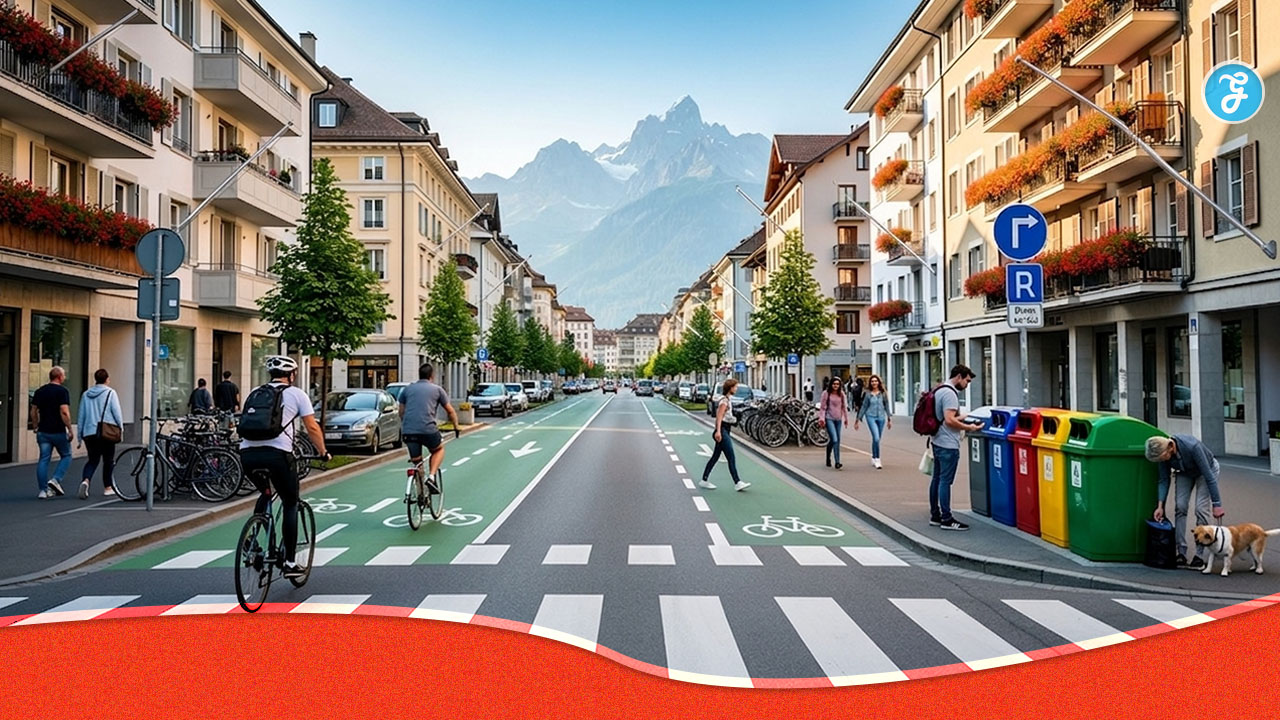
By combining the best of both worlds and making it easier for people to move between the city and the countryside, new models of cities are created that pave the way for a new way for people to live.
They are sustainable cities with a human dimension that are integrated into nature so that citizens do not have to wait until the weekend to get their “dose of nature,” but rather live integrated into it, as a method of preventing the syndrome by deficits of a natural reach in a short-term future clinical category.