Have you ever wondered why some people seek out danger for fun? Welcome to the world of extreme sports, where the line between excitement and peril is razor-thin. In this article, we’re diving into the 15 most dangerous sports on the planet. But don’t worry – we’re not just here to scare you. We’ll explore what makes these activities so risky, why they captivate so many, and how athletes manage the dangers.
From the dizzying heights of base jumping to the bone-crushing impacts of bull riding, we’re about to take a journey through some of the most heart-pounding activities humans have ever invented. So buckle up (or strap on your parachute) – it’s going to be a wild ride!
The Top 10 Most Dangerous Sports in the World
1. Base Jumping: The Ultimate Leap of Faith
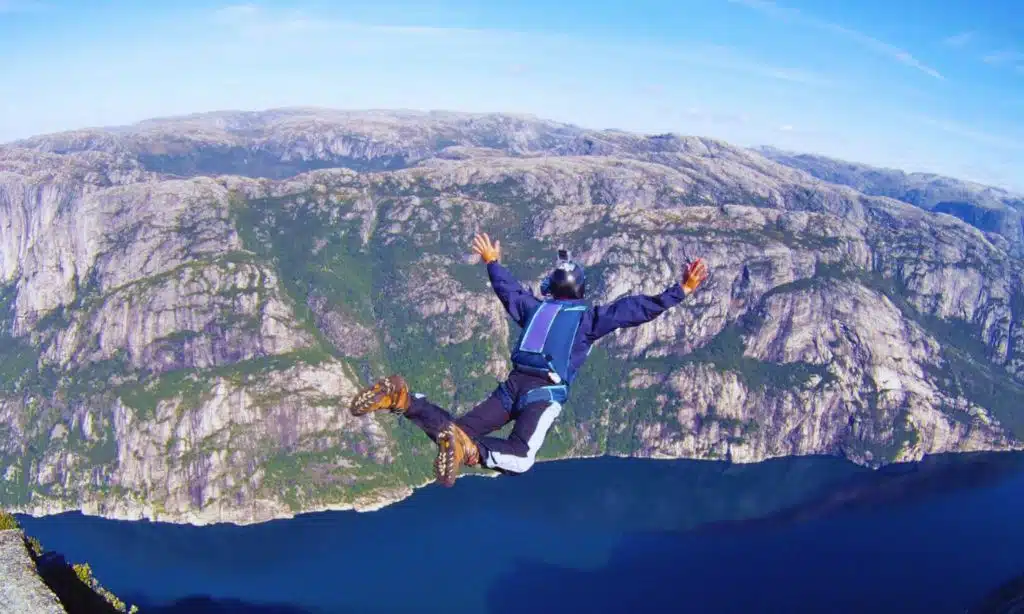
Imagine standing on the edge of a skyscraper, a cliff, or a bridge. Your heart’s racing. Your palms are sweaty. And then… you jump. That’s base jumping in a nutshell.
Why it’s so dangerous:
- Super low altitude jumps (sometimes less than 200 feet!)
- Only seconds to deploy the parachute correctly
- Obstacles everywhere – buildings, rocks, trees
- Unpredictable winds that can slam you into things
The appeal:
Despite the risks, base jumpers describe an unmatched sense of freedom and a “flow state” during jumps. It’s the ultimate adrenaline rush.
Safety measures:
- Extensive training and practice jumps
- Careful weather monitoring
- Specialized equipment like quick-deploy parachutes
Did you know? The “BASE” in base jumping is an acronym: Buildings, Antennas, Spans (bridges), and Earth (cliffs).
2. Bull Riding: Eight Seconds of Fury
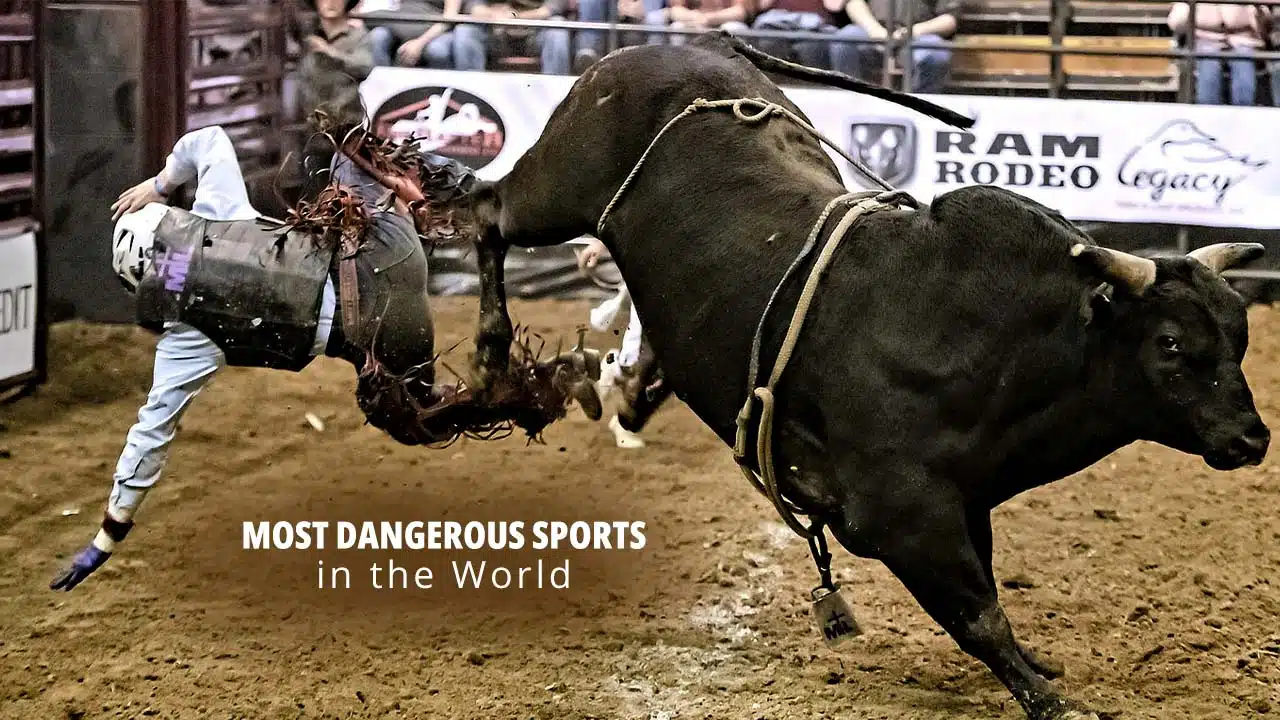
Picture yourself on top of a 2,000-pound angry bull. Your goal? Stay on for just 8 seconds. Easy, right? Not quite.
Why it’s a bucking disaster waiting to happen:
- Bulls are bred to be extra feisty and unpredictable
- Riders can be thrown 15 feet in the air
- Getting stomped on by a bull is like being hit by a car
- High risk of head injuries, broken bones, and internal injuries
Why cowboys keep climbing on:
The rush of controlling (or trying to control) such a powerful animal is addictive. There’s also a strong cultural tradition in many areas.
Safety improvements:
- Mandatory protective vests
- Many riders now wear helmets (though not all)
- Rodeo clowns who distract bulls after a rider falls
Fun fact: The 8-second rule comes from the early days of rodeo. It was determined that after 8 seconds, the bull’s bucking starts to slow down.
3. Big Wave Surfing: Riding Mountains of Water
When regular surfing isn’t enough of a thrill, some surfers seek out waves that are taller than a 4-story building. Welcome to big wave surfing.
The dangers are massive:
- Waves can reach heights of 60-100 feet
- Wipeouts can hold surfers underwater for minutes at a time
- The force of the wave can drive surfers deep underwater
- Collisions with reefs, rocks, or even your own board
Why surfers paddle out:
The feeling of riding a wave that big is described as almost spiritual. It’s man vs. nature in its purest form.
New safety tech:
- Inflatable vests that can quickly bring surfers to the surface
- Jet ski assists to help surfers catch waves and for quick rescues
- Better forecasting to predict when and where big waves will form
Crazy but true: The largest wave ever surfed was 80 feet high, ridden by Sebastian Steudtner in 2020 in Nazaré, Portugal.
4. Wingsuit Flying: Human Flight at Its Most Extreme
Take skydiving, add a special suit that turns you into a human flying squirrel, and you’ve got wingsuit flying. It’s as close to true human flight as we’ve ever come.
Why it’s incredibly risky:
- Speeds can exceed 200 mph
- Flying close to terrain (mountains, cliffs) leaves zero room for error
- High-speed impact with the ground is almost always fatal
- Difficult to judge distances and speeds accurately
The irresistible draw:
Wingsuit flyers describe an unparalleled sense of freedom and the most incredible views on Earth.
How they’re trying to make it safer:
- Advanced training simulators
- Suits with better aerodynamics and control
- Some events now use safety nets for landing
Mind-blowing fact: The furthest anyone has flown in a wingsuit is over 18 miles, set by Kyle Lobpries in 2022.
5. Free Solo Climbing: No Ropes, No Second Chances
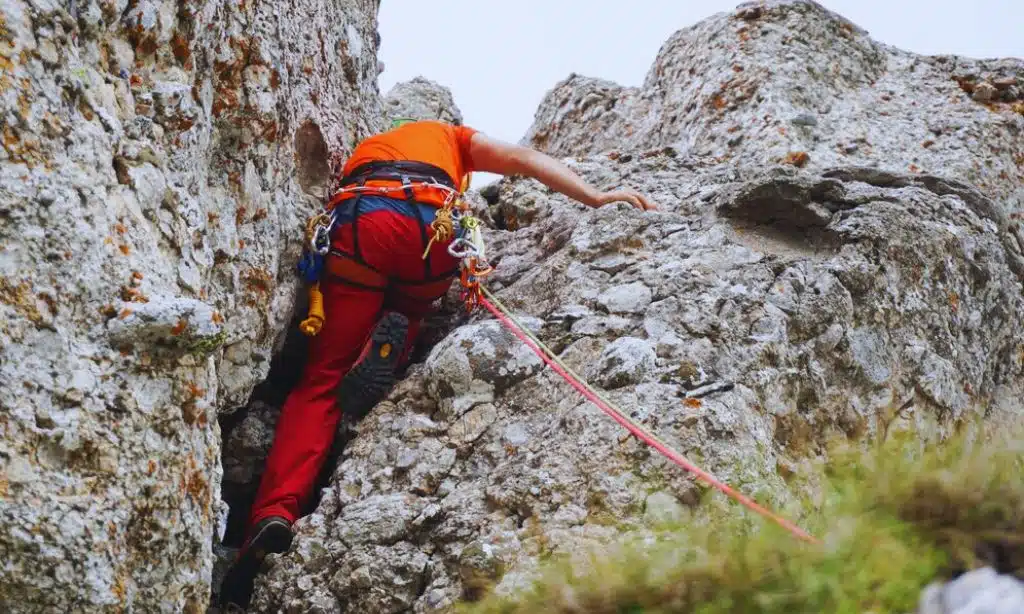
Imagine scaling a sheer cliff face hundreds or even thousands of feet high. Now imagine doing it with no ropes, harnesses, or safety gear of any kind. That’s free solo climbing.
The dangers are obvious, but let’s spell them out:
- Any fall is likely to be fatal
- Extreme physical and mental stress
- Weather changes can make holds slippery
- Even a small mistake can be catastrophic
Why climbers go ropeless:
Free soloists describe a feeling of pure focus and connection with the rock that’s unmatched in any other form of climbing.
Safety… well, there isn’t much:
- Extensive practice of routes with ropes first
- Careful route selection based on skill level
- Obsessive attention to weather and rock conditions
Unbelievable but true: In 2017, Alex Honnold free soloed El Capitan in Yosemite – a 3,000-foot vertical cliff – in under 4 hours.
6. Volcano Boarding: Surfing Down an Active Volcano
Yes, this is a real thing. Adventurers climb up an active volcano, sit on a wooden or metal board, and slide down at speeds up to 50 mph.
Why it’s not your average day at the beach:
- Sharp, abrasive volcanic rocks can cause nasty cuts and scrapes
- The volcano could decide to erupt (it’s active, remember?)
- Falls at high speed on hard volcanic surface are brutal
- Breathing in volcanic dust can cause respiratory issues
The volcanic appeal:
It’s a totally unique experience – how many people can say they’ve surfed down a volcano?
Making molten mountains marginally safer:
- Protective gear like jumpsuits, goggles, and gloves
- Guides who monitor volcanic activity
- Some tours use sitting boards for more stability
Hot fact: The most popular volcano for this sport is Cerro Negro in Nicaragua, which last erupted in 1999.
7. Cave Diving: Underwater Mazes of Death
Regular scuba diving not challenging enough for you? Try cave diving, where you swim through underwater cave systems with only a flashlight and your wits to guide you.
Why it’s terrifyingly dangerous:
- Easy to get lost in complex cave systems
- Limited air supply means no room for error
- Stirred-up sediment can reduce visibility to zero in seconds
- Tight spaces can cause panic or trap divers
The submerged allure:
Cave divers describe otherworldly beauty and the thrill of exploring places few humans have ever seen.
Safety measures that barely scratch the surface:
- Extensive specialized training
- Redundant air supplies and lights
- Guide lines to find the way back
- Detailed mapping of cave systems
Sobering statistic: An estimated 300-400 cave divers have died in Florida alone since the 1960s.
8. Street Luge: Asphalt Surfing at Freeway Speeds
Take a skateboard, make it longer, lie down on it, and then race down a hill at speeds up to 90 mph. That’s street luge in a nutshell.
Why it’s a recipe for road rash (or worse):
- Minimal protection at very high speeds
- Racing on open roads with potential for car traffic
- Small obstacles like pebbles can cause wipeouts
- Head injuries are a major risk
The speed demon’s delight:
The combination of speed, skill, and danger creates an intoxicating rush for street lugers.
Attempts to make it less lethal:
- Full-body leather suits
- Aerodynamic helmets
- Some events now use closed roads
- Hay bales on corners (it helps a little)
Fast fact: The fastest recorded speed on a street luge is 101.9 mph, set by David Dean in 2016.
9. Heli-Skiing: Extreme Skiing with a Side of Chopper Danger
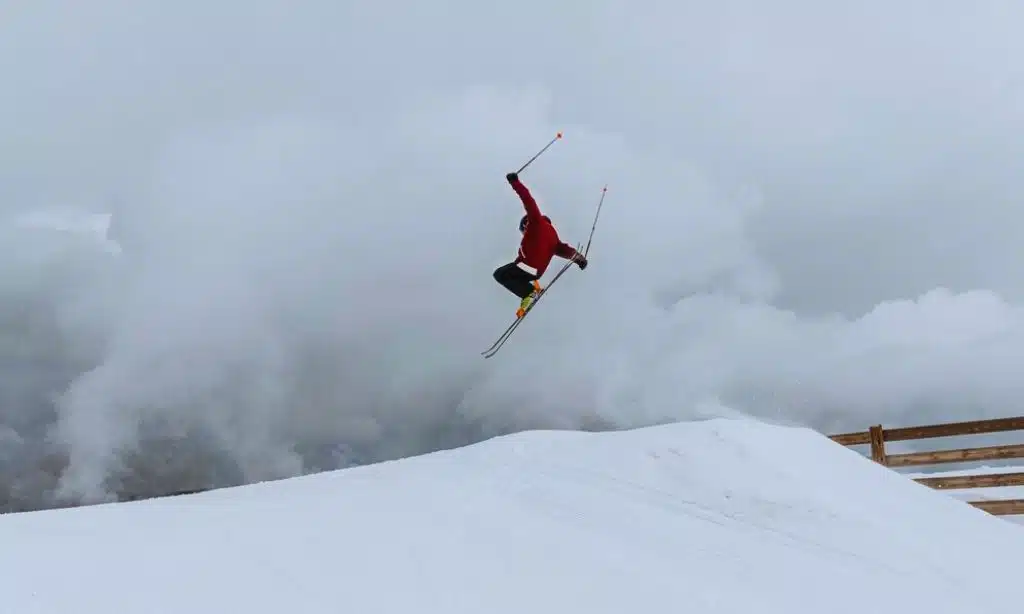
Why take a ski lift when you can take a helicopter? Heli-skiing drops you on remote, untouched mountains for the ultimate powder experience.
The helicopter-sized risks:
- Avalanches in uncontrolled backcountry terrain
- Helicopter crashes in challenging mountain conditions
- Extremely remote locations, far from medical help
- Hidden obstacles under fresh snow
Why skiers take to the skies:
Access to pristine, untouched powder and runs that can last thousands of vertical feet.
How they’re trying not to become statistics:
- Extensive avalanche safety training
- Guides use explosives to trigger controlled avalanches before skiing
- Emergency locator beacons for each skier
- Some operators now use more stable dual-engine helicopters
Powder fact: A typical day of heli-skiing can give you 30,000 vertical feet of skiing – that’s like skiing from the top of Mount Everest to sea level!
10. Highlining: Tightrope Walking Taken to New Heights
Imagine a tightrope. Now imagine that tightrope strung between two cliffs, hundreds of feet in the air. That’s highlining.
Why it’s a high-stakes balancing act:
- Any fall could be fatal (though most highliners use a safety harness)
- Extreme winds at height can throw you off balance
- Mental stress of the extreme height
- Equipment failure would be catastrophic
The sky-high appeal:
Highliners describe a meditative state and a sense of conquering fear that’s unmatched.
Safety in the sky:
- Redundant anchoring systems
- Safety leashes (though some still “free solo” highlines)
- Careful weather monitoring
- Rigorous equipment checks
Jaw-dropping feat: The longest highline ever walked was 2.1 km (1.3 miles) long, set by Rafael Bridi in 2021 in Brazil.
Fatality Rates and Key Stats in Dangerous Sports
| Sport | Estimated Fatality Rate (per 100,000 participants) | Key Stat |
|---|---|---|
| Base Jumping | 43.17 | 1 in 60 participants will die |
| Wingsuit Flying | 54.00 | Fastest recorded speed: 318 mph |
| Big Wave Surfing | 2.50 | Largest wave surfed: 80 feet |
| Motorcycle Racing | 1.93 | Top speed (MotoGP): 221.5 mph |
| Boxing | 1.30 | 20% of pro boxers may develop CTE |
| Free Solo Climbing | Data not available | Highest free solo: 3,000 feet (El Capitan) |
| Cave Diving | 3.02 | 300-400 deaths in Florida alone since 1960s |
| Heli-Skiing | 0.52 | Average vertical feet skied per day: 30,000 |
| Ice Climbing | 0.68 | Longest ice climb in N. America: 3,000 feet |
| Bull Riding | 1.15 | Only 1 in 15 rides last the full 8 seconds |
| Street Luge | Data not available | Top speed record: 101. |
Takeaway
The world’s most dangerous sports push human limits. They offer unparalleled thrills but come with serious risks. Participants in these sports often spend years training to minimize dangers. But the element of risk always remains.
It’s important to note that what makes a sport dangerous can change. Advances in safety equipment and techniques can reduce risks. But new challenges or more extreme versions of sports can also emerge.
For many athletes, the rewards of these dangerous sports outweigh the risks. The sense of accomplishment, the adrenaline rush, and the connection with nature or machine drive them to pursue these activities.
As spectators or potential participants, it’s crucial to understand the real dangers involved. Proper training, equipment, and respect for the sport are essential. Even then, these activities remain among the most dangerous in the world.