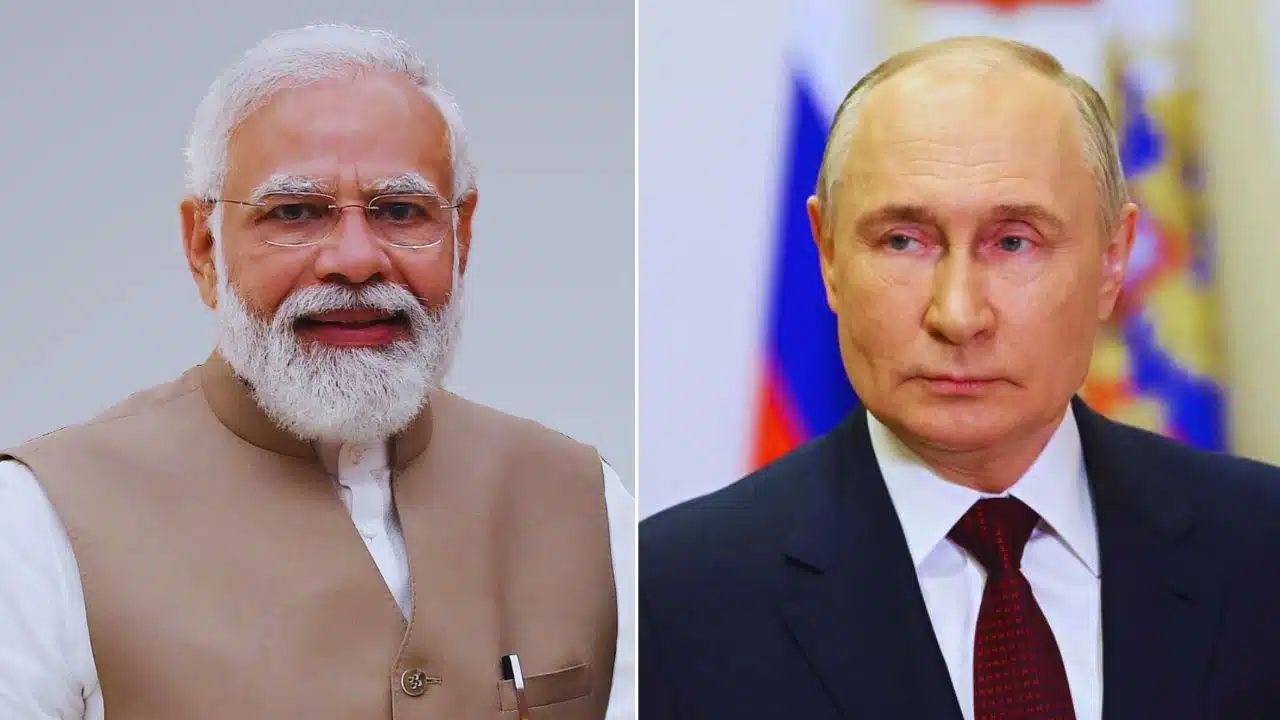
Russian President Vladimir Putin and Indian Prime Minister Narendra Modi are scheduled to meet on the sidelines of the Shanghai Cooperation Organisation (SCO) Summit in Tianjin, China. The summit is being held on August 31 and September 1, 2025, bringing together leaders of member states, observer nations, and dialogue partners. This year’s event is particularly significant because it comes at a time when global power dynamics are shifting, and the SCO is increasingly being viewed as a platform for non-Western nations to strengthen security and economic cooperation.
The meeting between Putin and Modi is scheduled to take place immediately after the expanded SCO Plus session on September 1. Both leaders will already be in Tianjin for the main summit, which also includes discussions on counterterrorism, regional connectivity, and emerging economic partnerships across Eurasia.
First Face-to-Face Meeting of 2025
Although President Putin and Prime Minister Modi have been in regular telephone contact throughout the year, this will be their first in-person meeting of 2025. Their discussions are expected to cover a wide range of issues, including energy cooperation, defense ties, trade opportunities, and regional security.
The timing of this bilateral engagement also coincides with efforts by both nations to reinforce their independent foreign policy approaches. For India, participation in the summit marks a recalibration of its regional strategy, as it engages with both Russia and China despite lingering tensions with Beijing. For Russia, deepening ties with India is part of a broader pivot toward Asia in response to strained relations with Western countries.
Strategic Partnership Marks 15 Years
Russia and India officially designated their relationship as a “special and privileged strategic partnership” in December 2010. This year marks the 15th anniversary of that designation, making the upcoming meeting symbolic as well as practical. Over the years, the partnership has expanded to include cooperation in nuclear energy, defense production, space exploration, cyber security, and pharmaceuticals.
The anniversary provides both governments with an opportunity to reflect on the depth of their cooperation and to outline fresh initiatives for the future. According to the Kremlin, the Tianjin meeting will focus not only on bilateral trade but also on multilateral projects within the SCO and the BRICS framework.
Preparations for Putin’s Visit to India in December
One of the most important outcomes of this encounter is expected to be the groundwork for President Putin’s official visit to India in December 2025. Such annual summits have been a tradition between the two countries for more than two decades, serving as a platform for announcing major agreements.
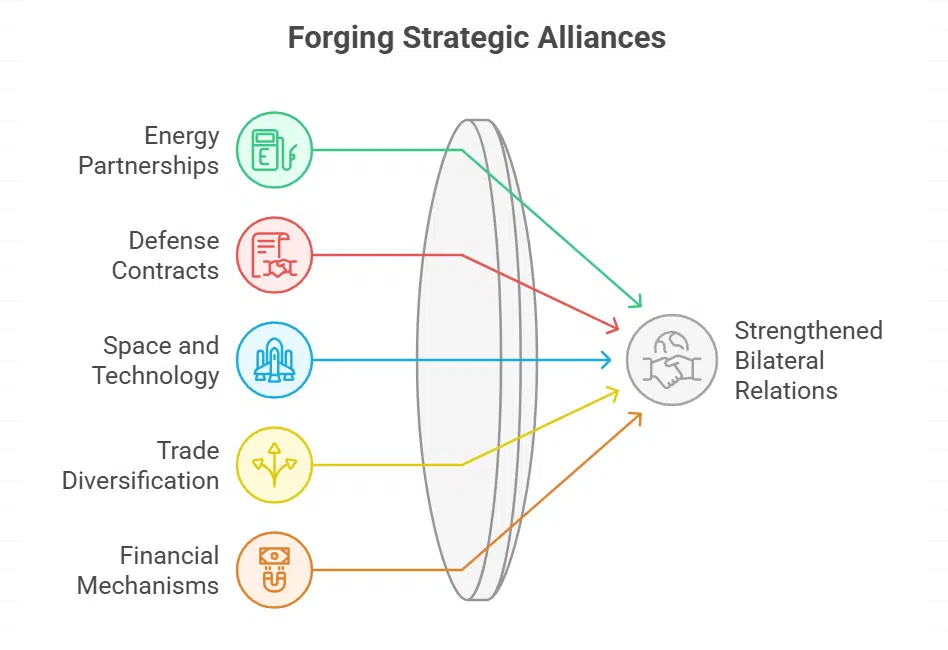
Preparations for the December visit are expected to include negotiations on:
-
Expansion of energy partnerships, particularly in oil, gas, and nuclear energy.
-
Long-term defense contracts, including co-production of advanced equipment.
-
Enhanced cooperation in space and emerging technologies.
-
Trade diversification to reduce dependency on traditional sectors.
-
Strengthening financial mechanisms to bypass Western sanctions.
This makes the Tianjin meeting an important step in shaping the agenda for year-end bilateral talks.
Wider Diplomatic and Geopolitical Context
The SCO Summit in Tianjin is being watched closely because it is Modi’s first visit to China in over seven years. The decision to attend reflects India’s recognition of the strategic importance of regional groupings, even while it continues to manage unresolved border disputes with Beijing.
For Russia, the summit provides another occasion to demonstrate that Moscow remains central to regional diplomacy despite its strained relations with Western nations. The presence of both Putin and Modi alongside Chinese President Xi Jinping underlines the continuing relevance of the Russia-India-China (RIC) trilateral format, which has long been promoted as a counterbalance to Western alliances in Asia.
The summit also coincides with a major military parade in Beijing on September 3, commemorating the 80th anniversary of the end of World War II in Asia. Putin and Modi’s participation in both the summit and the commemorative events will be seen as an endorsement of China’s growing role as a convener of large-scale international gatherings.
Key Issues Expected in the Bilateral Dialogue
Several key issues are likely to feature prominently when Modi and Putin sit down in Tianjin:
-
Energy Security – India has become one of the largest buyers of discounted Russian oil in recent years. Both sides are expected to discuss stabilizing long-term supply chains and exploring new energy projects.
-
Defense Cooperation – Russia remains a major supplier of defense equipment to India. Talks may focus on technology transfers, joint production, and ensuring that existing contracts are not disrupted by Western sanctions.
-
Trade and Payments – Bilateral trade has grown significantly, but payment mechanisms have been complicated by sanctions on Russian banks. Alternative financial settlement systems are likely to be on the agenda.
-
Regional Security – The two leaders are expected to exchange views on Afghanistan, the Indo-Pacific, and ongoing conflicts that directly or indirectly affect Eurasian stability.
-
Multilateral Engagement – Coordination within the SCO, BRICS, and the G20 will also be discussed, particularly regarding reforms in global governance institutions.
Why This Meeting Matters
The Modi-Putin meeting carries significance beyond bilateral relations. It comes at a time when the global landscape is undergoing realignment, with many nations exploring alternatives to Western-dominated institutions.
-
For India, it represents a balancing act—maintaining strong partnerships with the United States and its allies while also engaging with Russia and China.
-
For Russia, the meeting underscores its ability to retain valuable allies in Asia, even as it faces mounting pressure from Europe and the United States.
-
For China, hosting both leaders at the SCO provides a stage to demonstrate Beijing’s role as a central player in shaping Eurasian politics.
The upcoming meeting between Vladimir Putin and Narendra Modi during the SCO Summit in Tianjin is more than just a routine diplomatic engagement. It is the first in-person interaction between the two leaders in 2025, it coincides with the 15th anniversary of their strategic partnership, and it sets the stage for Putin’s state visit to India later in the year.
With issues such as energy, defense, trade, and regional security at the center of the agenda, this bilateral discussion is expected to reinforce the depth of India-Russia ties while also shaping the contours of Eurasian geopolitics in the months to come.