
Have you ever tried to sit still, only to find your mind immediately racing about work, laundry, or what is for dinner? I know exactly how frustrating that feels. If stress keeps stealing your peace and focus drifts every time you try to relax, you are definitely not the only one. Scientists at Harvard have found that practicing mindfulness can help lower stress and boost attention in daily life.
In this guide to Mindfulness For Skeptics: Science-Backed Benefits, I will share easy ways to feel calmer and think more clearly using real science. We will look at how small changes can make a big difference, so grab a cup of coffee and let’s go through it together.
What is Mindfulness?
Mindfulness simply means paying close attention to the present moment on purpose, without judging yourself. Many people have ideas about this practice that are not exactly true, so it helps to get the facts straight right away.
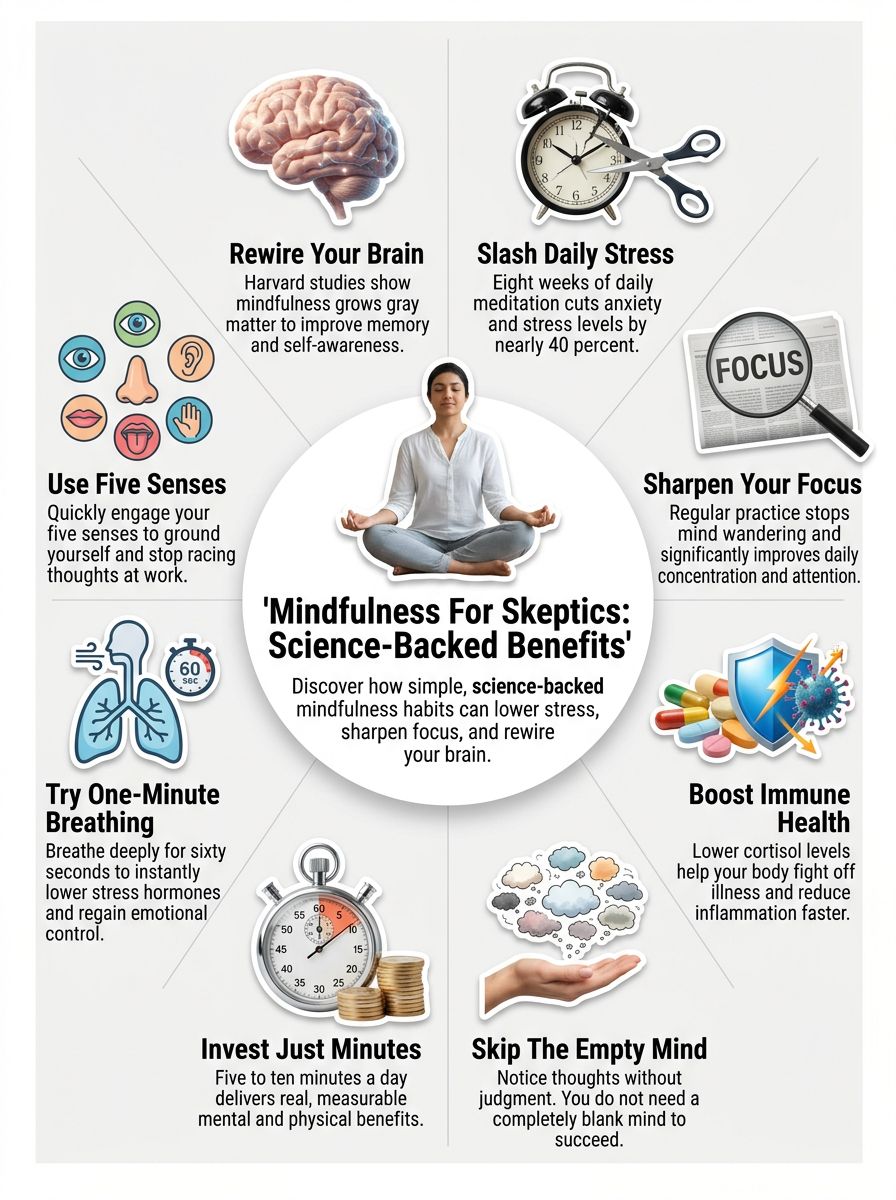
Definition of mindfulness
Some people describe mindfulness as being truly present. Your mind pays full attention to what you are doing, thinking, or feeling right now. You notice sounds, smells, and sights around you without letting your thoughts run wild.
Harvard researchers say this simple practice can boost well-being and focus. You do not try to control your thoughts or empty your brain. Instead, you just watch them come and go like clouds passing in the sky.
According to 2025 statistics from the Centers for Disease Control and Prevention, over 17% of U.S. adults now practice some form of mindful meditation. This shows it is no longer a fringe idea, but a mainstream tool for better health.
Common misconceptions about mindfulness
Many people think this is strange or hard to understand. The truth is, it is much simpler than it sounds. Here are the most common myths to clear up:
- Mindfulness does not mean you have to clear your mind of every thought. It is natural for the mind to wander.
- You do not need to meditate for hours to see results. Research shows even five minutes a day can help with stress reduction and focus.
- It is not just a spiritual tradition. Scientists study it as an evidence-based way to improve cognitive health.
- You do not need to sit cross-legged and chant. You can practice mindful listening while walking at the park.
- Noticing that your mind is wandering is not a failure. It is actually a normal part of learning self-control.
The Science Behind Mindfulness
Scientists have studied how these practices actually change the brain. These findings might surprise even the most skeptical reader.
Neuroscience of mindfulness
Brain scans show this practice changes the brain in huge ways. A famous Harvard study led by Dr. Sara Lazar found that just eight weeks of mindfulness meditation increases gray matter density in the hippocampus. This is the part of your brain that controls memory and learning.

At the same time, people showed less activity in the amygdala, which is where your stress reactions start.
“Mindfulness reshapes our brains to help us focus better and worry less, physically altering areas tied to memory and stress.”
These habits calm the mind and boost cognitive health by building stronger pathways for relaxation. Even short sessions can spark these effects.
Studies from Harvard and other institutions
Mounting evidence points to real psychological benefits, proving this is not just a buzzword dressed as science. Harvard researchers found that just eight weeks of daily practice made people feel less stressed and anxious.
A January 2024 study from the University of California, San Francisco looked at 1,400 employees. They found that workers who used digital mindfulness tools for just five minutes a day reported significantly less burnout and higher job satisfaction.
Johns Hopkins University also reviewed over 18,000 studies on these practices. They confirmed meditation helps reduce symptoms of depression and pain, while even schoolchildren saw improved attention after simple breathing exercises.
Science-Backed Benefits of Mindfulness
You might wonder what this actually does for you in the real world. Science shows some surprising perks that can change the way you feel each day.
Improved mental health and reduced stress
Daily practices help calm racing thoughts and quiet the noise. In fact, Harvard researchers found that eight weeks of mindful meditation can reduce stress by almost 40%.
Recent 2025 data from clinical studies shows that just ten minutes of daily practice can reduce anxiety symptoms by over 12%. People who use these relaxation techniques report much less sadness and worry over time.
With regular practice, your brain handles stressful moments better. It gives you a personal umbrella during the rainy storms of life.
Enhanced focus and attention
This habit helps your brain stay on task, even when your phone is buzzing and distractions pop up. Think of it like lifting weights for your focus.
A September 2025 study from the University of Lancashire proved this beautifully. They found that participants who practiced for just ten minutes showed much quicker reaction times and fewer wandering thoughts than a control group.
Even just a few minutes each day can sharpen your awareness, helping you feel calmer and make fewer mistakes under pressure.
Increased emotional regulation
Sharper attention leads directly to stronger self-control. Harvard researchers found that regular meditation can help people slow down their reactions in tough moments.
According to 2025 reports from behavioral health experts, mindfulness increases gray matter in the prefrontal cortex. This specific brain region is responsible for executive functions, helping you pause and notice feelings before acting on them.
Instead of yelling or shutting down, you can cool the fire. Adults who train their minds this way report far fewer regrets after heated talks at home or work.
Boosted immune system health
People who practice staying present may actually get sick less often. Science shows that regular meditation can help your body fight germs much better.
A 2016 study from Carnegie Mellon University found volunteers who learned these techniques missed fewer days at work due to illness. Here is why it works:
- It significantly lowers your levels of C-reactive protein, a major marker tied to inflammation.
- When you feel calm, your body naturally produces less cortisol.
- Keeping stress under control gives your immune cells the space they need to thrive.
Breaking Myths About Mindfulness
Let us bust some common myths and see why even skeptics can give this a fair shot.
Myth 1: Mindfulness is about emptying your mind
Many people think you have to clear your thoughts like wiping a whiteboard. That is simply not true. It invites you to notice thoughts, feelings, and sensations as they come.
Your mind will wander, and that is completely normal for everyone. You focus on awareness and acceptance instead of fighting off every worry.
Studies from Harvard show that being aware of what happens in your mind helps reduce stress and rumination. Just watch each thought float by like a cloud.
Myth 2: You need to meditate for hours
The next big misunderstanding is about the time spent practicing. You do not have to sit for hours to see real gains.
“You do not need a twenty-minute window; even a one-minute breathing exercise can reset your nervous system.”
Life gets busy, so it is great news that brief moments count. Small daily efforts improve mental health and brain function, building calm in your daily routine.
Myth 3: Mindfulness is a religious or spiritual practice
Many people see this word and think of monks or spiritual leaders. This view does not fit with how most scientists use the term today.
Harvard studies show that it helps brain function, focus, and stress reduction for everyone. According to 2025 wellness data, over 50% of large U.S. employers now offer mindfulness or meditation programs to their workers.
Doctors now teach it in hospitals to help kids and adults manage depression, pain, and worry. It works for all backgrounds, and absolutely no incense is required.
Simple Mindfulness Practices for Skeptics
Anyone can try simple ways to be more present each day, even if they feel totally doubtful. Here are a few quick methods, along with a comparison of popular apps that can guide you.
Top Mindfulness Apps for Beginners
If you want some digital help getting started, you have great options. Here is a quick look at the two most popular apps in the U.S. right now based on 2026 pricing.
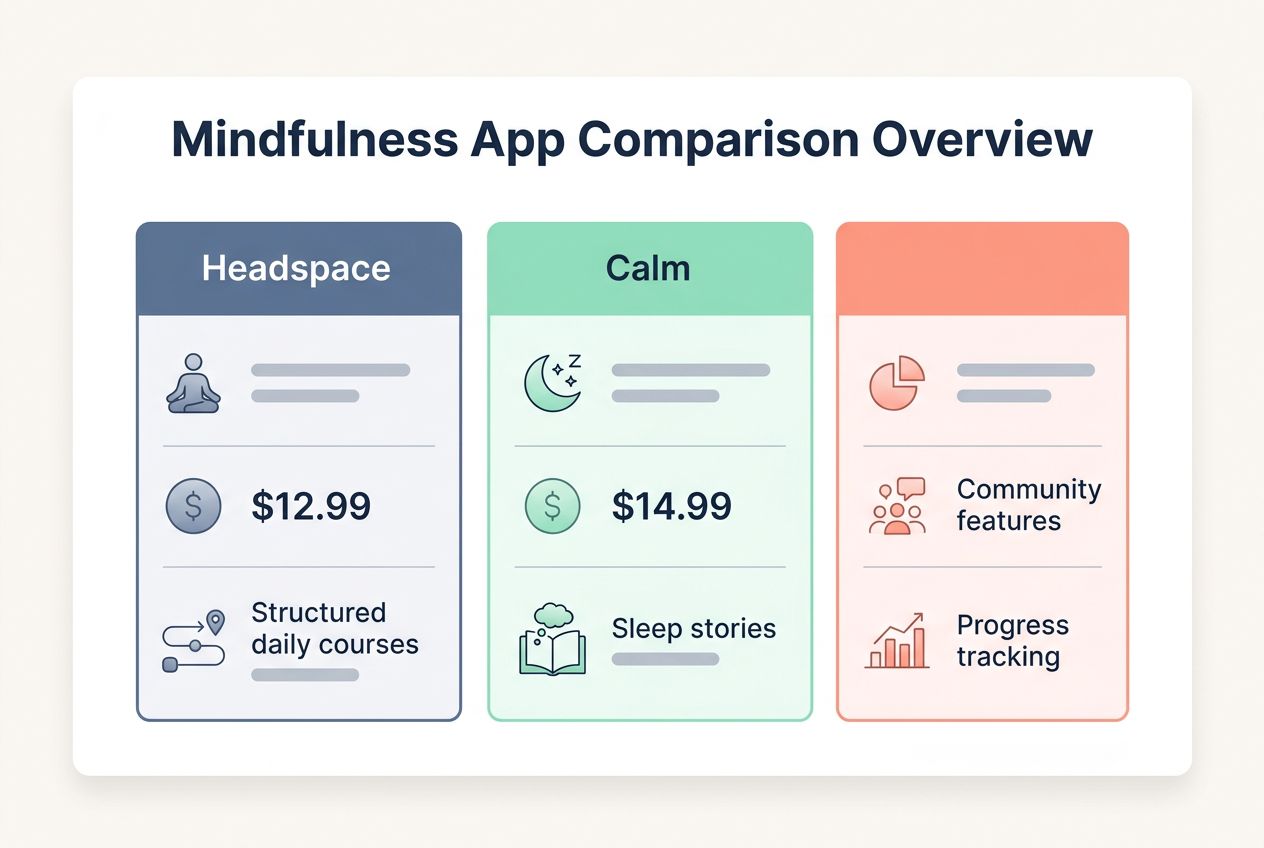
| App Name | Monthly Cost | Best Feature For Beginners |
|---|---|---|
| Headspace | $12.99 | Structured daily courses and a very playful, easy-to-learn approach. |
| Calm | $14.99 | Celebrity-narrated sleep stories and immediate relief for anxiety. |
Both apps offer free trials, so you can test them out before paying a dime.
The One-Minute Breathing Space
This is a wonderful tool that helps you stay calm and aware, even on your busiest days.
- Find a safe place to sit or stand; no special tools are needed.
- Bring your attention to your breath, noticing the air moving in and out.
- Breathe in slowly through your nose for four seconds.
- Hold that breath gently for another four seconds.
- Exhale through your mouth for six seconds to release tension.
- Follow this cycle three times to complete your one minute.
Many scientists at Harvard say quick breathing practices like this can lower stress hormones and boost focus.
The Five Senses Check-In
Sometimes, your mind feels like it is buzzing. This quick check-in helps slow things down and roots you in the present.
- See: Look around and name five things you can see, like a light bulb or a book.
- Hear: Listen for four sounds in your space, like birds chirping or cars passing.
- Touch: Focus on three things you can feel, like the texture of your shirt.
- Smell: Notice two smells nearby, like coffee brewing or fresh soap.
- Taste: Pay attention to one thing you can taste, like a sip of cold water.
Mindful Listening
After checking in with your senses, it is good to shift focus to how you hear others. This boosts awareness and lowers stress during conversations.
- Pay full attention to the speaker, putting away your phone.
- Notice the tone and emotion in their voice, not just the words.
- Hold off on planning your response while they are still talking.
- If your mind wanders, gently bring it back without judging yourself.
- Make natural eye contact to show you are fully present.
Studies link this simple skill to better emotional regulation and lower levels of rumination.
Overcoming Challenges in Practicing Mindfulness
Every mind gets distracted sometimes, and that is simply part of being human. With a few easy steps, anyone can give this a fair shot.

“I do not have time for mindfulness”
Busy lives can make meditation seem completely impossible. You do not need twenty free minutes or a perfectly silent room.
A 2025 meta-analysis of over 16,000 participants found that taking quick micro-breaks during the workday significantly improves task performance. You can pause for three deep breaths before opening an email or while waiting in traffic.
Everyday routines hold perfect moments to practice relaxation techniques. Brushing your teeth with full attention becomes a chance for mental health care right at home.
“My mind is too busy to focus”
Thoughts bounce around like popcorn in a microwave. Minds do that, especially during times of high stress or worry.
Harvard researchers found that people’s minds wander almost 47% of the time each day. It is perfectly normal.
Short practices train the brain to notice the wandering and gently bring attention back. If thoughts move off track, guide them back softly. Progress comes slowly but surely, so just keep showing up.
Moving Forward with Mindfulness
Small steps help tremendously. Try one-minute breathing before a big meeting, or pause to notice sounds on your morning walk.
People like Dr. Sara Lazar at Harvard found that only eight weeks of short exercises change the brain in incredibly good ways. Your stress can drop, and you may focus much better during work or playtime.
Kids use mindful listening to calm nerves, and athletes use it for emotional control before big games. Give it a try the next time your mind starts wandering at work, and see relaxation grow with every single breath.
Finally, Mindfulness For Skeptics: Science-Backed Benefits!
Mindfulness uses science to make life calmer and healthier. Harvard studies show that even short mindful moments can change the brain, improve focus, and boost emotional regulation.
You do not need hours of meditation or a quiet mountain top to see real results. Just one minute of breathing or a focus on sound helps lower stress and supports cognitive health right at your desk.
People once thought this meant sitting for hours or clearing every single thought from your head, but that is simply not true. Awareness helps with relaxation, strengthens self-control, and reduces rumination during those difficult days.
Minds wander all the time, and that is normal. Mindfulness offers simple ways to bring your attention back gently, leading to much better brain function over time. If you are exploring Mindfulness For Skeptics: Science-Backed Benefits, give these simple tools a try and see how a few minutes can change your whole day.