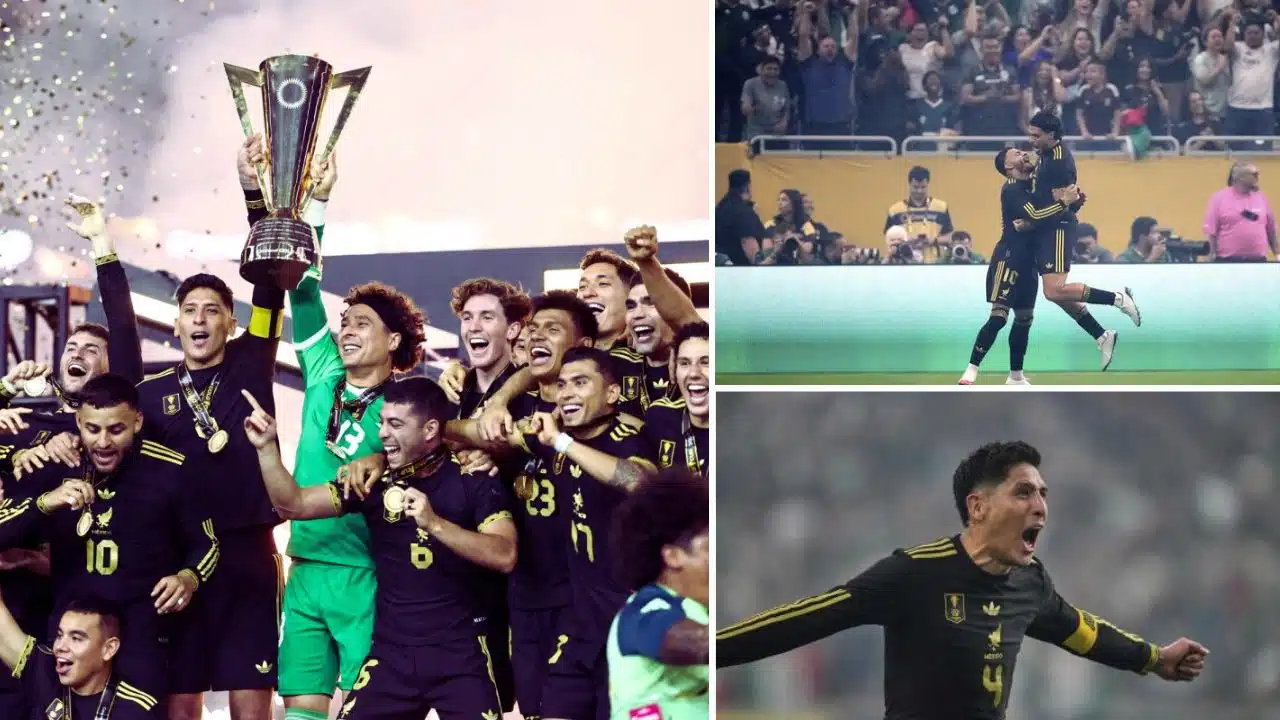
In a high-stakes showdown at NRG Stadium in Houston, Texas, the Mexican national football team emerged victorious over the United States Men’s National Team (USMNT) with a final score of 2-1, claiming their 10th CONCACAF Gold Cup championship. The game was more than just a final—it was a statement of supremacy in the region, played between two of the continent’s fiercest football rivals just one year before the 2026 FIFA World Cup, which the two nations will co-host alongside Canada.
The crowd of over 70,000 fans created a pulsating atmosphere, setting the stage for what would become one of the most dramatic finals in recent tournament history.
Fast Start from the United States Stuns Mexico
From the opening whistle, the USMNT came out with unexpected intensity, catching Mexico momentarily off guard. In just the fourth minute, Chris Richards, one of the emerging stars of the U.S. backline, made a decisive move during a set-piece opportunity. The ball was delivered into the penalty area from a well-placed free kick by Sebastian Berhalter. Rising above his marker, Richards sent a thunderous header that struck the crossbar before crossing the line, giving the United States an early 1-0 lead.
This opening goal injected confidence into the American side and set the tone for a fiercely competitive match. However, Mexico refused to be rattled and slowly began to assert their dominance as the half progressed.
Mexico Regains Control and Finds the Equalizer
After conceding early, Mexico increased their tempo and began to dictate the flow of the game. By the 25th minute, they were controlling possession with ease and launching coordinated attacks from both flanks. Their efforts were rewarded just two minutes later.
In the 27th minute, Mexican forward Raúl Jiménez showed his class and composure in front of goal. A precise pass from Marcel Ruíz found Jiménez in the box. With a quick turn, he positioned himself perfectly and fired a powerful shot past U.S. goalkeeper Matthew Freese, sending the ball into the roof of the net from close range.
Jiménez’s celebration was deeply symbolic. He held up a jersey in tribute—interpreted by some as a nod to a former teammate or fallen football figure, although conflicting reports suggest a potential mix-up. Regardless of the confusion, the gesture resonated emotionally with fans and teammates.
The Second Half Intensifies as Teams Battle for Supremacy
The second half began with both sides making tactical adjustments. The U.S. looked to regain their early momentum, while Mexico continued to apply pressure with sharp passing and coordinated pressing. Both teams exchanged dangerous chances, but neither could find the breakthrough in the early stages of the half.
The physicality of the match increased as players from both teams battled for midfield control. Several challenges, near-misses, and substitutions contributed to the rising tension. The game remained finely balanced, with every tackle and pass carrying weight.
As the clock ticked toward the final 15 minutes, the energy inside NRG Stadium reached its peak. Both fanbases, loud and passionate, spurred their teams on with chants, hoping to see a late winner.
Álvarez’s Header Seals the Win for Mexico
The decisive moment came in the 77th minute, again from a set piece—an area where Mexico has consistently been dangerous throughout the tournament. The initial delivery into the box was flicked on by Johan Vásquez, sending the ball toward Edson Álvarez, who launched into a diving header. The ball curled into the corner of the net, leaving goalkeeper Freese with no chance.
Initially, the assistant referee raised the offside flag, prompting a pause for a VAR (Video Assistant Referee) review. After careful analysis, the goal was deemed valid. The offside position had not affected the play, and Mexico’s goal stood. The score was now 2-1 in favor of El Tri.
The stadium erupted. Mexican players embraced as they knew how critical that goal was—not just for the game but for the national pride it carried.
Late Drama as the U.S. Tries to Respond
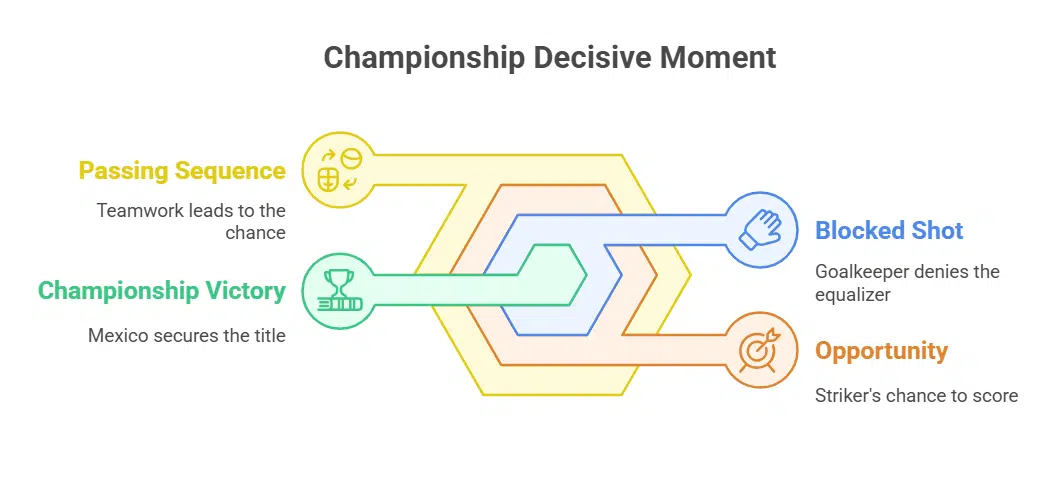
As the final whistle approached, the United States launched a desperate effort to find an equalizer. In the second minute of stoppage time, striker Patrick Agyemang had a golden opportunity. After a slick passing sequence, he found himself inside the box and fired a low shot toward the corner.
But Mexican goalkeeper Ángel Malagón, who had been solid all night, reacted quickly. He dived low and got just enough on the ball to push it wide. Mexican defenders rushed to clear the rebound, preventing any follow-up attempt. That moment proved to be the last clear chance for the United States.
With time running out and the Americans unable to produce another threatening attack, referee Mario Escobar blew the final whistle, confirming Mexico as champions.
A Dominant Record: Mexico’s Gold Cup Legacy
This win further solidified Mexico’s position as the most successful team in Gold Cup history, with 10 titles—three more than the United States, who remain second with seven championships.
It was the eighth time that the U.S. and Mexico had faced each other in the Gold Cup final. Mexico now holds a commanding 6-2 head-to-head advantage in those high-stakes encounters. The result also marked Mexico’s second consecutive Gold Cup title, a sign of their consistent excellence in the region.
Challenges Ahead for the USMNT and Manager Pochettino
For the United States, the loss raised serious questions ahead of the upcoming World Cup. Manager Mauricio Pochettino, who took over earlier in the year, now faces mounting pressure to shape a more competitive squad.
The former Chelsea and PSG coach was unable to call upon several of his top players for the tournament. Christian Pulisic, widely regarded as the team’s most influential player, opted to rest following a taxing season with AC Milan. His absence was keenly felt in the attacking third.
Meanwhile, midfielders Weston McKennie and Tim Weah were unavailable due to their involvement in the Club World Cup with Juventus. Defender Sergiño Dest, who plays for PSV Eindhoven, withdrew due to continued rehabilitation from an ACL injury.
These absences left the U.S. with a relatively inexperienced squad, which, while spirited and competitive, ultimately fell short against a more seasoned Mexican side.
The Road to the 2026 FIFA World Cup Begins Now
With less than a year to go before the 2026 World Cup, both teams will now shift their focus to preparation and player development. The United States will begin their tournament campaign on June 12, 2026, at SoFi Stadium in Los Angeles. Mexico will kick off the World Cup one day earlier, on June 11, at the iconic Estadio Azteca in Mexico City.
In the coming months, both teams are expected to participate in high-profile friendlies, regional qualifiers, and international training camps. For the U.S., integrating their top European-based players will be crucial. For Mexico, the focus will be on maintaining their momentum and continuing to blend youth with experience.
Mexico’s 2-1 win over the United States in the 2025 CONCACAF Gold Cup final was more than just a trophy win—it was a message to the continent and the world. With tactical discipline, individual brilliance, and a sense of national pride, El Tri showed why they remain a regional powerhouse.
For the United States, the loss will serve as a learning opportunity. The absence of key players exposed depth issues but also gave valuable experience to emerging talents. As both nations prepare to take center stage at the World Cup, the rivalry is far from over—it’s only just getting started.
The information is collected from ESPN and Yahoo.