Ever feel like your phone is permanently glued to your hand? You’re not the only one. We all know that irony of opening an app to find “peace,” only to end up doom scrolling through emails or social feeds for twenty minutes. But here is the thing: in 2026, technology has shifted. It is no longer just about distracting you; it is about precision wellness.
The new wave of meditation apps—powered by smarter AI and wearables—can actually help you build a real rest habit, rather than just giving you another screen to stare at. Walk you through exactly how these tools have evolved this year, the hidden features that actually work, and how to use them without falling into the “digital noise” trap.
Grab a comfortable seat, and let’s figure this out together.
The Growth of Meditation Apps
If it feels like everyone you know is meditating with their phone, it is because they probably are.
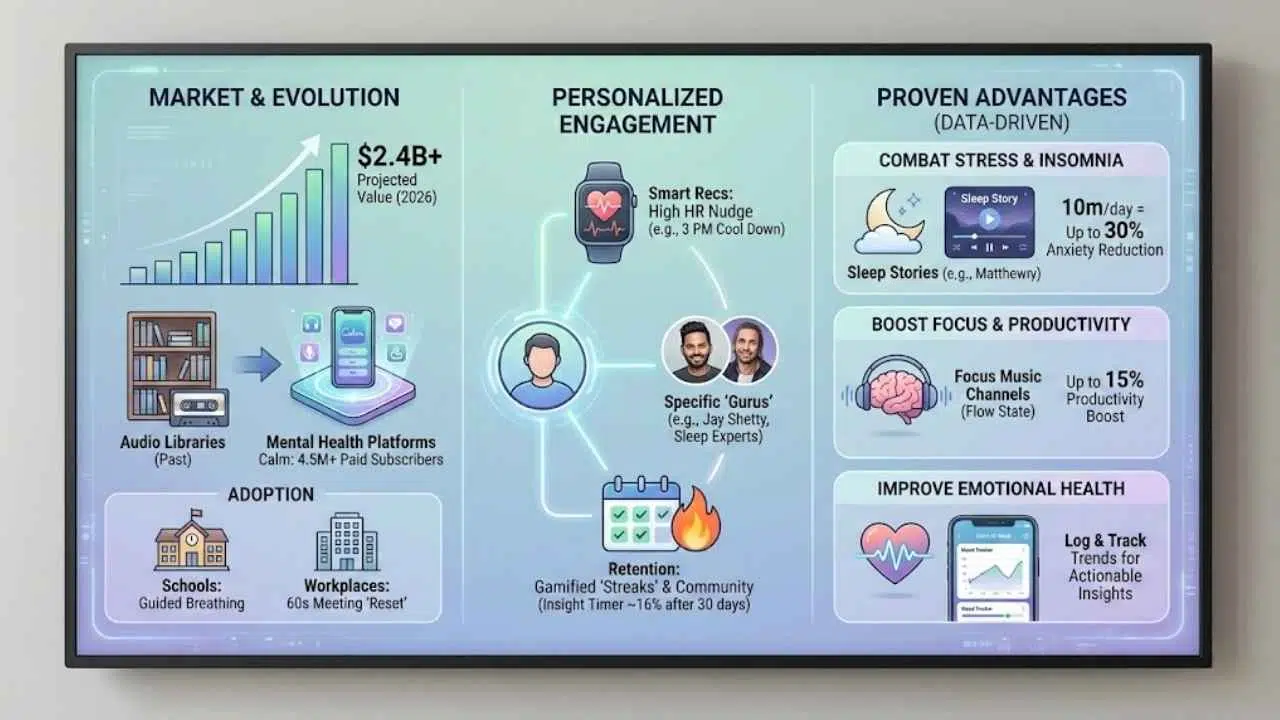
The market for these apps has exploded, reaching a projected value of over $2.4 billion in 2026. This isn’t just a trend anymore; it is a standard part of the daily health routine for millions of Americans.
Rising Popularity of Digital Mindfulness Tools
We have seen a massive shift in how these apps are used. In the past, they were just libraries of audio tracks.
Now, they are comprehensive mental health platforms. Apps like Calm and Headspace have grown their user bases significantly, with Calm reportedly surpassing 4.5 million paid subscribers. People are not just looking for “zen” anymore; they are looking for specific solutions to modern problems like burnout, insomnia, and political anxiety.
Schools and workplaces are jumping on board too. Programs like “Calm Schools” and Headspace for Work have brought short, guided breathing exercises into classrooms and boardrooms across the US. It is becoming common practice to start a team meeting with a sixty-second “reset” to clear the mental clutter.
Key Attractions of Meditation Apps in 2026
Why are we so hooked? Because the apps finally know what we need before we do.
The biggest change this year is personalization. Instead of scrolling through hundreds of titles, apps now use data to serve you the right content.
- Smart Recommendations: If your Apple Watch detects a high heart rate at 3 PM, your app might nudge you with a 2-minute “Cool Down” breathing exercise.
- Specific “Gurus”: It is not just generic voices anymore. You can choose guides like Jay Shetty on Calm or specific sleep experts who align with your personal style.
- Retention Features: Market leaders like Insight Timer are seeing incredible engagement—boasting a retention rate of around 16% after 30 days—because they focus on community and “streaks” that make building a habit feel like a game.
Advantages of Using Meditation Apps
So, does downloading one of these actually change anything? The short answer is yes, but the data is even more interesting than you might expect.
Combat Stress, Anxiety, and Insomnia
We all want to sleep better, and this is where the apps shine brightest. A landmark study involving users of the Calm app found that regular usage led to significant reductions in stress and improvements in sleep quality.
The “secret sauce” here seems to be the specialized content. Sleep Stories—bedtime tales narrated by soothing voices like Matthew McConaughey—have become a nightly ritual for millions. These aren’t just stories; they use specific pacing and tone to lower your heart rate and signal to your brain that it is time to shut down.
“Research from 2024 and 2025 consistently shows that using digital mindfulness tools for just 10 minutes a day can reduce symptoms of anxiety by up to 30%.”
Boost Focus and Productivity
It sounds counterintuitive to use a phone to focus, but it works. Music and soundscapes are powerful tools here.
According to research highlighted by the London Economic, listening to the right kind of background music can boost productivity by up to 15%. Apps have capitalized on this with “Focus Music” channels—curated playlists designed to put your brain into a “flow state” without the distraction of lyrics or ads.
I personally use Headspace’s “Focus” mode when I need to write. It blocks out the ambient noise of my house and signals to my brain that it is time to work.
Improve Emotional Health
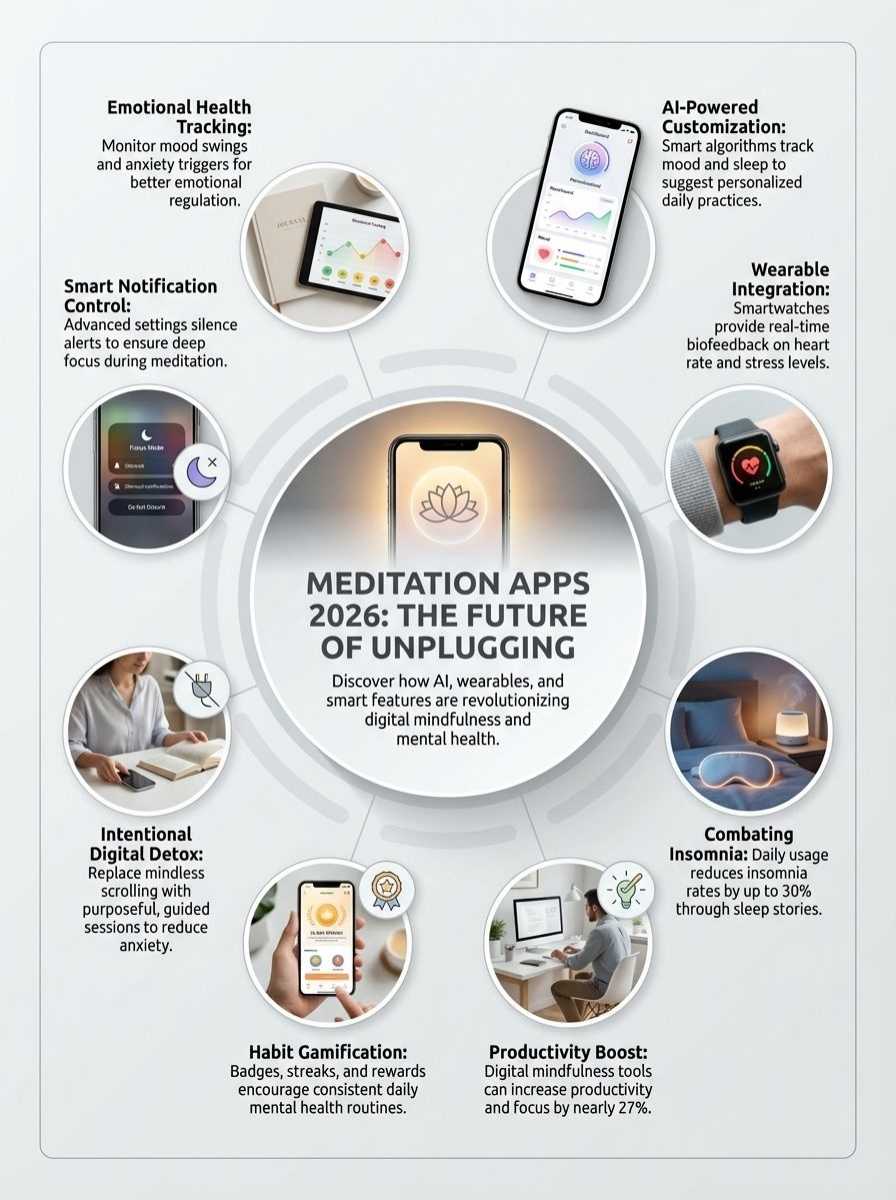
Beyond just relaxing, these apps are teaching emotional intelligence. New features allow you to log your “State of Mind” (a feature now native to Apple devices) and track emotional trends over time.
This data helps you spot patterns. You might notice that you are consistently anxious on Sunday nights, prompting you to schedule a wind-down routine specifically for that time. It turns vague feelings into actionable insights.
The Contradiction of Unplugging Through Technology
I know what you are thinking. “Isn’t using an app to disconnect a bit… hypocritical?”
It is the elephant in the room. But experts are starting to frame this differently. It is not about “digital detox” anymore; it is about “digital nutrition.”
Exploring the Idea of a Digital Nutrition
Jocelyn Brewer, a cyberpsychology researcher, coined the term “Digital Nutrition” to help us stop demonizing screens and start making better choices. Think of it like food.
Scrolling Instagram for an hour is like eating a bag of candy—it feels good for a second but leaves you feeling gross. Using a meditation app for ten minutes is like taking a vitamin. It is still technology, but it nourishes you.
| Digital Candy (Depleting) | Digital Vitamins (Nourishing) |
|---|---|
| Doom scrolling news feeds | Guided breathing exercises |
| Comparing yourself on social media | Listening to a Sleep Story |
| Checking email in bed | Logging your mood/gratitude |
Assessing the Impact of Apps on Digital Distractions
The risk is real, though. If you pick up your phone to meditate but see a text message, you are lost.
This is why the best apps now integrate with system-level tools. On an iPhone, for example, opening a meditation app can automatically trigger a “Focus Mode” that silences all other notifications. This creates a walled garden for your mind, ensuring that your ten minutes of peace don’t turn into thirty minutes of responding to emails.
Technological Advances in Meditation Apps for 2026
If you haven’t updated your apps lately, you are missing out on some sci-fi level features.
AI-Enhanced Personalized Meditation Solutions
Artificial Intelligence has moved beyond just writing chat responses. In 2026, apps like Headspace are rolling out AI companions (often called “Ebb” or similar names in testing) that can chat with you about how you are feeling.
Instead of searching for “anxiety meditation,” you can type, “I’m feeling overwhelmed about a presentation tomorrow.” The AI will then build a custom session for you, combining a short breathwork exercise with a confidence-boosting visualization. It feels much more like having a personal coach in your pocket.
Integration with Wearable Technology
Your body knows you are stressed before your mind does, and your tech is finally catching up.
The Oura Ring now integrates directly with apps like Headspace and Strava. If your ring detects that you had a terrible night’s sleep, the Oura app will recommend a specific “Rest and Restore” meditation for the morning rather than a high-energy workout.
Similarly, the Apple Watch uses its “State of Mind” logging to correlate your physical health with your mental health, showing you exactly how a stressful meeting spiked your heart rate and offering a quick fix.
Applying Gamification to Encourage Regular Use
Let’s be honest: meditation can be boring. That is why apps are borrowing tricks from video games.
- Streaks: Seeing that you have meditated for 45 days in a row is a powerful motivator not to skip today.
- Group Challenges: You can now join “Mindful Minutes” challenges with friends, seeing who can log the most quiet time.
- Badges and Milestones: Apps like Insight Timer award stars for hitting different milestones, which gives a nice hit of dopamine for doing something healthy.
Assessing the Need for Technology in Unplugging
Do you need a $1,000 phone to close your eyes and breathe? Absolutely not.
Exploring the Need for Balance in a Tech-Heavy Lifestyle
For many of us, silence is intimidating. We are so used to constant input that sitting alone with our thoughts feels scary.
This is where the apps bridge the gap. They act as “training wheels” for mindfulness. They provide the structure and the voice that keeps you from getting distracted by your grocery list. Once you learn the techniques, you can use them anywhere, anytime, without the phone.
Considering Mindfulness Practices Without Digital Aid
There is still immense value in analog mindfulness. I always recommend trying “The 5-4-3-2-1 Technique” when you are out and about.
Name 5 things you see, 4 you can touch, 3 you hear, 2 you can smell, and 1 you can taste. It grounds you instantly, costs zero dollars, and requires zero battery life.
Mindful Usage of Meditation Apps
If you are going to use these tools, you need to use them on your own terms. Here is how to keep the app from becoming the master.
Managing App Notifications Effectively
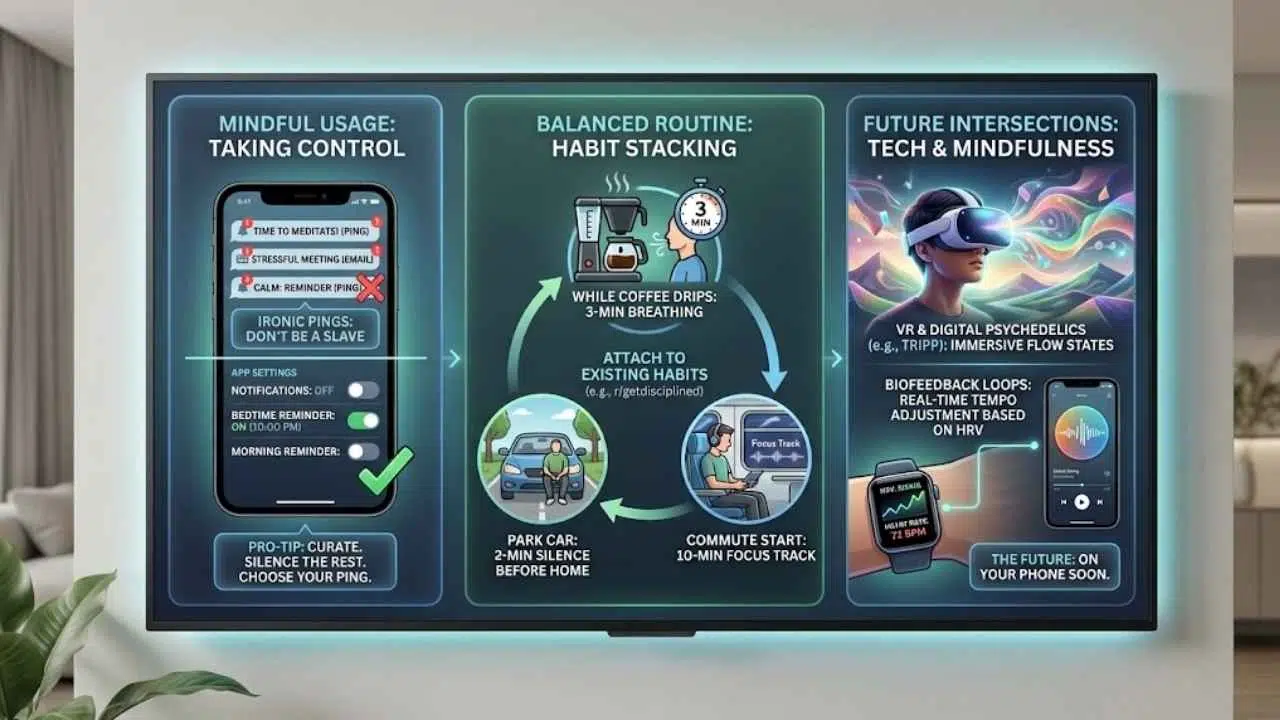
The irony of a meditation app sending you a “Time to Meditate!” ping while you are in a stressful meeting is not lost on me. You have to curate this.
Pro-Tip: Go into your settings and turn off all notifications except for one. Keep only the “Bedtime” reminder if you struggle with sleep, or the “Morning” reminder if you want to start the day right. Silence the rest. You want to open the app because you chose to, not because it yelled at you.
Integrating Apps into a Balanced Daily Routine
The most successful users I know practice “Habit Stacking.” This is a concept often discussed in productivity forums like Reddit’s r/getdisciplined.
You attach your meditation to an existing habit. For example:
- Coffee Brewing: “While the coffee drips (3 minutes), I will do one breathing exercise.”
- Commute: “As soon as I sit on the train, I will put on my noise-canceling headphones and do a ten-minute focus track.”
- Parking: “When I park the car at home, I will stay in the seat for two minutes of silence before going inside to the family.”
The Intersection of Meditation and Future Technologies
We are just scratching the surface of what is coming.
Trends Influencing Future Meditation Apps
Virtual Reality (VR) is the next frontier. Apps like Tripp on the Meta Quest and Apple Vision Pro are creating “digital psychedelics”—immersive visual journeys that guide you into deep states of flow without any substances.
Technology’s Role in Enhancing Mindfulness Practices
We will likely see more “biofeedback” loops. Imagine an app that changes the music tempo in real-time based on your heart rate variability (HRV), slowing down the beat as your body relaxes.
This isn’t science fiction; it is already happening in high-end performance labs and will be on your phone soon.
Final Thoughts
Meditation apps in 2026 have grown smarter, easier to use, and more supportive for anyone hoping to find calm. These digital tools offer simple ways to reduce stress, sleep better, focus sharper, and bring peace back into busy days. But remember, they are just tools. The goal isn’t to get better at using the app; the goal is to get better at living your life.
Why not try just one small step today? Download a free option like Insight Timer, turn off your notifications, and give yourself five minutes of quiet. You might be surprised at how much difference it makes.