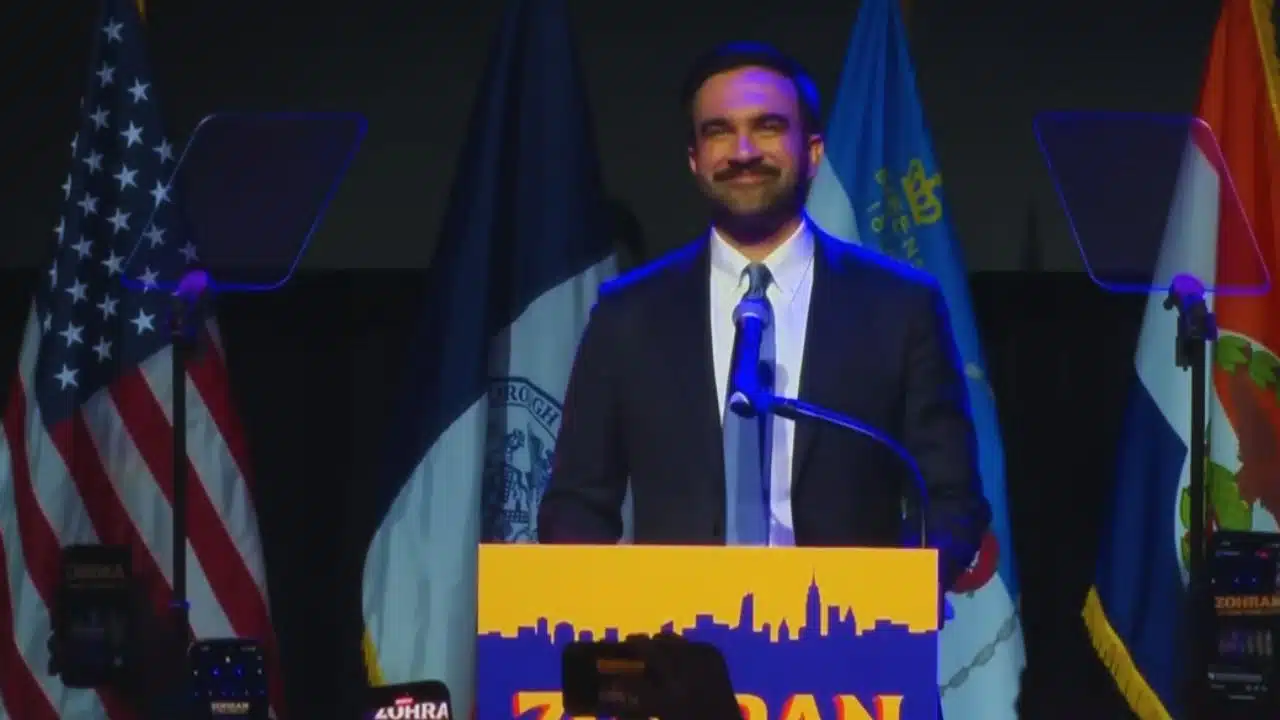
In a historic moment for New York City, Mamdani has been elected as its first Muslim mayor. His election comes at a time of heightened tensions between Jewish and Muslim communities in the city.
New York, which is home to a large Jewish population—over 1.5 million people—has had a complex relationship with Muslims, especially following the September 11, 2001 terrorist attacks, which were carried out by an Islamic extremist group. The rise of Mamdani, however, has sparked both excitement and concern, reflecting the city’s ongoing challenges around identity, religion, and political power.
Mamdani’s Journey and Embracing Identity
Mamdani, born in Uganda and with roots in India, has always been open about his Muslim identity. In high school, he embraced his heritage by wearing a hat that combined his birthplace and his parents’ homeland, labeled “Ugindia.” His student campaign slogan, “What Can Brown Do For You?” reflected his determination to represent diversity and inclusion, qualities that have defined his political career.
Throughout his campaign for mayor, Mamdani leveraged his Muslim identity as a strength, visiting more than 50 mosques across the city. His actions stand in stark contrast to previous political figures, such as former New York Governor Andrew Cuomo, who only visited a mosque for the first time in September of the previous year.
Tensions Within a Divided City
While Mamdani’s rise to power symbolizes progress for many, it also stirs tensions within a city where Jewish and Muslim communities have had a fraught history. Mamdani’s vocal criticism of Israel, especially during the 2012 Gaza conflict, where he described Israel’s actions as a “massacre,” has led to backlash from Jewish leaders and communities. His controversial stance continued when he declared that, if elected mayor, he would order the arrest of Israeli Prime Minister Benjamin Netanyahu should he visit New York. Such statements have added to fears that Mamdani’s leadership could exacerbate existing divides between these communities.
Potential Conflicts Over City’s Pension Fund
One of the key areas where Mamdani’s policies may spark conflict is New York City’s public employee pension fund, worth around $300 billion. This fund currently includes investments in Israeli businesses and real estate, a practice Mamdani could challenge if he opposes such investments. His stance on this issue could fuel further internal conflicts within the city’s government, particularly among elected officials who support the fund’s current investments.
A Divisive Path
As New York’s first Muslim mayor, Mamdani’s victory marks a milestone in the city’s political evolution. However, his election comes with deep political and cultural challenges. With rising tensions between Jewish and Muslim communities, Mamdani will need to navigate these complex dynamics carefully, seeking to balance his commitment to social justice with the need for unity in a divided city.