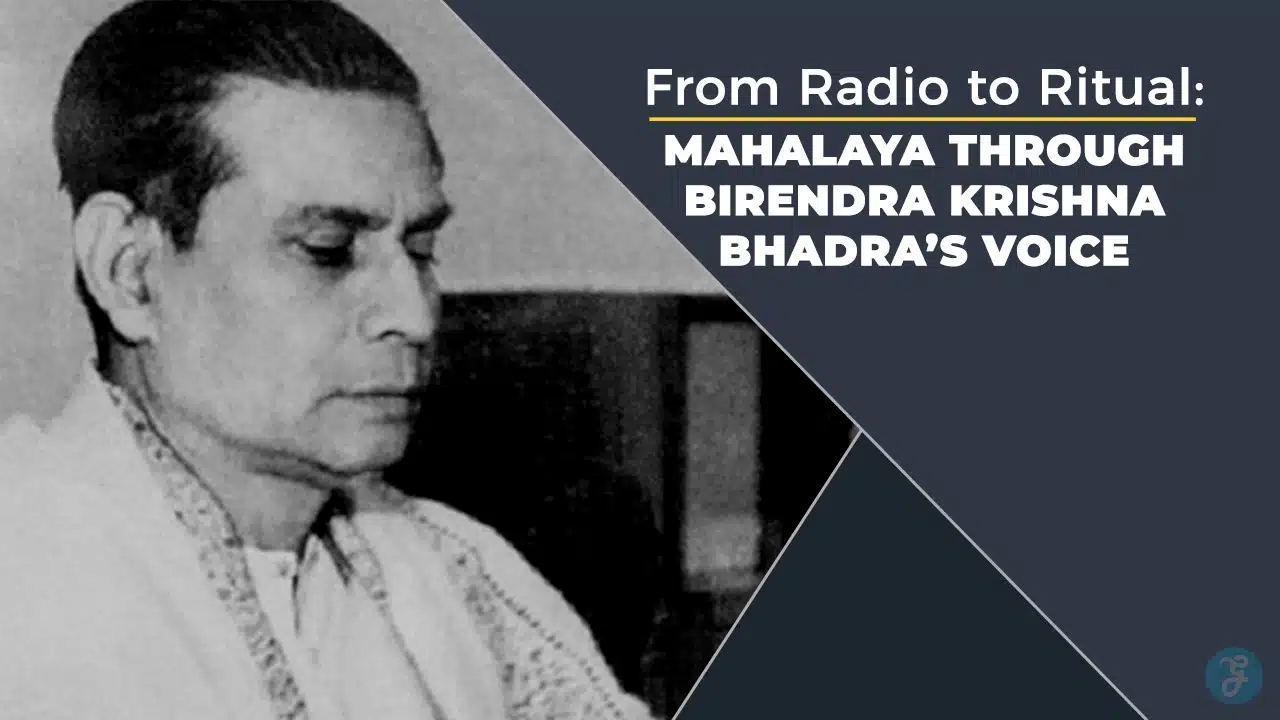
Mahalaya is the dawn that opens the doors to Durga Puja. It is simple and powerful. A quiet house. A lamp. A conch. And a voice that feels like home. For millions, that voice is Birendra Krishna Bhadra, whose narration of All India Radio’s pre-dawn program “Mahisasuramardini” turned listening into a living ritual.
This long-form guide explains Mahalaya in plain language. It gives you dates, facts, checklists, and context. It shows how a 1931 radio program became a cultural ceremony. It also compiles current, real-time details from reliable search results—so you can plan this year with confidence. Citations are included, and you’ll find quick tables under each section for easy reference.
What Is Mahalaya? (Meaning, Date & Rituals)
Mahalaya marks the end of Pitru Paksha (a period to honor ancestors) and the beginning of Devi Paksha (the fortnight of the Goddess). In 2025 (India), Mahalaya Amavasya—also called Sarva Pitru Amavasya—falls on Sunday, 21 September 2025. Many families wake before dawn and listen to the classic radio montage “Mahisasuramardini” at 4:00 a.m. This time is so common that many media and cultural sources refer to 4 a.m. as “the Mahalaya hour.”
At a glance: Mahalaya 2025 (India)
| Item | Key info |
| Observance name | Mahalaya Amavasya / Sarva Pitru Amavasya |
| 2025 India date | Sunday, 21 September 2025 |
| Traditional listening time | ~4:00 a.m. local (AIR Kolkata tradition) |
| What it marks | End of Pitru Paksha, start of Devi Paksha |
| Links with Durga Puja | Cultural and devotional “opening chord” before Puja week |
| Typical practices | Early bath, diya, quiet listening to Mahisasuramardini, optional tarpan (ancestral rites) |
Diaspora note: If you live outside India, match the 4 a.m. idea to your time zone—or choose a community replay later in the day.
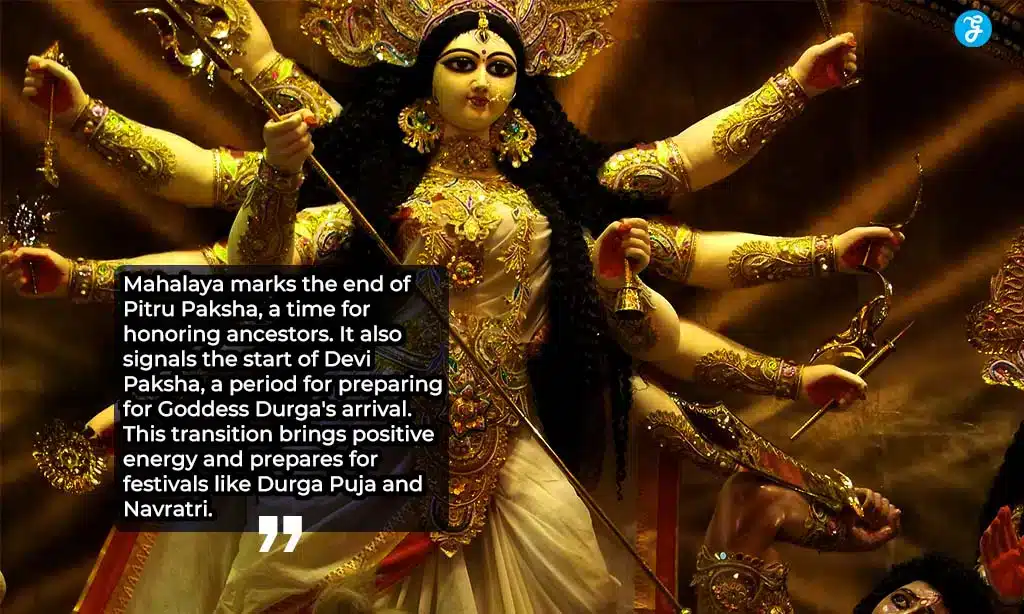
Mahalaya sits on the Amavasya (new moon) that closes Pitru Paksha. Many national outlets, panchang pages, and calendar explainers list 21 September 2025 for Sarva Pitru Amavasya. Shardiya Navratri 2025 then begins the next day, 22 September, in most widely followed panchang summaries; the festival period concludes on 2 October 2025 (Vijayadashami/Dussehra). As always, small regional variations can occur, but the broad, public dates align around these markers this year.
At a glance: the 2025 festival arc (India)
How Families Observe Mahalaya
Most homes keep it gentle. Rise early. Bathe. Clean a small prayer corner. Light a diya. Keep the volume clear but not loud. Play the program on time. Some families add tarpan by a river or at home, guided by their elders or priest.
Mahalaya morning checklist
| Step | What to prepare | Why it helps |
| Night-before | Alarm set; stream/radio bookmarked; devices charged | Avoids last-minute stress |
| Space | Clean surface; diya, matches, incense; flowers | Sets a calm tone |
| Audio | Radio or trusted stream; speaker or headphones | Fewer glitches; clear sound |
| During | Minimal chatter; follow the flow | Keeps the ritual feeling |
| After | Simple prasad; call elders; note a memory | Builds family tradition |
The Story Behind “Mahisasuramardini” (1931 → Today)
“Mahisasuramardini” is All India Radio’s famous pre-dawn broadcast for Mahalaya. It premiered in 1931 and blends Sanskrit verses from the Chandi (Durga Saptashati), Bengali devotional songs, orchestral passages, and narration. Credits are widely recorded as script by Bani Kumar, music by Pankaj Mullick, and the signature narration by Birendra Krishna Bhadra. The runtime is about 1 hour 29 minutes. The show originated on AIR Calcutta (now Kolkata) and later aired across many AIR stations because of its popularity.
At a glance: the program
| Detail | Facts |
| First aired | 1931, All India Radio (AIR) Kolkata |
| Core contributors | Bani Kumar (script), Pankaj Mullick (music), B.K. Bhadra (narration/recitation) |
| Languages | Bengali and Sanskrit |
| Format | Audio montage: Chandi verses + songs + orchestration |
| Runtime | ~89 minutes |
| Legacy | Annual pre-dawn tradition on Mahalaya in Bengal and beyond |
Birendra Krishna Bhadra: The Voice That Became a Ritual
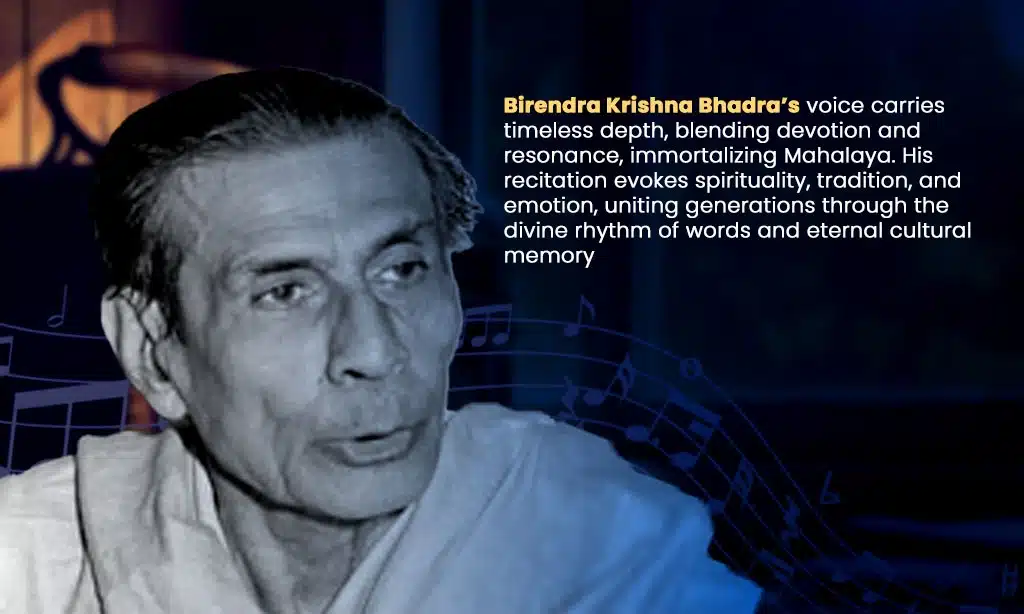
Birendra Krishna Bhadra (1905–1991) was a broadcaster, playwright, actor, and theatre director from Kolkata. He worked at All India Radio in the 1930s and helped shape early radio theatre. His measured cadence, careful pronunciation, and deep tone made the Chandi Path feel both intimate and immense. Over time, his voice became inseparable from Mahalaya—a sonic icon of the festival dawn.
At a glance: Bhadra’s legacy
| Topic | Highlights |
| Profession | Broadcaster, playwright, actor, theatre director |
| AIR era | Active from the early 1930s in Kolkata |
| Mahalaya role | Narrator of “Mahisasuramardini”; the definitive voice of the ritual |
| Cultural impact | A yearly anchor for memory, devotion, and identity |
Birendra Krishna Bhadra: The Voice That Turned Mahalaya Into Ritual
For millions, the dawn of Mahalaya is not only a date. It is a voice. A low, steady, careful voice that calls the Goddess at daybreak. That voice belongs to Birendra Krishna Bhadra. He was a broadcaster, playwright, actor, and director from Kolkata. But above all, he is the narrator who made “Mahisasuramardini” a living tradition. His cadence, his pause, his precise Bengali and Sanskrit created a sound that people wait for all year.
| Topic | Key facts |
| Full name | Birendra Krishna Bhadra (1905–1991) |
| Known for | Narration/recitation of “Mahisasuramardini” (AIR, first aired 1931) |
| Professions | Broadcaster, playwright, actor, theatre director |
| Cultural legacy | His recorded narration is still the heart of Mahalaya listening |
| Recent recognition | 2025 Kolkata puja theme honoring Bhadra’s 120th birth anniversary |
The Collaborators: Names That Shaped the Classic
Bhadra’s genius sat within a team. The script came from Bani Kumar (Baidyanath Bhattacharya). The music came from Pankaj Mullick. Organizers and contributors included Nripendra Krishna Mukhopadhyay, Raichand Boral, Premankur Aatorthi, and a generation of celebrated singers who made the montage unforgettable.
At a glance: key contributors
| Role | Name(s) |
| Script | Bani Kumar |
| Music | Pankaj Mullick |
| Organization | N.K. Mukhopadhyay, Raichand Boral, Premankur Aatorthi |
| Iconic singers (selection) | Dwijen Mukhopadhyay, Pratima Bandopadhyay, Manabendra Mukhopadhyay, Sandhya Mukhopadhyay, Utpala Sen, Supriti Ghosh, Shyamal Mitra, Haimanti Shukla, Arati Mukhopadhyay, Tarun Bandopadhyay, and others |
The 1976 Revamp: When Replacement Failed
In 1976, All India Radio tried a revamp called “Durga Durgatiharini”, narrated by film legend Uttam Kumar with music by Hemant Kumar. The change was rejected by listeners. The backlash was strong; AIR soon restored the original Bhadra-led program and even issued a public apology, according to multiple histories. The episode shows how deep the audience’s bond is with Bhadra’s cadence and the classic format.
At a glance: 1976 lesson
| Year | What AIR changed | How people reacted | Outcome |
| 1976 | New program Durga Durgatiharini; narrator Uttam Kumar; music Hemant Kumar | Strong rejection | Classic Bhadra program restored; legacy reaffirmed |
From Radio to Ritual: Why Listening Became Ceremony
Why did a broadcast become a ritual? Four simple reasons:
- Time: Pre-dawn is quiet. Minds are steady. The first light is gentle.
- Repetition: The same program, order, and voice—every year—creates memory.
- Community: Families and neighbors listen together.
- Meaning: The content invokes the Goddess and speaks of courage and grace.
At a glance: the ritual logic
| Factor | What it does |
| 4 a.m. timing | Builds a strong emotional imprint; feels sacred |
| Familiar cadence | Triggers nostalgia and calm |
| Family listening | Passes meaning from elders to children |
| Sacred story | Links courage, protection, and hope to daily life |
What You Hear: The Program’s Flow
“Mahisasuramardini” moves like a tide: a call to dawn, invocations, devotional songs, the climactic battle passages, and a peaceful close. AIR has played archived cuts over the years (including 1962-era recordings, referenced in cultural write-ups and program notes). The pattern remains recognizably the same, which is why it triggers such deep memory.
At a glance: the soundscape
| Segment | Feel | Note |
| Opening conch & chorus | Awakening | A sonic “sunrise” |
| Chandi verses | Measured, dignified | Sanskrit recitation with dramatic pauses |
| Devotional songs | Melodic, choral | Bengali bhajans guide the mood |
| Battle passages | Brisk, stirring | Musical rise to climax |
| Benediction | Calm, protective | A gentle landing for the mind |
Mahalaya in the Digital Age: Where to Listen Now
You can still tune in live on All India Radio. Many AIR stations stream through the official app or via regional stations’ online pages. Around Mahalaya, Indian media and community pages also share authorized links or refer to trusted channels hosting the full broadcast at the correct time. Bookmark your stream the night before, and test it.
At a glance: listening options
| Option | How to use it | Tips |
| AIR radio | Local MW/FM frequencies (e.g., AIR Kolkata 657 MW) | Check station schedules a day prior |
| AIR online/app | Use official app/portal or station pages | Test audio; have a backup device |
| Video platforms | Search for authorized full-length versions | Bookmark; verify upload credibility |
| Community events | Cultural halls, clubs, temples | Join pre-dawn or planned replays |
Emotional Resonance: Why the Voice Still Echoes
Some sounds become part of family life. Bhadra’s narration reminds many people of childhood kitchens, soft light, and the rustle of elders’ saris. Psychology tells us that repeated cues at the same time in the same context form strong memory links. Add sacred meaning, and the bond grows even deeper. That is why this single voice, heard once a year, can move entire communities.
At a glance: sound & memory
| Cue | Impact |
| Same hour, same month | Reinforces ritual memory |
| Same narrator | Sparks nostalgia and calm |
| Shared listening | Links sound to love and safety |
| Sacred text | Adds purpose and reverence |
Beyond Bengal: Global Mahalaya
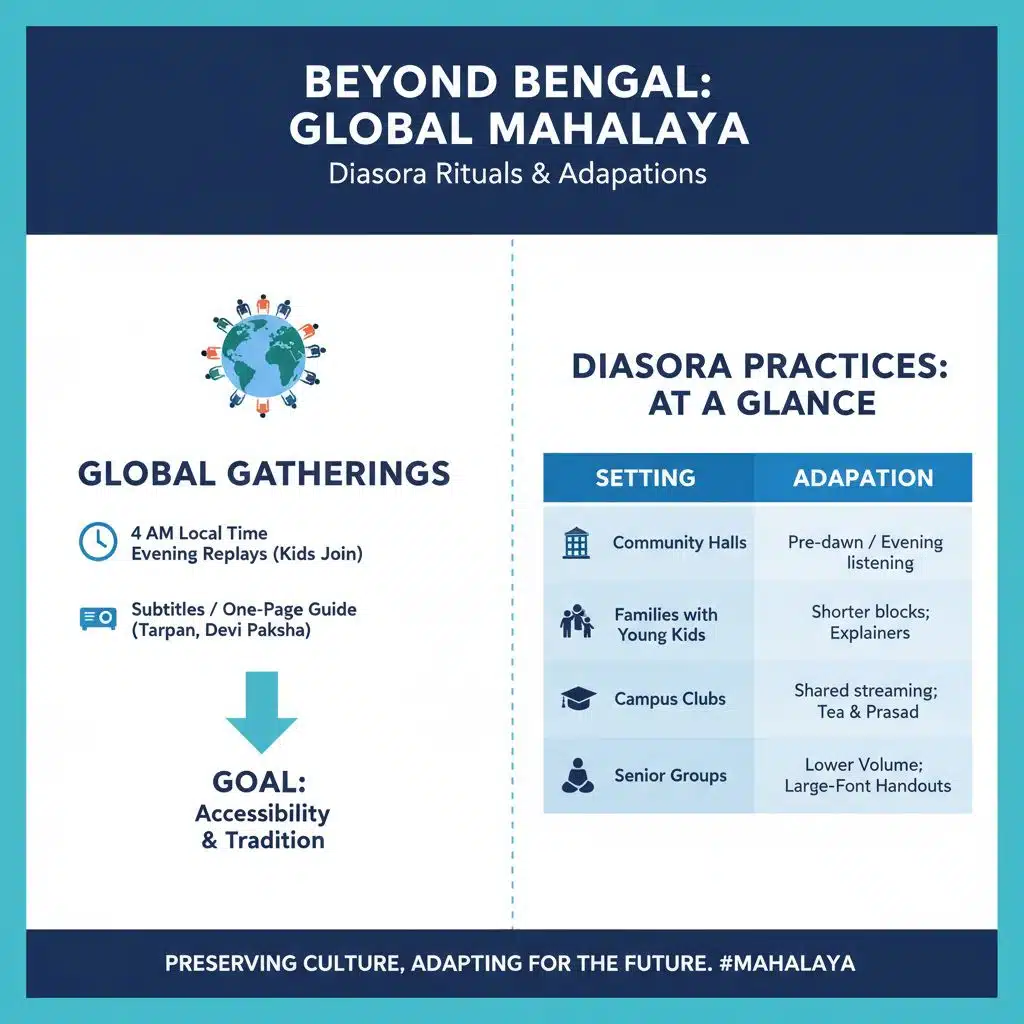
Bengali communities worldwide host Mahalaya gatherings. Some meet at 4 a.m. local time. Others schedule evening replays so children can join. Many groups add subtitles on a projector or distribute a one-page guide explaining key terms like tarpan and Devi Paksha. The goal is simple: keep the ritual accessible and pass it on.
At a glance: diaspora practices
| Setting | Adaptation |
| Community halls | Pre-dawn listening or evening replays |
| Families with young kids | Shorter listening blocks; explainers |
| Campus clubs | Shared streaming rooms; tea and prasad |
| Senior groups | Lower volume; printed large-font handouts |
Authenticity vs. Innovation: A Friendly Debate
Should we modernize the show or keep it exactly as is?
- Authenticity: People cherish the original—Bhadra’s voice, script flow, and musical cues.
- Innovation: Better audio quality, clear captions, and translations help new listeners and children.
- Balanced approach: Preserve the classic program, but improve access with legal streams, subtitles, and good sound.
The 1976 episode proves the point: you can change many things, but not the heart of the ritual.
At a glance: what audiences want
| Need | Why it matters |
| The classic narration | Feels like “coming home” |
| Legal, stable streams | Easier entry for global audiences |
| Clearer audio | Helps elders and kids alike |
| Optional subtitles | Welcomes non-Bengali listeners |
Quick History Nuggets
- The program’s popularity spread beyond Bengal; many AIR stations now carry it.
- Cultural writers note that AIR has broadcast archived recordings (e.g., 1962 cut) in recent years, preserving the exact “feel” many grew up with.
- Media pieces and cultural blogs retell the 1976 revamp story and its swift reversal—now oral history in many households.
At a glance: mini-timeline
| Year | Event |
| 1931 | First known broadcast of “Mahisasuramardini” on AIR Kolkata |
| 1960s | Classic recordings (e.g., 1962) later used as archives |
| 1976 | Revamp “Durga Durgatiharini”; audience rejects it; AIR restores Bhadra program |
| Today | Radio + online streams; tradition continues worldwide |
The Craft of Bhadra’s Voice: How He Reads, Why It Works
Listeners often say “the voice feels like home.” There are reasons:
- Tempo: Bhadra speaks slowly, with a steady beat.
- Diction: His Bengali and Sanskrit are crisp; every consonant lands.
- Pauses: He lets silence breathe, which creates awe.
- Dynamic range: He rises at climactic moments, then settles into calm.
The method is simple, but the effect is strong: the brain links the same voice, same hour, same story to a feeling of safety and devotion. Cultural reporters and personal essays continue to describe Bhadra’s tone as “sonorous,” “anchoring,” and “inseparable from Mahalaya.”
At a glance: technique and impact
| Aspect | What Bhadra does | Result for listeners |
| Pace | Slow, measured, deliberate | Space for meaning; calm focus |
| Enunciation | Clear vowels/consonants | Easy to follow chants |
| Pauses | Intentional silence | Builds awe; marks transitions |
| Climaxes | Controlled rise | Emotional lift without strain |
The Eternal Dawn
At 4 a.m., a home becomes a temple. A conch sounds. A diya glows. And a voice recorded decades ago wakes the present. This is why Mahalaya endures. It is not only a date on the almanac. It is a shared ritual—moving from wooden radio sets to phone screens—without losing its soul.
Mahalaya invites us to begin again: to honor our ancestors, welcome courage, and carry the light into Durga Puja. Whether you are in Kolkata or across an ocean, the ritual is within reach. Set your alarm. Save your stream. And let the dawn arrive with music and grace.