
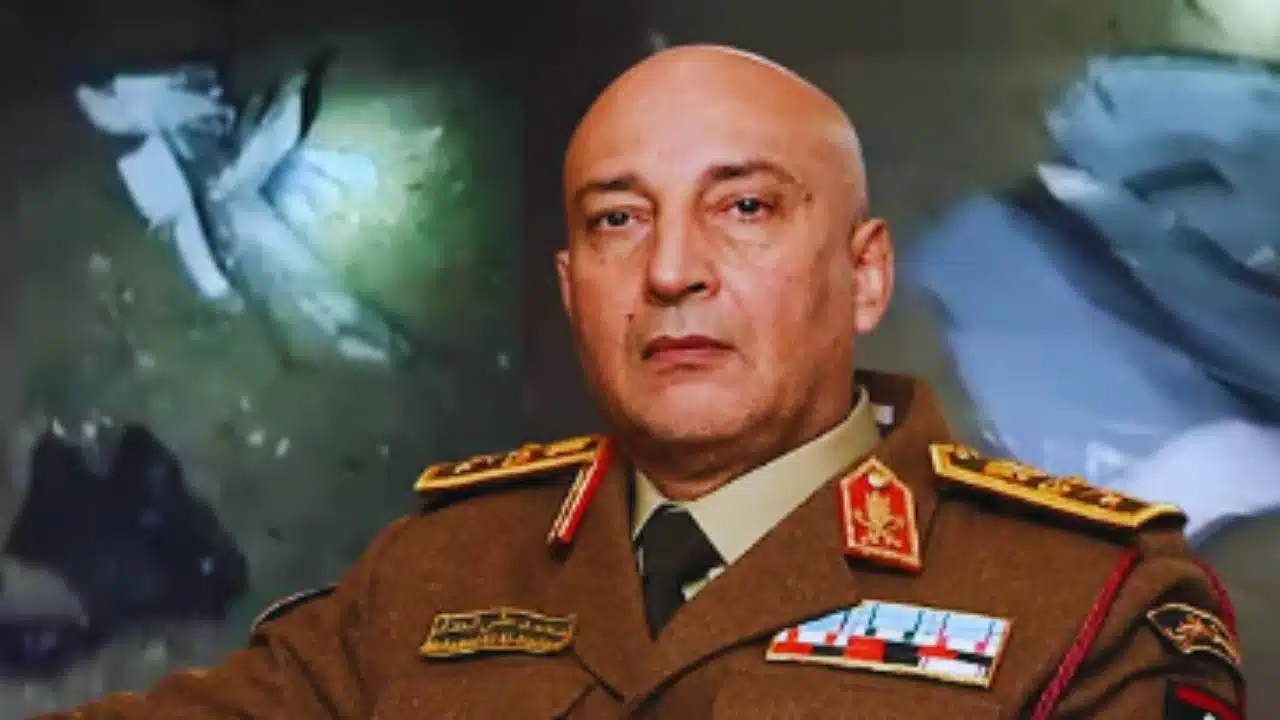
Libya’s army chief of staff, Mohammed Ali Ahmed Al-Haddad, and four other officials died after a business jet crashed near Ankara, Turkey, shortly after takeoff for Tripoli; Turkish authorities launched an investigation as Libya declared three days of national mourning.
What happened: Flight lost contact after takeoff from Ankara
A Dassault Falcon 50-type jet departed Ankara’s Esenboğa Airport on Tuesday for Libya’s capital, Tripoli. Turkey’s interior minister said the aircraft took off at 17:10 GMT and radio contact was lost at 17:52 GMT, after the crew requested an emergency landing while the jet was over the Haymana area southwest of Ankara. Turkish teams later located the wreckage near Kesikkavak village in Ankara’s Haymana district.
The cause of the crash was not immediately announced. Turkey’s justice minister said an investigation was underway, while Libyan officials said they were sending an official delegation to Ankara to follow procedures and coordinate with Turkish authorities.
Who was on board: Five Libyan officials reported among the dead
Libya’s Tripoli-based Government of National Unity (GNU) said the victims included:
- Mohammed Ali Ahmed Al-Haddad, chief of staff of Libya’s armed forces aligned with the GNU
- Commander of Libya’s ground forces
- Director of the military manufacturing authority
- An adviser to the chief of staff
- A photographer from the chief of staff’s office
Some reporting also indicated additional crew members may have been on the aircraft, but official public statements highlighted the five Libyan passengers.
Timeline of the incident
| Key moment | What was reported | Where |
| Departure | Jet took off about 17:10 GMT bound for Tripoli | Ankara Esenboğa Airport |
| Emergency request | Aircraft requested an emergency landing while over Haymana | Ankara province |
| Contact lost | Radio contact lost about 17:52 GMT | En route |
| Wreckage found | Authorities found wreckage near Kesikkavak | Haymana district |
(Details reported by Turkish and Libyan officials.)
Libya reacts: Mourning declared and delegation sent to Ankara
Libyan Prime Minister Abdulhamid Dbeibah called the crash a “tragic and painful” loss for Libya, the military institution, and the public, and announced three days of official mourning nationwide.
The GNU also said the prime minister instructed the defence minister to dispatch an official team to Turkey to follow the investigation and administrative steps related to the crash and victims’ repatriation.
The aircraft: Officials said it was a leased Maltese jet
A Libyan state minister said the Falcon 50 was a leased aircraft registered through Malta, adding that Libyan officials did not yet have complete details about ownership or technical history and that these issues would be examined as part of the investigation.
What investigators will likely examine
While Turkish prosecutors and aviation authorities lead the investigation, crashes of business jets typically prompt scrutiny of several areas:
Aircraft and maintenance records
Investigators commonly review airworthiness documentation, recent inspections, deferred maintenance items, and any prior technical defects—especially when an emergency landing is requested soon after departure.
Communications and flight data
Authorities will assess air traffic control communications, radar traces, and any available flight data/voice recordings. Even if a jet is not required to carry the same equipment as large commercial aircraft, investigators often recover onboard avionics and data sources where possible.
Weather and operational factors
Officials will also check local weather conditions, visibility, winds, and any warnings or anomalies around the time contact was lost. (No official cause has been released so far.)
Why this matters: Libya’s military-unification effort faces a setback
Al-Haddad was one of the senior commanders linked to efforts to build and unify security institutions in western Libya during years of political division. He was appointed chief of staff in 2020 during the previous Tripoli-based administration and remained a prominent military figure in the west.
His death is likely to complicate the already sensitive balance among Libya’s competing armed formations and political centers, especially as the country continues to struggle with fragmented security chains of command and overlapping institutions.
Turkey–Libya military ties: Cooperation and a shifting diplomatic approach
Al-Haddad’s trip to Ankara followed continuing defence engagement between Turkey and the Tripoli-based authorities. Turkey has supported the U.N.-recognized administration in Tripoli with training and other assistance since 2020 and has also pursued agreements with Tripoli on maritime boundaries and energy cooperation—moves disputed by regional actors.
In recent years, Ankara has also expanded contacts with Libya’s eastern-based leadership under a “One Libya” approach, seeking working relationships across Libya’s political divide.
Key people and institutions mentioned
| Person/Body | Role | Connection to the crash |
| Abdulhamid Dbeibah | Libya’s GNU prime minister | Announced deaths, mourning, delegation to Ankara |
| Ali Yerlikaya | Turkey’s interior minister | Provided timeline of takeoff, lost contact, wreckage location |
| Yilmaz Tunç | Turkey’s justice minister | Said investigation opened |
| GNU (Tripoli-based) | Libya’s internationally recognized government | Issued mourning measures and coordination steps |
(As stated by official announcements and public statements.)
What to watch next
Investigators in Turkey are expected to release preliminary findings after on-site recovery work, while Libyan officials work to confirm technical details about the aircraft’s leasing and maintenance background. In Libya, attention will likely turn to who fills the leadership gap and how the GNU manages continuity in military command during a politically fragile period.