Suffering a personal injury can be a life-altering experience, affecting not only your physical health but also your emotional well-being and financial stability. Whether you’ve been injured in a car accident, workplace mishap, medical negligence, or public liability incident, knowing your rights can make a significant difference in securing fair compensation and proper medical care.
Unfortunately, many victims are unaware of the full scope of their legal entitlements, making them vulnerable to lowball settlements, delayed compensation, or claim rejections.
This guide provides an in-depth look at the eight key legal rights every personal injury victim in Australia should know. We will explore the nuances of each right, offer practical examples, and present relevant data to help you make informed decisions when dealing with insurers, legal representatives, and compensation claims.
Understanding Personal Injury Law in Australia

Personal injury law in Australia is designed to protect individuals who suffer harm due to someone else’s negligence. The legal framework varies across states, but the core principles remain consistent in providing compensation and legal recourse for victims.
Common Types of Personal Injury Cases in Australia
- Motor vehicle accidents: Includes car, motorcycle, bicycle, and pedestrian-related injuries.
- Workplace injuries: Covers workers’ compensation claims for job-related accidents.
- Medical negligence: Arises from misdiagnosis, surgical errors, or inadequate treatment.
- Public liability claims: Involves injuries sustained in public places, businesses, or rental properties.
- Product liability cases: Concerns injuries caused by defective or hazardous products.
How Australian Law Protects Personal Injury Victims
| Protection Measure | Description |
| Compensation Schemes | Some states have no-fault compensation schemes for specific injury types. |
| Strict Time Limits | Claims must be lodged within the statutory period to remain valid. |
| Legal Aid & Advocacy | Free legal assistance is available for eligible individuals. |
Understanding these aspects ensures that personal injury victims in Australia take the right legal steps toward securing justice.
8 Essential Legal Rights Every Personal Injury Victim Should Know
Suffering a personal injury can be a life-altering experience, bringing not only physical pain but also emotional distress and financial burdens. Medical expenses, rehabilitation costs, lost wages, and the emotional toll of the incident can create significant stress for both the victim and their family.
However, understanding your legal rights is the first step toward reclaiming control over your situation and ensuring you receive the justice and compensation you deserve.
1. Right to Seek Compensation
Every personal injury victim in Australia has the legal right to seek compensation for the financial and personal impact of their injury. Compensation is not limited to immediate medical costs; it can also cover long-term care, emotional trauma, and lost earning capacity.
The process of claiming compensation can differ based on the injury type, the responsible party, and the applicable laws in your state.
Types of Compensation Available
| Type of Compensation | Coverage Details |
| Economic Damages | Medical bills, lost wages, rehabilitation expenses, property damage. |
| Non-Economic Damages | Pain and suffering, emotional distress, loss of enjoyment of life. |
| Future Losses | Reduced earning capacity, ongoing medical treatments, long-term care. |
| Special Damages | Home modifications, assistive devices, therapy costs. |
Example Case:
James, a factory worker in Sydney, suffered a severe spinal injury due to faulty equipment. He successfully claimed workers’ compensation, covering his medical bills, lost wages, and ongoing rehabilitation therapy.
2. Right to Legal Representation
Navigating the complexities of a personal injury claim without legal representation can lead to delays, unfair settlements, or rejected claims. Insurance companies often employ tactics to minimize payouts, and without expert knowledge of legal procedures, victims may struggle to counter these strategies effectively.
Seeking professional legal help ensures that your rights are protected, and you receive the maximum compensation you deserve. A skilled personal injury lawyer can assess your case, gather compelling evidence, and negotiate on your behalf to achieve a fair settlement.
Additionally, legal professionals are adept at handling procedural complexities, such as filing claims within statutory deadlines, representing clients in dispute resolution, and taking cases to court if necessary. Without legal representation, victims risk missing out on significant compensation for medical expenses, lost income, and long-term suffering.
Having a lawyer not only strengthens your case but also provides peace of mind, allowing you to focus on recovery rather than legal battles.
Benefits of Hiring a Personal Injury Lawyer
| Benefit | Explanation |
| Case Evaluation | Lawyers assess claim strength and potential compensation. |
| Legal Paperwork | Handles complex documentation and deadlines. |
| Negotiation Power | Experienced in dealing with insurance companies to secure better settlements. |
| No Win, No Fee | Many lawyers only charge if the case is successful. |
Example Case:
Sarah, a pedestrian hit by a reckless driver in Melbourne, initially received a low settlement offer. After hiring a lawyer, her compensation increased by 40% due to better negotiation tactics.
3. Right to Medical Treatment & Rehabilitation
Receiving timely and adequate medical treatment is a fundamental right for any personal injury victim in Australia. Access to immediate medical care not only ensures a quicker recovery but also strengthens the validity of compensation claims.
Delayed treatment can lead to complications, prolonged suffering, and reduced chances of obtaining fair compensation, as insurance companies may argue that injuries were not serious if medical attention was not sought promptly.
Personal injury victims should be aware of the different medical coverage options available to them and take the necessary steps to receive appropriate care. Seeking specialist opinions, undergoing diagnostic tests, and following prescribed rehabilitation programs can significantly impact the outcome of a claim.
Medical Coverage Options for Personal Injury Victims
| Coverage Type | Details |
| Medicare | Covers emergency medical services and essential treatments for Australian citizens. |
| Private Insurance | Provides additional benefits such as physiotherapy, specialist consultations, and alternative treatments. |
| Workers’ Compensation | Covers workplace injury-related medical expenses and rehabilitation programs. |
| Third-Party Insurance | Applies to victims of motor vehicle accidents, covering hospital bills and therapy sessions. |
| Government Support Schemes | Some states offer additional financial aid for long-term disability or catastrophic injuries. |
4. Right to Lodge a Claim Within the Time Limit
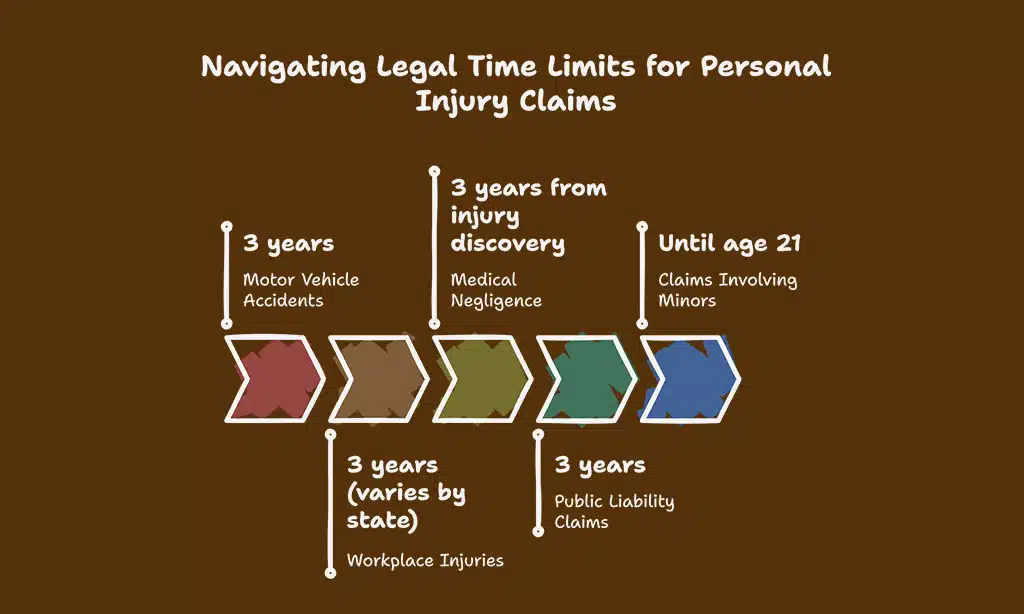
Strict time limits apply to personal injury claims in Australia, and missing deadlines can mean losing the right to compensation. The statute of limitations varies depending on the type of injury and jurisdiction, making it essential for victims to act quickly.
Delays in filing can weaken a case, as evidence may become harder to obtain and witness memories may fade over time. Seeking legal guidance early ensures that all required documentation is prepared and submitted within the allowable period, maximizing the chances of a successful claim.
Additionally, certain exceptions apply, such as cases involving minors or individuals with mental incapacities, which may extend the filing deadline.
Statute of Limitations for Different Cases
| Type of Case | Time Limit | Possible Extensions |
| Motor Vehicle Accidents | 3 years | Possible extension if injuries manifest later |
| Workplace Injuries | 3 years (varies by state) | In some cases, workers may have longer to report conditions like occupational diseases |
| Medical Negligence | 3 years from injury discovery | Can be extended if negligence is discovered late |
| Public Liability Claims | 3 years | Exceptions may apply in cases of serious injury or disability |
| Claims Involving Minors | Until age 21 | Time limit starts when the child turns 18 |
Understanding these deadlines ensures that personal injury victims in Australia take timely action to protect their rights and avoid claim dismissal due to procedural issues.
5. Right to a Fair Settlement
Many insurance companies offer initial settlement amounts that are significantly lower than what victims are entitled to. This is a common strategy used to minimize financial payouts, relying on victims’ urgency to settle quickly.
However, accepting the first offer can lead to significant financial loss, especially if long-term medical care or income loss is involved. Understanding how to negotiate ensures that personal injury victims in Australia do not accept inadequate compensation and maximize their rightful claims.
Common Tactics Used by Insurance Companies to Undervalue Claims
| Tactic | Explanation |
| Quick Lowball Offers | Presenting an initial offer that is much lower than the rightful claim amount. |
| Delaying Payouts | Prolonging the process to pressure victims into settling for less. |
| Disputing Liability | Arguing that the victim was partially or fully at fault. |
| Downplaying Injuries | Claiming that the injury is not as severe as reported. |
| Requesting Excessive Documentation | Asking for unnecessary paperwork to delay settlements. |
Strategies to Maximize Settlement Offers
- Keep detailed medical records and receipts for all treatment expenses.
- Gather witness testimonies and expert medical opinions to support your claim.
- Do not rush to accept early settlement offers, as they are often lower than deserved.
- Consult a legal expert to analyze the offer and determine a fair counteroffer.
- Request a breakdown of the insurance company’s valuation and challenge discrepancies.
Example Case:
Emma, a cyclist in Brisbane, suffered a broken leg after being hit by a negligent driver. The driver’s insurance company initially offered her $15,000. With legal assistance and medical reports proving long-term mobility issues, she successfully negotiated a $60,000 settlement to cover ongoing physiotherapy and lost wages.
Strategies to Maximize Settlement Offers
- Keep detailed medical records and receipts for expenses.
- Gather witness testimonies and expert opinions.
- Do not rush to accept early settlement offers.
- Consult a legal expert to evaluate the offer.
6. Right to Challenge a Denied Claim
If your claim is unfairly denied, you have the legal right to dispute the decision through formal processes. This includes requesting a written explanation for the denial, gathering additional evidence to support your claim, and seeking legal assistance if needed. Many insurance companies and responsible parties initially reject claims to minimize payouts, but persistence and proper legal procedures can overturn unjust decisions.
Understanding the appeals process and your legal rights ensures you are not left without the compensation you deserve. If internal reviews and negotiations fail, you can escalate your dispute to an independent tribunal or take legal action through the courts.
Steps to Challenge a Denied Claim
| Step | Action Required |
| Internal Review | Request a detailed reason for claim rejection. |
| External Mediation | Seek resolution via legal mediation services. |
| Legal Appeal | File a case with relevant tribunals or courts. |
7. Right to Privacy & Confidentiality
Your personal medical records, claim details, and other sensitive information must remain confidential throughout the claims process. Under Australian privacy laws, medical providers, insurance companies, and legal representatives must ensure that your personal data is handled securely and not disclosed without your explicit consent.
Any unauthorized sharing of your information could lead to legal consequences, including fines and penalties for the responsible party.
If you suspect a breach of confidentiality, you have the right to report it to the Office of the Australian Information Commissioner (OAIC) or seek legal advice.
Key Privacy Protections for Personal Injury Victims
| Protection Measure | Description |
| Medical Privacy Laws | Prevents unauthorized sharing of medical history and records. |
| Legal Confidentiality | Lawyers must keep all client communications private. |
| Insurance Data Security | Insurers cannot disclose claim details without permission. |
| Right to Access Records | You can request and review your personal injury records at any time. |
Understanding these privacy protections ensures that personal injury victims in Australia can navigate their claims without the risk of personal data being misused or exploited.
8. Right to a Court Trial (If Necessary)
If settlement negotiations fail, victims can proceed to court for fair judgment, where a judge will review the case, consider all evidence, and determine the appropriate compensation.
The court process may include multiple stages, such as pre-trial mediation, witness testimonies, and expert evaluations, ensuring that all aspects of the claim are properly examined. While most cases are resolved outside of court, having the right to trial ensures victims are not pressured into accepting unfair settlements.
Court Process Overview
| Stage | Description |
| Filing | Submitting the official claim to the court. |
| Pre-Trial | Evidence gathering, mediation attempts. |
| Trial | Court hearings with legal arguments. |
| Judgment | Final compensation decision by a judge. |
Takeaways
Understanding your rights as a personal injury victim in Australia is not just about securing compensation—it’s about ensuring justice and protecting your future well-being. Personal injuries can have lasting physical, emotional, and financial consequences, making it essential to take informed steps toward recovery.
Whether you are dealing with medical bills, lost income, or ongoing treatment, knowing your legal rights helps you make the best decisions for yourself and your loved ones.
Navigating the complexities of insurance claims and legal procedures can be challenging, especially when faced with pushback from insurers or legal hurdles. This is why seeking legal advice from an experienced personal injury lawyer can make a significant difference.
A skilled legal professional can assess your case, guide you through the claims process, and advocate for the maximum compensation you deserve.