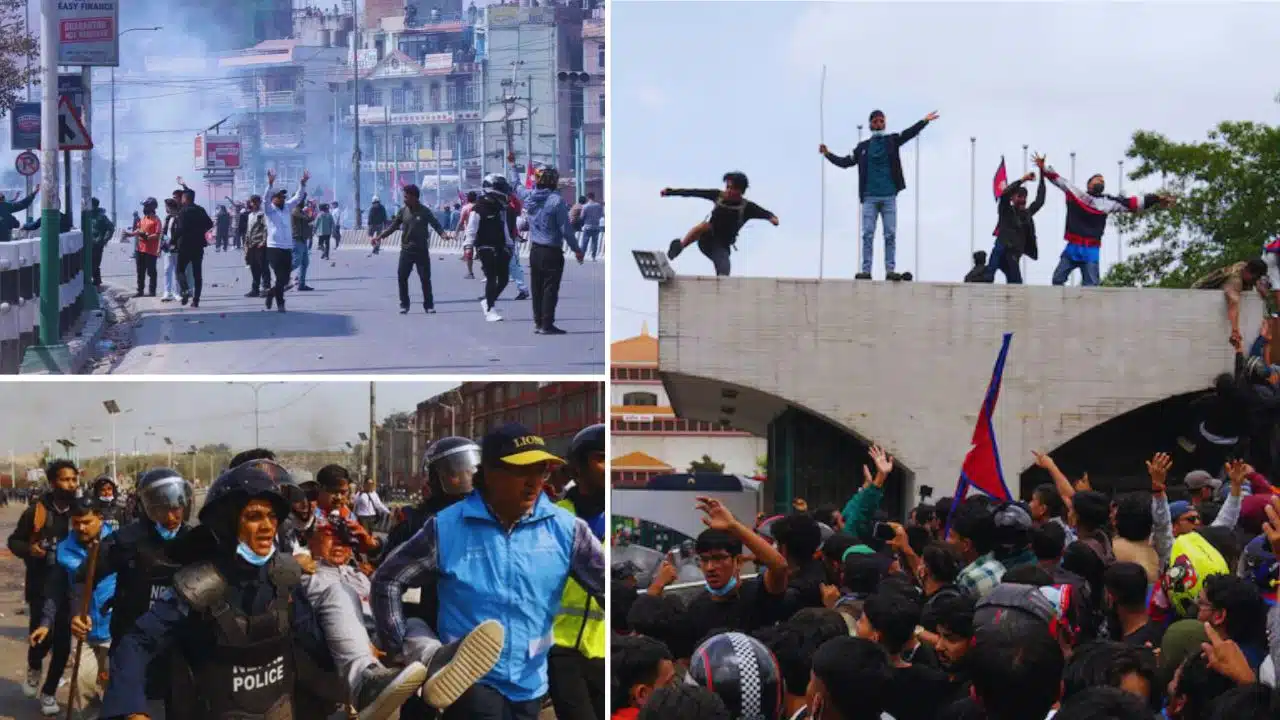
Nepal’s capital, Kathmandu, witnessed some of its deadliest unrest in years as at least 19 people were killed and more than 100 others injured in mass demonstrations against government corruption and a sweeping social media ban. The protests erupted when young demonstrators stormed toward the parliament complex, tearing down barriers and overwhelming police forces tasked with protecting the area.
The clashes broke out after the government’s controversial decision to block access to 26 major social networking platforms, including Facebook, Instagram, WhatsApp, YouTube, X (formerly Twitter), Reddit, Snapchat, and LinkedIn. Authorities insisted the shutdown was necessary because the companies had failed to register officially with regulators under new rules designed to hold platforms accountable for misinformation and harmful content.
Platforms like TikTok and Viber, which had complied with registration requirements, remain accessible, but the bans on globally dominant services immediately disrupted daily communication and inflamed a young, digitally dependent population.
Gen Z Mobilization Across Nepal
The demonstrations were quickly branded as “Gen Z protests” because of the sheer dominance of young people—many still in school uniforms—among the crowds. Thousands of students, first-time voters, and young professionals flooded Kathmandu’s streets carrying national flags and handmade placards. They demanded the lifting of the social media ban and the end of entrenched corruption that they argue has blocked opportunities and undermined democracy.
The protests did not remain confined to the capital. By evening, reports confirmed marches and rallies spreading into other major towns and cities, including Pokhara, Biratnagar, and Butwal. Organizers said the movement was leaderless and organic, reflecting a new wave of political awareness among Nepal’s youth.
Security Forces Overwhelmed
Initially, riot police attempted to contain the protesters using barricades, barbed wire, and crowd control tactics. But the size and determination of the crowds forced officers into retreat, with some fleeing inside the parliamentary complex for safety. When protesters pressed forward, security forces escalated their response, deploying water cannons, tear gas, rubber bullets, and eventually live rounds.
The confrontations left the streets littered with tear gas canisters and debris. Witnesses reported that ambulances struggled to move through blockaded areas, and in some places, emergency vehicles themselves became targets of vandalism. An ambulance was set on fire near the protest site, highlighting the scale of the chaos.
Deaths, Injuries, and Medical Emergencies
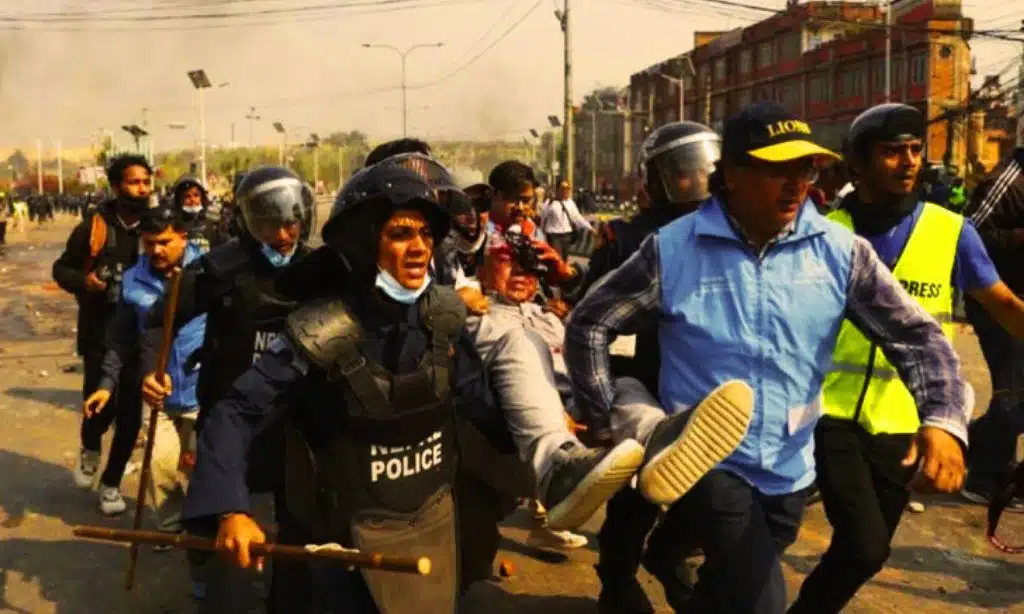
Hospitals across Kathmandu treated dozens of injured protesters as well as nearly 30 police personnel hurt in the clashes. Many victims suffered gunshot wounds, while others sustained injuries from rubber bullets, batons, and chemical exposure. Authorities confirmed at least 19 fatalities, though unofficial figures suggest the toll could climb further as critically injured individuals remain under intensive care.
Among the dead were young students and bystanders caught in the violence. Outside hospitals, families gathered in large numbers, seeking news of missing relatives. Doctors described scenes of overcrowded emergency wards and shortages of medical supplies to treat the injured.
Government Crackdown and Resignation of Home Minister
In response to the crisis, the Nepalese government deployed the army to Kathmandu and imposed a strict curfew around the prime minister’s residence, parliament, and other key government precincts. Troops patrolled major intersections to enforce the restrictions, while internet connectivity in certain areas was throttled to limit the flow of live protest footage.
The severity of the crackdown triggered a major political shock. Home Minister Ramesh Lekhak resigned during an emergency cabinet session, accepting responsibility for the mishandling of the unrest. His resignation underscored the scale of the crisis facing Prime Minister K.P. Sharma Oli’s government, which is now under intense domestic and international scrutiny.
Roots of Anger: Beyond the Social Media Ban
While the immediate trigger of the protests was the blocking of social media platforms, experts point to deeper frustrations that have been simmering for years. Nepal’s youth population—making up a large portion of its 30 million citizens—faces limited job opportunities, rising costs of living, and a political system marred by corruption scandals and infighting.
For many, the social media ban symbolized a broader erosion of freedoms. More than 90 percent of Nepal’s citizens are internet users, making the sudden removal of global platforms not only a political issue but also an economic and social disruption. Businesses that rely on digital marketing and cross-border communication were abruptly cut off from customers, amplifying anger.
Censorship and Constitutional Debate
The government insists the bans are temporary measures to enforce accountability. A bill currently under debate in parliament would require all major social platforms to establish a local office or legal representative in Nepal, enabling authorities to monitor activity more closely.
Critics, however, argue that the legislation is primarily a tool for censorship. Rights groups warn it will be used to silence dissent, punish activists, and criminalize online criticism of government officials. The social media ban of 2025 echoes earlier restrictions, such as Nepal’s 2018 ban on pornography and the temporary ban on TikTok in 2023, which was justified on grounds of social harmony. Each of these restrictions has fueled accusations that the government is overstepping constitutional freedoms.
International Concerns and Regional Repercussions
The deadly crackdown has drawn condemnation from international human rights organizations, which called for an impartial investigation into the deaths. The United Nations urged Nepal’s government to respect citizens’ rights to free expression and peaceful assembly.
Nepal’s instability also raises regional concerns. Situated between India and China, the Himalayan nation plays a delicate role in South Asian geopolitics. Analysts warn that heavy-handed measures and violent repression could erode international confidence and weaken Nepal’s democratic institutions at a critical time.
Organizers of the protests vowed to continue mobilizing until the ban is lifted and systemic corruption is addressed. With schools, colleges, and universities now central to the movement, momentum is likely to persist even under curfews and military presence.
For Prime Minister Oli, the crisis represents one of the gravest threats to his leadership in years. Balancing the demands of a digitally empowered youth movement with the pressures of governance, security, and international scrutiny will determine his political survival.