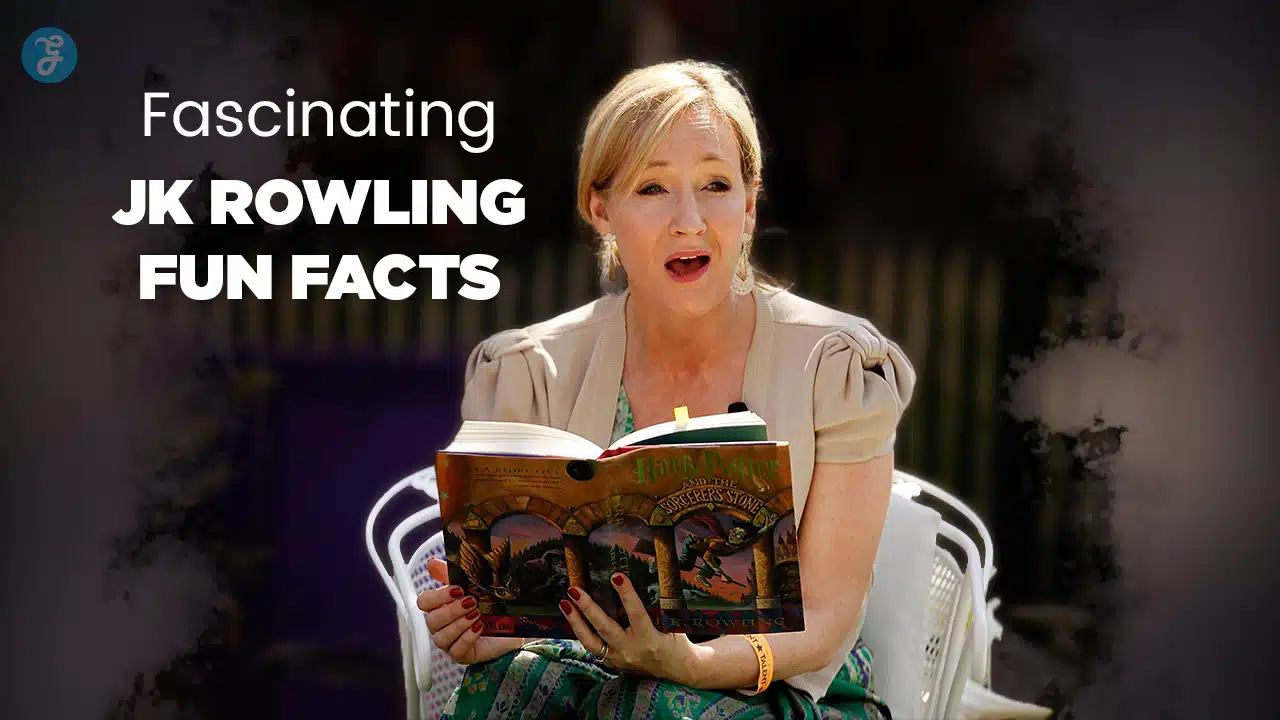
Millions know J.K. Rowling as the author who created Harry Potter and his magical universe, but her story holds more surprises than a game of Quidditch on a windy day. Many believe they know all about her, yet some facts remain buried deeper than the secrets at Hogwarts.
Have you ever wondered what sparked the magic before the billions of dollars and blockbuster movies? Curious readers often miss out on how real-life struggles and big choices shaped not just one woman’s life, but also every book in the famous series.
This article promises to deliver practical “Jk Rowling Fun Facts” you probably have never read before. I want to show you the grit behind the glory.
As an editor who tracks media and business trends across the US and UK, I’ve learned why stories like Rowling’s matter far beyond fiction shelves or movie theaters. Her journey from writing “Rabbit” as a child in Gloucestershire to founding charities like Lumos proves that great ideas can grow anywhere.
You might be surprised to learn that some of her best ideas came on napkins during train rides from Manchester! Stay put for five eye-openers you’ll want to share with every Harry Potter fan you meet.
When Did J. K. Rowling Write Her First Story?

Joanne Rowling penned her first story at just six years old, long before she wrote about Harry and his magical adventures. She named it “Rabbit,” starting her journey from a child with big dreams to the author behind millions of cherished books.
What Was the Story “Rabbit” About and What Inspired It?
At just six years old, Rowling wrote her first book called “Rabbit,” showing her dream to become a writer early on. The story followed a rabbit who became sick with the measles and was cared for by friends and family.
One of the most charming details about this early work is the inclusion of a giant bee named Miss Bee. In later interviews, Rowling joked that she “always wanted to be a writer, though I rarely told anyone so.”
Simple as it sounds, this tale showed Rowling’s knack for building caring characters. She used scraps of paper from around the house to write down ideas, much like she later did while planning the Harry Potter series.
Her love for stories started in childhood in England. Reading classics inspired her imagination long before launching Pottermore Publishing or creating magical creatures found in Fantastic Beasts.
Her favorite author back then was Jessica Mitford. She admired Mitford so much that she named her daughter after her. This is a little fact cherished by fans who follow rowling facts closely.

“I was a writer from the age of six. But I never told anyone.” — J.K. Rowling
Even small moments from home life could spark big adventures on paper. “Rabbit” stands as proof that Joanne Rowling was born ready to tell stories that touch millions today.
The Origin of the Harry Potter Idea
J.K. Rowling dreamed up the idea for Harry Potter while she was on a long train ride from Manchester to London, and that single spark turned into millions of books, movies, and even Wizarding World Digital.
Just wait until you hear the specific details of how it all began.
How Did a Train Ride Inspire the Harry Potter Concept?
A delayed train from Manchester to London in 1990 changed everything for Rowling. She sat daydreaming, ideas swirling as she watched the English countryside slide by.
Harry Potter’s world popped into her mind, almost electric. She saw wizards, magical creatures, and a boy with a scar. But here is the fascinating part: the train was delayed for four hours, and she didn’t have a working pen.
She was too shy to ask a stranger to borrow one. Instead of writing, she spent those four hours simply thinking. This forced her to memorize every detail, from Hogwarts castle to the house ghosts, letting the world become incredibly real in her mind before she wrote a single word.
King’s Cross Station held special meaning too. Her parents met there at age eighteen on a train to Scotland. That became home base for Harry’s leap to Hogwarts. It is a small nod to Rowling’s family story tucked inside a magic fiction legend.
After getting off that train, Rowling spent five years planning all seven books. She often wrote on scraps of paper while living in Scotland and receiving state benefits. Each detail was born from those lonely hours and simple moments on public transport.
How Did Depression Influence the Creation of Dementors?
J.K. Rowling shaped Dementors from her own struggle with major depressive disorder after losing her mother at the University of Exeter. She described these soul-sucking creatures in Harry Potter as shadows cast by grief, a feeling she knew all too well during her hardest days in Edinburgh.
What Role Did J.K. Rowling’s Battle with Depression Play?
Clinical depression shaped Rowling’s writing in deep ways. She fought sadness after her mother died from multiple sclerosis, which hit during Rowling’s teenage years. That pain crawled into her stories.
She imagined the Dementors in Harry Potter as dark shapes feeding on hope. This came straight from those hard times with major depressive disorder. In a powerful 2008 commencement speech at Harvard University titled “The Fringe Benefits of Failure,” Rowling spoke openly about this.
She explained that rock bottom became the solid foundation on which she rebuilt her life. Fighting these feelings pushed new ideas for magical creatures like Dementors.
Sleepless nights and stress followed her success and public life too. Insomnia kept her up while she worked late or debated hot topics online. These struggles led to acts of kindness, not just fiction.
Related Read: 12 Best Harry Potter Moments That Still Give Us Chills and Warm Our Hearts in 2025
Her Volant Charitable Trust began because she wanted to help others facing trouble or poverty, much like she once did herself in the United Kingdom.
Many fans have found comfort knowing that someone behind million-selling novels also had tough mental health days. She used them for good through philanthropy and storytelling alike. In fact, Rowling was the first person to fall off the Forbes billionaire list because she gave away so much money to charity.

Why Was J. K. Rowling Rejected by Multiple Publishers?
Rowling faced rejection from twelve different publishing companies before Bloomsbury finally said yes to her first Harry Potter book. Imagine if Scholastic or Bloomsbury had passed.
Millions of fans would have missed out on Harry’s magical journey!
How Many Publishers Rejected the First Harry Potter Manuscript?
Nine publishers turned down the first Harry Potter manuscript immediately. In total, 12 publishing houses rejected the book, often saying it was “too long for children.”
Each company thought a story about wizards, written by a woman, would not sell well. The typed pages sat in piles while J.K. Rowling lived on state benefits and cared for her daughter.
Here is the insider twist that changed history: Alice Newton, the eight-year-old daughter of Bloomsbury chairman Nigel Newton, found the first chapter. She read it and immediately demanded the rest, saying it was “so much better than anything else.”

Bloomsbury Publishing finally saw magic in those pages and decided to take the risk in 1997. They paid her a modest advance of just £2,500 (about $4,000).
Some publishers even suggested using a gender-neutral name to avoid bias; that’s how “J.K. Rowling” came to be. Afterward, she received fan mail addressed with “Dear Sir,” proof that her pen name did its job well.
Watching those rejection letters pile up can break anyone’s spirit. But this is one of the greatest facts about J.K. Rowling. She never gave up hope before millions of copies flew off shelves around the world.
Also Read: If You Like Harry Potter, You Must Watch These Films
What Does the “K” in J. K. Rowling Stand For?
The “K” in J.K. Rowling comes from her grandmother’s name, Kathleen. Keep reading to find out how family shaped the author behind Harry Potter!
Who Was Kathleen and Why Is She Honored in Rowling’s Pen Name?
Kathleen was J.K. Rowling’s paternal grandmother. She played a special role in the author’s life, though Rowling never had “Kathleen” as her legal middle name. Her legal name is simply Joanne Rowling.
The publisher for the first Harry Potter book suggested using two initials on the cover to appeal to boys. They feared boys wouldn’t read a fantasy book written by a woman.

| Name Used | Reason for Choice | Origin |
|---|---|---|
| Joanne Rowling | Her legal birth name | Given by parents |
| J.K. Rowling | To hide gender from young male readers | “K” honors grandmother Kathleen |
| Robert Galbraith | To write crime novels anonymously | Inspired by political hero Robert F. Kennedy |
Joanne chose “K” after her grandmother Kathleen, making it both personal and meaningful. Many fans of the wizarding world see this small letter as a big tribute hidden in plain sight.
The pen name “J.K. Rowling” soon became famous around the globe, helping sell over 500 million copies of Harry Potter books. Even today, some people write fan mail addressed to “Dear Sir,” showing how well the pseudonym worked at first glance!
As someone who grew up reading about magical creatures in Harry Potter, I always found it clever that Kathleen lives on through every mention of J.K.’s name. It is grandparent love sprinkled across each story she writes.
Final Words
JK Rowling’s life reads like one of her stories, full of twists and triumphs. She turned hardship into magic that touched millions.
Experts like Philip Errington, author of the definitive J.K. Rowling bibliography, have spent years documenting these details. Their research shows how a single idea on a train can grow into a global empire.
According to publishing leaders like Nigel Newton, knowing facts about JK Rowling can deepen readers’ connection with both the author and Harry Potter. Learning that Rowling wrote “Rabbit” at age six or began dreaming up Hogwarts during a train delay helps fans see how stories grow from tiny sparks.
These fun details encourage aspiring writers by showing success starts small. Anyone could carry their first novel idea scribbled on napkins.
Rowling’s openness about struggles like clinical depression and welfare spending is groundbreaking for public figures. This honesty breaks the stigma surrounding mental health while also raising awareness through charity work.
She supports organizations such as Lumos, Comic Relief partnerships, and the Anne Rowling Regenerative Neurology Clinic at the University of Edinburgh, which she funded after donating £10 million.
Dr. Errington and other biographers advise parents and teachers to share these facts. It brings a human element to the classroom when introducing children to the Harry Potter series.
This approach roots each fact back to real human experience instead of just product promotion. Learning five fascinating JK Rowling fun facts gives valuable perspective that makes every book feel more alive for loyal fans everywhere.