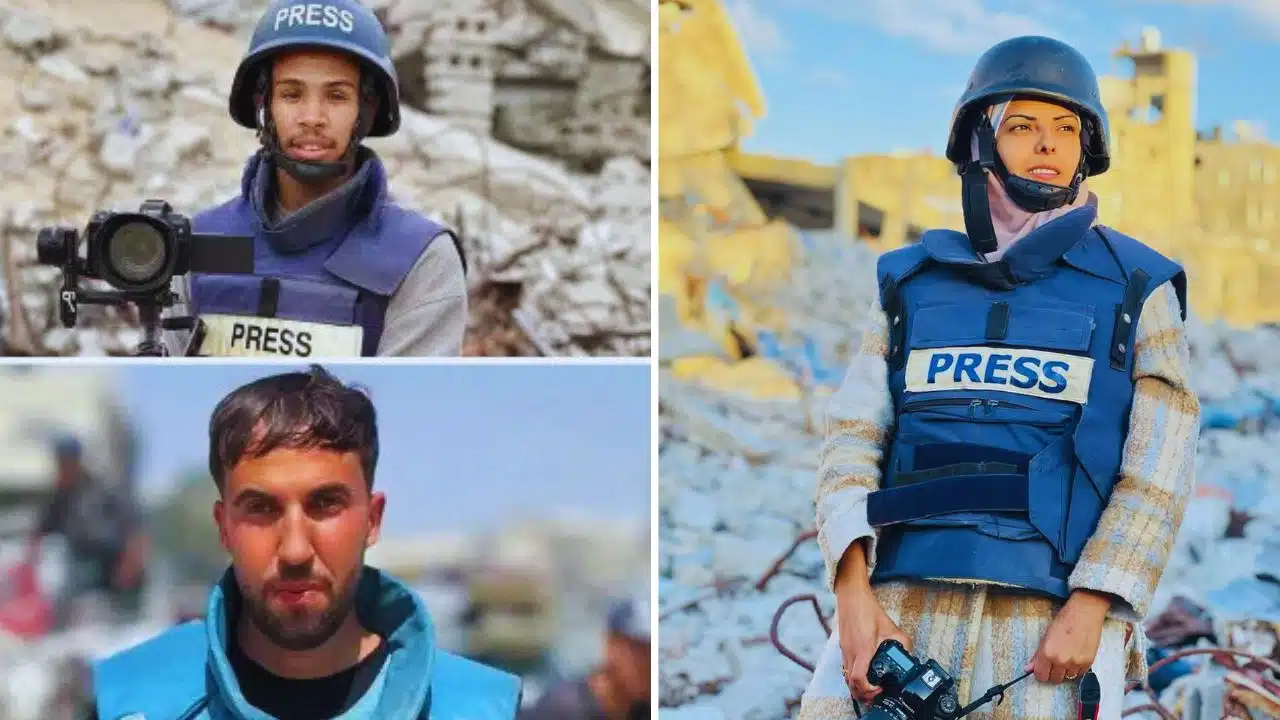
On Monday, August 25, 2025, Gaza’s largest functioning medical center in the south, Nasser Hospital in Khan Younis, became the site of a devastating strike that claimed dozens of lives, including those of journalists, medical personnel, emergency responders, and civilians who had sought shelter in the complex.
According to Gaza’s Ministry of Health, the strikes killed at least 20 people and injured many others. Among the dead were five journalists reporting from the hospital grounds, along with doctors, nurses, paramedics, and members of Gaza’s Civil Defense team.
The hospital itself confirmed that the strikes occurred in two successive waves separated by only minutes, a tactic often described as a “double-tap” strike. The first hit the hospital’s fourth floor, damaging a balcony often used by journalists for vantage points over Khan Younis. As medical staff and rescue workers rushed to the site, a second strike struck nearby, killing first responders and additional civilians.
Journalists Among the Victims
The media community was left reeling as confirmation came that five journalists lost their lives in the hospital strikes. The victims included:
-
Mohammed Salama, cameraman for Al Jazeera.
-
Hussam al-Masri, working with Reuters.
-
Mariam Abu Dagga, a journalist who contributed to the Associated Press and other outlets throughout the conflict.
-
Moath Abu Taha, a freelance reporter and photographer who worked with international broadcasters.
-
Ahmed Abu Aziz, affiliated with Quds Feed Network.
Civil Defense reported that one of its own rescue team members was also killed in the attack. Several other journalists who had been on the hospital balcony were wounded but survived. The death of these reporters adds to what has already become one of the deadliest conflicts for media workers in modern history.
The Israeli Military’s Acknowledgment and Initial Inquiry
The Israel Defense Forces (IDF) confirmed that it carried out strikes in the area of Nasser Hospital. Military officials stated that the initial target was a camera positioned on the roof, which they alleged was being used by Hamas operatives to monitor Israeli troop movements.
An Israeli security source with knowledge of the military’s early review explained that the IDF intended to disable the camera with a drone strike but instead launched two tank shells—the first at the surveillance device and the second at the area where emergency responders had gathered.
This disclosure is significant as it acknowledges that the second strike, which killed first responders and journalists, was deliberate. Prime Minister Benjamin Netanyahu later addressed the incident, acknowledging that media professionals and health workers were among the dead, and described the loss of life as a tragic error. The Israeli government has ordered a formal investigation, though rights groups argue that an independent international probe is needed.
Humanitarian Consequences for Gaza’s Fragile Health System
Nasser Hospital has long been a critical lifeline for southern Gaza, especially since other medical facilities were either destroyed or forced to close earlier in the war. The hospital had already been operating under extreme pressure, with shortages of supplies, overcrowding, and limited electricity.
Medical personnel reported that the strikes not only killed staff but also disrupted ongoing treatment for patients, including children suffering from malnutrition and civilians injured in previous bombardments. Doctors Without Borders (MSF) confirmed that some of their staff had to shelter inside the hospital’s laboratory as repeated strikes shook the building. The organization called the attack catastrophic, stressing that this was one of the few remaining partially functioning hospitals in Gaza.
International Condemnation and Calls for Accountability
The strikes triggered immediate condemnation from international organizations, press freedom advocates, and governments across the world.
-
The Foreign Press Association in Israel and the Palestinian Territories described the attack as one of the deadliest incidents involving journalists since the conflict began. The group called it a turning point in the treatment of the press in Gaza.
-
The Committee to Protect Journalists (CPJ) noted that nearly 200 journalists have been killed since the start of the war, making it one of the most dangerous conflicts for the media in decades. CPJ accused Israeli forces of deliberately targeting a camera position and killing first responders.
-
UN Secretary-General António Guterres called for an impartial investigation and emphasized that journalists and medical workers must be protected under international law. His spokesperson stressed that targeting or endangering civilians performing essential duties could constitute war crimes.
-
Philippe Lazzarini, head of UNRWA, warned that the deaths amounted to silencing some of the last remaining voices documenting famine and suffering in Gaza.
-
Doctors Without Borders (MSF) and other humanitarian organizations demanded accountability and reminded Israel of its obligations under the Geneva Conventions.
Governments including Canada, Germany, Switzerland, Qatar, Saudi Arabia, Kuwait, and the UK issued strong statements condemning the attack.
Personal Stories of the Victims
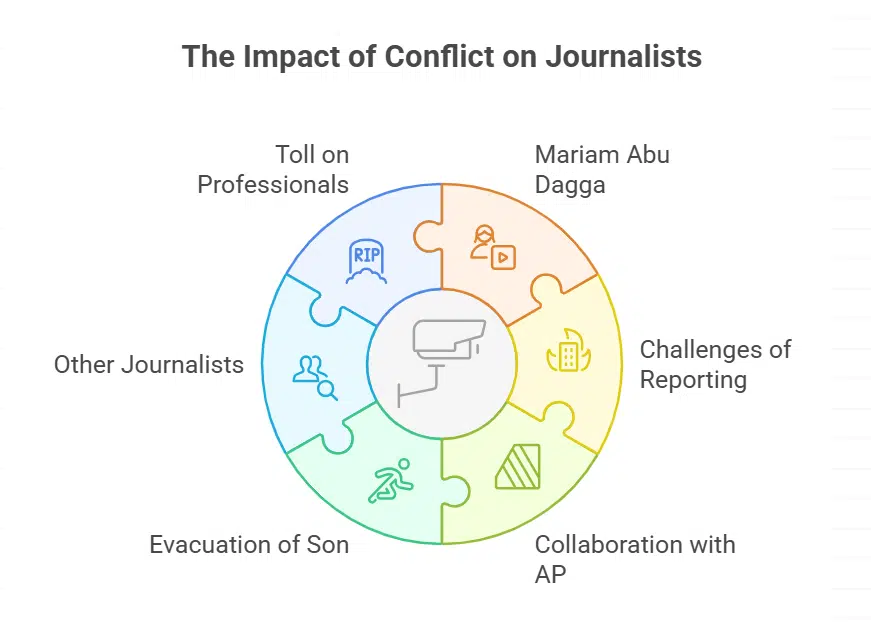
Among those killed, Mariam Abu Dagga had been profiled by CNN in 2024. At the time, she explained the challenges of reporting amid bombardment but emphasized her duty to document the suffering of ordinary people. She had been covering stories of doctors at Nasser Hospital struggling to save children who were wasting away from hunger. The Associated Press, which frequently collaborated with her, confirmed that her 12-year-old son had been evacuated from Gaza earlier in the war for safety.
Other journalists killed were also known for their contributions to documenting daily life and devastation in Gaza. Their deaths underscore the mounting toll on professionals trying to provide independent reporting from the ground.
Wider Context of the War and Previous Strikes on Journalists
This was not the first time that journalists have been killed in Gaza. Earlier in August, several reporters from Al Jazeera, including prominent correspondent Anas al-Sharif, were killed in an Israeli strike in Gaza City. Israeli officials accused al-Sharif of being linked to militant activity, a claim he had denied before his death.
The pattern of targeting areas where media crews are present has led watchdog groups to raise alarms about systemic violations of press protections under international law. Human rights experts argue that repeated strikes on hospitals, journalists, and humanitarian workers cannot be dismissed as isolated mistakes.
Reaction from Palestinian Groups and Hamas
The Palestinian Journalists Syndicate condemned the hospital attack as a deliberate massacre targeting media workers and accused Israeli forces of seeking to intimidate journalists into silence. Hamas also issued a statement accusing Israel of attempting to suppress coverage of alleged war crimes and humanitarian suffering.
Meanwhile, Al Jazeera described the killing of its cameraman as part of an ongoing campaign against journalists in Gaza, warning that such actions violate international humanitarian law, including provisions of the Rome Statute and the Geneva Conventions, which forbid targeting civilians and journalists in conflict zones.
U.S. Political Response
As the strikes drew condemnation abroad, U.S. President Donald Trump told reporters that he expected the war in Gaza to end “within the next two to three weeks,” though he provided no details or diplomatic framework for how such a resolution might occur. Families of Israeli hostages and missing persons expressed cautious hope but also frustration, saying they needed concrete action rather than vague assurances.