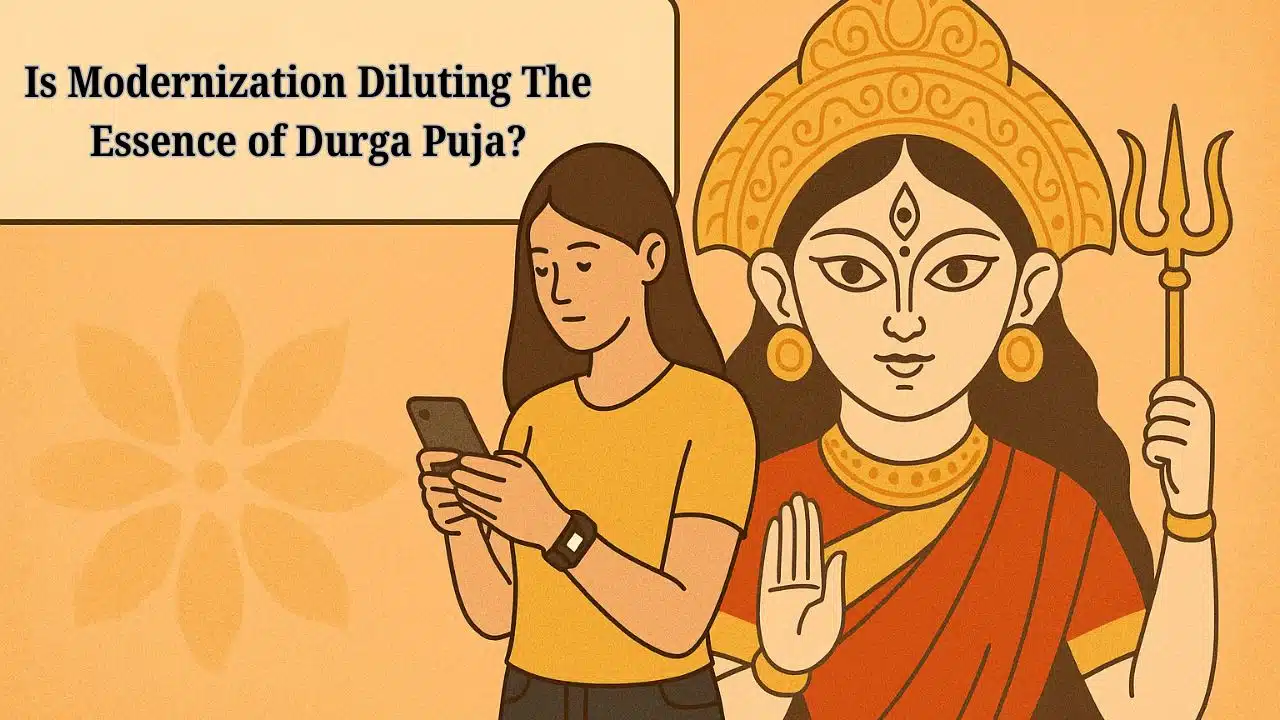
Is Durga Puja losing its old charm or just getting a new look? In West Bengal and beyond, many say the heart feels quieter as bright lights, loud speakers, and crowds grow bigger. You hear fewer clear mantras for Goddess Durga and fewer simple prayers that once pulled neighbors together for social harmony.
Still, this Hindu religious festival centers on one timeless truth: the victory of good over evil. In the next sections, you’ll see how change shapes today’s Durga Pujas, what gets better, what slips, and how you can help keep the essence alive without closing the door on new ideas.
Key Takeaways
- Modern pujas bring flashy lights, giant sets, and social media fame, but some miss older rituals like kumari puja and sandhi puja.
- Parties such as Trinamool Congress and BJP’s local units back lavish pandals; in 2024, Mamata Banerjee opened several during Pitra Paksha, which sparked debate.
- UNESCO listed Durga Puja as “intangible cultural heritage,” yet state and national leaders still argue over who deserves credit.
- Hashtags like \#jaiShriRam trend, while many teens take selfies instead of learning folk songs or joining long prayers.
- Groups balance change by using eco-friendly steps at Durga Visarjan so rivers, including the Ganga, stay cleaner after the festival.
The Traditional Significance of Durga Puja
Durga Puja is a living lesson in courage and hope. Across West Bengal, Assam, Tripura, Odisha, Bihar, and Jharkhand, families honor goddess Durga and her fight against Mahishasura. Many stories call her Mahisha Mardini, the slayer of the buffalo demon. In those tales, she carries the power of Brahma, Vishnu, and Maheshwara to push back darkness.
This celebration is more than songs and offerings. It pulls families, friends, and full neighborhoods together. In small towns, people gather near temples and ponds for Durgotsav, the full set of worship days. Long lines form, kids watch every move, and elders guide the flow of prayer.
The season also marks autumn’s clean air and clear skies. After Pitra Paksha, a fortnight for honoring ancestors, lilies bloom and mark a fresh start. In Assam, many link the story of the goddess to the Kamakhya temple and to practices shaped during the Ahom dynasty. These roots still shape how people greet the festival.
Rituals carry simple yet deep ideas. In Kumari Puja, a young girl is honored as the divine feminine, called “shakti,” which means sacred female power in Hindu traditions like Shaktism. Sandhi puja marks the moment between two special phases of worship with focused prayer and lamps. Boys often sing bhajans, devotional songs with easy tunes. Girls and boys help elders place flowers and light lamps.
Navratri, a nine-night span of prayer, leads to Vijayadashami, also called Vijaya Dashami, the day of victory. Many pandals, the temporary worship halls, set themes, but the spirit at the core is steady.
Modernization and Its Impact on Durga Puja
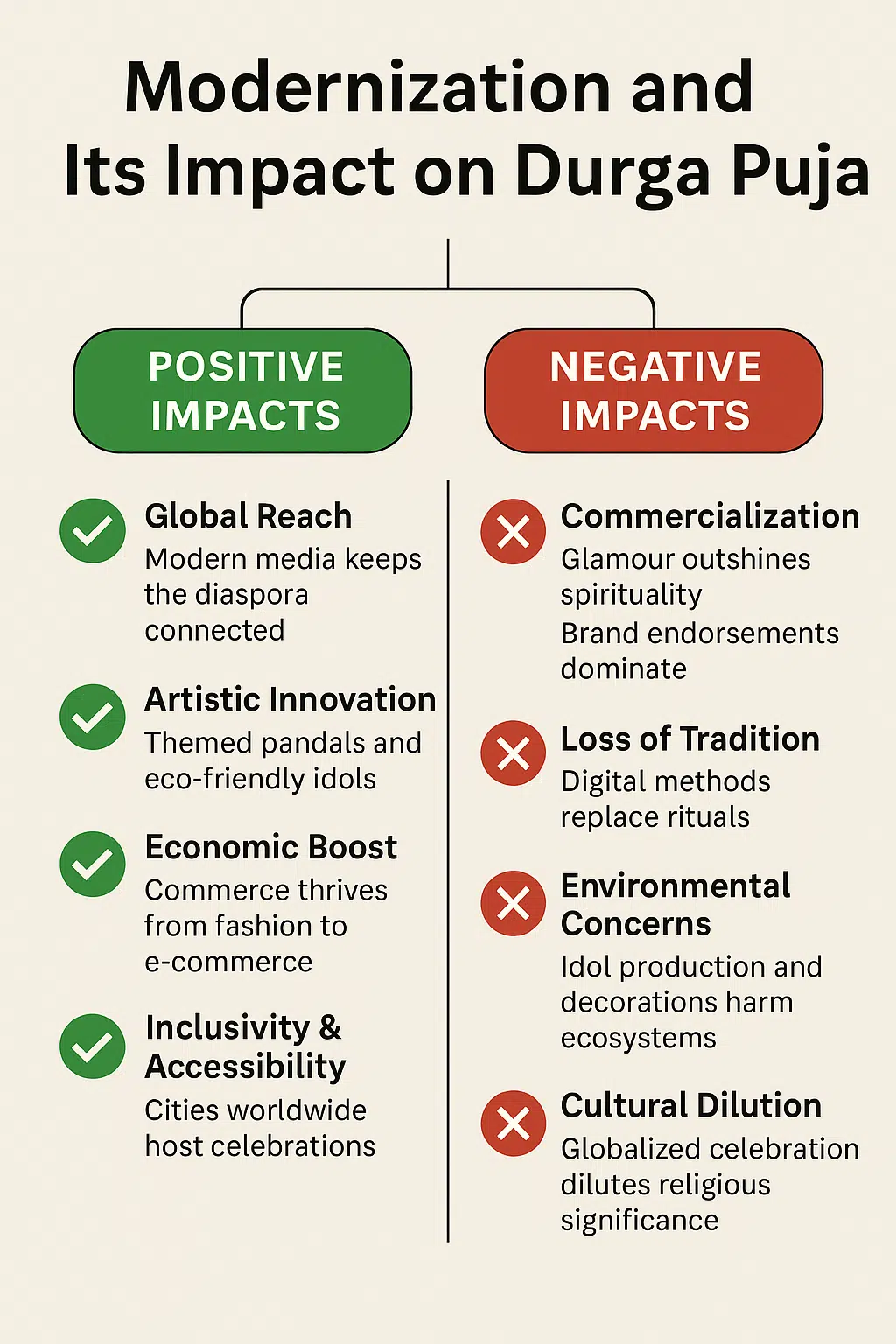
Durga Puja in West Bengal now looks bigger and brighter. It draws crowds and cameras. That sparkle can unite people. It can also pull attention away from quiet prayers.
Commercialization of the Festival
Colorful pandals rise on busy streets and in quiet lanes. Party units from Trinamool Congress and BJP’s local networks sponsor grand stages. In 2024, Mamata Banerjee opened several pandals during Pitra Paksha, the time set aside to honor ancestors. Many people welcomed the energy; others worried that timing might blur the festival’s meaning.
Brands fund stages, banners, and contests. A well-known pandal by Ghosh used a Ram temple replica in January 2024. A Red Fort model drew huge lines for photos in a past year. The style can feel like an amusement park, fast and loud, which makes some devotees uneasy.
- Upside: more jobs for artists and electricians and wider access for visitors.
- Downside: long waits, high noise, and less space for calm prayer.
- Risk: The social message gets buried under spectacle and spending.
UNESCO recognized Durga Puja as “intangible cultural heritage.” That honor matters. It puts the festival on a global stage and can protect crafts. Even so, leaders from Delhi and Kolkata still argue over credit. The back-and-forth can eclipse the work of local artists who build the magic in clay, wood, and light.
Influence of Technology and Media
New tech brightens every corner. LED screens tell the story of the goddess Durga. Some pandals copy famous sites like the Ram temple or the Red Fort with detailed sets. News outlets race to cover the biggest themes. Headlines often focus on design and drama, not on long-standing rituals like kumari puja.
Social media amplifies everything. Party pages boost posts for organizers, including teams led by women, by scheduled caste groups, and by scheduled tribe groups. Hashtags such as \#jaiShriRam trend fast. Trinamool leaders promote cultural diversity. The reach now stretches far outside the state. NRI groups watch and comment in real time.
- Good: wider awareness, quick updates, clear directions for visitors.
- Bad: more pressure to shock with giant sets and loud soundscapes.
- Ongoing debate: non-biodegradable materials, waste after visarjan, and safe sound levels.
Arguments spread faster online than in any lane or local hall. One strong post can shift the mood across cities, even overseas. The attention helps, yet it can drown the quiet voice of prayer.
Balancing Tradition and Modernity
Old customs give this festival its soul. New tools help more people join. The goal is not a choice between them. The goal is a thoughtful mix.
Many families still honor ancient steps. They chant lines from the Vedas, which are old Hindu scriptures, and keep the aarti, the lamp ritual, simple and slow. Theme-based Durga Puja pandals use light and sound to teach. This can be helpful when it supports the story of the divine mother and the victory of good over evil.
At the same time, loudspeakers blast film songs at peak hours. Phones buzz through the aarti. Teens take selfies beside statues while elders bow their heads. Hashtags catch more eyes than stories of saints like Sri Ramakrishna Paramahamsa or reformers from the bhakti movement. The shift is real. The fix is practical.
- Learn the meaning of one core mantra and teach it to a child.
- Join Kumari Puja quietly, and explain that it honors the divine feminine energy.
- Keep phones silent during Sandhi Puja and the evening aarti.
- Support pandals that use clay, natural dyes, and reusable frames.
- Help with waste management bins near the pandal and along the route.
- After the last day, volunteer for cleanup at Durga Visarjan.
Small steps protect the rivers. Many groups now guide visarjan to set points, use fewer toxic paints, and collect flowers for compost. These choices keep the Ganga and local lakes safer for fish and for the next season. Culture stays alive when care meets action.
Takeaways
Durga Puja is changing, yet the anchor holds. The story of goddess Durga and the victory of good over evil is still the center. Big sets and bright lights can welcome newcomers. They can also blur the heartbeat of prayer. Both truths can sit side by side.
Leaders speak about inclusion and identity. Mamata Banerjee and Narendra Modi often point to social inclusion and cultural pride. In some places, Assamese traditions blend with Sharadiya and Basanti customs. Mixing styles keeps things fresh while honoring older steps drawn from vaidika learning and local tantram practices. The test is simple: keep the focus on the divine, not the spotlight.
What can you do now? Choose a pandal that balances art with worship. Sing a short bhajan with your family before you head out. Support artists who mold clay deities with care. Encourage one friend to keep phones silent during aarti. These tiny moves add up.
Night after night in Pitra Paksha, villagers light lamps for their ancestors. In the city, kids post photos beside shining statues built by skilled hands. Change is not the villain. It asks you to guard what matters—the prayer, the story, the welcome for all—while staying open to helpful ideas. Culture bends but does not break when hearts choose virtue, courage, and the joy of gathering every autumn under the watch of Maa Durga.