

Have you ever watched a harem anime and thought, “Wait, haven’t I seen this story before?” Maybe you’re tired of seeing one clueless hero chased by a crowd of love interests who all look strangely familiar. You might wonder if there is anything new under the sun or if the genre has finally lost its charm. You are not the only one asking this. While some fans roll their eyes at old clichés, studios keep making these shows because they still sell incredibly well.
If you feel stuck watching the same recycled plots and awkward love triangles, we have good news. We are going to break down how the harem trope started, why it’s changing today, is Harem Anime Trope dying, and which specific series are actually worth your time. Stick around to find out if your favorite genre has run out of steam or just changed its game.
What is the Harem Anime Trope?
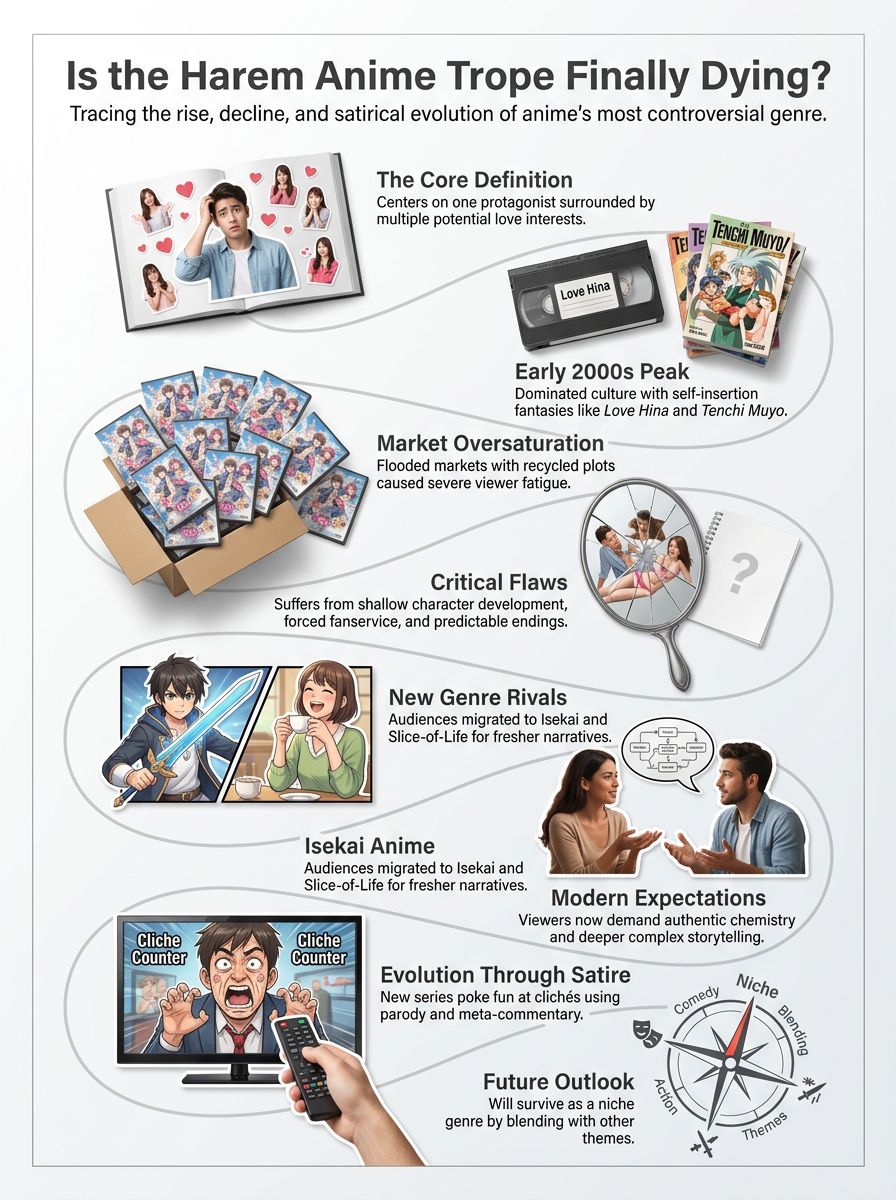
A harem anime centers on one main character surrounded by three or more possible love interests. This setup often causes chaos, funny moments, and a lot of romantic tension. While it started as a niche sub-genre, it shaped much of romantic comedy storytelling for two decades.
Definition and Key Characteristics
Harem anime typically involves one male lead who captures the attention of several female characters. The main guy is often designed to be “average” or “plain” so viewers can easily imagine themselves in his shoes. Most shows rely on a specific checklist of features to keep the plot moving.
- The “Accidental” Pervert: The hero constantly falls into awkward situations, like walking into the wrong room or tripping, which leads to slapstick comedy.
- The Archetype Checklist: You will almost always find a Tsundere (hot-headed and cold initially), a Deredere (sweet and energetic), and a Kuudere (cool and emotionless) in the group.
- The “Dense” Protagonist: A common complaint is that the main character is oblivious to the obvious affection directed at him, often to drag out the story.
Reverse harem flips this script. It features one girl surrounded by many boys fighting for her attention, popular in shows like Ouran High School Host Club. Today, however, viewers want more than just gags. They want honest romance and deeper relationships rather than endless misunderstandings.
Origins and Historical Popularity
To understand where we are, we have to look back at the giants that started it all. Early harem series grew out of self-insertion fantasies that drew in young male viewers. The 1990s classic Tenchi Muyo! Ryo-Ohki is often credited as the codifier of the genre. It introduced the formula of “alien/fantasy girls living with a normal guy,” which set the standard for years.
By the early 2000s, Love Hina exploded in popularity. It shifted the setting to a realistic dorm life and solidified the “violent slapstick” style of comedy. The genre made big money because fans wanted escapism wrapped in fantasy. Relationship dynamics that seemed impossible in real life became the norm on screen.
If you’re not tripping over love triangles, is it even a harem show?
This knack for giving audiences exactly what they wanted helped set harem anime apart. It became a dominant force within broader anime culture during its rise to fame in the 1990s and early 2000s.
The Rise and Decline of Harem Anime
Harem anime once ruled TV screens and fan discussions. Now, the sparkle has faded for the traditional “school battle” style, leaving many to wonder what changed so fast.
Peak Popularity in the Early 2000s
Fans once filled forums and chat rooms with talk of anime like Love Hina and Shakugan no Shana. Animation studios rolled out dozens of new series in the harem genre, hoping to catch the same lightning in a bottle.
Shops sold posters, keychains, and DVDs faster than you could say “anime crush.” The trend pulled in teen viewers with its colorful characters and funny scenes. Big conventions had fans dressing up as their favorite harem stars. It seemed everywhere you looked, a new show about one guy surrounded by quirky girls popped up on TV.
That boom made the genre a massive part of anime culture for years. However, this success eventually led to its biggest problem.
Oversaturation of the Genre
After the boom, harem anime flooded every corner of TV and streaming sites. Viewers grew tired of seeing the same tropes pop up like stubborn weeds. Shows started to blend together with one-dimensional characters repeating old jokes.
A 2024 analysis of anime trends noted that “school battle harems,” which dominated the early 2010s, have largely vanished from top rankings. Viewer fatigue became impossible to ignore. People wanted engaging stories, not just recycled love triangles or fake romantic tension.
Do all harem guys shop at the same personality store?
Writers are now shifting away from plain “unwanted harem” plots toward richer character development. Even loyal fans have their limits with genre saturation.
Shifting Audience Preferences
Viewers today are tired of the “will-they-won’t-they” dynamic that drags on for 20 episodes with no resolution. Many want more than just fan service and shallow love triangles. Instead, they now lean into polyamory or make clear partner choices.

The Quintessential Quintuplets movie, released in 2022, grossed over $18 million worldwide. It succeeded because it promised a definitive “winner” and closure, something fans had been begging for. Audiences notice forced fan service and demand narrative depth instead. They want stories with substance rather than empty plot devices.
Criticisms of the Harem Anime Trope
Many fans get bored with the same stories and flat characters. Some even joke that romance in these shows feels forced, like a bad school play.
Repetitive Storytelling and Lack of Originality
Fans now spot clichés in harem anime from a mile away. Girl A, Girl B, and sometimes even Girl Z all fall for the same clueless main character. Each episode feels stuck on repeat, serving up old jokes and predictable drama.
One-dimensional female characters often exist just to fight over the hero. Real romance or depth rarely enters the picture. This formulaic approach leads to viewer fatigue fast. People call out “lazy” writing online with growing frustration.
Objectification and Shallow Character Development
After talking about repetition, it is clear that most harem anime fall into another trap. Female characters often exist only as love interests. Writers rely on quick shortcuts by giving them just one trait or goal.
In many shows from the early 2000s, girls in these stories looked different but acted the same. They were either kind to a fault or clumsy for laughs. Most harem series target young male viewers, which leads to objectification and lazy character development.
Lately, more people want authentic feelings on screen. Modern titles poke fun at old habits with parody and metacommentary. Some now try to fix this by making their cast deeper and more interesting than cardboard cutouts.
Unrealistic Romantic Dynamics
Objectification often goes hand in hand with flimsy relationship dynamics. Harem anime sticks to old patterns where one boy has a group of girls swooning over him, yet true feelings rarely get sorted out.
Instead of real conversations, characters stay stuck in a cycle of misunderstandings. Girls act more like trophies than people, and love triangles pop up without much sense. Newer anime such as The 100 Girlfriends Who Really, Really, Really, Really, Really Love You poke fun at these setups. It uses parody to show how odd it is when every girl wants the main character’s attention and no one makes clear choices.
Factors Contributing to the Decline
Fresh trends, shifting tastes, and changing social views have all poked big holes in the harem formula. But did the genre die, or did it just move house?
Competition from Other Genres Like Isekai
The harem genre didn’t disappear; it largely migrated to Isekai (fantasy “another world” stories). In the early 2000s, harems happened in high schools. Today, they happen in fantasy worlds.
According to industry data, Isekai anime made up nearly 15% of all new TV anime in 2024. Shows like Mushoku Tensei or That Time I Got Reincarnated as a Slime feature harem elements, but they wrap them in grand adventure stories. Audiences love seeing heroes tossed into wild worlds rather than just sitting in a classroom.

| Feature | Classic School Harem (Old) | Modern Isekai Harem (New) |
|---|---|---|
| Setting | High School / Dorms | Fantasy Worlds / RPG Mechanics |
| Protagonist Goal | Survive school / Find a girlfriend | Save the world / Build a kingdom |
| Romance Style | Shy, accidental, unresolved | Bold, direct, often marriage-focused |
Many viewers got tired of the old formula, so they started picking these fantasy adventures instead. People want decisive stories, and Isekai often delivers this while keeping the multi-love-interest dynamic alive.
Increased Demand for Complex Narratives
Anime fans now ask for stories with more twists and deeper meaning. Simple harem plots packed with bland characters just don’t cut it anymore. People pick shows that give clear answers or explore actual relationships.
Reviewers praise stronger character arcs. Shows that offer narrative complexity win better critical reception, leaving repetitive fan service behind. Viewer fatigue sets in quickly for anime that cling to worn-out formulas instead of giving fans new reasons to care.
Changing Societal Attitudes Toward Gender Representation
Modern harem anime often shows polyamory and clear romantic choices. These changes reflect how people view romance today. Writers focus on characters who actually talk about their feelings and break away from old gender roles.
Some shows poke fun at the classic passive male lead to highlight how outdated those ideas feel. Many fans want better character development and real chemistry between love interests. One-sided or flat female roles get rejected more than before.
Is the Harem Trope Evolving or Dying?
Some shows mix old ideas with new twists to keep folks guessing. Others seem to wave goodbye by slipping out of the spotlight.
Subversions of the Trope in Recent Anime
A wave of recent anime is shaking up the harem genre by embracing the absurdity. The 100 Girlfriends Who Really, Really, Really, Really, Really Love You is the perfect example. It leans so hard into the trope that it earned a Guinness World Record for the longest anime monologue, delivered by the main character professing his love.
Shows now feature bolder choices. Instead of endless drama, some series pick one partner or explore polyamory right in the story. Kanojo mo Kanojo (Girlfriend, Girlfriend) features a protagonist who asks to date two girls at once in the first episode. This honesty replaces the frustrating secrecy of older shows.
Hybrid Genres Blending Harem with Other Themes
Many new harem anime add other genres to keep stories fresh. Writers play around with narrative styles by mixing adventure, action, or even slice-of-life elements. Series now often focus on polyamory or have the protagonist make a clear choice in romance.
Harem does not always follow one simple formula anymore. It gets mixed into hybrid tales that explore different kinds of love and partner choices. Fantasy worlds help these new blends stand out from past trends in romantic storytelling.
The Future of Harem Anime
Some studios might try fresh ideas, while others may keep old patterns alive. Fans could see wild mashups and strange stories popping up soon.
Potential for Reinvention
Polyamory and true partnerships now show up in new harem anime. This breaks away from the old “Will-They-Won’t-They” style. Recent shows use satire and meta-commentary to poke fun at classic tropes while building something fresh.
Writers focus on better character development and more natural relationship dynamics. The main characters act with purpose instead of just reacting, which makes the story feel real. Fans want authentic romance and less forced fan service these days.
Will It Fade Completely or Remain Niche?
Fresh ideas push the harem anime subgenre to adapt. Rising demand for better character development puts pressure on simple setups. Many new titles blend the classic harem trope with Isekai elements or deeper narrative twists.
Despite growing fatigue from audiences tired of recycled plots, harem anime still attracts young male fans who enjoy self-insertion fantasies. The genre will likely hold a niche spot in anime but not vanish entirely. Expect more hybrids and clever reworks rather than total disappearance.
Final Thought
The harem anime trope is not disappearing, but it is changing its stripes to stay lively and relevant. Fans grow tired of old ideas fast, so creators mix in new jokes, real choices in love stories, or even poke fun at the clichés.
These tricks are simple yet powerful ways to keep shows fresh. They draw both loyal viewers and curious newcomers alike. If you want more information on this genre’s twists and turns, fan forums and review sites are just a click away.
So next time you watch a new harem show with oddball romances or clever winks at fans, keep in mind that change can keep an old favorite alive for another season.




























