
Starting a business in Ireland sounds exciting, right? But then reality hits. You face a mountain of paperwork, confusing rules, and questions about what you actually need to do first.
Many business owners feel lost when they try to set up their Irish Business Systems. They do not know which forms to fill out, what the Companies Registration Office wants, or how to structure their company properly.
The process feels overwhelming, and one wrong move could cost you time and money.
Here is the good news: Ireland has a clear roadmap for business registration. The Companies Registration Office handles all company registrations in the Republic of Ireland, and the process follows set steps that thousands of business owners complete every year.
You do not need to be an expert to get this right.
This guide walks you through every essential legal step to incorporate your business in Irish Business Systems. You will learn how to choose your company name, pick the right business structure, register with the proper authorities, and handle tax compliance.
We cover what documents you need, who you must appoint, and what happens after registration. By the end, you will know exactly what to do next. Let’s get started.
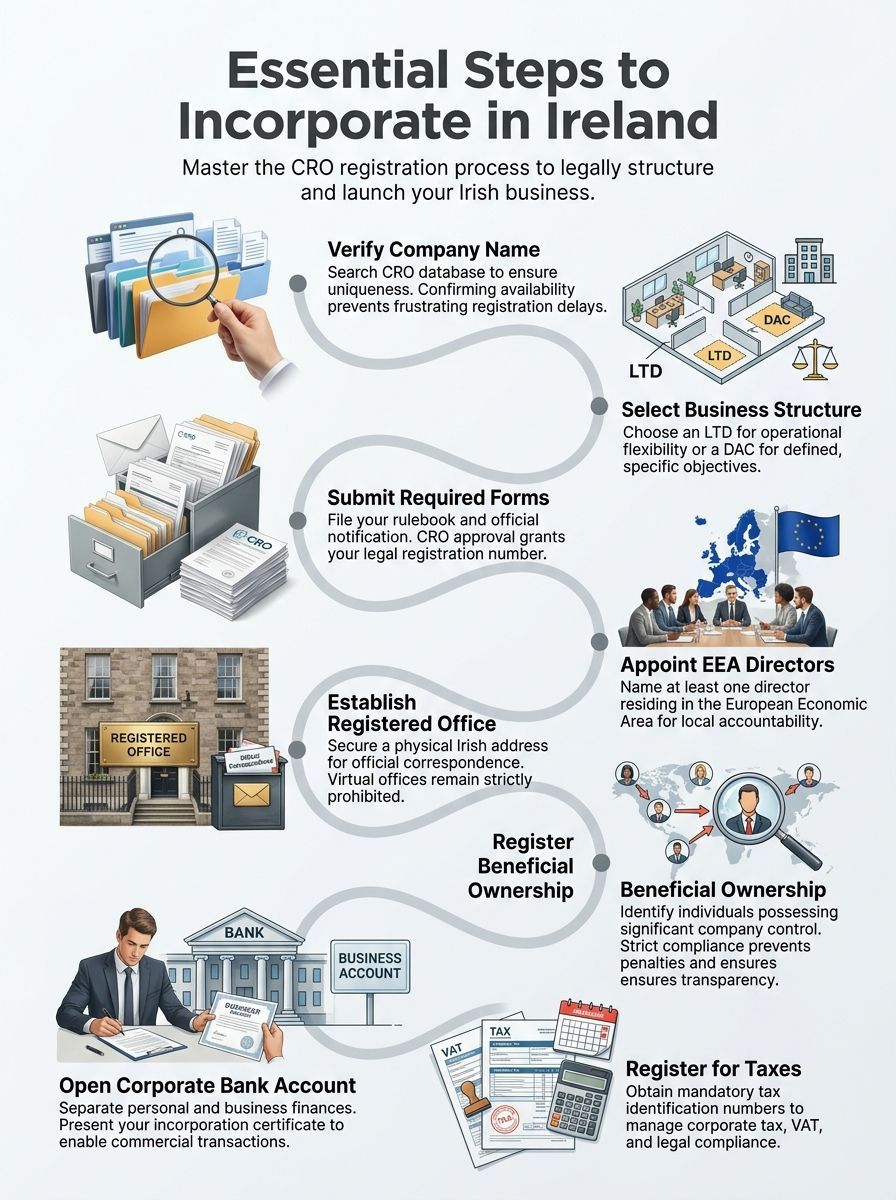
Corporate Landscape in Ireland
Ireland’s corporate landscape shapes how businesses operate across the country, from small startups in Cork to large enterprises in Belfast. The Companies Registration Office (CRO) acts as the central hub, managing all company registrations and keeping records that affect how your business runs.
The Role of the Companies Registration Office (CRO)
The Companies Registration Office stands as Ireland’s official gatekeeper for business formation. This government body processes all company registrations across the country and issues the Certificate of Incorporation once your application passes review.
Think of the CRO as your business’s official stamp of approval. The office maintains detailed records for every registered company, tracks filing obligations, and enforces compliance with Irish business law.
Without CRO registration, your company cannot legally operate or conduct business transactions. The registration process protects both your business interests and your customers by creating an official record of your company’s existence.
The CRO requires specific documents before approving your registration application. You must submit identification for directors and secretaries, proof of your registered office address, and your company’s constitution.
The office enforces strict rules about company names; your business name must comply with regulations and cannot match any existing registered company. After successful registration, the CRO issues your Certificate of Incorporation, which proves your company’s legal status.
Your business must maintain ongoing obligations with the CRO, including filing annual returns and reporting any changes to company information. Failing to meet these filing requirements can result in penalties and operational disruptions.
The CRO’s oversight helps keep Ireland’s business sector organized, transparent, and trustworthy for all stakeholders involved in commerce across Cork, Belfast, and every corner of the island.
Registering Your Business with the Companies Registration Office (CRO)
Getting your business registered with the Companies Registration Office (CRO) forms the backbone of your Irish company’s legal foundation, so read on to learn exactly what steps you need to take.
Choosing a Unique Company Name and Verifying Availability
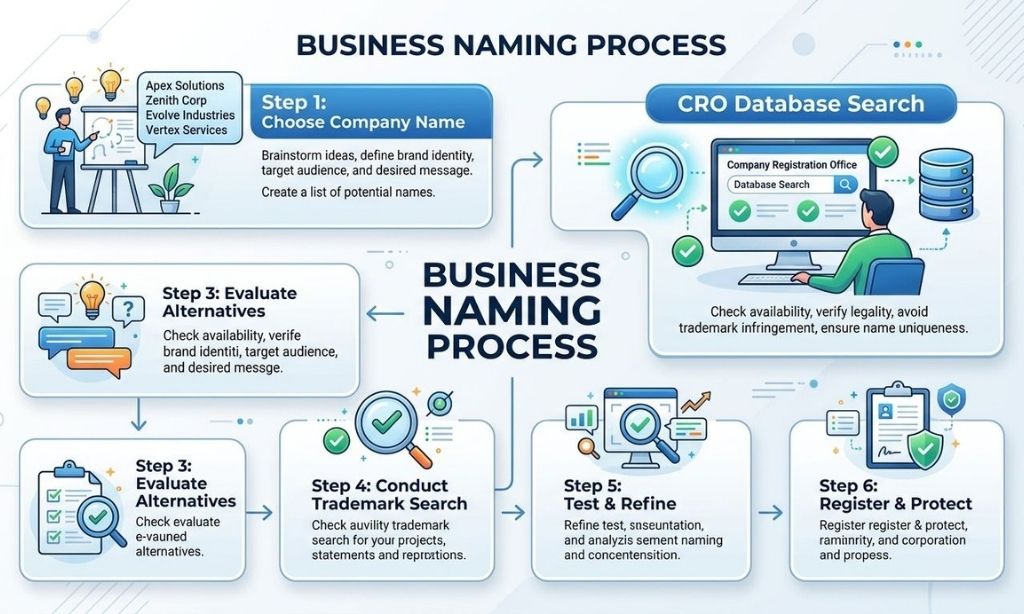
Your company name is the first impression you make on the market. You need to pick a name that stands out, reflects your business, and follows the Companies Registration Office rules.
The CRO requires that your chosen name does not conflict with existing registered names across Ireland. You must verify availability before you submit your application. This step prevents registration delays and saves you time later.
Irish Business Systems Ltd and other established companies went through this exact process. They checked their names against the CRO database to confirm no other business held the same title.
You can search the CRO’s online registry to see what names are already taken. This search takes just minutes and gives you clear answers about availability.
Compliance with company naming rules matters more than you might think. The CRO has specific guidelines about what you can and cannot include in your business name. You cannot use words like “bank” or “insurance” unless you have proper authorization.
Your name must be in English or Irish, or both. You should avoid names that are offensive or misleading to customers. Once you pick a name that passes all checks, you move forward with confidence.
The verification process protects your business identity and keeps your registration on track. Many small and medium enterprises in Cork and across Ireland have streamlined this step by consulting with the CRO directly.
Getting your name right from the start builds a strong foundation for your company profile and future growth.
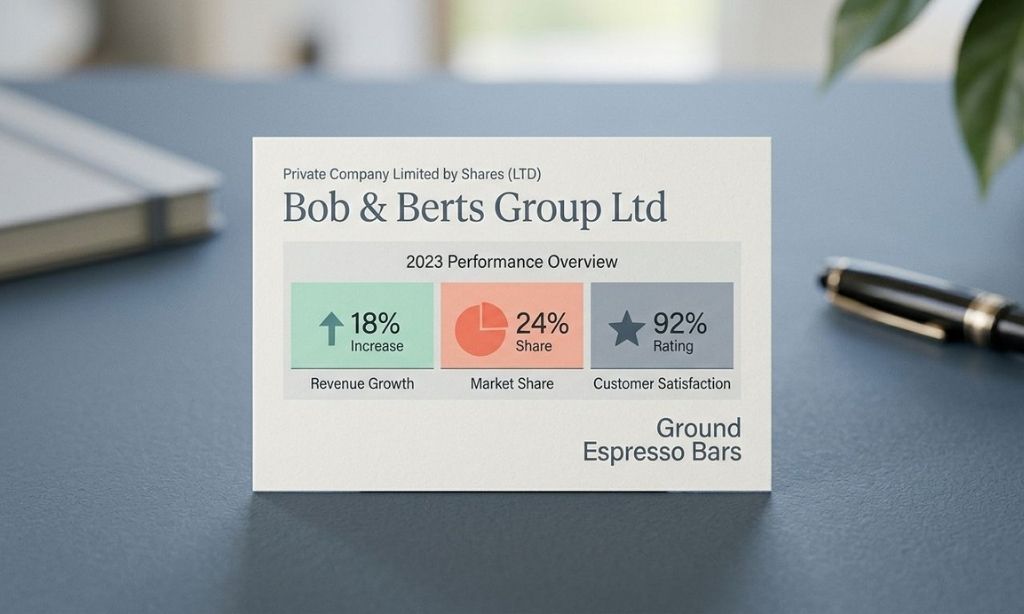
A Private Company Limited by Shares, or LTD, stands as one of Ireland’s most popular business structures. This setup separates shareholder liability from company liability, which means owners don’t risk their personal assets if the business faces financial trouble.
Companies like Bob & Berts Group Ltd and Ground Espresso Bars operate under this framework in Ireland. The structure works well for small operations, retail shops, restaurants, and manufacturing firms.
LTDs offer flexibility for businesses seeking to grow while protecting personal finances.
Setting up an LTD requires you to appoint at least one director and a company secretary. The director manages daily operations and makes key decisions for the company. You must submit a constitution to the Companies Registration Office, which outlines your company’s rules and governance structure.
This document covers how the business operates, shareholder rights, and director responsibilities. The CRO registers this paperwork and issues your company registration number, making your business official and legal in Ireland.
Many businesses across Cork, Northern Ireland, and throughout the country choose LTDs because the structure provides both protection and credibility with customers, suppliers, and financial institutions.
Designated Activity Company (DAC)
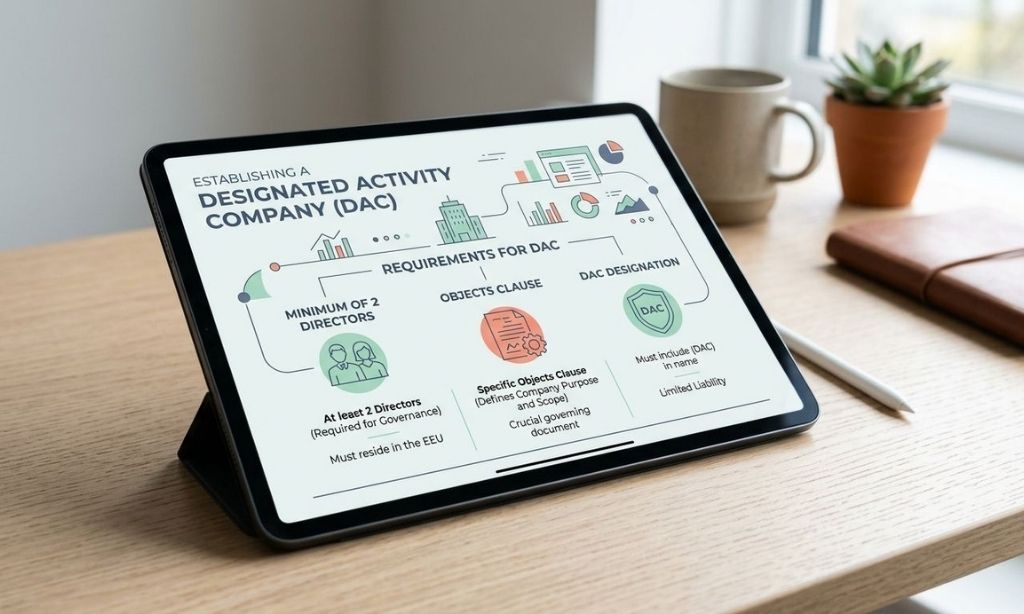
A Designated Activity Company offers a different path for business owners with specific, defined objectives. This structure works well for companies that operate within clear boundaries and need to communicate their exact purpose to stakeholders.
DACs require at least two directors to lead the organization, which spreads responsibility across multiple people. The constitution must include an objects clause that outlines the specific activities your company will perform.
This objects clause acts like a roadmap, showing exactly what your business will do and what it will not do. The Companies Registration Office reviews this information carefully during the registration process.
Many businesses choose this structure because it provides clarity and sets clear expectations from day one.
Your management software and back office systems will work smoothly within a DAC framework. The structure supports flexible operations while keeping your company focused on its core mission.
Government departments, universities, and education sectors often use this structure because they need to show their specific purpose clearly. The registration process mirrors that of other company types, but the objects clause makes your DAC distinct.
You’ll still open a corporate bank account, register for tax identification numbers with the Revenue Commissioners, and establish a registered office address. This structure gives your organization credibility while maintaining the focused approach that drives your success.
The capability to operate with defined parameters actually simplifies management and improves efficiency across your entire operation.
Mandatory Pre-Registration Requirements
Before you file paperwork with the Companies Registration Office, you need to prepare several critical documents and information that form the backbone of your company’s legal foundation.
Getting these pieces in place upfront saves you headaches later and keeps your registration moving forward without delays.
Submitting the Company’s Constitution and Form A1
Your company’s constitution forms the backbone of your business structure. This document outlines the internal regulations and rules that govern how your company operates day to day.
The Companies Registration Office (CRO) requires you to submit this constitution as a mandatory step before you can officially register. Think of it as your company’s rulebook; it tells directors, employees, and stakeholders how decisions get made and who holds what authority.
You must file this alongside Form A1, which captures critical information about your directors, company secretary, and registered office address. The CRO will not process your registration without both documents, so don’t skip this step.
Form A1 serves as the official notification form that brings your company to life in the eyes of Irish law. This form includes details about the people running your business, their roles, and where your company will maintain its registered office.
The accuracy of this information matters greatly; errors can slow down your registration or create compliance headaches later. You submit both your constitution and Form A1 together to the CRO, and this submission triggers the formal registration process.
Once the CRO reviews and approves these documents, your company receives its official registration number and certificate. This is when your business gains legal status and can start conducting operations, opening bank accounts, and engaging with customers and suppliers across Cork, the little island, and beyond.
Appointing Directors and the EEA Resident Rule

Your company needs at least one director to operate legally in Ireland. This director must live in the European Economic Area, which includes countries across Europe. The EEA resident rule exists to keep local accountability and oversight in place.
Directors handle the day-to-day operations and make key decisions for your business. You must provide identification documents for all directors during the registration process. The Companies Registration Office requires this information before they approve your application.
Think of your director as the executive who steers the ship; they carry real responsibility for how your company runs.
A company secretary also plays a vital role in your business structure. This person handles administrative tasks and keeps records organized. You need to appoint a secretary at the same time you name your directors.
Both positions require proper identification and verification through the CRO. If you operate a private limited company or a designated activity company, these rules apply to you. The technology and digital solutions your company uses for managing operations should support these governance requirements.
Your management team, whether they work from Cork or elsewhere in the EEA, must follow these legal obligations. Proper staffing of leadership roles protects your business and keeps everything running with efficiency and clarity.
Establishing a Registered Office Address
Your registered office address forms the legal backbone of your Irish company. This address serves as the official location where the Companies Registration Office sends all legal correspondence and documents.
You must provide proof of this address during registration, so pick a real place, not a mailbox service or a friend’s spare bedroom. The address becomes public record, which means anyone can find it through the CRO database.
Cork companies, Dublin firms, and businesses across Ireland all follow this same rule without exception.
Your registered office must be a physical location within Ireland where your company actually operates or maintains records. You cannot use a virtual office or a temporary address that disappears next month.
The person managing your office, often your managing director or another company officer, holds responsibility for receiving mail and handling official business at that location. Many growing companies choose office automation and equipment providers in their area to help manage their workspace efficiently.
This address stays on file with the CRO, so changing it later requires filing additional paperwork and paying fees. Pick your location carefully, because it shapes how your company appears to customers across Ireland and beyond.
Registering Beneficial Ownership (RBO)
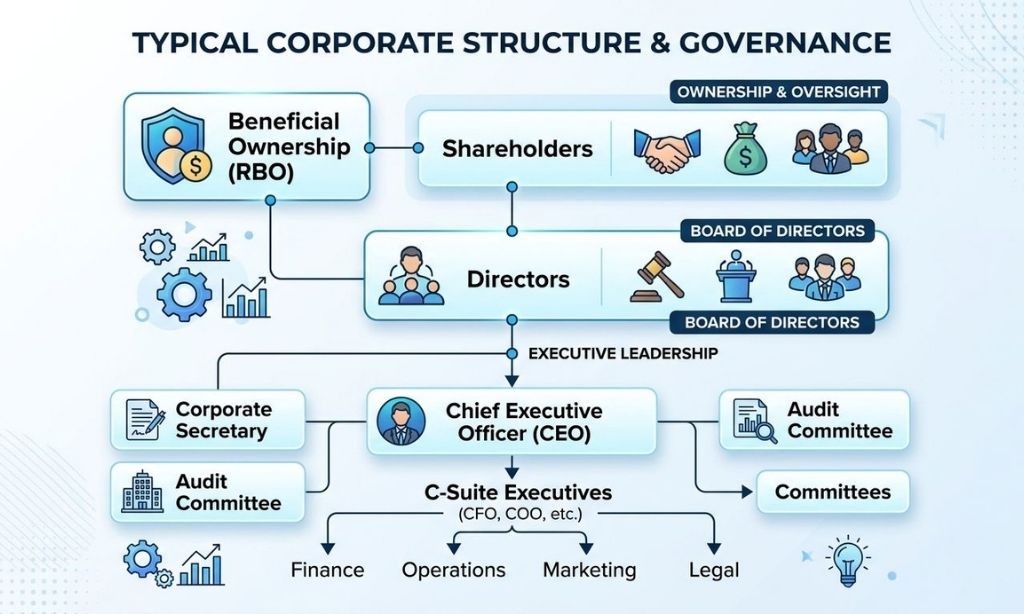
Ireland requires all companies to register beneficial ownership information with the proper authorities. This registration identifies individuals who hold significant control over your company.
The law demands that details of these people reach the RBO register without delay. Failing to comply with RBO regulations results in serious penalties. Companies House enforces these rules strictly.
The process protects the integrity of Irish business systems and improves transparency across the market. You must submit accurate information about anyone with real control, whether they own shares directly or pull the strings behind the scenes.
This step separates legitimate operations from questionable ones.
Details about beneficial owners must be current and complete at all times. If ownership changes hands, you update the register promptly. The RBO system works alongside your tax registration and corporate bank account setup.
Think of it as the final piece that locks everything into place. Individuals with significant control include shareholders, directors, and anyone making key decisions about the company’s future.
Cork-based businesses, companies in Dublin, and enterprises across all regions follow identical rules. The RBO register creates a clear picture of who actually runs each organization.
This transparency helps prevent fraud and money laundering schemes. Your compliance with these regulations demonstrates professionalism and builds trust with partners, investors, and customers who care about doing business with legitimate operations.
Opening a Corporate Bank Account
Your new Irish company needs a bank account to handle money matters. Banks require proof of company registration and identification documents before they open an account for you. You must complete this step after the Companies Registration Office approves your incorporation.
The corporate bank account separates your personal finances from business finances, which keeps everything clean and organized. Financial transactions flow through this account, making tax compliance straightforward.
Most banks in Cork and across Ireland ask for your Certificate of Incorporation and director identification papers. This account becomes the hub for all your business money, from customer payments to vendor bills.
Opening the account takes time, so start this process early in your incorporation timeline. Banks want to verify that your company is real and legitimate before they hand over access to financial services.
Your directors must visit the bank in person with proper identification to complete the setup. The account setup protects your business by creating a clear paper trail for the Revenue Commissioners.
Without this account, you cannot pay taxes properly or prove your financial transactions to authorities. Many growing businesses find that having a dedicated account improves efficiency in bookkeeping and accounting tasks.
This single step transforms your business from a legal entity on paper into a functioning operation ready to manage cash flow and build financial credibility.
Tax Registration and Compliance

You must register with the Revenue Commissioners to get your tax identification numbers. This step puts your business on the official radar and keeps everything above board.
Registering for Tax Identification Numbers With the Revenue Commissioners
Your business needs a tax identification number from the Revenue Commissioners to operate legally in Ireland. This registration step happens after you file your company documents with the CRO.
The Revenue Commissioners issue this number to all incorporated companies, which you then use for all tax matters. Corporation Tax registration is mandatory for every incorporated company in the country.
Your tax identification number becomes your official link to Irish tax authorities. Think of it as your business’s fingerprint for tax purposes. This number appears on invoices, tax returns, and all official correspondence with the government.
VAT registration is required for businesses exceeding the annual turnover threshold set by Irish tax law. Your tax identification number enables you to fulfill tax obligations with Irish authorities and simplifies compliance across all your operations.
Once you have this number, you can open a corporate bank account and start conducting business with full legal standing. The process moves quickly, typically taking a few weeks from submission to approval.
Your company’s information and tax status then integrate into the national system, allowing you to manage payroll, file returns, and track productivity across your organization’s operations.
This registration protects your business and keeps everything above board with government agencies.
Final Words
You’ve now got the roadmap for launching your Irish business the right way. The steps matter; they protect you legally and set a solid foundation. Your company gains real standing once the CRO approves your registration and issues that Certificate of Incorporation.
Open that bank account, file your tax forms, and keep your records sharp because compliance keeps your doors open. Start today, stay organized, and watch your Irish venture grow strong.
FAQs on Irish Business Systems
1. What are the first legal steps to set up a business in Ireland?
Start by choosing your company type, like limited or partnership. Register with the Companies Registration Office in Dublin or Cork city. You need an official address, which can be remote if you use outsourcing services.
2. Do I need special documents for digital imaging and printing businesses?
Yes, you must file paperwork that covers products and services such as managed printing services, point of sale systems like epos, and renting office machinery including computers. If you plan to offer IT services & computer repair or logistics support, mention these too.
3. How do privacy laws affect Irish business systems?
Irish law requires strict privacy controls when handling customer data from targeted advertising or collaboration tools like Bloomberg Terminal or TouchOffice Web. Always enhance security for digital imaging and printing products.
4. Can I run my headquarters outside Cork city?
Absolutely; many companies operate globally with diverse teams across locations like Draperstown in Co Antrim or even the United Kingdom while keeping their main channel through Cork city stock offices.
5. Is expertise needed for using artificial intelligence in Irish business systems?
If your range of systems includes artificial intelligence for things like hospitality management (think ByTable at Tides Restaurant), then yes; having workforce expertise is key to improve efficiency and simplify operations.
6. Are there rules about acquiring other companies such as Xerox IBS NI Limited?
Acquisition means more than just signing papers; it involves following local regulations on stock transfer, updating information technology records at Imaging Business Systems (N.I.) Limited, and reporting changes to authorities so everything stays above board—like Bloomberg Law would suggest!