The world has cautiously welcomed the recent ceasefire agreement between Israel and Iran, brokered by former U.S. President Donald Trump. While the truce has halted direct military confrontation for now, concerns remain over its fragility, the potential for renewed violence, and the broader implications for regional stability.
Ceasefire Agreement Announced by Trump
In a surprise diplomatic move, Donald Trump announced that both Israel and Iran had agreed to a phased ceasefire plan. The agreement involved a 12-hour suspension of hostilities to allow for de-escalation, followed by ongoing monitoring and potential extension. This marked a significant pause in a two-week-long conflict that saw direct military engagement between the two regional powers.
However, both Israel and Iran attached strong warnings to the ceasefire: each vowed swift retaliation if the other broke the deal. This condition set the tone for a tense and uncertain truce.
Rising Tensions Despite Ceasefire
Shortly after the ceasefire announcement, Israel accused Iran of launching missiles in violation of the agreement. In response, Israel’s Defense Minister ordered retaliatory strikes on Tehran. However, Trump intervened by urging Israel to hold back, emphasizing the importance of restraint. Israel complied, halting the planned strikes.
Despite initial violations, the ceasefire began to take effect across most fronts. Nonetheless, the confusion surrounding the implementation schedule and the lack of international enforcement mechanisms left the situation vulnerable to further flare-ups.
Iran’s Response and Nuclear Program Intentions
Iran’s top security body, the Supreme National Security Council, claimed that its military strength forced Israel to accept the ceasefire. Iranian authorities framed the outcome as a strategic success and warned they would remain fully prepared to respond to any breach.
Shortly after the ceasefire, Iran declared its intent to resume its nuclear program, which had been disrupted by recent Israeli and U.S. airstrikes. Tehran argued that its nuclear activities were for peaceful purposes, although the renewed urgency raised alarms internationally. Previously, both U.S. intelligence and the UN’s nuclear watchdog had found no conclusive evidence that Iran was actively developing nuclear weapons.
Israel’s Justification and Political Reactions
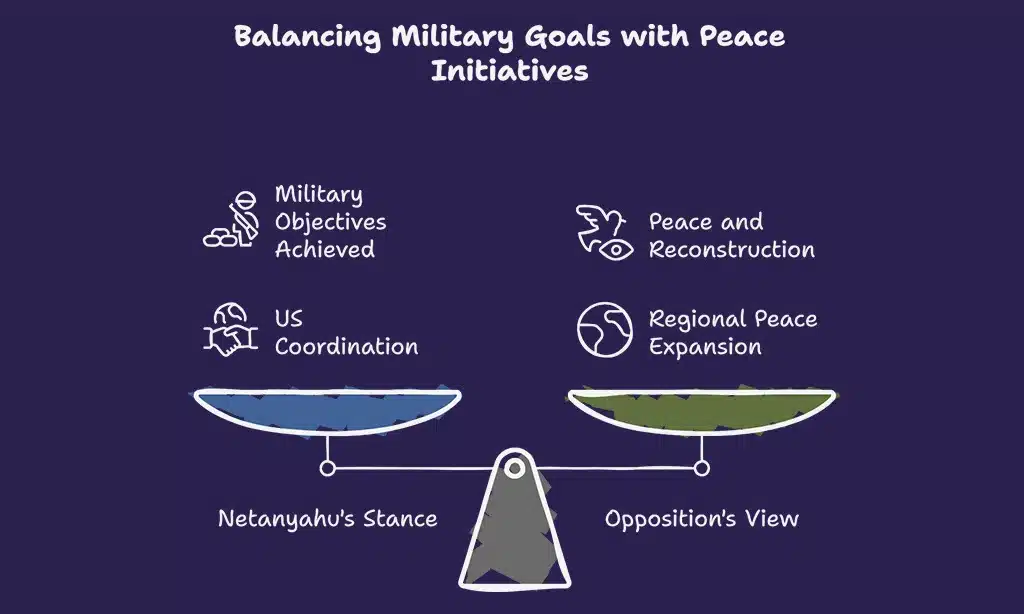
Israeli Prime Minister Benjamin Netanyahu stated that the objectives of the June 13 surprise attack were met. These goals included disrupting Iran’s nuclear infrastructure and diminishing its missile capabilities. He emphasized that the ceasefire was accepted only after achieving these military goals and in full coordination with the United States.
Israeli opposition leaders also weighed in, with some calling for a similar ceasefire in Gaza. They emphasized that the window for peace should be extended to all conflict zones in the region, particularly to secure the release of hostages and begin national reconstruction efforts.
United States: Deeply Divided on Trump’s Role
Reactions within the U.S. political landscape have been sharply divided. Supporters of Trump praised his negotiation skills, asserting that he achieved what previous administrations could not—direct engagement with both Israel and Iran leading to a temporary truce.
Others, particularly from the Democratic side, raised constitutional concerns. They criticized Trump for engaging the U.S. in acts of war without Congressional approval and warned that such unilateral decisions set a dangerous precedent for U.S. foreign policy.
Role of Regional Powers in Mediation
Qatar played a pivotal role in the ceasefire negotiations at the request of the United States. The Emir of Qatar welcomed the agreement but expressed deep concern about immediate ceasefire violations. He stressed the importance of adherence to the truce terms and called for restraint.
Qatar and Egypt are expected to resume mediation efforts in Gaza within days. These talks aim to build on the momentum from the Israel-Iran ceasefire and secure a similar agreement between Israel and Hamas. Egypt echoed Qatar’s position, stating that the ceasefire between Israel and Iran could serve as a critical step toward broader regional stability.
Global Reactions to the Ceasefire
The ceasefire drew mixed but largely positive reactions from around the world:
-
Lebanon expressed relief at having avoided involvement in the conflict.
-
Jordan praised the agreement and emphasized the need to prevent further escalation.
-
Saudi Arabia welcomed the announcement and supported continued diplomacy.
-
Russia viewed the ceasefire as a potentially stabilizing step but warned that the situation remains unpredictable.
-
China emphasized the importance of sovereignty and urged all parties to return to peaceful dialogue.
-
European Union leaders expressed cautious optimism, calling the agreement an important step while urging Iran to engage constructively in diplomatic talks.
-
France called for immediate negotiations to address concerns about Iran’s nuclear and ballistic programs.
-
Germany acknowledged the ceasefire as a positive development and thanked regional mediators for their restraint during the conflict.
Civil Aviation and Logistics Recovery
With the fighting paused, Middle Eastern airspace began reopening. Qatar, Iraq, Oman, the UAE, and Syria resumed commercial flight operations. Airlines, which had canceled hundreds of flights, began working to resolve a significant passenger backlog.
In Doha alone, over 25,000 travelers were affected. Airlines like Oman Air and Virgin Australia resumed operations, prioritizing those whose travel plans were disrupted by the conflict.
Global Market Reaction
The ceasefire brought immediate relief to global markets:
-
Oil prices dropped by about 3 percent due to decreased fears of prolonged regional supply disruptions.
-
Equity markets surged, with U.S. stocks rallying across the board. The Dow Jones Industrial Average gained over 500 points, while the S&P 500 and Nasdaq saw similar jumps.
-
Currency markets reacted as well. The U.S. dollar fell against the yen and euro, both of which strengthened due to improved energy outlooks for Japan and the EU. The rupee, heavily dependent on oil imports, also gained ground.
-
Investors began speculating that with tensions cooling, the U.S. Federal Reserve might delay any additional rate hikes.
While optimism drove these trends, analysts cautioned that the ceasefire remains tenuous. Any renewed violence could quickly reverse these gains.
Lingering Concerns and Future Risks
Despite the momentary calm, several critical questions remain unresolved:
-
Will the ceasefire hold? Early violations and deep-seated mistrust between Israel and Iran could threaten the truce at any moment.
-
Is Iran’s nuclear program truly disrupted? U.S. intelligence reports suggest that Iran’s capabilities were only delayed—not destroyed—by recent airstrikes.
-
What is the future of Gaza? Many international actors are urging Israel to apply the same ceasefire framework to the ongoing conflict in Gaza.
-
Can diplomacy take root? Regional and global powers are pushing for sustained negotiations, but the pathway to a long-term solution is still unclear.
The ceasefire between Israel and Iran has offered a rare and fragile opportunity for de-escalation in the Middle East. While markets have reacted positively and international leaders have voiced support, the underlying tensions that sparked the conflict remain unresolved. Iran’s nuclear ambitions, Israel’s security concerns, and the humanitarian crisis in Gaza continue to pose serious threats to peace.
Whether this truce leads to meaningful negotiations or simply delays further conflict will depend on how committed both sides are to restraint—and how strongly the international community supports diplomatic efforts moving forward.