

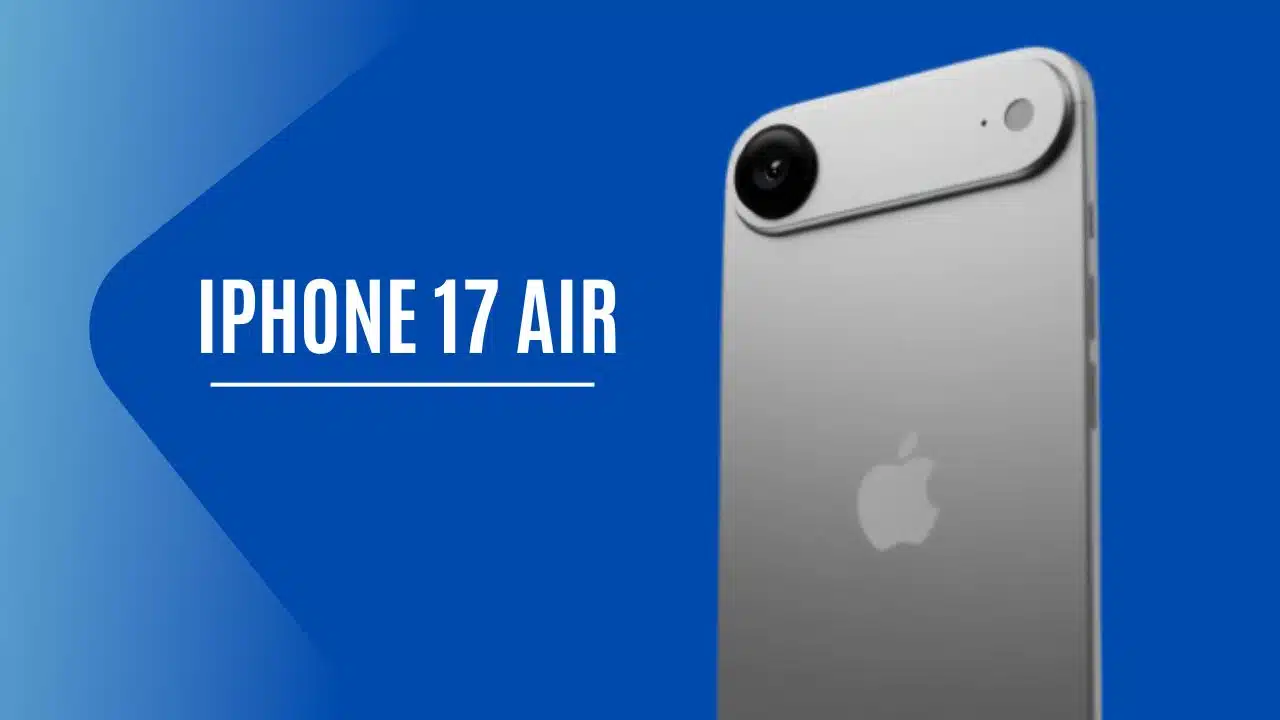
Apple’s iPhone 17 lineup has been billed as the company’s most ambitious generation yet, and at the heart of this leap is the iPhone 17 Air. Replacing the Plus line, the Air is Apple’s thinnest smartphone to date at 5.6 millimeters, making it a milestone not just in design but in engineering.
The iPhone 17 Air also signals something bigger: a glimpse into Apple’s future. Analysts see it as a stepping stone toward the company’s long-rumored foldable iPhone or even a seamless “single sheet of glass” device. By solving the challenges of extreme thinness—heat, battery, durability—Apple has laid the groundwork for innovations we haven’t even imagined yet.
This detailed guide explores every aspect of the iPhone 17 Air—from release date and pricing to specifications, design, camera upgrades, and comparisons with earlier models—to help you decide whether it’s worth the upgrade.
Release Date and Availability
Apple officially announced the iPhone 17 Air on September 9, 2025, during its highly anticipated fall event in Cupertino, California. As with previous iPhone launches, the timeline followed a predictable pattern:
-
Pre-orders began on September 12, 2025, just three days after the launch event.
-
First shipping started on September 19, 2025, in Apple’s priority markets such as the United States, United Kingdom, India, Japan, and major European countries.
-
Secondary markets are expected to see availability between October and November 2025, depending on regulatory clearances and logistics.
This phased rollout ensures Apple maximizes demand during the launch window and guarantees supply for regions where iPhones dominate sales. For buyers in emerging markets, the Air may arrive closer to the holiday season, making it a popular premium purchase for late 2025.
Ultra-Thin Design: Engineering a Breakthrough
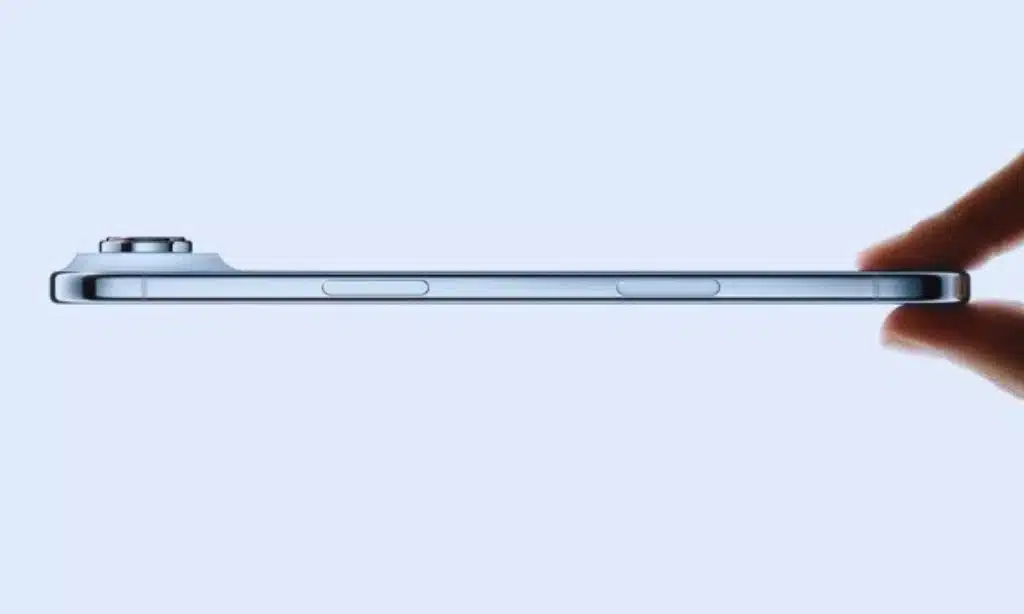
At just 5.6 mm, the iPhone 17 Air is slimmer than any mainstream smartphone currently on the market. While the thickness reduction from the standard iPhone 17’s 7.9 mm seems small, in real-world usage the difference is dramatic. The Air feels lighter, more compact, and more pocketable while retaining a 6.5-inch display.
The reduction in thickness required Apple to completely rethink smartphone architecture. Instead of distributing components evenly, Apple shifted major parts into the reinforced camera housing at the rear. This strategic choice created more usable space inside the frame and kept the device structurally rigid.
The Air is constructed with Grade-5 titanium, known for its high strength-to-weight ratio, and Ceramic Shield 2 glass on both sides for superior protection. Despite its slimness, it retains IP68 certification, ensuring resistance to dust and water up to 6 meters for 30 minutes.
This design makes the Air a lifestyle device: elegant enough for professionals, portable enough for travelers, and durable enough for everyday use.
Display: A Slim Profile with Cinematic Quality
The iPhone 17 Air sports a 6.5-inch LTPO Super Retina XDR OLED display with ProMotion 120Hz refresh rate. The thin bezels give an impressive 89.9% screen-to-body ratio, making the device almost all-screen.
Apple prioritized brightness, making the Air perfect for outdoor use. With 3,000 nits peak brightness, the Air outshines almost all competitors, ensuring excellent visibility in direct sunlight. HDR10 and Dolby Vision create a truly cinematic experience, whether you are streaming movies or editing videos.
The Ceramic Shield 2 glass with Mohs level 5 hardness provides scratch resistance, while an anti-reflective coating reduces glare for professionals who rely on accurate visuals.
| Display Specs | Details |
|---|---|
| Type | LTPO Super Retina XDR OLED, 120Hz, HDR10, Dolby Vision |
| Brightness | 1000 nits (typ), 1600 nits (HBM), 3000 nits (peak) |
| Size | 6.5 inches, ~89.9% screen-to-body ratio |
| Resolution | 1260 x 2736 pixels (~460 ppi) |
| Protection | Ceramic Shield 2, Mohs level 5 hardness, anti-reflective coating |
Performance and Hardware
At its core, the iPhone 17 Air is powered by the Apple A19 Pro chip, fabricated on a 3 nm process. This ensures not only faster processing but also better thermal efficiency—crucial for an ultra-thin device.
-
CPU: A hexa-core design with two high-performance cores clocked at 4.26 GHz and four efficiency cores for background tasks.
-
GPU: A 5-core Apple GPU supporting real-time ray tracing, bringing console-quality gaming graphics to mobile.
-
Neural Engine: Enhanced AI and AR performance for applications like real-time language translation, AR gaming, and advanced photo editing.
-
Modem: Apple’s in-house C1X modem with double the throughput of the iPhone 16, ensuring blazing-fast 5G speeds.
-
Networking Chip: The N1 chip handles Wi-Fi 7, Bluetooth 6, and Thread for better smart-home integration.
The Air comes with 12 GB RAM across all models, paired with NVMe storage options of 256 GB, 512 GB, and 1 TB. This setup makes it powerful enough to replace laptops for many workflows.
Camera System: Compact Yet Capable
Despite being limited to a single 48 MP rear sensor due to the thin frame, Apple leverages computational photography to deliver telephoto-like zoom and wide-angle versatility.
| Main Camera | Details |
|---|---|
| Resolution | 48 MP, f/1.6, 26mm wide |
| Sensor Size | 1/1.56″, 1.0µm, dual pixel PDAF, OIS |
| Features | Dual-LED dual-tone flash, HDR, panorama |
| Video | 4K@24/25/30/60fps, 1080p@25/30/60/120/240fps, Dolby Vision HDR, stereo sound recording |
The selfie camera is an 18 MP wide-angle lens with PDAF and OIS. It’s paired with an SL 3D sensor for secure Face ID and depth mapping. Features include 4K HDR recording, Dolby Vision HDR, 3D spatial audio, and advanced stabilization, making it a content creator’s favorite.
iOS 19: Smarter, Safer, and More Integrated
The iPhone 17 Air runs iOS 19, which introduces deeper AI integration and ecosystem synergy.
-
AI Enhancements: Smarter widgets and lock screen suggestions tailored to individual routines.
-
Privacy: Enhanced controls for app tracking and permissions, allowing users to revoke background tracking instantly.
-
Productivity: Safari gains AI summarization tools, Notes integrates with transcription, and Mail suggests smart replies.
-
AR Ecosystem: Tight integration with Apple Vision Pro and ARKit apps, preparing users for Apple’s mixed-reality future.
-
Satellite Features: Emergency SOS and messaging via satellite expand to more regions, ensuring connectivity even in remote areas.
Connectivity and Network Support
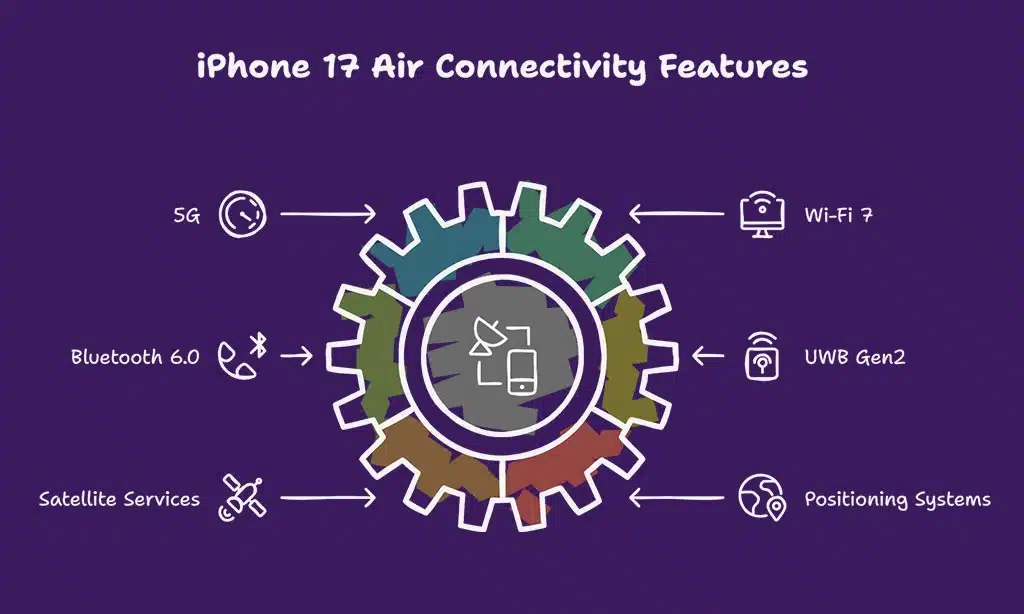
The iPhone 17 Air is fully future-ready with next-generation wireless standards:
-
5G: Global mmWave + Sub-6GHz bands for faster speeds
-
Wi-Fi 7: Up to 4.8 Gbps throughput, ultra-low latency for gaming and VR streaming
-
Bluetooth 6.0: Improved audio stability and energy efficiency
-
UWB Gen2: Precision device tracking and integration with Apple Vision Pro
-
Satellite Services: SOS, messaging, and Find My available in supported countries
Positioning Systems: GPS, Galileo, GLONASS, QZSS, BDS, and India’s NavIC.
Battery and Charging
At 3149 mAh, the Air’s battery is smaller than other iPhone 17 models. However, it benefits from optimized iOS power management.
| Battery Specs | Details |
|---|---|
| Type | Li-Ion 3149 mAh, non-removable |
| Wired Charging | PD2.0: 50% in 30 min |
| Wireless | MagSafe/Qi2 up to 20W (15W in China) |
| Reverse Charging | 4.5W wired |
| Endurance | ~40:00h video playback |
| Cycles | ~1000 full cycles |
Apple also offers a MagSafe modular battery pack for extended 40-hour playback, designed to complement the Air’s slim design.
Pricing Breakdown
Apple positions the Air between the mainstream iPhone 17 and the Pro models.
| Model | US Price | India | EU | UK |
|---|---|---|---|---|
| iPhone 17 Air (256 GB) | $999 | ₹99,999 | €1,199 | £999 |
| iPhone 17 Air (512 GB) | $1,199 | ₹1,19,999 | €1,399 | £1,149 |
| iPhone 17 Air (1 TB) | $1,399 | ₹1,39,999 | €1,599 | £1,299 |
This makes the Air a premium design-first choice, priced higher than the standard iPhone 17 but slightly below the Pro Max.
Colors, Models, and Certification
-
Colors: Space Black, Cloud White, Light Gold, Sky Blue
-
Models: iPhone18,4, A3517, A3260, A3518, A3516
-
EU Labels: Energy Class A, Free Fall Class B (180 drops tested), Repairability Class C
Takeaways
The iPhone 17 Air is more than a thinner iPhone—it’s Apple’s boldest step toward reimagining what a smartphone can physically be. With its ultra-thin titanium body, A19 Pro chip, advanced OLED display, and satellite-ready communications, it is a mix of art and engineering.
Yes, it sacrifices a larger battery and multiple rear cameras, but it compensates with modular accessories, AI-driven photography, and cutting-edge connectivity. For design-conscious buyers and professionals who want a futuristic device without losing flagship performance, the Air is one of Apple’s strongest offerings yet.




























