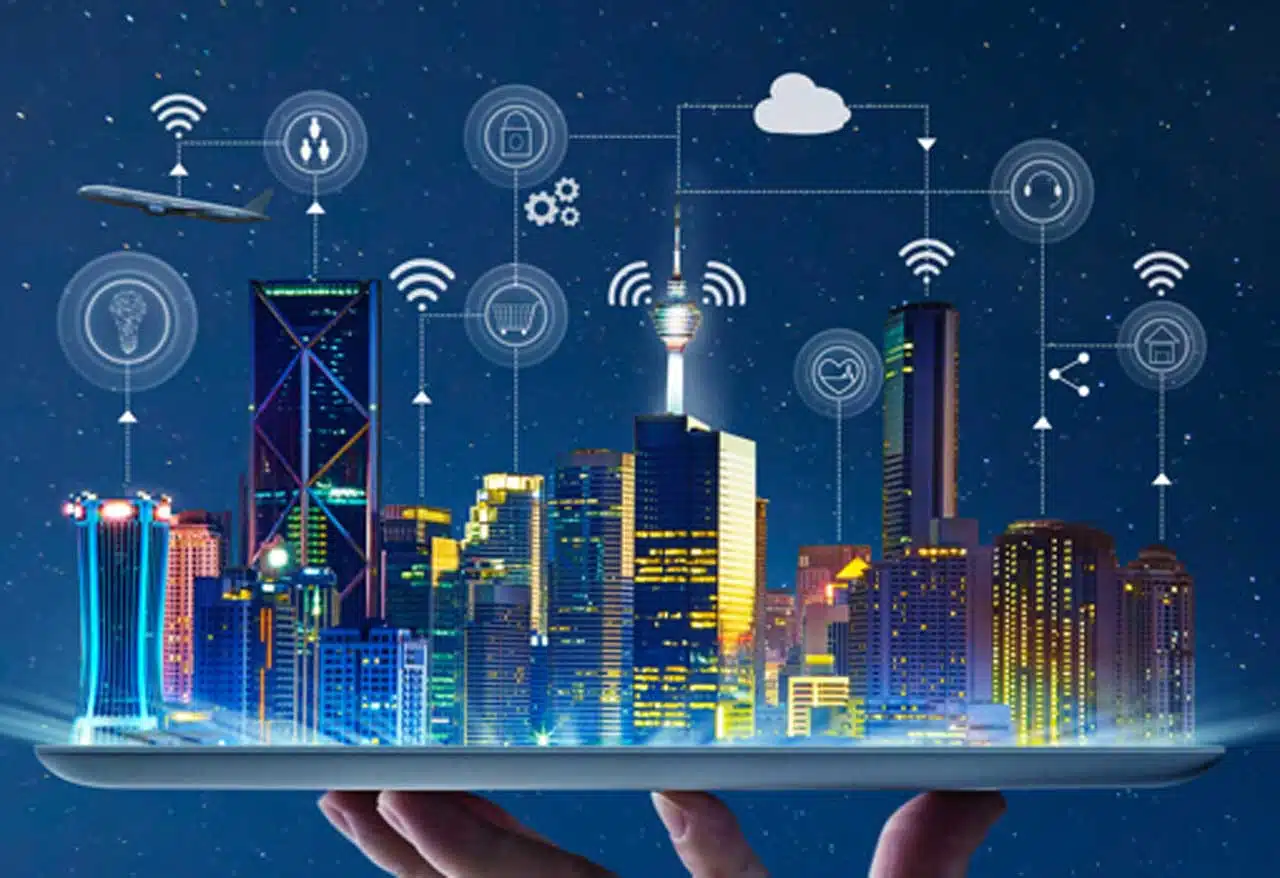
“Smart cities” are those that use technology to enhance the quality of life for citizens in terms of social, environmental, and economic responsibilities. In this transformation path, the city and the community must maintain a continuous commitment to innovation while keeping a long-term perspective on the situation at hand.
During these exceptional times, smart city technology will become more vital as towns, municipalities, and utilities seek to enhance their services while also increasing the safety of their residents. Smart city technology will help cities plan for and respond to the next safety issue.
Every internet of things development company is becoming increasingly valuable as connected devices proliferate. Several countries throughout the globe are embracing new technology more than ever before to improve city ecosystems and improve the lives of their citizens. In addition to greenways, parks and other areas of public open space, this area has a variety of residential, commercial, and retail buildings and government and public-sector organizations.
The final goal is to reform the delivery of public services via a citizen-centric strategy, resulting in improved efficiency and more responsive services that will help achieve equitable development.
Unleashing the general thoughts on smart city technologies
When smart city technologies are properly deployed, they enable more effective service delivery to expand population demographics. While a genuinely smart city is built from the bottom up, many cities increasingly use the Internet of Things (IoT) technology to enhance public services.
Some believe that the only way to ensure the long-term viability of the planet’s population expansion is to implement scalable smart city technologies. Traffic management, for example, maybe accomplished through the use of smart traffic signals, road-implanted sensors, and connections with future smart automobiles.
There are a variety of technologies accessible today, and which ones would be most appropriate for a given city would differ depending on their specific difficulties, environmental activities, and the ultimate purpose of the smart city project. One may view these technologies separately or as a unified ecosystem that includes these services. Modern technology makes it possible to do all of this and more with the use of cloud computing, artificial intelligence (AI), the Internet of Things (IoT) and machine learning (ML).
The Potential of the Internet of Things Devices in Smart Cities
As a result of their ability to gather data on sewerage, air quality, garbage, and energy consumption, sensor-enabled Internet of Things devices deployed in smart cities may also assist in monitoring the environmental effect of cities.
Furthermore, linked technology may raise knowledge and visibility about individual energy and resource use. Temperature controllers connected to the Internet of Things, for example, may decide whether or not to turn on the heating depending on variable energy prices.
With the use of smart Internet of Things water management sensors in conjunction with data analytics tools, customers may better understand how much water they use. Smart meters, for example, provide more insight into consumption and have been shown to save money while also conserving natural resources.
It is possible to achieve cutting-edge intelligence and adaptability using IoT Smart Cities technology, allowing cities to make better use of their resources while also improving everything from air and water quality to transportation and energy systems to communication networks.
The Potential of AI and Machine Learning in Smart Cities
Artificial intelligence and machine learning are important components of the city’s connectedness. For example, smart sensors installed in our cities to identify, monitor, and categorize automobiles, pedestrians, and bicycles would undoubtedly enhance traffic management in our cities due to their use.
Increased internet penetration is also critical in developing smart city platforms, as it allows for the establishment of IoT connections, which serve as the foundation for the development of smart cities.
IoT and Machine Learning in Smart Cities
The capabilities of machine learning and the Internet of Things are critical components of smart cities. Natural disasters, healthcare, communication, agriculture, and public services are just a few examples of IoT applications that may be improved using machine learning. They can all help improve citizens’ quality of life.
-
Public safety from natural disasters
Maintaining citizen and worker safety during natural disasters may be difficult for municipalities. Incidents such as storms, floods, fires, and gas leaks are unexpected and, in many cases, difficult to forecast or prepare for in advance. Natural disasters are growing more often, more severe, and more expensive in the next decades, making safety even more vital shortly.
Smart sensors and sophisticated analytics may assist communities in better anticipating, preparing for, and responding to these types of emergencies. For example, IoT sensors in conjunction with machine learning (ML) may manage risk and prevent damage, such as air quality sensors, electric distribution line sensors, leak detection sensors and pole tilt sensors. Cities can discover concerns and influence outcomes during and after natural disasters by using sensors in conjunction with predictive analytics.
-
Smart healthcare facilities
The notion of using Internet of Things-based sensor networks for healthcare applications seems to be a promising one, potentially reducing inefficiencies within the current infrastructure. Given the vast quantity of data to be handled smartly by wireless sensor networks driven by the Internet of Things, a machine learning technique is essential for the effective deployment of IoT-powered wireless sensor networks for this purpose.
Artificial intelligence, IoT and machine learning make a major impact in today’s healthcare environment, whether it comes to disease control, early identification of illness, or the right treatment selection. The provision of better and more individualized medical care is possible in the future.
One should implement different machine learning algorithms throughout smart cities to optimize and increase application performance and substantially provide better outcomes. As a result, sensor networks, the Internet of Things, and machine learning have untapped promise to relieve physicians’ workloads and improve illness detection.
-
Freedom of movement and peace of mind
As the world’s population grows and the demand for resources rises, there is an increase in the number of crimes committed worldwide. Sometimes, police investigations are hindered because of issues with surveillance cameras, such as blind areas or low-quality images.
To assist police officers in tackling crime more efficiently, new technology is beginning to become accessible. Using big data and analytics, for example, predictive police may go through historical and behavioural data, video feeds, and other sources to anticipate when and where crimes, other kinds of public disturbance, and other types of public disorder are most likely to occur.
Law enforcement organizations are already using facial recognition technologies based on neural networks and machine learning to simplify their jobs. According to McKinsey, instances of vehicle theft, robbery, burglary, and assault, might be reduced by 30 to 40% in digitally equipped smart cities.
-
Smart public facilities
IoT and machine learning for optimal forecasts are required for smart cities. For example, in smart streets, smart IoT devices will gather and analyze data using machine learning to forecast the amount of traffic on a certain street location at a given time. Furthermore, smart dustbins are another example of IoT smart sensors being a catch to dustbin containers; bin collection trucks would routinely come to pick up dustbins from containers based on acquired data from sensors, keeping streets cleaner, greener, and smarter.
Conclusion
As a result of current technologies such as artificial intelligence, the Internet of Things (IoT) and machine learning, the world is rapidly heading toward comprehensive digitization.
With improvements in traffic flow, more efficient garbage collection procedures, video monitoring and infrastructure maintenance schedules, the smart city is a vision for our urban centres that are cleaner, safer and more inexpensive in the years to come. Previously manual tasks like driving a vehicle or cleaning a home may now be completed automatically with the aid of the Internet of Things and machine learning.
About the author: Rachita Nayar
Rachita Nayar is a professional writer. She has a penchant for writing and is involved in many projects throughout the world. Currently, she works with a blockchain, AI, and IoT development company that allows her to explore the domain and hone her skills further by learning about blockchain and spreading the knowledge.