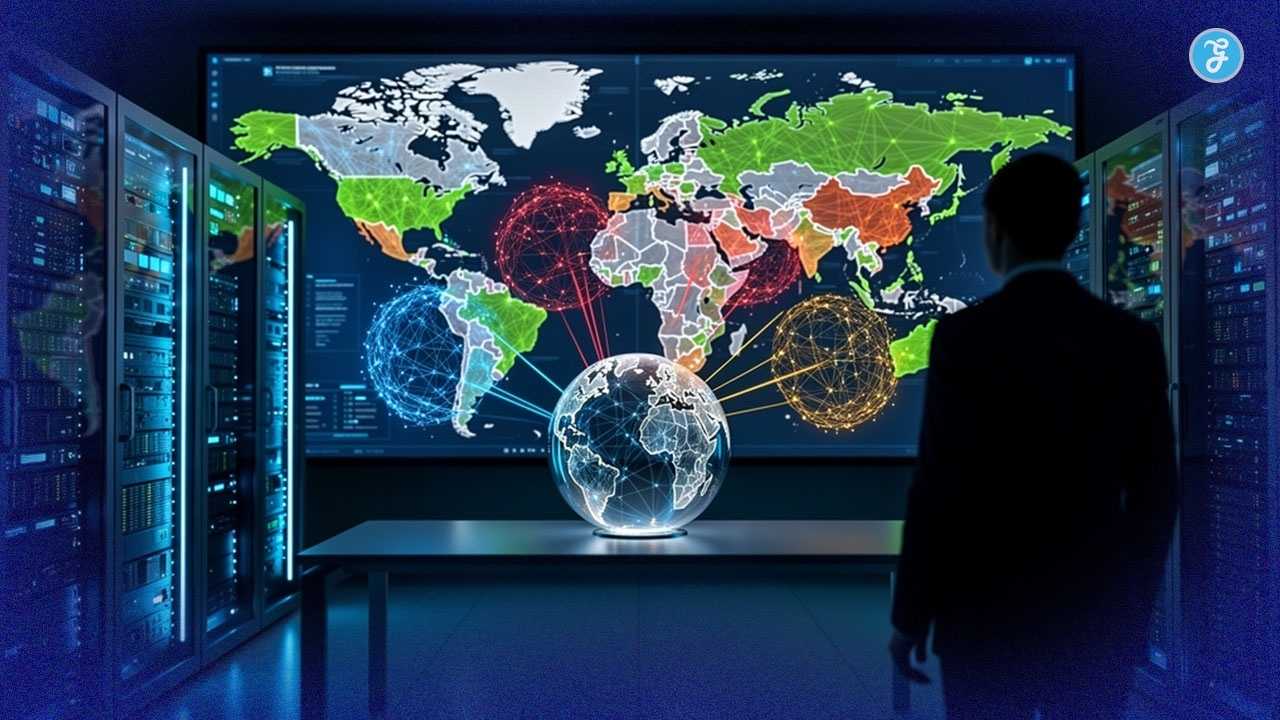
We are witnessing a quiet turning point in how we eat. For decades, food logistics relied on a fragmented and often blind system. Today, a radical departure is taking place. It is called the Collaborative Integrated Value Chain. Think of it as a unified loop rather than a broken line. In this system, every single professional operates on the exact same data. The soil scientist, the organic farmer, and the high-tech processing hub all share information in real-time.
This data loop allows for real-time nutrient density scoring of every crop, ensuring the harvest meets the highest biological standards before it even leaves the field. This creates a living network. It prioritises long term stability over sheer speed. Old supply routes easily broke under the weight of recent global shocks. This new model is specifically built to absorb those sudden hits. It ensures the original purity of the harvest survives the entire journey to your table. Opaque middle layers are removed completely. You finally know exactly what you are eating and exactly who grew it.
You might view this simply as a positive shift in your own grocery habits. Perhaps you are reaching for clean and traceable produce more often. Yet something much larger is happening beneath the surface. This structural transformation serves as a high-stakes geopolitical shield. It protects national food security from the wild and unpredictable swings of global commodity markets. The way we move our food is now our quietest and strongest line of defence.
Everyday Life: How the Framework Finds Your Kitchen
The way we eat is no longer a matter of chance. It is becoming a deliberate choice powered by a Collaborative Integrated Value Chain.
This framework moves food from being a distant commodity to a personal story told through data. It is a quiet shift that brings the farm directly into the heart of the modern home.
The Breakfast Table Reality
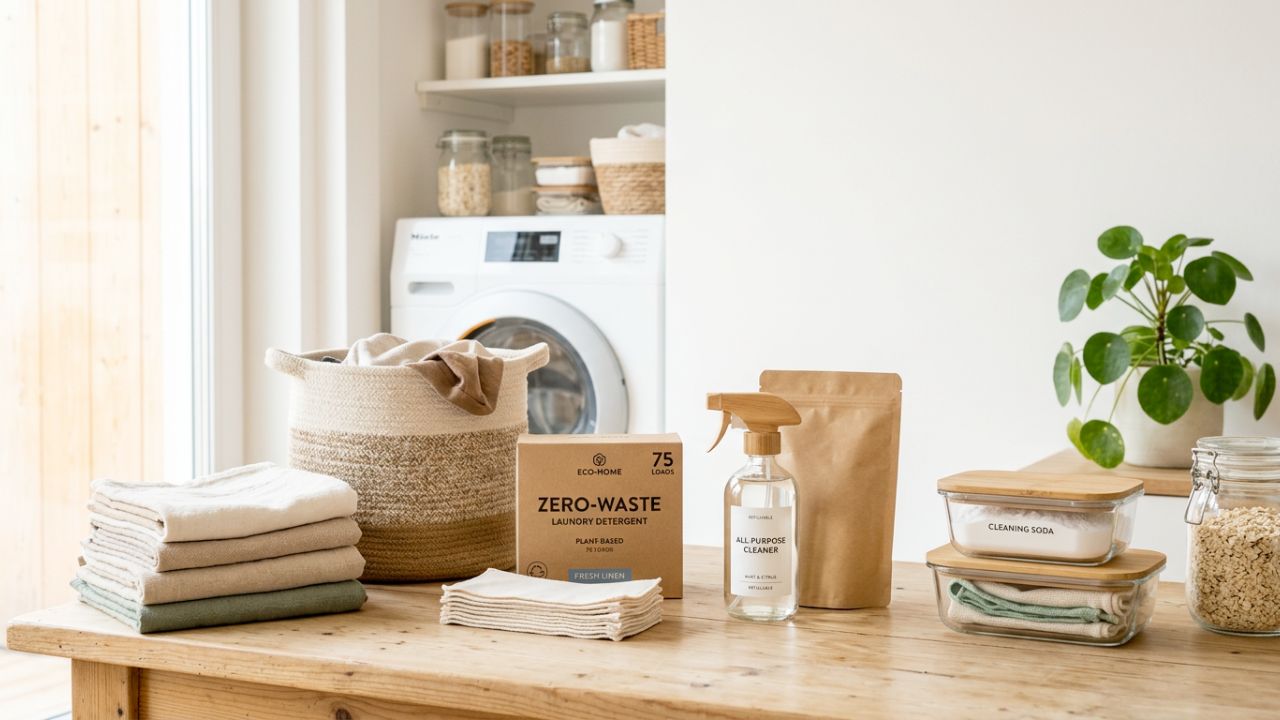
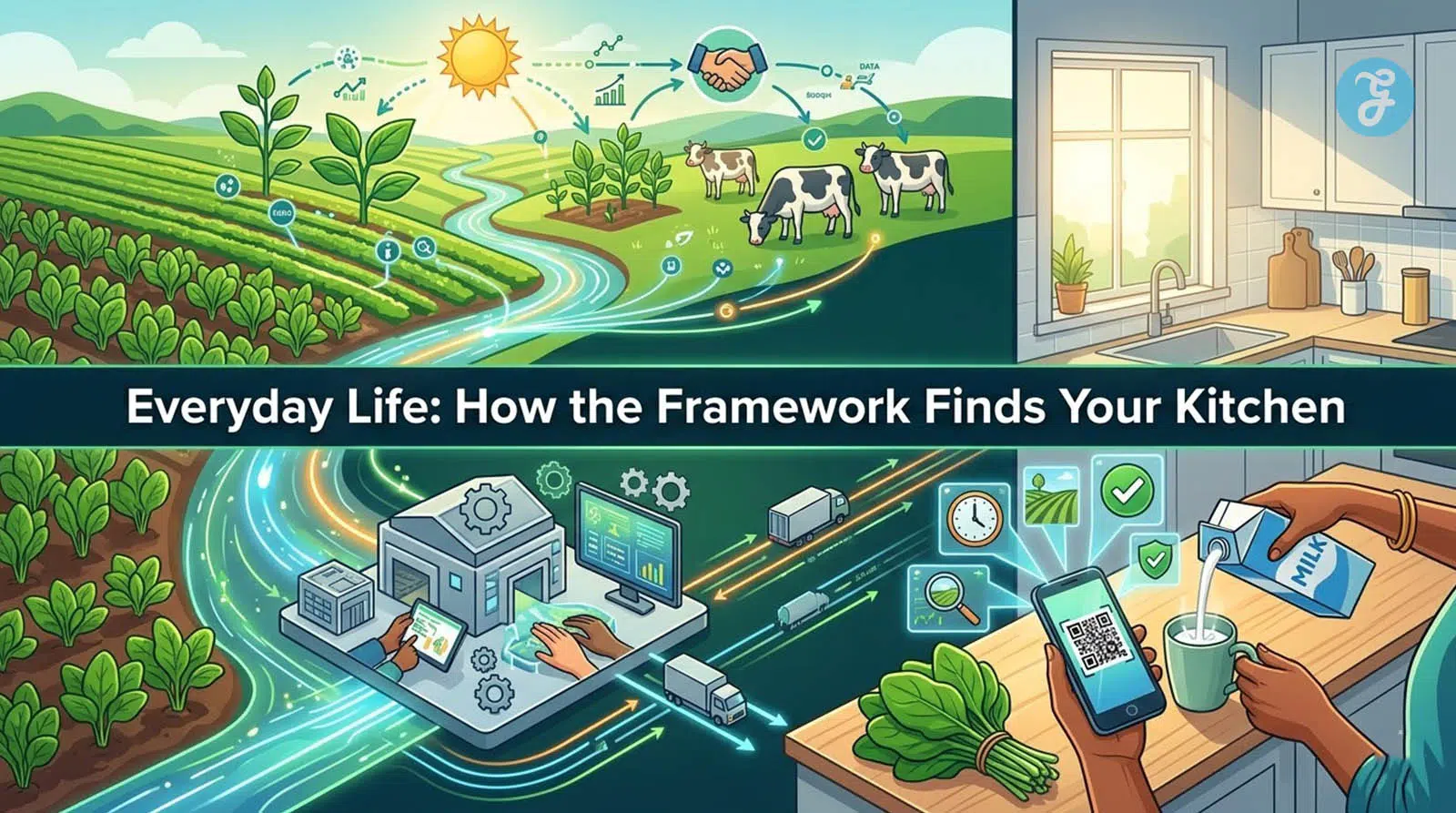
The morning sun hits the kitchen counter as Kumari didi, the trusted helper who keeps the home running, begins the daily meal prep. You pour a warm cup of tea and reach for a carton of milk and fresh spinach. Years ago, their journey was a mystery. Today, you scan a code on the packaging and instantly see the exact hour of dairy processing and the soil health reports for your greens. You are not just looking at a digital label. You are watching a Collaborative Integrated Value Chain in action, connecting the soil directly to your breakfast table.
Price Stability
Global inflation dominates the evening news. Supermarket receipts often bring a quiet sense of shock. Yet you might notice that certain integrated grocery lines remain surprisingly affordable. This is not an accident. Traditional supply routes pass through dozens of global commodity brokers. Each broker adds a margin to protect their own profits. We call this the speculation tax. The new collaborative model removes these opaque layers entirely. Organic farmers connect straight to regional processing hubs. This direct relationship shields your monthly grocery budget from volatile international market swings.
The Trust Factor
Modern families face constant worry over what they actually eat. The mystery ingredient problem makes grocery shopping feel like a guessing game. We often consume anonymous commodities hidden behind clever marketing campaigns. The integrated chain solves this deep anxiety. It turns every vegetable and grain into a verified resource. Smart sensors track the temperature and handling of your food at every stage. You no longer have to blindly trust a shiny brand logo. You have the definitive proof right in your hands. This total transparency brings a profound sense of peace to your kitchen. Clean eating is finally a verified reality rather than an empty promise.
The End of the Fragile Web
Our current food systems are far more interconnected than many of us realise. When a single port closes or a shipping lane freezes, the shockwaves reach your local grocery shelf within days.
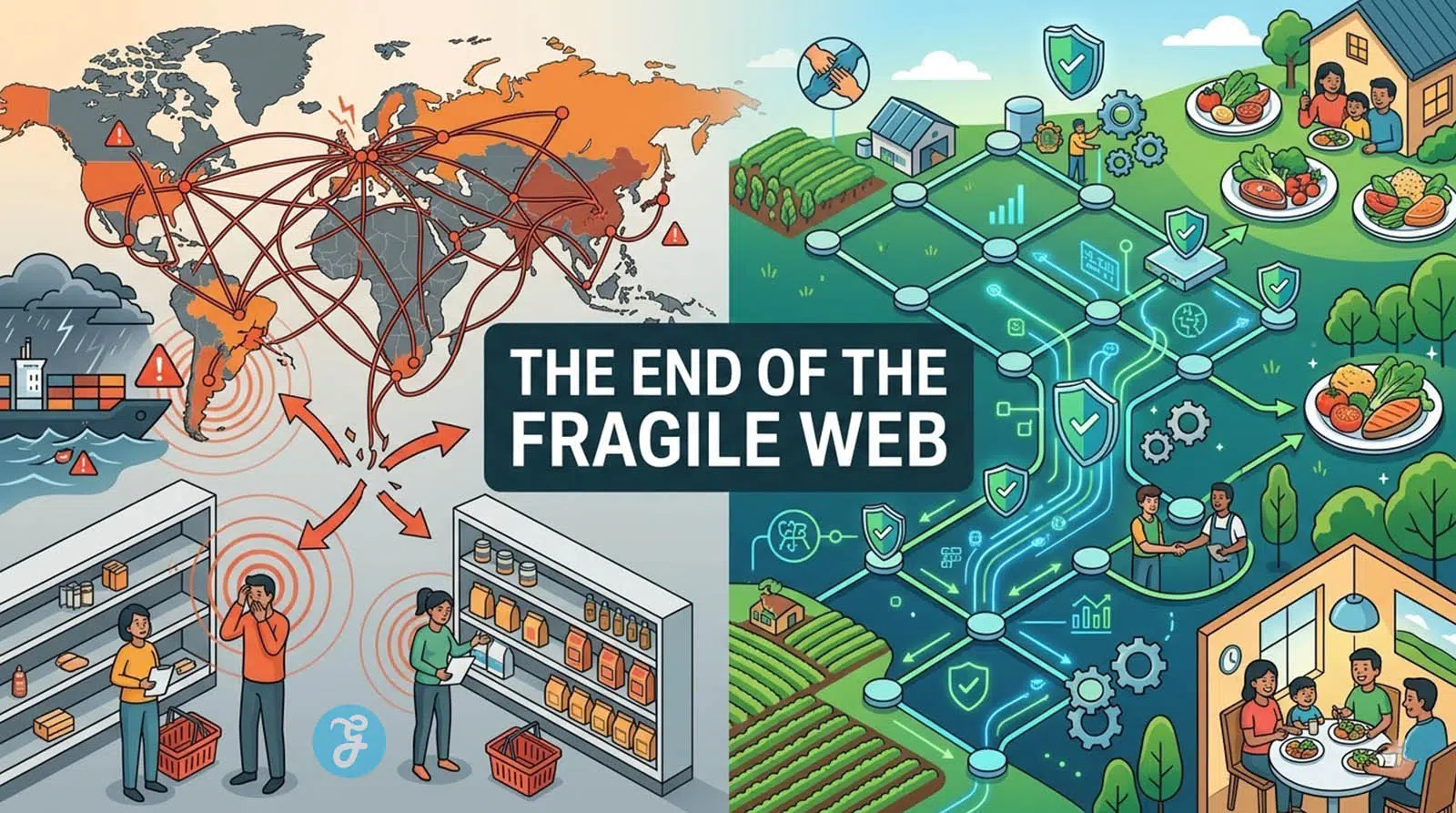
The transition to a Collaborative Integrated Value Chain is the essential move from a brittle global web to a resilient, local first network. It is a necessary evolution to ensure the plate remains full even when the world is in flux.
Beyond “Just in Time”
For years, our food systems relied on the “Just in Time” model. It was built for a world that no longer exists. This old approach prioritised rock bottom costs and razor thin inventories. We saw the consequences in 2024 and 2025. Massive port strikes and sudden fuel hikes caused the system to buckle. Fresh produce sat in shipping containers while supermarket shelves went bare. The new integrated model is the direct remedy to that chaos. It replaces fragile global links with a robust, collaborative network. We are moving away from a system that breaks under pressure toward one that is specifically designed to withstand it.
The “Collaboration” Engine
The secret to this new stability is a shared digital ledger. In the past, farmers and processors worked in isolation. They often had to guess what the market needed. This lack of communication created “dark zones” in the supply chain. These are the hidden gaps where food simply disappears or spoils. Research shows that 19% of food is lost or wasted at the retail and consumer level alone. The collaboration engine changes this. It allows everyone in the chain to anticipate demand with pinpoint accuracy. By sharing real-time data, we can finally shine a light into those dark zones. We are not just moving food more efficiently. We are ensuring that what is grown actually gets eaten.
From Organic Farms to Processing Hubs
The distance between the soil and the processing floor is shrinking through a Collaborative Integrated Value Chain.
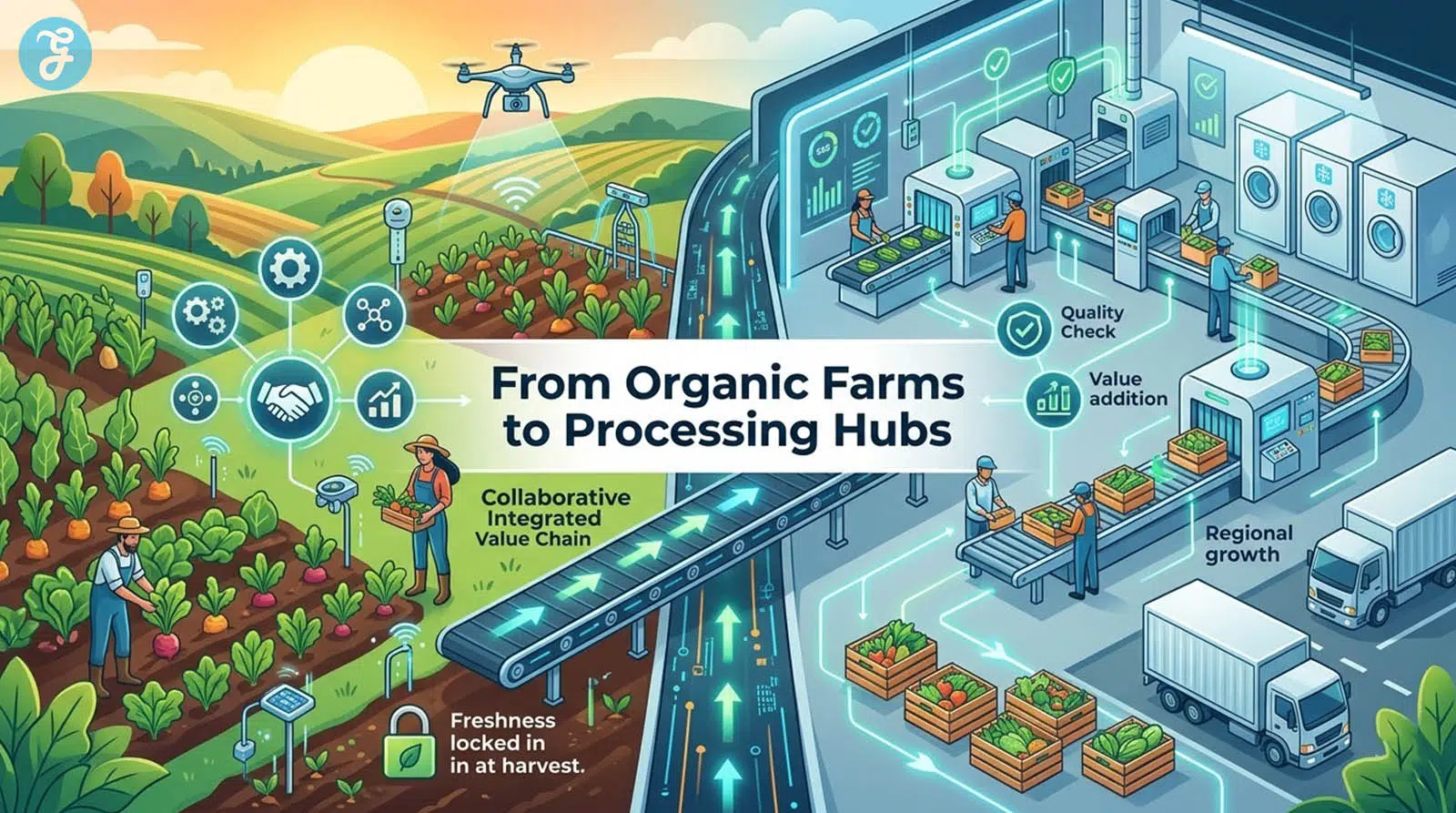
By anchoring technology directly in the heart of rural clusters, we ensure that freshness is locked in the moment the harvest leaves the field.
The Direct Link
The modern food system is moving toward a hub and spoke model. This connects organic farming clusters directly to regional processing centres. These clusters are physically and digitally tethered to one another. This unified structure ensures that every stage of production is visible and accountable. In the past, a farmer might harvest a crop and wait days for a middleman to collect it. Now, the link is instantaneous. Digital signals tell the processing hub exactly when the harvest is ready. This seamless connection ensures that the journey from the soil to the facility is as short as possible. It preserves the peak nutritional value of every single vegetable.
Value Addition at Source
Processing food where it is grown changes the economic reality for rural communities. Traditionally, raw produce was shipped away to distant cities for packaging and refining. This took the profits away from the people who actually did the work. By building high-tech hubs near the farms, we keep the economic value within the local ecosystem. This creates skilled jobs in rural areas. It empowers the community to do more than just grow crops. They now manage the technology and the logistics too. This shift turns a simple farm into a centre of regional growth. It is a fairer way to feed the world.
Purity as a Standard
We often see the organic label on supermarket shelves. Yet, without data, it is just a word. The new framework uses real-time monitoring to make purity a verifiable chemical reality. Every stage of the journey is tracked using precise sensors. We can verify the water quality and the absence of synthetic pesticides at the source. This level of transparency is the cornerstone of non-UPF verified organic independence, giving families the power to reclaim their health from industrial, ultra-processed alternatives. This data follows the product from the farm to the fork. It ensures that the organic integrity is never lost during transit or processing. You are not just buying a marketing claim. You are accessing a transparent record of truth. Trust is no longer a matter of faith. It is a matter of facts.
The “Invisible Middle”: Reimagining Cold Storage
The real hero of this transformation is often the most overlooked: the temperature-controlled “Invisible Middle.” In the old model, a breakdown in a single refrigerator truck meant an entire harvest was lost to the landfill. Today, the Collaborative Integrated Value Chain treats cold storage as a dynamic, data-driven service rather than a static warehouse. These hubs use AI to monitor the “respiration” of organic produce in real-time. If a crate of tomatoes shows a slight spike in temperature, the system automatically reroutes it to the nearest processing facility before any spoilage can occur.
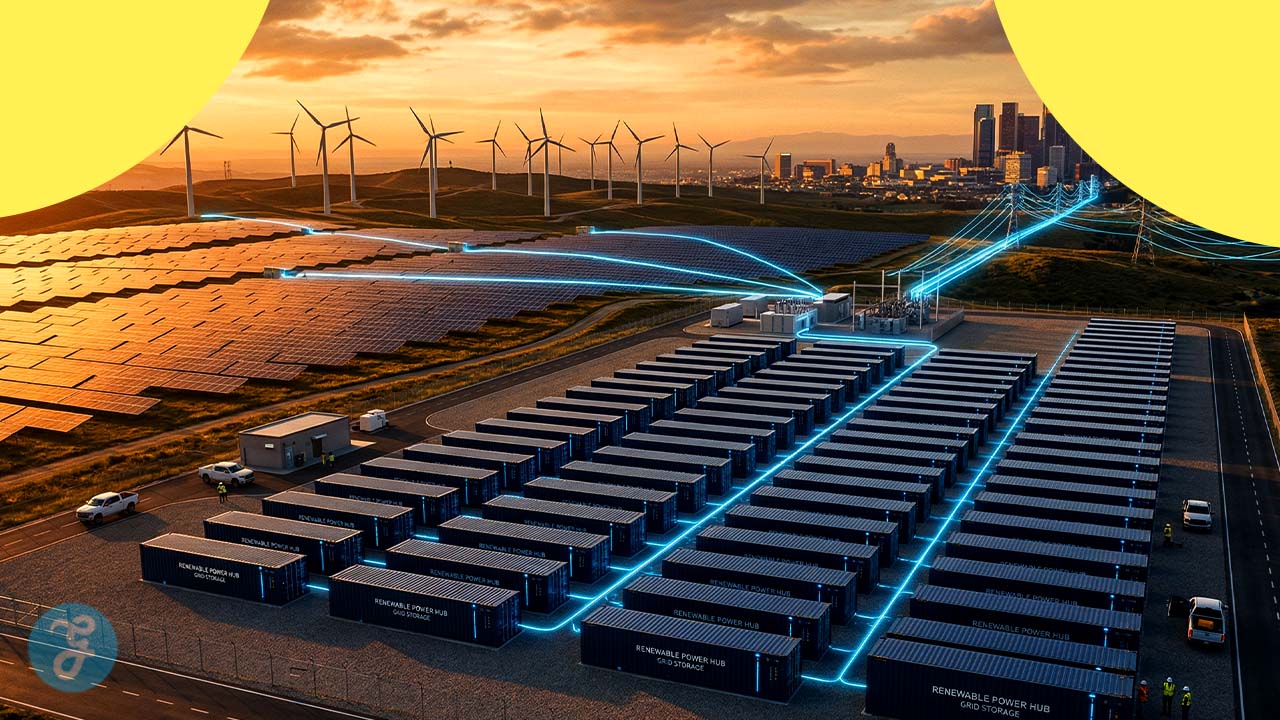
This level of precision is what makes the system truly resilient. It creates a “fail-safe” for the farmer and a guarantee of nutrient density for the consumer. By using solar-powered micro-grids at these rural hubs, we are also decoupling our food cooling from the volatile price of fossil fuels. It is a technological triumph that ensures a mango picked in a sun-drenched orchard reaches a city kitchen with its vitamins and flavour perfectly intact. We are no longer fighting against time and heat; we are using integrated data to master them. This is how we move from a wasteful system of “hit or miss” logistics to a precise science of absolute freshness.
The Geopolitical Shield: Food as National Defence
Food security is no longer just a matter of farming. It is a high-stakes element of national sovereignty. The Collaborative Integrated Value Chain serves as a strategic fortress that keeps a nation’s dinner table safe from global turmoil.
De-risking the Menu
We live in an era where food can be used as a political tool. This is often called food weaponisation. When a nation relies too heavily on distant and unstable sources, its citizens become vulnerable. Global market volatility can cause sudden spikes in the cost of basic staples.
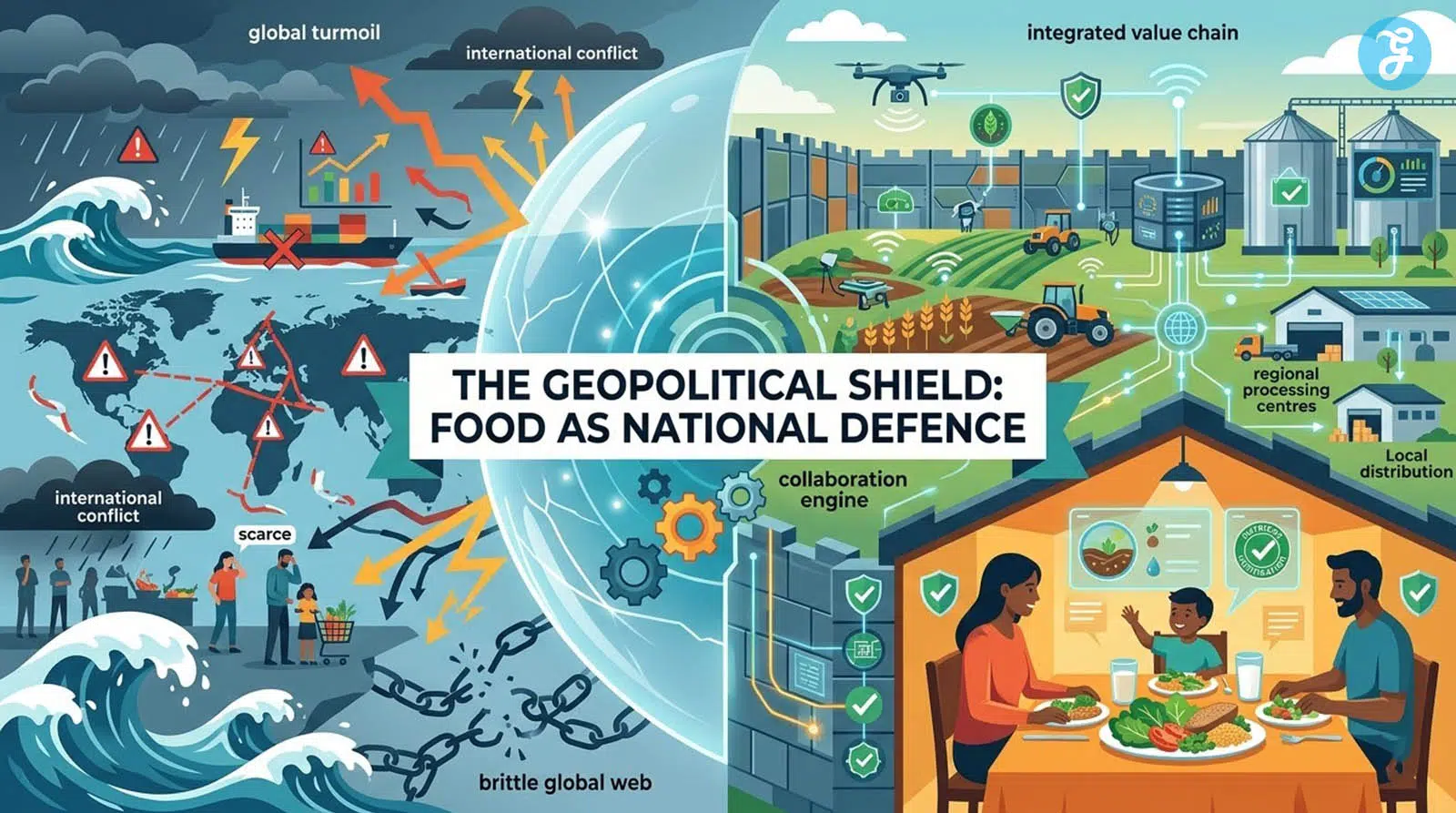 An integrated system protects us from these external pressures. It builds a self-reliant network that functions even when international relations sour. By localising the journey from the farm to the hub, we ensure that our essential nutrition is never held hostage by global events.
Strategic Buffers
Modern safety nets are becoming digital. In the past, grain reserves were simple warehouses that were difficult to monitor. Today, we use data enhanced grain reserves to secure our national interests. This shift toward regionalised networks is a direct response to the Global Report on Food Crises, which points out the increasing vulnerability of supply chains to international conflict. These smart storage systems use real-time sensors to track quantity and quality, acting as buffers within a wider regionalised network. They allow a country to maintain a steady supply during international trade freezes. If one trade route closes, the data instantly identifies the next best local source. It is a sophisticated way to ensure that a temporary global crisis does not lead to an empty plate at home.
Energy and Food Nexus
The way we move food is deeply linked to our energy consumption. Long-distance shipping creates a massive amount of carbon miles. Our 2026 climate mandates require a drastic reduction in these emissions. Integrated chains solve this by shortening the physical distance between the producer and the consumer. By processing food within the same region where it is grown, we cut out the need for thousands of miles of transport. This alignment with environmental goals is not just good for the planet. It also makes the entire food system more efficient and less dependent on expensive fossil fuels.
Technology as the Invisible Thread
Silicon and software now act as the silent guardians of our nutrition. This digital layer ensures that the Collaborative Integrated Value Chain remains unbreakable even under heavy pressure.
The Digital Food Passport
In 2026, the standard for knowing what you eat has shifted completely. We now use the Digital Food Passport. This is not a simple tracking tool. It is a system of Authenticity Assurance. Every batch of produce carries a unique digital identity. It records the exact GPS coordinates of the farm and the precise time of the harvest. You are no longer guessing if your food is genuinely organic or sustainably sourced. The data provides a certificate of truth that cannot be altered. It brings a level of honesty to the grocery aisle that was impossible just a few years ago.
AI and Predictive Plating
The most impressive part of this system happens before the food even leaves the farm. We call it predictive plating. Advanced algorithms now analyse the eating habits of entire cities. The chain uses this data to predict exactly what a metropolitan area will need to consume two weeks in advance. This foresight prevents the sudden shortages that lead to panic buying. It also stops the massive gluts that result in perfectly good food being dumped in landfills. By balancing supply and demand with such precision, we create a system that is both lean and incredibly reliable. It is the end of guesswork in the global kitchen.
The Return of Seasonal Intelligence
The final layer of this quiet revolution is a return to what we might call “Seasonal Intelligence.” For too long, the global market forced us to expect every fruit and vegetable to be available every single day of the year. This came at a massive cost to both flavour and the environment. The Collaborative Integrated Value Chain encourages a more sophisticated way of eating. By using predictive data, the system helps consumers understand when local crops are at their nutritional peak. It turns the act of grocery shopping into a seasonal dialogue between the land and the larder.
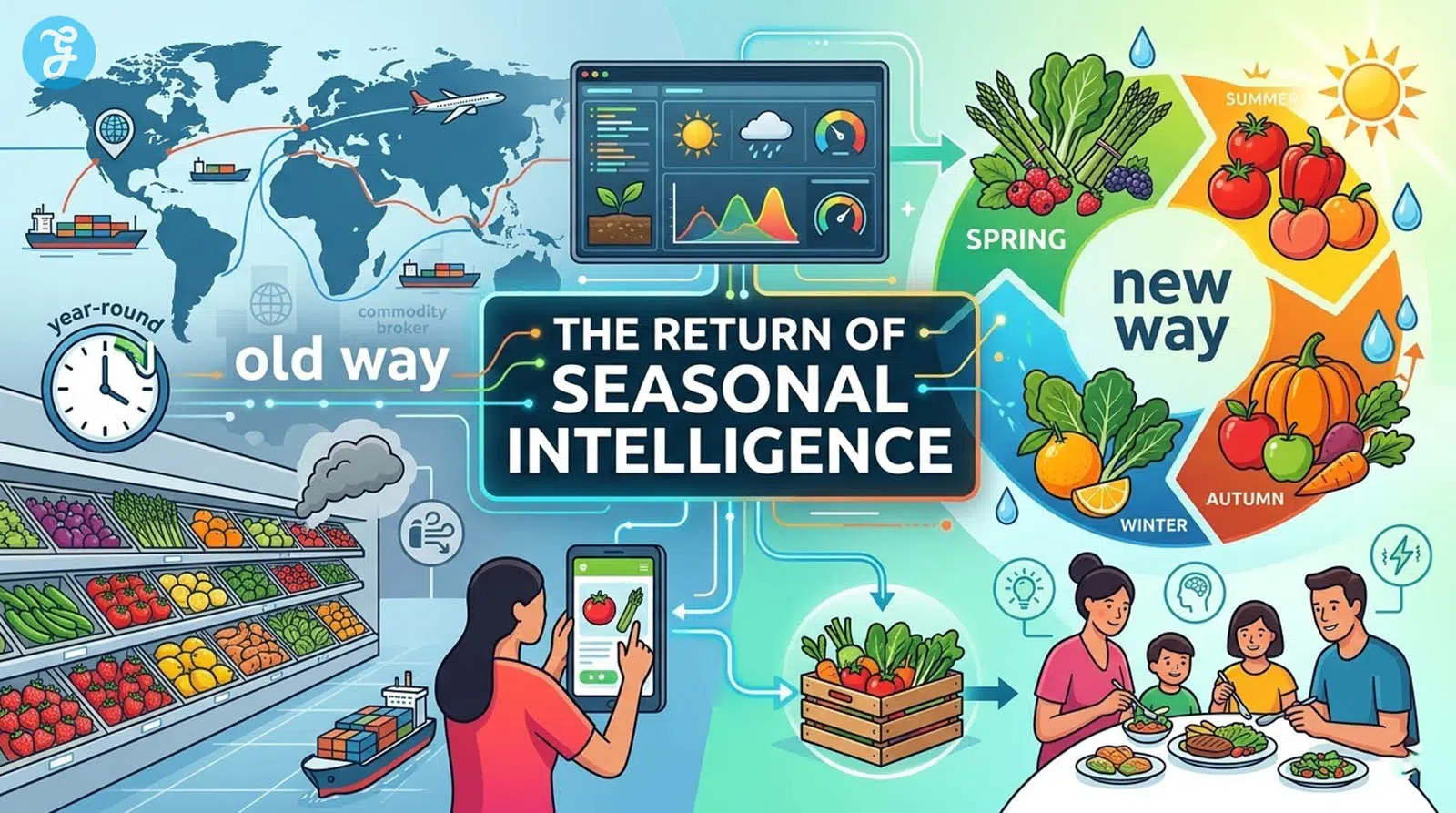 When you shop within this framework, you are eating in harmony with the local harvest cycle, but with the convenience of modern technology. The data tells you not just what is available, but why it is the best choice for your health this week. Eating in sync with these seasonal peaks naturally supports a fibremaxxing productivity framework, where high-quality plant nutrition fuels both physical energy and mental clarity. This shift reduces the need for heavy chemical preservatives and long-haul air freight that strips food of its soul. It humanises the supermarket experience by reconnecting us with the natural rhythm of the seasons. We are rediscovering the joy of eating food that belongs to a specific time and place. This is not a step backward into the past; it is a sophisticated step forward into a future where our lifestyle choices are both healthy and sustainable.
5 Powerful Ways the Framework Secures Our Food
To truly understand the impact of the Collaborative Integrated Value Chain, we must look at the precise ways it transforms both our daily lives and our global infrastructure. Here are the five core pillars of this resilient system:
- Price Stability: By removing global commodity brokers and their speculation tax, the framework directly connects organic farmers to regional processing hubs. This shields local grocery budgets from sudden inflation and international market swings.
- Absolute Traceability (The Trust Factor): The system uses smart sensors to track temperature and handling at every stage. This verifies organic purity, provides a transparent record of truth, and eliminates the mystery ingredient problem from your kitchen.
- Eliminating Waste (The Invisible Middle and Collaboration Engine): A shared digital ledger and AI-enhanced cold storage allow the network to anticipate demand with pinpoint accuracy. This prevents spoilage in transit and ensures that what is grown actually gets eaten.
- Geopolitical Resilience (Food as National Defence): By localising the journey from the farm to the hub, the framework builds a self-reliant network. This protects the national food supply from global shipping shocks, trade freezes, and geopolitical volatility.
- Seasonal Intelligence: The system uses predictive data to match consumer habits with the local harvest cycle. This ensures you are eating produce at its peak nutritional value while reducing the need for heavy chemical preservatives and long-haul transport.
A New Social Contract
The way we eat is no longer just a transaction between a buyer and a seller. It has become a shared commitment to resilience. This shift creates an empowerment loop that serves the three most important pillars of our society. The farmer finally receives fair pay because the system removes the expensive middlemen who once took the largest share. The consumer gains absolute purity and price stability through a verified record of truth. Finally, the nation secures its own sovereignty by building a food system that is immune to global political shocks.
This is the quiet revolution of our time. It is a fundamental change that moves us away from a brittle and anonymous past. By adopting a Collaborative Integrated Value Chain, we are ensuring that our most basic human need is never left to the mercy of a volatile world. We are choosing a future where every meal is backed by data and every bite is a vote for a more stable and honest world. Ultimately, it is about reclaiming our right to a secure, transparent, and healthy life.