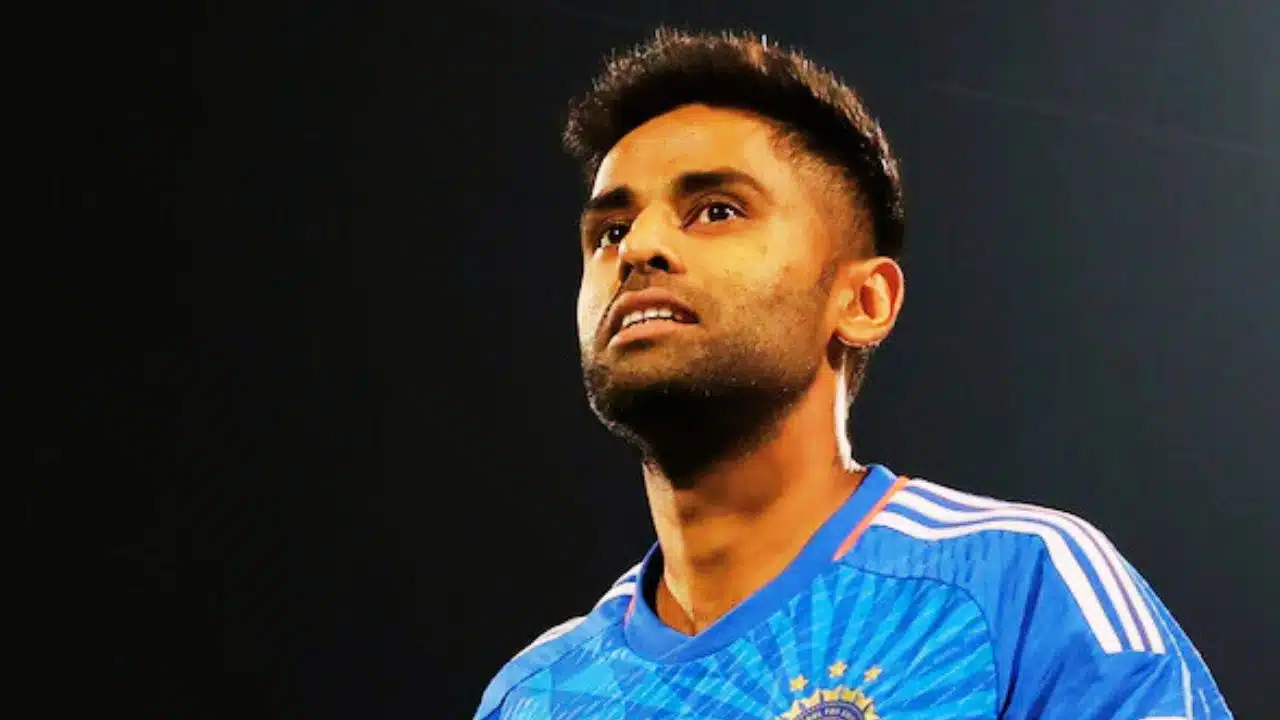
The Asia Cup 2025 clash between India and Pakistan in Dubai became the center of controversy after Indian captain Suryakumar Yadav and his teammates deliberately chose not to shake hands with Pakistani players. The incident drew significant attention, as such gestures are usually seen as part of cricket’s tradition of sportsmanship, both before and after matches.
India’s Decision to Skip the Handshake
From the very beginning of the fixture, the Indian team’s approach signaled a strong message. At the toss, Suryakumar Yadav did not engage in the customary handshake with Pakistan’s captain, Salman Ali Agha. Later, after India’s comfortable seven-wicket victory, the Indian players again refrained from shaking hands and instead walked straight back to the dressing room.
Explaining the reasoning, Suryakumar clarified that the team’s decision was not taken lightly but in full alignment with both the Board of Control for Cricket in India (BCCI) and the Government of India. According to him, while sports generally uphold values of friendship and respect, there are certain moments in life and in national history when other priorities outweigh symbolic gestures of goodwill. The Indian skipper pointed directly to the Pahalgam terror attack that took place earlier in 2025, in which several Indian citizens and security personnel lost their lives. He noted that the match and the victory were dedicated to the victims and their families.
The team also expressed collective solidarity with the Indian armed forces, who carried out Operation Sindoor, a major counter-terrorism initiative in the aftermath of the Pahalgam incident. Indian players considered their stance not as a rejection of cricketing values but as a way of reinforcing their support for the armed forces and acknowledging the pain of the victims’ families.
Post match stance : “The call we took our govt and BCCI were aligned” pic.twitter.com/okZysLahWL
— Lala (@FabulasGuy) September 14, 2025
Reactions from Pakistan’s Side
The decision not to engage in handshakes caused visible disappointment within the Pakistan camp. Head coach Mike Hesson later confirmed that his side had been prepared to honor the tradition of shaking hands after the match, but the Indian team’s refusal left them frustrated. This incident appeared to affect Pakistan captain Salman Ali Agha personally, as he chose not to attend the official post-match presentation ceremony. According to the Pakistan management, his absence was directly linked to his dissatisfaction with the way the Indian team conducted themselves after the result.
The Pakistan Cricket Board (PCB) took the matter further by lodging a formal protest with the match referee. PCB officials argued that India’s refusal undermined the spirit of the game and brought political issues into a sporting contest. Mohsin Naqvi, chairman of both the PCB and the Asian Cricket Council (ACC), criticized the episode, calling it a setback for cricket’s values. For him and other Pakistani officials, cricket should act as a bridge in times of strained relations, not a reflection of hostility.
Geopolitical Backdrop of the Controversy
The incident cannot be viewed in isolation. Political and military tensions between India and Pakistan have been high since the April 2025 terror attack in Pahalgam, Jammu and Kashmir. Following the attack, the Indian government launched Operation Sindoor in May, a large-scale counter-insurgency drive in the region. Public anger in India grew significantly after the Pahalgam violence, and several voices within the country demanded that India completely boycott cricketing ties with Pakistan.
Despite these calls, the BCCI decided to participate in the Asia Cup, largely because it is a multi-nation tournament governed by the ACC, rather than a bilateral series. Nevertheless, the Indian team chose to make a symbolic gesture on the field by avoiding handshakes, showing solidarity with national sentiments.
How the Match Played Out
While the off-field controversy dominated headlines, the cricketing contest itself was one-sided. Pakistan, batting first, struggled against India’s disciplined bowling attack and managed only 127 runs for the loss of nine wickets in their allotted 20 overs.
-
Kuldeep Yadav was the star of the bowling attack, claiming three wickets with sharp turn and variation.
-
Axar Patel and Jasprit Bumrah delivered with two wickets each, maintaining consistent pressure on Pakistan’s batting lineup.
-
Varun Chakaravarthy and Hardik Pandya chipped in with one wicket apiece, ensuring that Pakistan never built momentum.
In response, India chased down the target with ease, finishing at 131 for 3 in just 15.5 overs. Captain Suryakumar Yadav played a composed innings of 47 runs, guiding his side to victory. Young talents Abhishek Sharma and Tilak Varma also contributed crucial knocks of 31 runs each, displaying both patience and aggression. For Pakistan, Saim Ayub was the only bowler to make an impact, picking up three wickets, but his effort was not enough to stop India’s smooth chase.
Reactions Beyond the Teams
The cricketing world remained divided on the issue. In India, many fans and commentators backed the team’s stance, praising them for putting national sentiment above cricketing customs. For them, refusing to shake hands was a justified symbolic act that aligned with the mood of the country following the terror attacks.
On the other hand, international media outlets and sporting experts voiced concern that such actions risk setting a precedent where politics overshadows the unifying nature of sport. Critics warned that continuing down this path might erode cricket’s reputation as a game that brings nations together despite political differences.
The Asia Cup 2025 India–Pakistan clash will be remembered less for the cricketing performances and more for the “No Handshake” controversy. While India celebrated a convincing win and dedicated it to the victims of the Pahalgam terror attack and the soldiers involved in Operation Sindoor, Pakistan was left upset by what they viewed as unsportsmanlike conduct.
This episode highlights how deeply intertwined cricket remains with the political climate of South Asia. For India, the decision was about honoring victims and sending a message of unity with its armed forces. For Pakistan, it was a reminder of how politics can overshadow cricket’s traditional spirit. Ultimately, the incident raised questions about whether the game can remain a neutral ground when larger national and geopolitical issues dominate the backdrop.
The information is collected from ESPN and Yahoo.