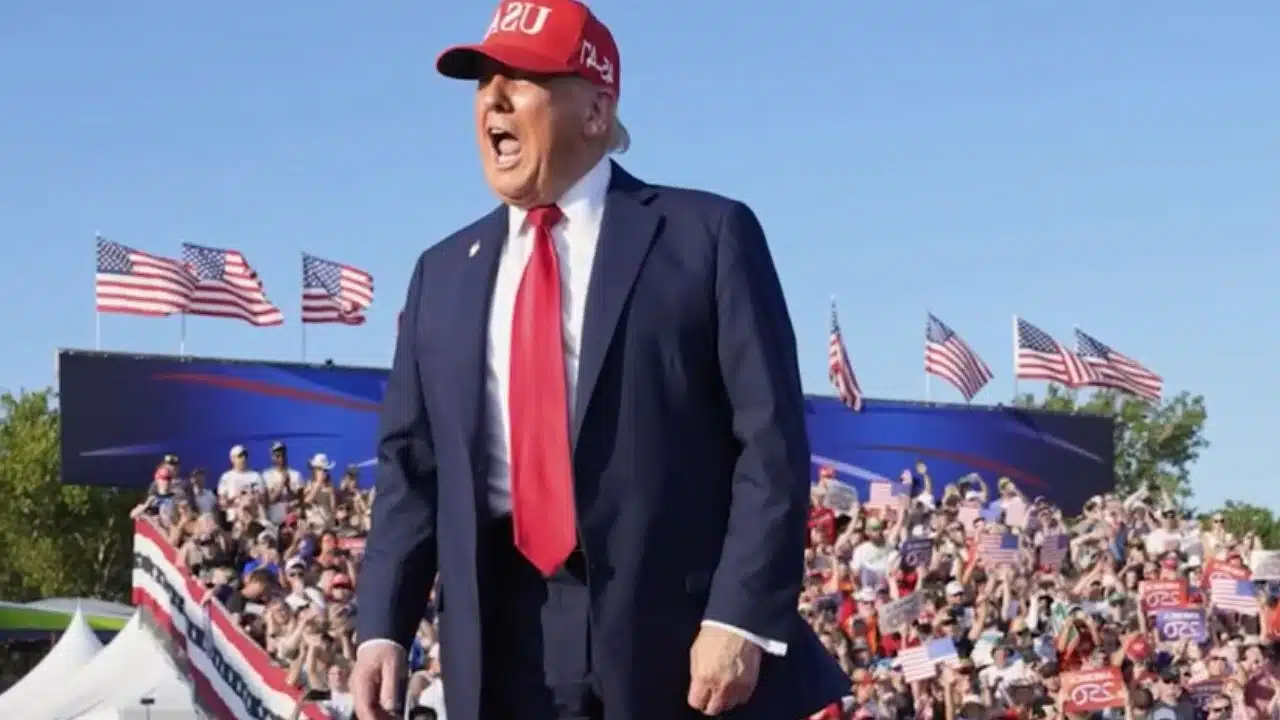
President Donald Trump is set to sign a sweeping and controversial tax and spending bill—officially titled the “One Big Beautiful Bill”—during a high-profile Independence Day ceremony at the White House. The event, scheduled for Friday afternoon, will include patriotic fanfare such as fireworks and a dramatic military flyover featuring B-2 stealth bombers.
The ceremony coincides with the 249th anniversary of U.S. independence from Britain, transforming a routine legislative signing into a national spectacle. As critics voice concerns over the bill’s massive economic and social implications, Trump is embracing the moment as a symbol of his political dominance and campaign promises delivered.
A Bill Signed with Fireworks and Fighter Jets
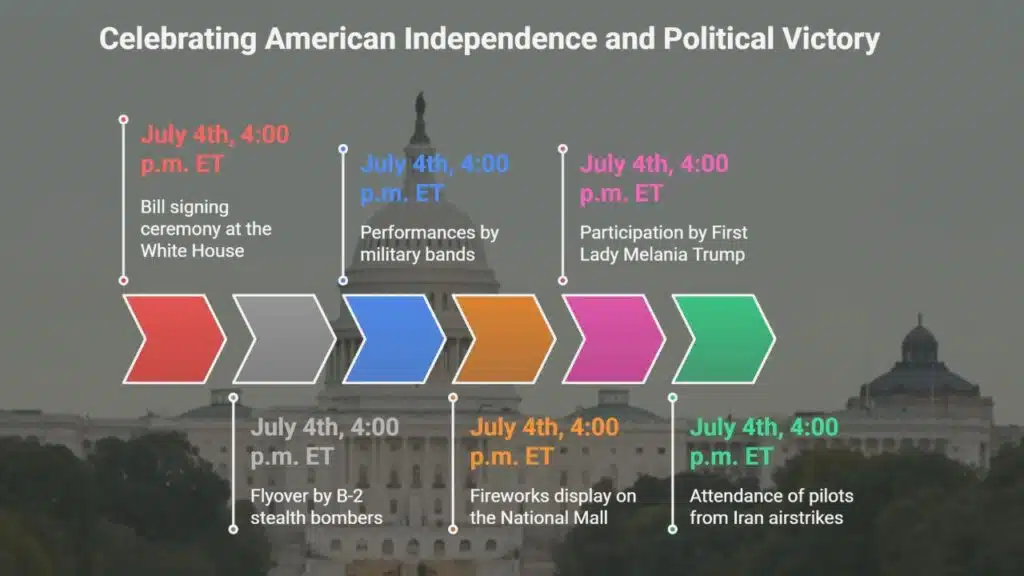
In typical Trump fashion, the bill’s signing will be anything but understated. The White House has announced that the signing will take place at 4:00 p.m. Eastern Time (2000 GMT) on July 4th. The ceremony is expected to include:
- A flyover by B-2 stealth bombers, the same type used in a recent U.S. airstrike targeting Iranian nuclear facilities;
- Performances by military bands and a fireworks display on the National Mall;
- Participation by First Lady Melania Trump;
- Attendance of the pilots involved in the June 22 airstrikes on Iran, who have been specially invited by Trump.
At a campaign-style rally in Iowa on Thursday, Trump announced the ceremony with pride, calling it a celebration of both American independence and his latest political win.
“They’re going to be in Washington tomorrow, at the White House—we’re going to be celebrating,” Trump told cheering supporters.
What’s in the “One Big Beautiful Bill”?
The bill, passed just one day before the signing deadline, is being described as one of the most comprehensive legislative packages of Trump’s presidency—if not of the modern era. Despite internal party divisions and public controversy, it narrowly cleared the House in a 218-214 vote on Thursday.
Key Provisions of the Bill:
| Policy Area | Details |
| Tax Cuts | Extends and expands Trump-era tax cuts from 2017; estimated cost: $4.5 trillion over a decade. |
| Military Spending | Major increases in defense funding, including next-gen missile systems and nuclear deterrents. |
| Immigration Enforcement | Funds mass deportation programs and construction of new border detention centers. |
| Health & Welfare Cuts | Cuts Medicaid by over $1.2 trillion, slashing support for millions; also reduces federal food assistance programs. |
| Budget Impact | Expected to add $3.4 trillion to the national debt over 10 years, according to Congressional Budget Office (CBO) estimates. |
Trump claims the bill will usher in a new era of American prosperity and security, calling it “phenomenal” and “historic.” However, many independent analysts warn the fiscal and humanitarian consequences could be significant.
Deep Division Within the GOP
While Trump boasts about the bill’s passage, the process revealed sharp fractures within his own Republican Party. House Speaker Mike Johnson reportedly worked through the night to negotiate with a group of conservative holdouts, convincing just enough of them to pass the bill.
Key Republican Concerns:
- Exploding national debt: Many fiscal conservatives worry about the long-term implications of such a large deficit increase.
- Harsh cuts to social programs: Lawmakers from rural and working-class districts fear blowback from voters who rely on Medicaid and food stamps.
- Internal rebellion: Billionaire and Tesla CEO Elon Musk, once an ally of Trump, publicly criticized the bill, calling it “irresponsible and inhumane.”
Despite these concerns, Trump managed to push the bill through—a testament to his tight grip on the Republican Party and ability to frame opposition as disloyalty to his movement.
The Iran Airstrike Connection
The presence of B-2 bombers and military personnel at the signing ceremony is not just for show—it’s a direct nod to a recent U.S. air campaign against Iran’s nuclear infrastructure. On June 22, U.S. forces launched “Operation Midnight Hammer,” targeting three major Iranian nuclear facilities: Fordow, Natanz, and Isfahan.
Why It Matters:
- The Pentagon says the mission delayed Iran’s nuclear program by 1–2 years.
- It was one of the largest B-2 deployments in recent military history.
- Iran has since cut off cooperation with the International Atomic Energy Agency (IAEA), raising international tensions.
- The operation received both praise and concern from global leaders, including calls for restraint from NATO allies and the UN Security Council.
Trump is using the flyover to highlight U.S. military power and his administration’s bold stance on foreign policy.
A Symbolic Ceremony with Serious Consequences
This Independence Day ceremony is about more than patriotism. For Trump, it’s a political rally, a message of strength, and a reassertion of control over Washington.
Political Strategy:
- The bill delivers on many of Trump’s 2024 campaign promises, reinforcing his second-term agenda.
- It appeals to nationalist and defense-first voters with its immigration and military funding.
- It deepens ideological divides, offering a stark contrast to Democratic proposals on health care, climate change, and social safety nets.
Democrats, meanwhile, are preparing for a political fight. With midterm elections in 2026, they hope the bill’s unpopularity—especially among lower-income Americans and swing voters—will help them retake the House of Representatives.
Human and Economic Toll
While Trump paints the bill as a national triumph, many experts and advocacy groups warn of long-term risks, particularly for vulnerable communities.
Projected Impacts:
- Up to 17 million people could lose Medicaid coverage over the next decade.
- Rural hospitals, already struggling, may be forced to close due to funding cuts.
- Cuts to food assistance programs may affect more than 30 million Americans, according to the Center on Budget and Policy Priorities (CBPP).
- The added $3.4 trillion in debt could lead to higher interest rates and pressure on future budgets.
In short, the legislation represents a massive redistribution of wealth, critics say—from the poorest Americans to the wealthiest households and corporations.
A Turning Point in Trump’s Presidency
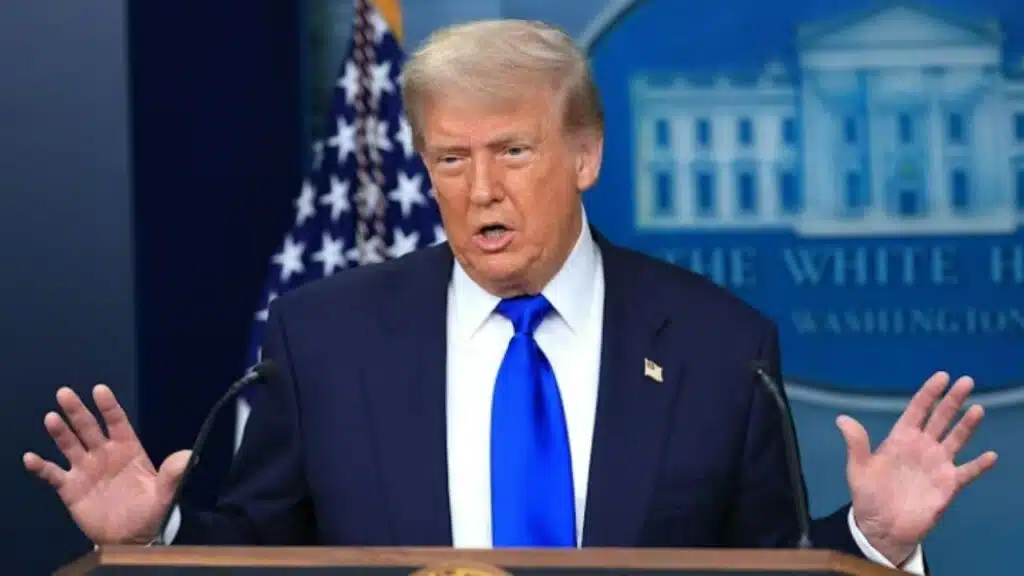
The signing of the “One Big Beautiful Bill” is a defining moment in Trump’s second term. It signals a bold and unapologetic direction for American governance—marked by tax cuts, defense spending, strict immigration enforcement, and deep welfare cuts.
Whether this bill is ultimately remembered as a victory for American renewal or a setback for economic equity and public health will be decided not only by policy outcomes—but also by voters in the next elections.
As fireworks explode over Washington and bombers roar through the sky, Americans are left with much to consider—about power, priorities, and the price of political ambition.
The Information is Collected from CBS News and MSN.