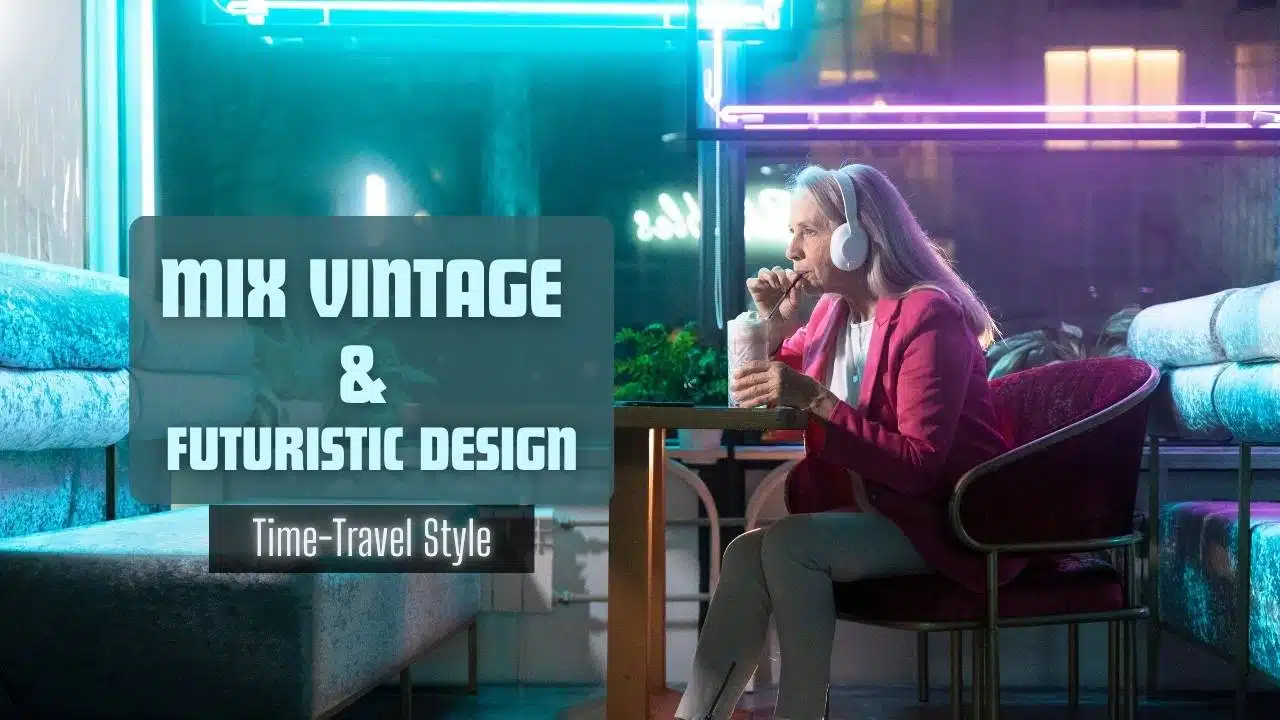
Every few years, design hits a point where the past and the future collide. 2026 is one of those moments. You can see it everywhere: curved 70s sofas under LED strip lighting, Y2K sunglasses styled with minimalist black coats, websites that look like old computer screens but behave like sleek apps.
People are tired of cold minimalism and also wary of disposable fast trends. At the same time, technology is moving faster than ever. The result? A powerful, global appetite for nostalgic design trends that still feel fresh, smart, and connected.
That is exactly where the idea to mix vintage and futuristic design comes in. It’s part retro futurism, part sustainability, part lifestyle statement.
What Does “Mix Vintage and Futuristic Design” Actually Mean?
Before you start redecorating your living room or redesigning a landing page, it helps to define what we are mixing.
Vintage, Retro, and Antique – What’s the Difference?
- Antique usually means over 100 years old. Think Victorian wardrobes or early 1900s chairs.
- Vintage generally covers pieces from around 20–80 years old. That includes mid-century modern, 70s, 80s, 90s, and early 2000s items.
- Retro often refers to new items inspired by older styles, such as a brand-new lamp designed to look like it’s from 1965.
When we talk about vintage in this guide, we mostly mean mid-century to Y2K pieces, because they blend well with contemporary and futuristic aesthetics.
What Makes a Design Look Futuristic?
Futuristic design is less about a specific decade and more about a feeling.
It often includes:
- Clean lines and simple shapes
- High-gloss or reflective surfaces
- Metallic finishes like chrome, silver, and brushed steel
- Advanced or visible technology
- LED and neon lighting
- Interfaces, screens, and digital graphics
- Cyberpunk, Y2K, and “space-age” influences
In interiors, futuristic home decor trends 2026 lean into smart tech, immersive lighting, and sculptural forms. In fashion, we see shiny fabrics, technical details, and accessories that look like they came from a sci-fi film.
Retro Futurism: The Bridge Between Eras
Retro futurism design is where things get especially interesting. It’s all about how the past imagined the future. Think:
- 50s and 60s “space-age” furniture
- Atomic lamps and boomerang coffee tables
- 80s gridlines and neon signs
- Arcade-style graphics and chunky pixels
When you embrace retro futurism interior design in 2026, you’re not just mixing old and new objects. You’re combining nostalgic dreams of tomorrow with today’s technology and materials. That is why this trend feels both familiar and forward-looking.
Core Principles: How to Mix Old and New Without Visual Chaos
You can mix vintage and futuristic design in many ways, but a few core principles will keep everything coherent.
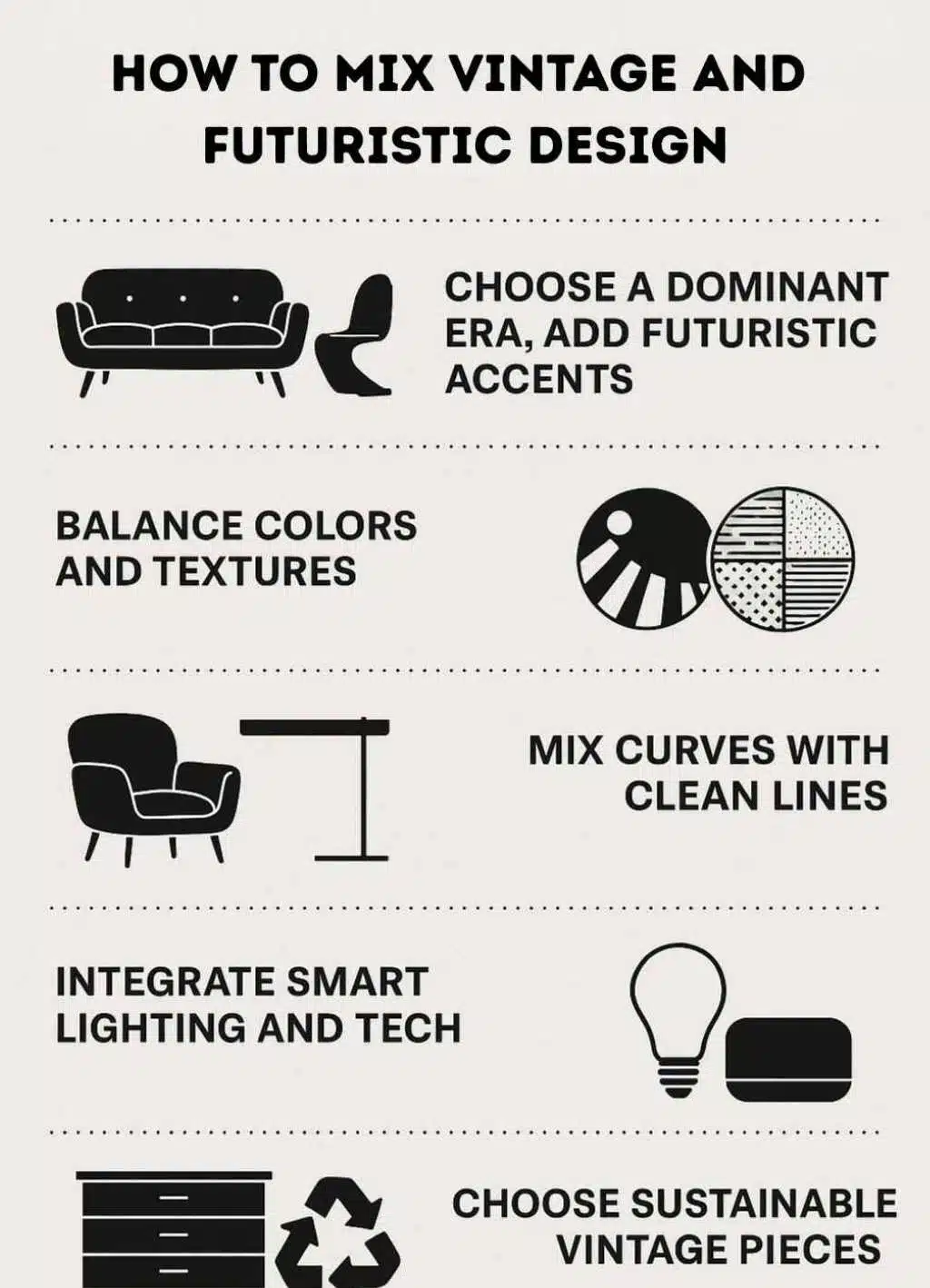
Principle 1 – Choose One Dominant Era, One Supporting Future
The biggest mistake people make is trying to give equal weight to every idea. The result is a confused room or outfit.
Instead:
- Pick a dominant era or style.
- Add the future as a supporting layer.
For example:
- A mostly 70s-inspired living room (dominant) with strip lighting and a sleek chrome side table (supporting futuristic touch).
- A clean, futuristic, minimal bedroom (dominant) with one vintage wooden dresser and a classic rug (supporting vintage touch).
Aim for a 70/30 balance rather than 50/50. Let one look lead, and the other enhance.
Principle 2 – Use Color and Texture as Your Glue
When you’re mixing antique and modern furniture or pairing mid-century pieces with high-tech decor, color and texture do the heavy lifting.
- Choose a limited color palette and repeat it across old and new items.
- Use neutrals like white, beige, greige, charcoal, or soft black to smooth out contrasts.
- Introduce one or two bold accent colors that appear in both your vintage and futuristic elements.
Texture also connects eras:
- Wood, rattan, and woven textiles bring warmth from the past.
- Glass, metal, acrylic, and lacquer bring the glossy feel of the future.
Layer them together, and the space feels intentional instead of chaotic.
Principle 3 – Balance Curves and Lines
Vintage furniture often has curves. Futuristic items often rely on straight lines and sharp edges. Instead of choosing one or the other, use both:
- Curved vintage sofa + linear LED strip along the wall
- Rounded 60s armchair + minimal rectangular side table
- Circular dining table + angular metal chairs
Think of it as dialogue: the soft lines of the past speaking to the clean lines of tomorrow.
Principle 4 – Decide What Tech Should Do: Disappear or Perform
In 2026, almost every room is a smart room in some way. Screens, speakers, chargers, and hubs are everywhere. The question is not if you use technology, but how it shows up.
You have two clear options:
- Invisible tech: hide cables, use built-in speakers, tuck routers into cabinets, and keep screens low-profile.
- Hero tech: treat a large screen, projector, smart mirror, or LED installation as a bold visual statement.
Both approaches can work in a space where vintage meets modern decor. The key is to choose consciously, not let tech clutter appear by accident.
Principle 5 – Tell One Clear Story Per Space or Outfit
Every room or look should feel like it has a story:
- “70s lounge meets Mars colony.”
- “Parisian vintage with AI lighting”
- “Old vinyl shop meets cyber club.”
When you define the story first, it becomes much easier to:
- Choose the right vintage pieces
- Filter which futuristic items fit
- Avoid random additions that break the mood.
2026 Interiors: Turning Your Home Into a Retro-Futuristic Sanctuary
Let’s make this practical. Here is how to bring retro futurism interior design 2026 into your home, room by room.
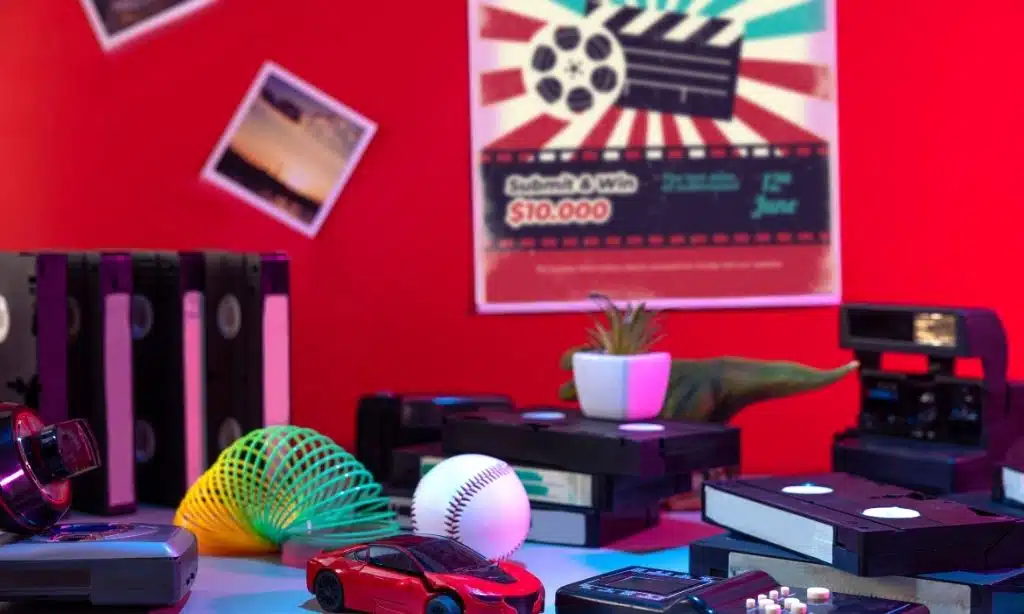
Step 1 – Start With One Vintage Anchor Piece
Choose a single vintage item to act as your anchor. This could be:
- A mid-century sideboard
- A 70s velvet armchair
- A vintage chandelier
- A patterned rug
- A retro coffee table
Make sure it’s something you truly love. Let this piece set the tone in terms of color and mood.
If you are worried about wear and tear:
- Reupholster sofas and chairs in durable fabric.
- Replace hardware on drawers for a subtle update.
- Clean and refresh finishes without removing the character.
This is where sustainable vintage decor ideas fit naturally. You’re giving existing items a second life instead of buying everything new.
Step 2 – Layer in Futuristic Lighting and Surfaces
Lighting is your fastest route to a futuristic feel.
Consider:
- LED strips along shelving, under cabinets, or behind headboards
- Smart bulbs that change color and brightness through your phone
- Sculptural lamps with sleek metal or acrylic bases
- Neon signs or halo lights as art pieces
Then look at surfaces:
- Add a glass or chrome side table near a wooden vintage chair.
- Use a mirrored tray on a classic wooden dresser.
- Introduce a high-gloss console against a wall with vintage art.
These futuristic home decor trends 2026 elevate your vintage elements instead of fighting them.
Step 3 – Use 2025–2026 Texture Trends to Bridge Eras
Some textures are timeless, yet feel very current:
- Bouclé
- Velvet
- Wool blends
- Rattan and cane
- Soft, thick cotton
You can pair:
- A vintage rug with a modern, boxy sofa
- A mid-century armchair with a metallic or glass side table
- A classic wooden bed with futuristic bedding and reflective cushions
This mix keeps the room grounded while still allowing for experimentation.
Step 4 – Update Architectural Details With a Futuristic Twist
If you have the freedom to update walls and built-ins, look at architectural details:
- Classic crown molding or wainscoting painted in clean, modern tones
- Arched doorways or curved shelves to soften sharp corners
- Minimalist paneling with integrated LED strips
These details bring depth and character without feeling heavy. It’s still a 2026 interior design trend, just rooted in older craftsmanship.
Step 5 – Integrate Smart Tech Without Killing the Vintage Mood
To keep a balance between smart home and vintage style, think of tech as a discreet assistant, not the star of the show (unless you want it to be):
- Hide smart speakers inside vintage boxes or behind books.
- Use smart plugs and switches so devices work seamlessly but remain visually minimal.
- Mount televisions in frames so they look like art when not in use.
- Run cables through cable channels or behind furniture to keep sightlines clean.
A 90s-inspired living room can still have a 2026 brain. It’s simply disguised inside a retro shell.
Room-by-Room Quick Ideas
Living room
- Vintage sofa or armchair
- Futuristic coffee table in chrome, glass, or acrylic
- Smart lighting scene set to “cinema”, “reading”, or “party.”
- Retro posters or album covers in modern frames.
Bedroom
- Mid-century bedside tables
- Simple platform bed with soft, neutral bedding
- Smart bulbs for sunrise and sunset modes
- One futuristic accent, like an LED headboard strip or smart mirror
Kitchen
- Retro-style appliances in pastel or bold colors
- Sleek, handle-less cabinets in a modern finish
- Under-cabinet LED lighting
- Vintage bar stools at a streamlined breakfast bar
Fashion and Personal Style: Wearing Vintage and Futuristic in 2026
The same logic applies to your wardrobe. Y2K and cyberpunk fashion trends 2025–2026 are still strong, but now they are mixing with classic tailoring and vintage pieces in new ways.
The Y2K–Cyberpunk Fusion Era
Current fashion is full of crossovers:
- Y2K silhouettes like low-rise trousers, slip dresses, and baby tees
- Cyberpunk-inspired hardware, harness details, and chunky boots
- Metallic, reflective, and holographic fabrics
- Oversized headphones and smart glasses as statement accessories
It’s easy to go overboard, but a careful mix of vintage tech aesthetics with clean modern basics can look polished and editorial.
How to Build a Retro-Futuristic Outfit
Start simple:
- Pick one vintage item
- A blazer from the 80s
- A 90s band T-shirt
- A slip dress from the late 90s or early 2000s
- A classic leather jacket
- Add one or two futuristic elements.
- Metallic boots or sneakers
- A reflective bag
- A sleek belt with minimal hardware
- Tech accessories like smartwatches or AR glasses
- Control the palette
- Combine soft, nostalgic colors like sage green, baby blue, or dusty rose with black, silver, or chrome.
- Keep patterns minimal; let shine and texture carry the futuristic feeling.
The result is a look that feels intentional, not costume-like.
Accessories and Beauty as Low-Risk Experiment Zones
If you’re unsure about wearing bold pieces, focus on:
- Sunglasses with sharp lines or tinted lenses
- Jewellery inspired by circuits, asteroids, or geometric forms
- Metallic eyeliner, glossy lips, or wet-look hair
These choices give you a time-travel design style without demanding a full wardrobe overhaul.
Sustainability and Thrifting in a High-Tech Age
Designing the future doesn’t mean abandoning responsibility. Thrift shops, vintage markets, and re-commerce platforms are ideal places to:
- Find unique vintage clothing
- Rework items with tailoring or DIY details
- Avoid overconsumption in the name of the “new future.”
You can always add futuristic elements through styling, accessories, and fabrics, while keeping the core of your wardrobe vintage and sustainable.
Branding, Web, and Digital Aesthetics: Designing for the Retro-Future Web
The same mix of old and new is reshaping design for brands, websites, and interfaces.
Why Retro Futurism Works So Well Online
Digital spaces are naturally “futuristic,” but they gain depth when you add references to the past:
- Old-school computer windows and pixelated icons
- Analog textures like VHS grain, print halftones, and scan lines
- Neon gradients and glassy effects that feel advanced
This retro futurism design language communicates:
- Trust – through familiarity and nostalgia
- Innovation – through motion, interactivity, and advanced layouts
For brands, it signals that they understand both heritage and progress.
Visual Language for 2026 Retro-Future Brands
Key visual elements include:
- 80s-style grid backgrounds and chrome text
- UI elements inspired by early operating systems
- Holographic gradients and neon accent colors
- Mix of serif vintage typography with minimal sans-serif fonts
Use these elements sparingly and strategically. A full page of neon can feel overwhelming. A retro button style or a nostalgic loading animation is often enough.
Practical Design Tips for Creators
If you’re a designer, creator, or entrepreneur:
- Build a color system that includes one nostalgic shade (mustard, teal, burgundy) and one futuristic accent (electric blue, neon magenta, or metallic grey).
- Use retro-style icons or badges in specific spots, like newsletter sign-ups or feature highlights.
- Keep navigation and user journeys modern, clear, and fast. The retro layer is for aesthetics, not for slowing people down.
The aim is a digital presence where vintage meets modern without compromising usability.
2026 Micro-Trends: Where Vintage and Future Collide Next
Beyond the big ideas, a few micro-trends are worth watching.
Retro-Futurism Interior Design 2.0
Expect to see:
- More mid-century pieces paired with dramatic, space-age lighting
- Projected art and ambient visuals replacing static paintings
- Curved, modular seating that recalls conversation pits mixed with hi-tech control points
This is retro futurism interior design evolving into something immersive, not just decorative.
Smart Homes With Vintage Faces
As smart tech becomes standard, many people will hide it behind familiar forms:
- Smart speakers inside vintage radio bodies
- Wireless chargers built into wooden side tables
- Old suitcases are used as storage for devices and cables
The home looks nostalgic, but behaves like a 2026 smart space.
Seasonal and Holiday Retro-Future Decor
Expect holiday and seasonal decor to mix:
- Heirloom ornaments and vintage candle holders
- LED fairy lights, fiber-optic trees, and metallic ribbons
- Old family photos displayed on modern digital frames
This blend reinforces a key 2026 message: honoring memories while embracing innovation.
AI-Co-Designed Retro Assets
AI tools make it easier to:
- Generate posters that look like 80s album covers with futuristic typography
- Create 8-bit style logos with modern motion effects.
- Develop mood boards that instantly combine past and future reference.s
Used wisely, AI can speed up experimentation while you keep control of taste and strategy.
Common Mistakes When Mixing Vintage and Futuristic Designs (and How to Fix Them)
Even with a strong concept, it’s easy to lose direction. Watch out for these typical mistakes.
Mistake 1 – Turning Spaces Into Cluttered Museums
Too many vintage pieces in one space can feel like a prop warehouse.
Fix:
Limit yourself to one or two statement vintage items per room or outfit. Let them breathe. Give each piece enough negative space so it reads as intentional.
Mistake 2 – Ignoring Function in Favour of Aesthetics
A chair that looks amazing but is impossible to sit on isn’t good design.
Fix:
Test comfort, storage, and usability. Make sure:
- Seating works for real bodies.
- Tables are the right height.
- Tech is easy to reach and operate.
Future-friendly design is functional and beautiful.
Mistake 3 – Unresolved Color Clashes
Vintage items often come with strong colors. Futuristic pieces can be bright or metallic. Together, they can argue visually.
Fix:
- Decide on a core palette and stick to it.
- Use neutral walls and floors to calm down intense shades.
- Repeat key colors in multiple places so your eye sees a pattern, not a clash.
Mistake 4 – Treating Tech as an Afterthought
Adding devices after a room is “finished” often leads to exposed cables and awkward placements.
Fix:
- Plan tech at the same time as furniture.
- Map where screens, speakers, and hubs will go.
- Ensure there are power outlets where you actually need them.
This keeps your smart home and vintage style working together instead of fighting each other.
Mistake 5 – Going Full Theme Park
It’s easy to lean too hard into a single reference: a spaceship bedroom, a 50s diner kitchen, a cyberpunk bar. Fun once, exhausting every day.
Fix:
- Instead of building a movie set, aim for a subtle narrative.
- Use references and hints, not costumes.
- Focus on echoes of an era, not exact replicas.
A Simple 7-Step Blueprint: Build Your Own 2026 Retro-Future Mood Board
To make everything concrete, here’s a step-by-step process you can follow.
- Define your dominant vintage era.
Choose one: 50s, 70s, 90s, or Y2K. Let this guide shape, colours, and key pieces. - Choose your futuristic direction.n
Decide whether you lean more towards minimal tech, cyberpunk, space-age, or AI-core aesthetics. This sets the tone for lighting, materials, and digital elements. - Select a 3–5 color palette and 2–3 textures.
Combine one or two nostalgic shades with modern neutrals and perhaps one bold, futuristic accent. Choose textures that connect both sides: wood and velvet for warmth, glass and metal for the edge. - Pin three vintage anchors.s
These could be furniture pieces, garments, fonts, or patterns. They represent the “past” side of your story. - Add three futuristic accents.
Maybe smart lighting, metallic accessories, a neon sign, or a sci-fi-inspired jacket. These items push the look into the future. - Check the balance of shapes, materials, and tech visibility
Ensure you don’t have all curves or all straight lines. Mix soft and hard materials. Decide how visible tech should be. - Translate your mood board into a checklist
Turn it into concrete actions:- For interiors: a shopping and decluttering list.
- For fashion: items to thrift, tailor, or buy.
- For branding: visual rules for your designer or creative team.
This blueprint works whether you are styling a single shelf, a full apartment, a capsule wardrobe, or a brand identity.
Final Thoughts – Designing a Life Between Memory and Tomorrow
To mix vintage and futuristic design is to accept that we live in two timelines at once. We carry old stories, objects, and aesthetics. We also navigate rapid innovation, smart systems, and digital worlds that never switch off.
The 2026 design mood doesn’t ask you to choose. Instead, it invites you to:
- Honour the past through cherished objects, silhouettes, and visual references.
- Embrace the future through thoughtful tech, new materials, and bold experimentation.
- Make sustainable, long-term choices instead of chasing short-lived trends.
You don’t need to renovate your entire home or replace your wardrobe overnight. Start small. Style one retro-future corner, one outfit, or one digital project. Adjust, edit, and refine until the balance feels like you.
The future looks better when it remembers where it came from.