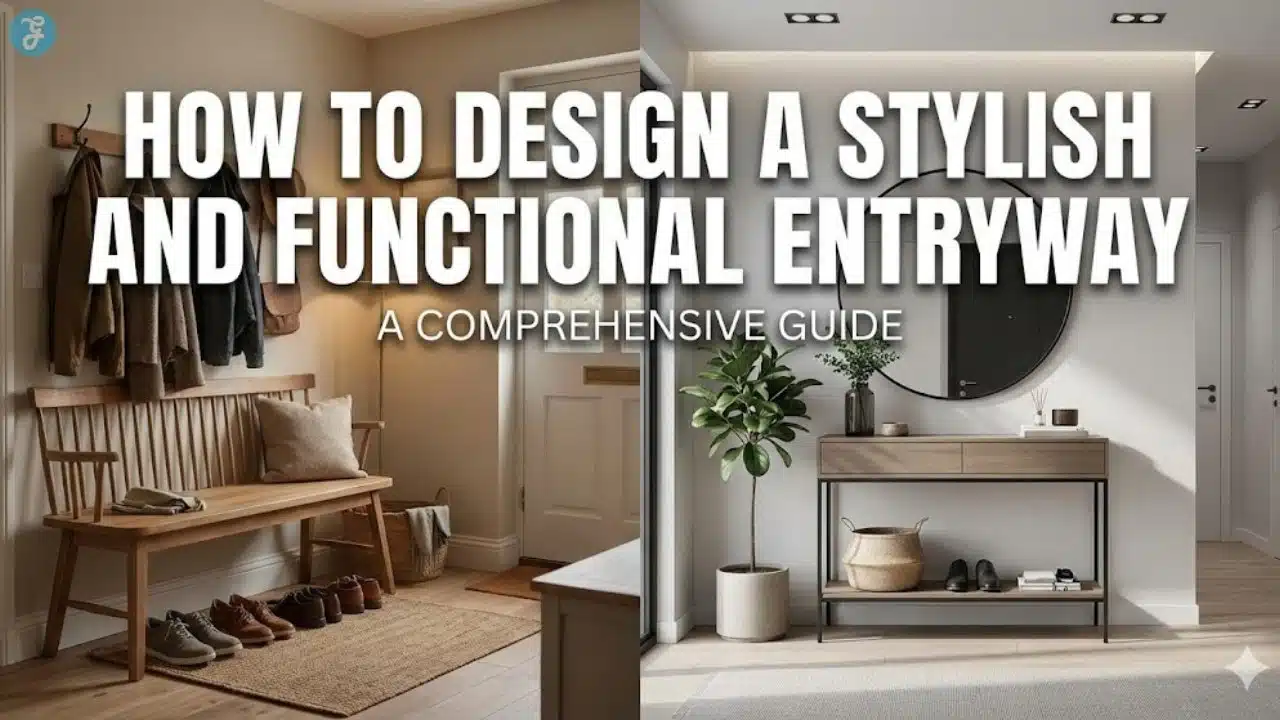
Your entryway is the handshake of your home. It is the very first thing guests see when they walk in, and it is the last thing you see when you rush out the door in the morning. Despite its importance, this space often becomes a chaotic dumping ground for shoes, mail, keys, and coats. It can easily turn into a clutter magnet that induces stress rather than welcoming you home.
Designing an entryway that balances style with high functionality does not require a grand foyer or a massive budget. It simply requires a strategic approach. You need to create a system that works for your lifestyle while maintaining an aesthetic that reflects your personality.
Whether you have a sprawling mudroom or a tiny sliver of wall by the front door, the principles of a great entryway remain the same. Here is a comprehensive guide on how to design a stylish and functional entryway that serves your needs and looks beautiful doing it.
What is the Importance of a Stylish and Functional Entryway?
A functional entryway isn’t just “nice to have”—it’s the control center that keeps the rest of your home calmer. It’s where daily friction happens: shoes coming off, bags dropping, keys going missing, mail piling up. When the entryway has a system, those small annoyances don’t spill into your living room (or your mood).
It also protects your home. The entry is where dirt, water, grit, and wet umbrellas first land, so smart materials and storage keep mess contained. And it’s a safety zone: a clear pathway, stable furniture placement, and non-slip rugs reduce the chance of trips—especially in busy households.
In short, a functional entryway:
-
Reduces clutter and “lost item” stress
-
Limits dirt spreading into the home
-
Creates a welcoming first impression
-
Improves flow in tight or open-concept layouts
3 Things to Consider When You Design a Stylish and Functional Entryway
Before you start moving furniture or painting walls, pause to consider the foundational elements that make an entryway work. Keeping these three factors in mind will ensure your design lasts.
- Traffic Flow: How many people enter at once? Ensure there is enough clearance for the door to open fully without hitting furniture. You need a clear path for walking, carrying groceries, or welcoming groups of guests.
- Durability: This is the highest traffic zone in the house. Surfaces need to withstand mud, water, grit, and heavy bags. Fragile items or delicate fabrics are rarely a good fit here.
- Storage Volume: Be honest about the volume of items that need to live here. A family of four needs significantly more shoe storage than a couple living alone. Design for the maximum amount of clutter, not the minimum.
Here are 8 ways on how you can design a functional entryway that’s both stylish and practical:
1. Assess Your Lifestyle Needs First
Before you buy a single piece of furniture or pick out a paint color, you need to evaluate how you actually use the space. A common mistake is designing for a fantasy life rather than your real one. If you have kids who kick off their muddy boots the second they walk in, a delicate silk rug is a bad choice.
Start by identifying the pain points. Do you constantly lose your keys? Then you need a dedicated drop zone. Do shoes pile up in a mountain by the door? Then, closed storage is a priority. Ask yourself what items naturally land in this area.
Usually, this includes coats, bags, shoes, mail, and dog leashes. Once you know what needs to be housed, you can design a system to accommodate it.
This assessment phase ensures that your design solves problems rather than creating new ones. Function must come first in high-traffic areas. Once the mechanics of the space are sorted, the style will follow naturally.
Pro Tip:
Walk through your door as if you were a guest. Note the first place you naturally want to set down your bag or keys. That is exactly where your storage or console table should go.
2. Choose an Anchor Piece
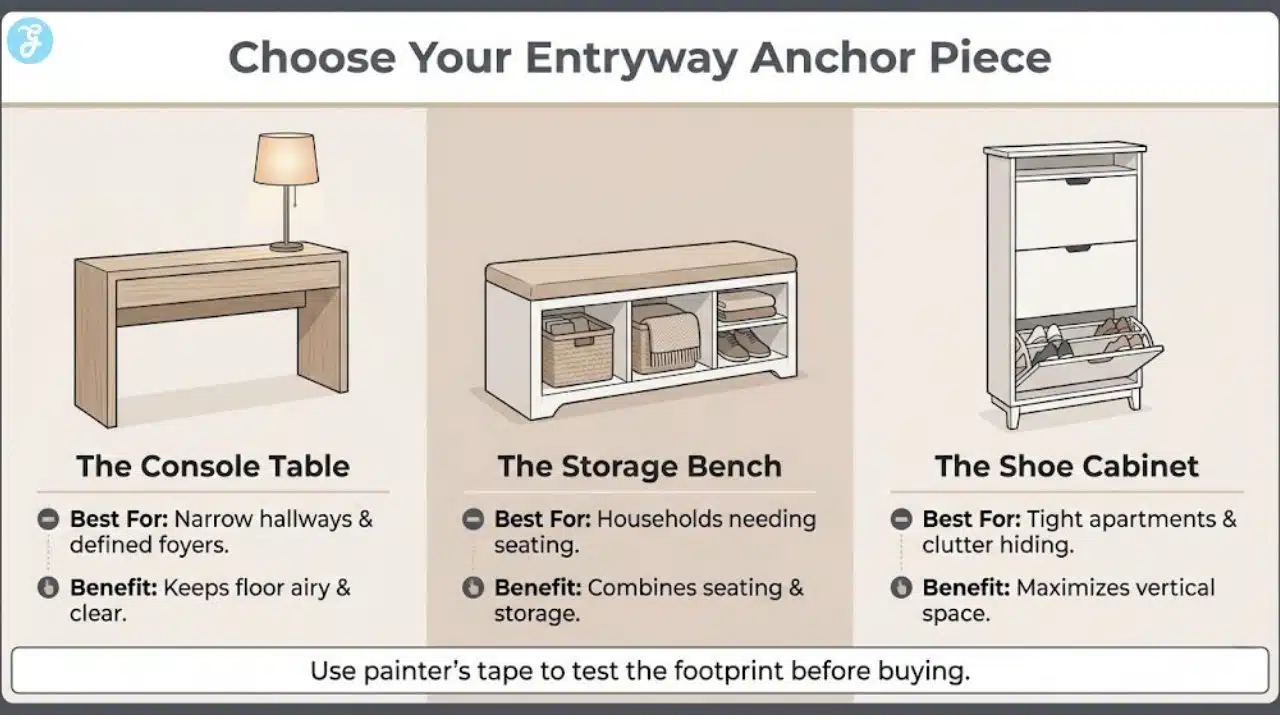
Every entryway needs an anchor piece of furniture to ground the space. This item dictates the flow of the area and serves as the primary functional hub. The right choice depends heavily on the shape and size of your entry.
The Console Table
For narrow hallways or defined foyers, a console table is the classic choice. It provides a surface for a lamp, a tray for keys, and decorative objects. If you need storage, look for a console with drawers or a shelf underneath where you can tuck baskets. This option keeps the floor relatively clear and feels airy.
The Storage Bench
If your household involves a lot of putting on and taking off, a bench is essential. It offers a place to sit, which is a small luxury that makes leaving the house easier. Look for a bench with a flip-top lid or cubbies underneath. This maximizes the footprint by combining seating and storage into one unit.
The Shoe Cabinet
For tight spaces where clutter is the enemy, a slim shoe cabinet is a game-changer. These units are often shallow but tall, utilizing vertical space to hide dozens of pairs of shoes. They often have a flat top surface that can function just like a console table. This is often the best solution for narrow apartments where every inch of floor width counts.
Pro Tip:
Use painter’s tape to mark the outline of potential furniture on your floor. This helps you visualize the footprint and ensures you will not block the walkway.
3. Master the Art of Vertical Storage
When floor space is limited, you must look up. The walls are your best asset in an entryway. Utilizing vertical space keeps the ground clear and makes the room feel larger.
Hooks are the unsung heroes of entryway organization. They are easier to use than hangers, which means family members are more likely to actually use them. Install a row of sturdy hooks for heavy coats and bags.
You can install a second, lower row for kids to hang their own backpacks and jackets. This encourages independence and keeps school gear off the floor.
Floating shelves are another excellent vertical solution. A shelf installed at chest height can hold a mail sorter or a decorative bowl for sunglasses. Higher shelves can be used for storage baskets containing out-of-season accessories like hats and gloves. By moving storage up the wall, you keep the visual flow of the floor open and uncluttered.
Pro Tip:
Install hooks at varying heights. High hooks for adults and guests, and low hooks for kids or heavy bags. This distributes the visual weight and keeps the wall from looking crowded.
4. Define the Space with a Rug
A rug does more than just catch dirt. It defines the zone. In open-concept homes where the front door opens directly into the living room, a rug visually separates the entry area from the rest of the living space.
Durability is the key factor here. This is a high-traffic zone that will see mud, water, and grit. Materials like wool, jute, or sisal are excellent natural options because they are tough and hide dirt well. Synthetic outdoor rugs are also a fantastic choice for indoor entryways because they are virtually indestructible and easy to clean.
Pattern plays a practical role as well. A patterned rug is much more forgiving than a solid color when it comes to hiding stains or wet footprints. Choose a pattern that complements your home’s color palette but is busy enough to camouflage the daily wear and tear.
Pro Tip:
Always use a high-quality non-slip rug pad. In an entryway, a sliding rug is a major safety hazard.
5. Lighting Sets the Mood
Entryways are often notoriously dark. Many lack windows, or the windows are blocked by privacy coverings. Good lighting is essential for checking your appearance before you leave and for creating a warm welcome when you return.
If you have the ceiling height, a statement pendant light or a chandelier can add instant drama and personality. It draws the eye up and signals that this is a designed space, not just a passageway.
For more functional lighting, consider a table lamp on your console or a wall sconce. Ambient lighting at eye level is softer and more flattering than harsh overhead lights. If you have a long hallway, wall sconces can create a rhythm that leads guests into the home. Smart bulbs or timers are a great addition here, so you never have to come home to a dark house.
Pro Tip:
Choose warm white bulbs (2700K to 3000K). Cool or daylight bulbs can make an entryway feel like a dentist’s waiting room rather than a cozy home.
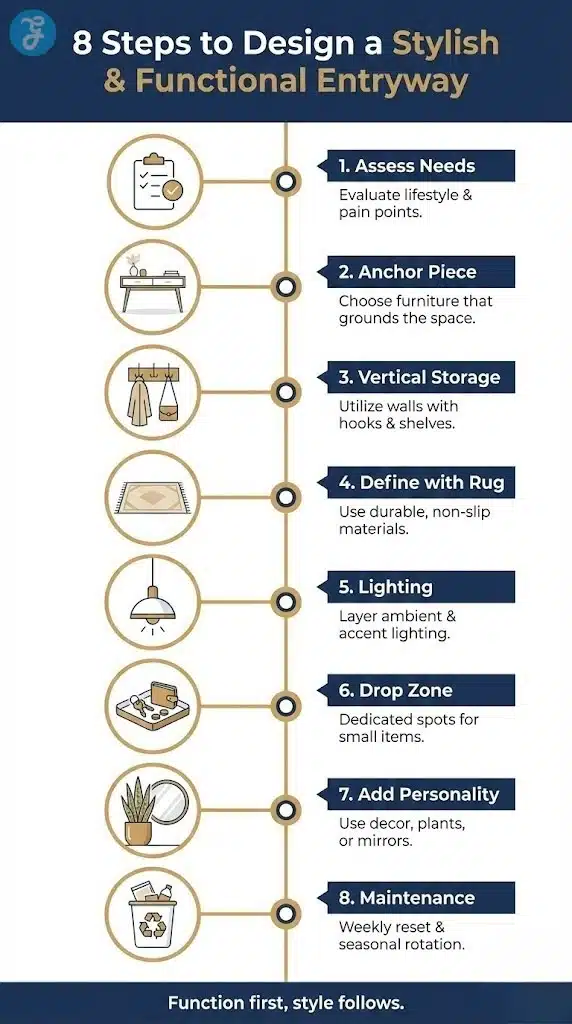
6. The Drop Zone Essentials
To keep the entryway functional, you need micro-organization for the small things. This is often where the “clutter creep” happens. Keys, loose change, lip balm, and mail need specific homes.
Use a tray or a shallow bowl on your surface to catch keys and wallets. When these items have a dedicated vessel, they are less likely to wander off. For mail, a vertical sorter or a designated basket prevents a paper pile-up. Deal with mail immediately if possible, but having a holding zone keeps it contained until you can sort it.
Mirrors are also a critical component of the drop zone. A mirror allows for a final outfit check, but it also bounces light around the room, making small entryways feel brighter and more spacious. Position the mirror above your console or bench to create a focal point.
Pro Tip:
The “One Tray Rule.” If it doesn’t fit in the catch-all tray, it doesn’t belong on the console table. This forces you to clear out receipt scraps and loose change regularly.
7. Adding Personality and Style
Once the functional framework is in place, you can layer in the style. The entryway is a great place to take a design risk because it is a pass-through space. You do not spend hours sitting there, so you can afford to be bolder with colors or patterns.
Wallpaper is a fantastic way to make a statement in a foyer. A bold print can turn a boring alcove into a jewel box. If wallpaper feels too permanent, consider a gallery wall of family photos or art. This immediately tells guests who lives there and adds warmth.
Plants are another way to breathe life into the space. A tall snake plant or a pot of pothos on a shelf adds organic texture. If your entry lacks natural light, a realistic dried arrangement or a high-quality faux plant can achieve the same effect without the maintenance.
Pro Tip
Group decor items in odd numbers (three or five). A lamp, a tray, and a plant create a visually pleasing triangle that looks styled rather than cluttered.
8. Keeping It Organized Long-Term
The best design in the world will fail without maintenance. The key to a functional entryway is a “one in, one out” policy. This space cannot be a permanent storage unit. It is a transit zone.
Seasonality is your guide. In the summer, heavy coats and boots should be moved to a closet or basement to make room for sandals and light jackets. In the winter, swap them back. By rotating items, you ensure that the entryway only holds what is currently relevant.
Make it a habit to clear the console table weekly. Junk mail and receipts tend to accumulate quickly. A quick Friday reset ensures you enter the weekend with a clean, welcoming entrance.
Pro Tip
Place a small recycling bin or trash can near the door or hidden in a cabinet. This allows you to discard junk mail immediately before it ever hits your table.
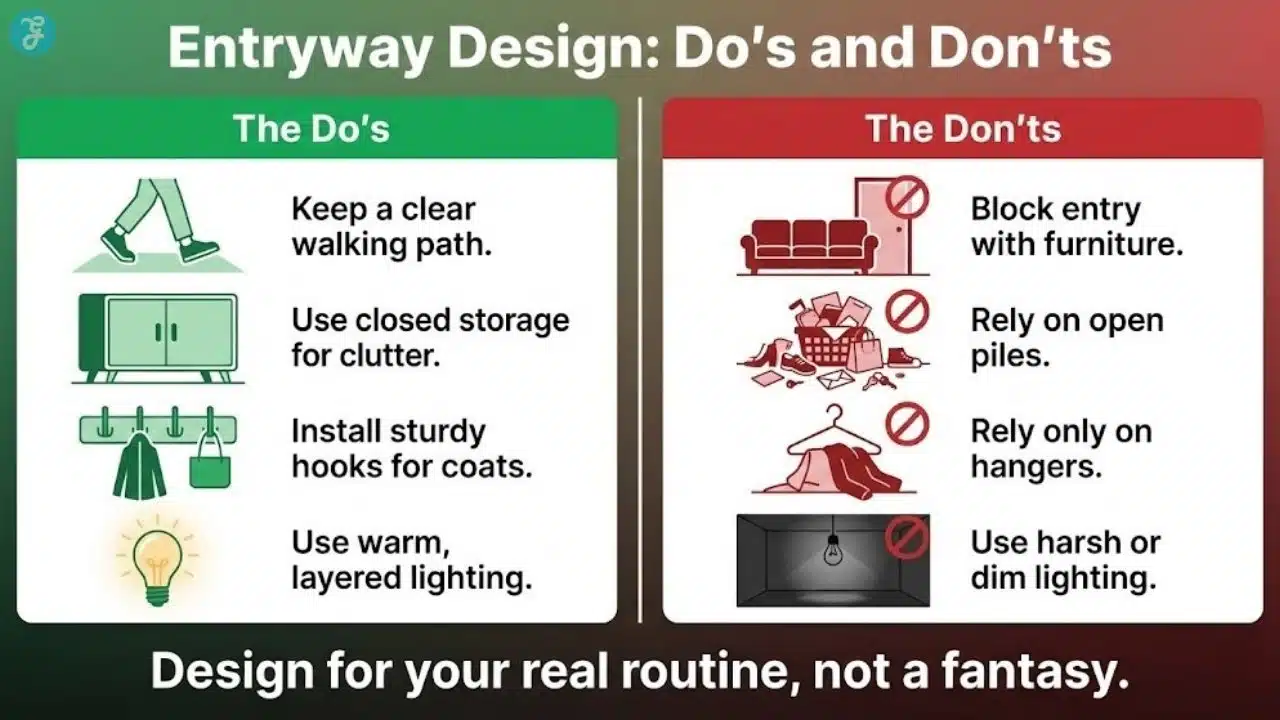
The Do’s and Don’ts
Here are things you should and shouldn’t do:
| Do | Don’t |
|---|---|
| Keep a clear walking path and door clearance (measure before buying furniture). | Block the entry with bulky furniture that makes the space feel tight. |
| Use closed storage if shoes/clutter build up fast (shoe cabinet, baskets, bench cubbies). | “Hope it stays tidy” with open piles—open storage fails when life gets busy. |
| Install sturdy hooks (multiple heights for adults/kids). | Rely on hangers only—most people won’t bother, and coats end up on chairs. |
| Use a durable, patterned rug + a non-slip rug pad. | Use delicate or light solid rugs that show every footprint or slide around. |
| Create a drop zone: one tray for keys/wallet + a mail sorter/basket. | Let the console become a dumping surface where clutter multiplies. |
| Add warm, layered lighting (overhead + lamp/sconce) or smart bulbs/timers. | Use harsh cool lighting that makes the space feel like a waiting room. |
| Rotate items seasonally (summer vs winter gear) so only current essentials live here. | Treat the entryway like permanent storage for everything year-round. |
| Do a quick weekly reset: clear surfaces, toss junk mail, return items to their “homes.” | Wait until it becomes a mess you dread—maintenance beats “big cleanups.” |
Expert Advice and Tips
Design for your real routine, not a fantasy routine. The fastest way to win is to identify what actually collects by the door (shoes, coats, backpacks, dog gear, mail), then build a home for those items—preferably one that’s easy to use in a hurry.
Expert moves that make the biggest difference:
-
Pick one anchor piece based on your space:
-
Console table (narrow foyers)
-
Storage bench (need seating + storage)
-
Slim shoe cabinet (tight spaces, hides clutter)
-
-
Go vertical with hooks and shelves. Hooks beat hangers because people use hooks.
-
Use a “drop zone” tray and keep it strict. If it doesn’t fit, it doesn’t stay.
-
Add a mirror above the anchor piece to bounce light and widen the space visually.
-
Light it properly: warm bulbs and layered lighting (overhead + lamp/sconce) create a welcoming, not clinical, atmosphere.
-
Choose durability over delicacy: entryways need tough rugs, wipeable surfaces, and furniture that can handle real traffic.
Ending Thoughts
Designing a functional and stylish entryway is about solving the puzzle of your daily routine. It requires an honest look at your habits and a creative approach to storage. By combining a strong anchor piece with smart vertical solutions and durable textiles, you can create a space that handles the morning rush with ease.
Remember that this space sets the tone for your entire home. It does not need to be perfect, but it should work for you. When everything has a place, leaving the house becomes less stressful, and coming home feels exactly like it should: a relief.
Frequently Asked Questions
Here are some frequently asked questions among readers who want to design a stylish, practical, and functional entryway:
What if my front door opens directly into the living room?
When you lack a defined foyer, you have to create one using furniture and layout. You can position a sofa with its back to the door to create a walkway. Placing a console table behind that sofa gives you a surface for keys and mail, effectively acting as an entry table. Alternatively, use a rug to visually mark the “entry” zone and place a coat rack or a slim shoe cabinet on the wall nearest the door to anchor the space.
How do I make a narrow hallway feel wider?
Light and mirrors are your best tools for widening a narrow hall. A large mirror reflects light and breaks up the visual tunnel effect. Avoid bulky furniture that intrudes on the walking path. Instead, opt for shallow pieces like slim shoe cabinets or floating shelves. Keeping the floor visible as much as possible also tricks the eye into thinking the space is larger, so choose furniture with legs rather than solid bases.
What is the best paint color for a small entryway?
Light, neutral colors like soft whites, creams, or pale grays generally make small spaces feel airier and more open. However, small spaces can also handle dark, moody colors surprisingly well. Painting a small entry in a deep navy or charcoal can blur the corners and create a cozy, dramatic effect.
How can I hide shoes in an entryway without a closet?
If you lack a closet, you need furniture that conceals clutter. A dedicated shoe cabinet with tilting drawers is the most efficient solution as it hides shoes completely while taking up very little depth.
What type of lighting is best for an entryway?
Layered lighting is ideal. You want a primary overhead light for general visibility, but accent lighting is what makes the space feel welcoming. If you have a high ceiling, a pendant light works well. For standard ceilings, a flush-mount fixture is better.