Every festival season, your budget feels the pull. Prices inch up, shopping lists stretch, and food delivery plus online shopping tempt you daily. Here is the thing: cultural events like Durga Puja and Holi spark huge consumer spending across retail stores, hospitality, travel, and digital commerce. That surge touches fintech too, short for financial technology.
This article looks at how festivals drive billions across India’s economy, what shoppers do, and how smart marketing campaigns turn that energy into sales. The scale may surprise you.
Key Takeaways
- Major Indian festivals trigger about ₹4.65 lakh crore in spending. Close to 40 percent of yearly retail sales happen during these weeks.
- In 2024, digital payments powered more than two-thirds of festive purchases. Online stores captured nearly 40 percent of sales.
- Informal work jumps. Nearly 80 percent of seasonal workers earn from short-term gigs. MSMEs, meaning micro, small, and medium enterprises, and street vendors grow with the sudden demand.
- E-commerce hit records in 2024. During Diwali, major marketplaces like Amazon and Flipkart sold goods worth about ₹2 lakh crore.
- Festivals lift travel, hospitality, food and beverage chains, and q-commerce, meaning quick commerce deliveries. They also create jobs in cities and rural tourism and boost GST, a goods and services tax, for the government.
Economic Impact of Festivals
Big festivals turn shopping and dining into a team sport. You see it on storefronts and dashboards, and you feel it in packed streets and tourist spots.
Increased consumer spending in retail, hospitality, and tourism
Festival spending in 2024 climbed to about ₹4.65 lakh crore. Retailers rushed in extra stock as demand spiked for phones, jewelry, fashion, and home goods. Around 40 percent of many brands’ annual sales land in this short window. Beauty items alone rose more than 50 percent year over year.
Hotels fill up, and restaurants stay busy with family gatherings. Rural tourism grew too. Strong monsoons and public programs helped villages contribute about 35 percent of festive buying.
Digital payments now lead checkout lines. More than two-thirds of shoppers used them. Online shopping grabbed almost 40 percent of sales in 2024. Q-commerce, or quick delivery services, moved sweets and snacks fast through apps like Swiggy Instamart and Zepto. Marketers rely on live dashboards to time offers, set inventory, and plan revenue management during Diwali or Holi rush hours.
Job creation in formal and informal sectors
Hiring surges as the season starts. Hotels, food and beverage brands, retail chains, travel firms, and delivery networks all add staff. Temporary workers set up stages and stalls. Security teams guard events. Courier fleets run late to move festival orders, from popular smartphones to snacks.
Here is a simple idea with big power: the multiplier effect. One purchase sparks more orders across the supply chain. In India, nearly 80 percent of seasonal workers earn from informal jobs during these months. MSMEs and artisans gain from custom decor, gifting, and packaging. A 2020 research wave showed packaging and logistics firms ramp up hiring in the run-up to big cultural events.
States like Uttar Pradesh turn into job engines during Holi and Durga Puja. The money flows across cities and villages, then circles back through more local spending.
Industries Benefiting from Festivals
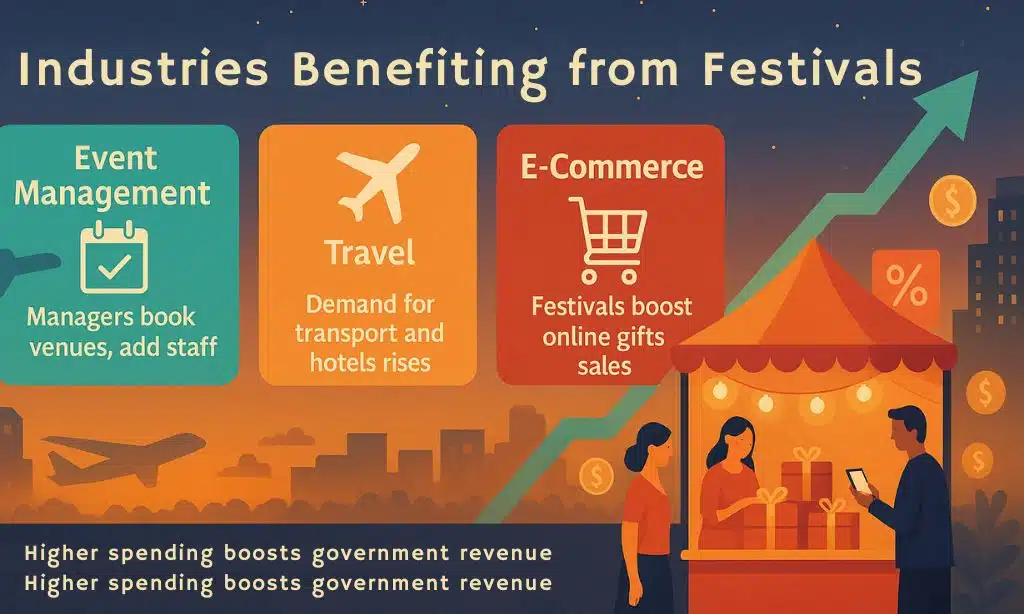
Many sectors catch a lift, from ticketing to e-commerce, using artificial intelligence. AI here means software that helps predict demand and speed checkout, which saves time when carts fill fast.
Event management, travel, and e-commerce
Event managers sprint during Diwali and Holi. They book venues, add staff, hire sound crews, and decorate stages. Food stalls and brand pop-ups crowd plazas and hotel lawns. It is busy, and it is profitable.
Travel takes off too. Trains, flights, and hotels fill as families visit relatives or attend temple processions. Cab drivers add shifts. Many hotels build festival packages with meals, local tours, and late checkouts.
E-commerce steals the spotlight. In 2024, Amazon and Flipkart together saw about ₹2 lakh crore in Diwali season sales. Digital gifting is now common. E-shagun cards, simple digital cash gifts, replace envelopes for many families. More than half of households ordered gifts online or through local delivery apps. Fashion, beauty, and electronics top the carts each year.
That wave also lifts government revenue. Higher spending means more GST collected on each purchase. The gains spread across states and city budgets.
Role of Indian Festivals in Driving the Economy
Holi, Durga Puja, and other cultural festivals work like engines. They boost consumer spending, create jobs for large chains and small vendors, and energize local streets.
Case studies: Durga Puja and Holi
Durga Puja in West Bengal is a prime example. In 2023, it pumped billions of rupees into local businesses. Shoppers crowded markets for new clothes and electronics. Food stalls lined the pandal routes, serving late into the night. Event firms were booked solid. Tourism in and around Kolkata soared. For a few weeks, formal stores and informal pop-ups hired by the thousands.
Holi packs a punch as well. Demand for snacks, color powders, and short trips jumps past normal quarterly levels. Brands roll out bundles, and travel partners build B2B deals, meaning business-to-business packages that combine flights, rooms, and local rides. Social media plus ad platforms help teams run targeted marketing with AI copilots, simple tools inside software that guide planning and bids.
You can see similar patterns outside India. Big concert tours in the United States and the UAE, such as The Eras Tour, push hotel bookings, merch sales, and local travel. The lesson is clear: well-timed cultural events create multiplier effects across sectors, city or village alike.
Takeaways
During puja season, money moves and streets glow. Shops stack sweets, saris, and gadgets. E-commerce hums, and hotels fill as families travel for cultural events. New roles are open for cooks, drivers, helpers, and designers who decorate pandals and venues.
This cycle keeps work flowing. One rupee spent on a gift can ripple through packaging, delivery, and retail wages. Even the gold market shines brighter as families buy for good luck.
Festivals do more than light lamps. They channel consumer spending through digital commerce and storefronts, feeding India’s economy from the city mall to the village stall. The impact adds up to billions, season after season.