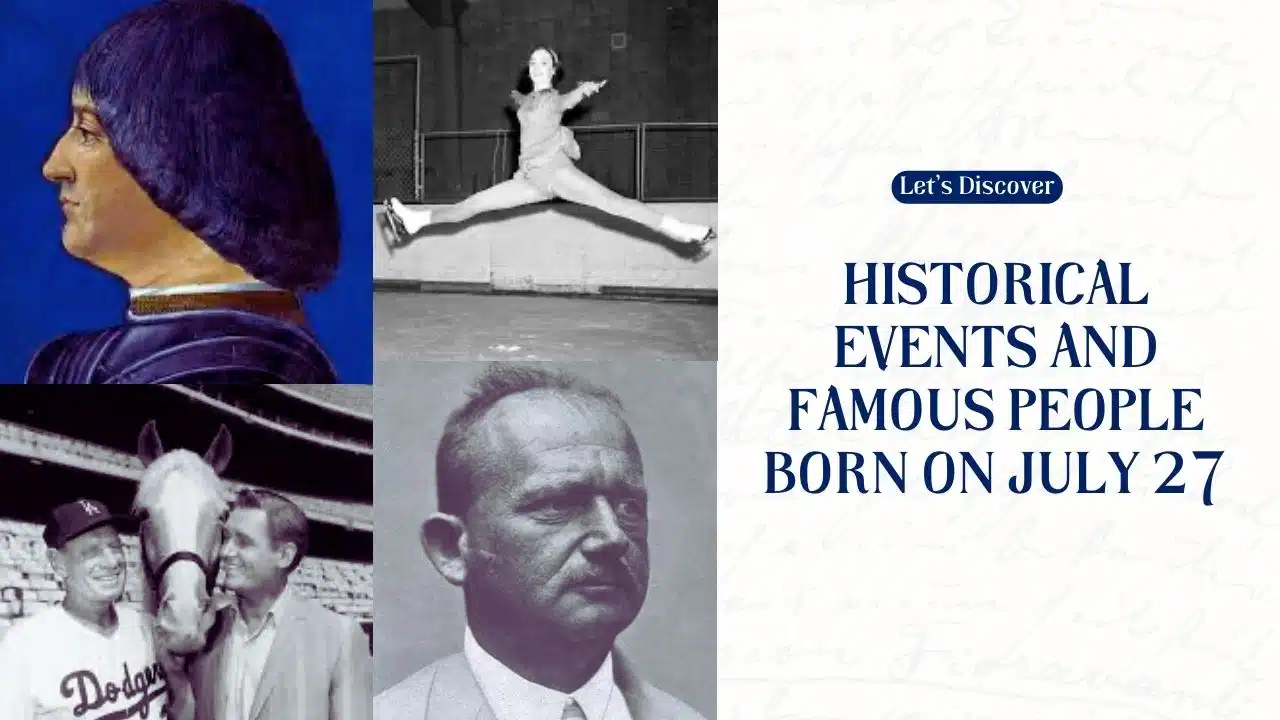
July 27 is a day filled with important events and birthdays of notable people. This article will explore five key events that happened on this day and four famous people born on July 27. We’ll learn about battles, health practices, scientific discoveries, and cultural changes that all took place on this date.
Historical Events on July 27
Battle of Bouvines (1214)
The Battle of Bouvines was a big fight that happened on July 27, 1214. It was between King Philip II of France and two other rulers: Holy Roman Emperor Otto IV and King John of England.
At that time, France and England were often fighting each other. King John of England wanted to take back lands in France that he had lost. He teamed up with Otto IV to fight against King Philip II.
The battle took place near a town called Bouvines in northern France. King Philip II’s army was smaller, but they fought very well. In the end, King Philip II won the battle.
This victory was very important for France. It made King Philip II more powerful and respected. For King John, it was a big loss. He had to give up his lands in France, including a region called Normandy. This is why people started calling him John “Lackland” – because he lacked (or lost) his lands.
The Battle of Bouvines changed things for both France and England. In France, it helped make the king stronger and the country more united. In England, it made King John weaker. This led to problems with his nobles, which later resulted in the creation of an important document called the Magna Carta.
First Use of Quarantine (1377)
On July 27, 1377, the city of Rugusa (now called Dubrovnik in Croatia) made a new rule that was the first example of quarantine. This happened during a time when a terrible disease called the Black Death was spreading across Europe.
The city council of Rugusa passed a law saying that anyone coming from places with the plague had to stay isolated for 30 days before entering the city. Later, they changed this to 40 days. The word “quarantine” comes from “quaranta,” which means “forty” in Italian.
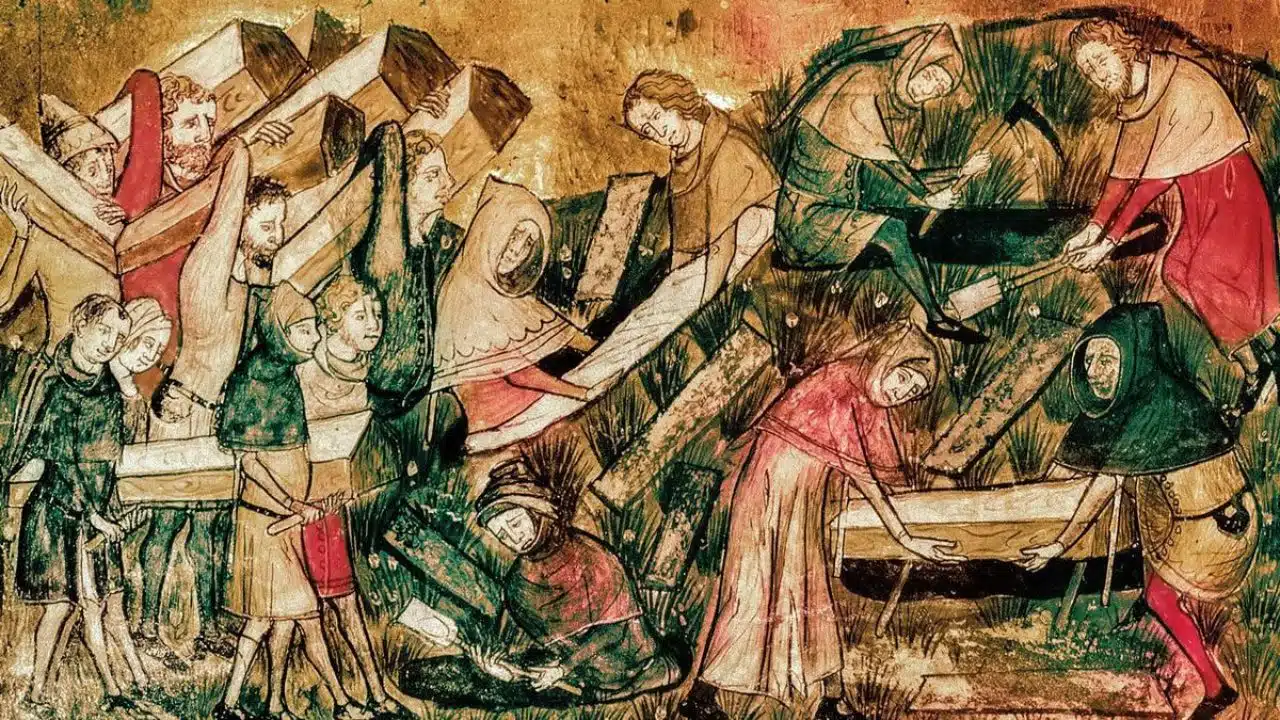
This was a new idea at the time. People didn’t know exactly how diseases spread, but they noticed that keeping sick people away from others helped stop the sickness from spreading.
The practice of quarantine became very important in fighting diseases. It’s still used today when there are outbreaks of contagious illnesses. The idea that started in Rugusa on July 27, 1377, has saved many lives over the centuries.
Copernicus Becomes a Canon (1501)
On July 27, 1501, a man named Nicolaus Copernicus was given an important job at the Frauenberg Cathedral in Frombork, Poland. He became what’s called an Augustinian canon.
Copernicus is famous for his ideas about the solar system. He said that the Sun, not the Earth, was at the center. This was very different from what most people believed at the time.
His job at the cathedral gave Copernicus time and resources to study and think about his ideas. He had a steady income and could use the cathedral’s library. This helped him develop his theories about the planets and stars.
Copernicus’s work as a canon might seem far from his scientific studies, but it actually gave him the freedom to pursue his interests in astronomy. This appointment on July 27, 1501, played a big part in allowing Copernicus to make his important discoveries.
First Christian Missionary in Japan (1549)
On July 27, 1549, a Jesuit priest named Francis Xavier reached Japan. He was the first Christian missionary to arrive in the country.
At this time, not many Europeans had been to Japan. Francis Xavier wanted to teach Christianity to the Japanese people. However, when he first arrived, he wasn’t allowed to enter any ports. He had to wait until August 15 to go ashore.
Francis Xavier faced many challenges in Japan. He didn’t speak the language and the culture was very different from what he knew. Despite these difficulties, he managed to establish a small Christian community in Japan.
The arrival of Francis Xavier on July 27, 1549, marked the beginning of Christian missions in Japan. This had a big impact on Japanese history and culture, even though Christianity remained a minority religion in the country.
Tobacco Introduced to England (1586)
On July 27, 1586, a man named Walter Raleigh brought tobacco to England for the first time. He had gotten it from Virginia, which was an English colony in North America.
Tobacco was new to Europeans at this time. Native Americans had been using it for centuries, but it was unknown in Europe. When Raleigh introduced it to England, it quickly became popular.
The introduction of tobacco had a big impact on England and later on the whole world. It became a valuable crop and trade item. Many people started smoking tobacco, which later led to health problems that weren’t understood at the time.
This event on July 27, 1586, changed cultural practices in England and started a global tobacco industry that still exists today.
Famous Birthdays on July 27
Ludovico Sforza (1452-1508)
Ludovico Sforza was born on July 27, 1452, in Vigevano, Italy. He became the Duke of Milan in 1494 and ruled until 1499.
Sforza was a important patron of the arts. He supported many artists and scientists, including Leonardo da Vinci. He asked da Vinci to paint “The Last Supper,” which became one of the most famous paintings in the world.
Despite his support for the arts, Sforza’s rule was troubled by political conflicts. He lost power in 1499 and spent his last years as a prisoner in France.
Ludovico Sforza’s life shows the mix of art and politics in Renaissance Italy. His support for artists like da Vinci had a lasting impact on art history.
Short Biography Table for Ludovico Sforza:
- Born: July 27, 1452
- Birthplace: Vigevano, Italy
- Died: May 27, 1508
- Known for: Duke of Milan, patron of Leonardo da Vinci
- Major work commissioned: “The Last Supper”
Hans Fischer (1881-1945)
Hans Fischer was born on July 27, 1881, in Hoechst, Germany. He became a chemist and did important work in organic chemistry.
Fischer studied substances found in blood, plants, and even butterfly wings. His most famous work was on a substance called heme, which makes blood red and helps carry oxygen in our bodies.
For his work, Fischer won the Nobel Prize in Chemistry in 1930. This is one of the highest honors a scientist can receive.
Hans Fischer’s research helped us understand important chemicals in our bodies. His work is still important in chemistry and biology today.
Short Biography Table for Hans Fischer:
- Born: July 27, 1881
- Birthplace: Hoechst, Germany
- Died: March 31, 1945
- Known for: Research on heme and other organic substances
- Major achievement: Nobel Prize in Chemistry, 1930
Leo Durocher (1906-1991)
Leo Durocher was born on July 27, 1906, in West Springfield, Massachusetts. He became a famous baseball player and manager.
As a player, Durocher was known for his skill as a shortstop. He played in several All-Star games and won two World Series championships.
Later, Durocher became a manager. He led the New York Giants to a World Series win in 1954. He was known for his tough, competitive style and often got into arguments with umpires.
Leo Durocher was elected to the Baseball Hall of Fame in 1994, recognizing his long and successful career in the sport.
Short Biography Table for Leo Durocher:
- Born: July 27, 1906
- Birthplace: West Springfield, Massachusetts, USA
- Died: October 7, 1991
- Known for: Baseball player and manager
- Major achievements: World Series championships as player and manager, Baseball Hall of Fame inductee
Peggy Fleming (born 1948)
Peggy Fleming was born on July 27, 1948, in San Jose, California. She became one of the most famous figure skaters in history.
Fleming won many competitions in her career. Her biggest victory was winning the gold medal in figure skating at the 1968 Winter Olympics. She also won three World Championship titles.
After she stopped competing, Fleming continued to be involved in skating. She worked as a TV commentator for skating events and performed in ice shows.
Peggy Fleming helped make figure skating more popular in the United States. She is remembered as one of the great athletes of her time.
Short Biography Table for Peggy Fleming:
- Born: July 27, 1948
- Birthplace: San Jose, California, USA
- Known for: Figure skating
- Major achievements: Olympic gold medal (1968), three World Championship titles
Takeaway
July 27 has been an important day in history for many reasons. From big battles to new health practices, from scientific discoveries to cultural changes, this day has seen it all. It’s also the birthday of people who made big impacts in art, science, sports, and more.
Learning about these events and people helps us understand how the world has changed over time. It shows us that big things can happen on any day, and that people born on the same day can do very different, but equally important things.
By looking at history like this, we can see how the past connects to our lives today. The events of July 27 across the years have helped shape the world we live in now.
References:
- Bradbury, Jim. (1998). Philip Augustus: King of France 1180-1223. Longman.
- Gensini, G. F., Yacoub, M. H., & Conti, A. A. (2004). The concept of quarantine in history: from plague to SARS. Journal of Infection, 49(4), 257-261.
- Gingerich, Owen. (2004). The Book Nobody Read: Chasing the Revolutions of Nicolaus Copernicus. Walker & Company.
- Boxer, C.R. (1951). The Christian Century in Japan 1549–1650. University of California Press.
- Brooks, Jerome E. (1952). The Mighty Leaf: Tobacco Through the Centuries. Little, Brown and Company.
- Lubkin, Gregory. (1994). A Renaissance Court: Milan under Galeazzo Maria Sforza. University of California Press.
- Priesner, Claus. (1990). Hans Fischer – Eine Forscherkarriere. Chemie in unserer Zeit, 24(6), 292-302.
- Dickson, Paul. (1989). Baseball’s Greatest Quotations. HarperCollins.
- Fleming, Peggy & Redmond, Peter. (1973). The Long Program. Simon & Schuster.