Airports, hotel breakfasts, conference dinners, long drives with one eye on the GPS and the other on hunger. Travel has a way of knocking routines sideways, especially when food choices feel rushed or limited. Eating healthy while traveling does not require monk level discipline or a suitcase full of supplements. It comes down to a few grounded habits, some realistic expectations, and the ability to adapt without turning meals into a stress project. The goal is not perfection. It is feeling steady, fueled, and clear headed enough to enjoy where you are and why you are there.
Travel often brings a strange mix of indulgence and deprivation. One meal is rich and celebratory, the next is a protein bar eaten over a trash can near Gate C12. That swing is what tends to leave people feeling off. A steadier approach makes the entire trip feel better, from energy to sleep to mood. Healthy eating on the road is less about rules and more about reading the moment in front of you.
Think in Anchors, Not Restrictions
Instead of focusing on what to avoid, it helps to think in anchors. Protein is one. Fiber is another. Hydration is the third. When those show up regularly, everything else tends to fall into place. A breakfast with eggs or yogurt, a lunch with vegetables and a solid protein, a dinner that includes something green alongside whatever local specialty caught your eye. Those anchors travel well across time zones and cuisines.
This approach also keeps decision fatigue low. You are not scanning menus for the perfect option. You are asking a simpler question. Where is the protein? Where is the fiber? Can I drink some water? Once those boxes are checked, the rest can be flexible without guilt. That flexibility is what makes the habit sustainable across multiple trips.
Airports and Highways Are Not Food Deserts
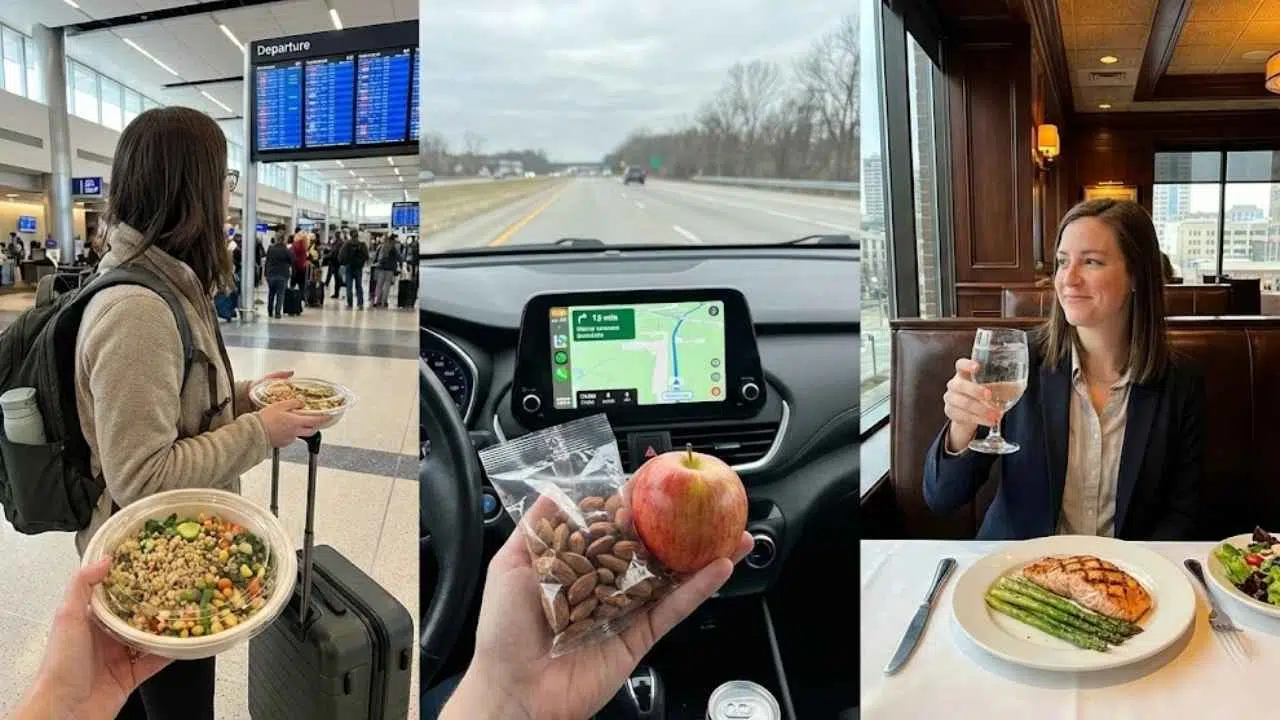
Airports have improved more than their reputations suggest. Many now offer grain bowls, salads with real protein, soups, and snack options that go beyond candy and chips. Convenience stores along highways are similar. Hard boiled eggs, hummus cups, yogurt, nuts, fruit, and even decent sandwiches are more common than people expect.
The trick is timing. Waiting until you are ravenous leads to rushed choices that feel unsatisfying. Eating earlier, even a small snack, keeps your blood sugar steady and your judgment intact. A banana and a handful of almonds at the right moment can change the tone of the entire day. That is not wellness talk. It is basic logistics.
Restaurants Offer More Flexibility Than You Think
Dining out while traveling often feels like a binary choice. Either eat the local specialties or miss out. That is a false choice. Most restaurants are happy to make small adjustments, and many menus already include balanced options that do not advertise themselves as such.
Whether you find yourself at a steakhouse in Indianapolis, a sushi spot in Chicago or anything in between, there is usually a way to build a meal that feels both satisfying and reasonable. Order the fish and add vegetables. Choose the steak and split it, then lean into the salad and sides. Sushi offers lean protein and sea vegetables, especially when rolls are not overloaded with sauces. Even pasta driven menus often have grilled proteins and vegetable forward starters that can anchor the meal.
Travel meals are also social. They mark occasions. Enjoying them matters. Eating well does not mean eating joyless food. It means choosing combinations that leave you feeling good afterward instead of heavy or foggy.
Hotel Breakfasts Are About Strategy, Not Willpower
Hotel breakfasts get a bad reputation, sometimes deserved, sometimes lazy. The key is to scan once, then build a plate with intention. Eggs, yogurt, fruit, oatmeal, nuts. These are staples in most places, even modest hotels. Toast and pastries can be part of the mix, but they work better as a side note rather than the main event.
If breakfast is sparse or unappealing, it is worth having a backup plan. A protein bar, instant oatmeal, or shelf stable smoothie can live in your bag and save you from starting the day underfueled. That early stability carries forward into better choices later, without any moralizing attached.
Planning Lightly Beats Overplanning Every Time
Research can help, but it does not need to turn into a spreadsheet. Skimming menus ahead of time, noting nearby grocery stores, or saving a few go to spots in your phone can make a difference. Many travelers now rely on food blogs to get a sense of local spots that balance flavor and nourishment, without chasing extremes.
That said, overplanning often backfires. Flights change. Meetings run long. Hunger does not always follow the itinerary. A light plan that leaves room for improvisation tends to work better than rigid rules that fall apart at the first delay.
Snacks Are the Unsung Hero of Travel Nutrition
Snacks are not a failure. They are a tool. A small, protein rich snack between meals can prevent the kind of hunger that leads to overeating later. Nuts, jerky, cheese sticks, fruit, roasted chickpeas. These travel well and do not require refrigeration for short stretches.
The goal is not to snack constantly. It is to use snacks strategically so meals stay balanced instead of reactive. That steadiness shows up in energy, patience, and even sleep, especially when crossing time zones or dealing with long days.
Eating healthy while traveling is less about discipline and more about respect for your own body in unfamiliar settings. When you prioritize steady fuel, stay flexible, and let enjoyment coexist with nourishment, food becomes a support rather than a source of stress. Travel already asks enough of you. Meals should help carry you through it, not weigh you down.