Do you feel lost in a flood of new medical technology? You might wonder if healthtech startups can really speed up diagnoses or cut costs. Flanders in Belgium ranks number one in the EU for clinical trials, so it has a strong track record in research.
This region hosts bio firms and digital health labs that push cell therapy and vaccine makers to innovate quickly.
This post explores five key healthtech innovations from Belgium. We spotlight AI imaging, precision medicine tools, sleep trackers, and more. Each item has clear benefits you can grasp today.
Read on.
Key Takeaways
- Promethera Biosciences in Flanders launched its first cell therapy trial in 2017 and now runs phase two for hepatitis-B-related liver disease, using AI to track cell changes.
- OncoDNA maps tumor DNA and RNA with AI, topped the EU chart for trial speed in 2019, and delivers precision oncology reports in days.
- FibriCheck scans a user’s pulse with a phone camera and AI to spot atrial fibrillation, validated in a 600-person clinical trial, and links to all wearables.
- Sunrise tracks sleep with a wearable sensor and mobile camera app, uses AI to flag apnea events, and won €4.7 million from VLAIO to fund 14 projects.
- Univercells packs single-use bioreactors into a case at Leuven Noord Science Park, meets GMP standards, and scales vaccine runs from 10 L to 2,000 L in days.
Promethera Biosciences: Advancing Regenerative Medicine for Liver Diseases
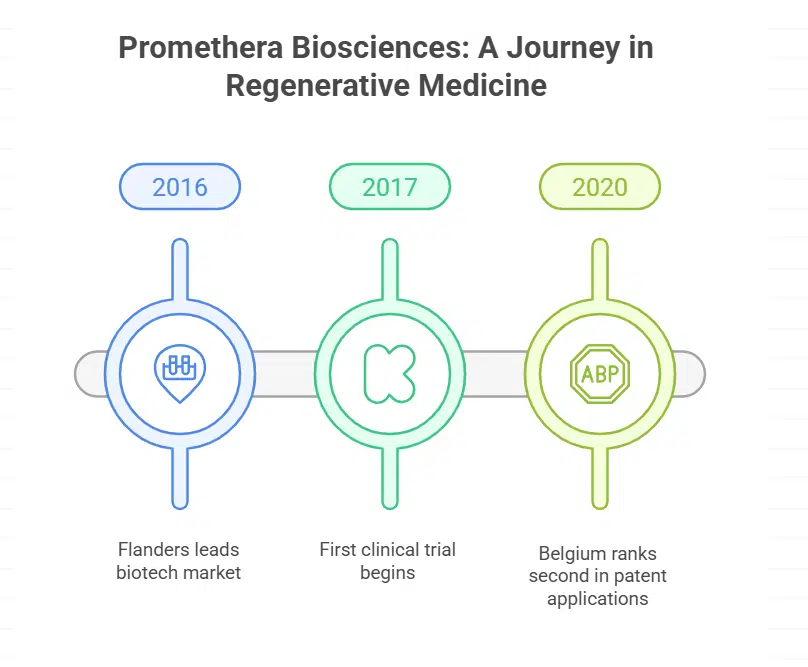
Promethera Biosciences is a biotechnology company based in Flanders, a region that led the biotech market in 2016. One healthtech startup uses cellular therapy to heal damaged livers, even in cases of hepatitis b.
The firm opened its first clinical trial in 2017 and now runs a phase two clinical study. Belgium ranked second in patent applications per capita in 2020, boosting its drive to protect new medical tech.
Researchers mix cells in a culture vessel, then track changes with artificial intelligence tools. A clinical development team taps health it software, sort of like google analytics for patient data.
It works with VITO to blend clean tech and preventive care in its supply chain. Venture funds fuel new steps, while hospitals pitch in to treat liver disease.
OncoDNA: Precision Oncology Solutions for Personalized Cancer Treatment
OncoDNA maps each tumor’s DNA and RNA. It scans genes to find weak spots. This bioinformatics tool uses artificial intelligence to read data. Labs finish reports in days, not weeks, thanks to advanced pipelines.
It topped the EU list for trial process speed in 2019 and ranked second for trial applications per capita that year. Doctors get charts that show which drugs might work best. This method helps match treatments to each patient.
Clinicians tap a next generation sequencing system to craft care plans. Patients join clinical trials faster, and they reach new drugs sooner. More than 1,500 graduates in biological sciences enter Belgium’s workforce each year.
They boost local talent, feeding this health it and medical technology hub. OncoDNA works with healthtech startups and labs around the globe. It links tumor profiles to trial matches, drug names, and dosage guides.
It helps doctors find the right path, offering a clear roadmap to hope.
FibriCheck: Device-Agnostic Technology for Cardiovascular Health Monitoring
FibriCheck scans your pulse with a phone camera and a light sensor. It spots signs of atrial fibrillation fast. The app uses artificial intelligence to flag irregular beats. A clinical trial with 600 people proved its accuracy.
It runs on phones, so users can link any wearable. Clinicians tap a browser or an API to fetch reports. Health IT teams link the data with electronic records in minutes.
A healthtech startup based in Flanders, FibriCheck grew on strong financing and government support. Collaboration with VIB in biotech and IMEC in digital tech sharpened its edge. The team bridged biotech, medtech, pharma and care networks to scale testing.
Healthcare technology of this kind can shift ECG tests from clinics into homes. Its medical technology can cut costs and save lives. Investors praise its impact on cardiac care.
Sunrise: Innovative Sleep Monitoring for Better Health Outcomes
Sunrise tracks sleep with a wearable sensor and a mobile camera app. It uses photoplethysmography and accelerometer data to study each night. The system runs an artificial intelligence model that flags apnea-hypopnea index spikes.
It alerts doctors to possible obstructive sleep apnea quickly. Belgian healthtech startups and healthcare technology firms praise its medical technology design for preventive care.
Researchers at VITO team up on sensor calibration and data analysis. Health House hosts demos that mix immersive environments, 3D printing, and sleep trials. Flanders.healthTech Cluster funded 14 projects with 4.7 million euros from VLAIO, helping bring the device to market.
A pool of over 1,000 graduates in CAR-T therapy adds bio data talent to clinical trials. Labs now collect patient data in early trials, using health IT dashboards for fast review.
Univercells: Revolutionizing Vaccine Production with Scalable Biomanufacturing
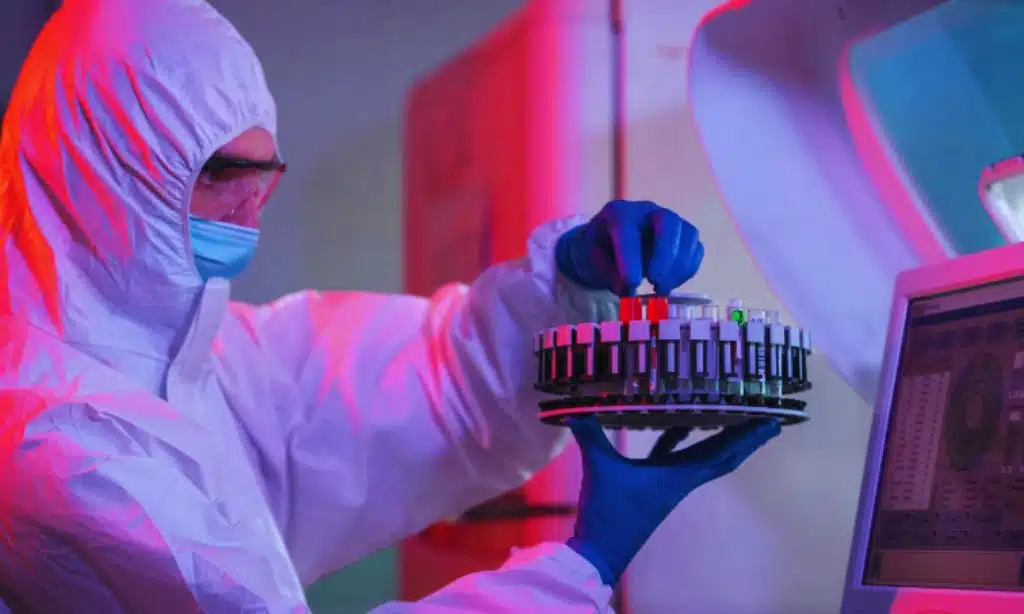
Univercells sets up flexible vaccine plants in Leuven Noord Science Park. They pack complex systems into a single shipping case. The design uses single-use bioreactors and cell scaffolds.
The layout meets GMP compliance and cuts lead time by weeks. Flanders ranks third for biopharma researchers per capita. Accelerators like imec.iStart and imec.xpand provide lab space.
Healthtech startups and medical technology firms thrive here.
Engineers integrate process intensification and modular manufacturing. They test filtration units and chromatography steps on site. Teams add artificial intelligence models to track yield and virus potency.
They link results to health IT dashboards for real-time alerts. This data speeds clinical trials and limits waste. Operators scale production from 10 liters to 2,000 liters in days.
Researchers at Janssen Pharmaceuticals and Pfizer eye this method for global roll out.
Precirix: Targeted Radiopharmaceuticals for Cancer Therapy
The team at Precirix builds radiopharmaceuticals that hunt tumors. They load a radioactive tag onto a targeting molecule. It feels like a guided missile searing only cancer cells. Scientists use nuclear imaging devices and AI analysis to map drug journeys, a health it play that leaps beyond simple imaging.
This healthtech startup taps Flanders’ AI diagnostics edge and joins VIB to mine immunology insights.
Clinical trials move fast in Belgium, which ranks second per capita in trial applications, thanks to CROs like QbD Group and Biogazelle. That speed matters for patients racing against time.
Precirix merges healthcare technology with artificial intelligence models to track dose measurement. This mix of life science tech, molecular imaging, and data code makes a powerful strike against cancer.
Takeaways
Belgium has built a strong path in medical technology. Flanders ventures speed up clinical trials in lab hubs. OncoDNA uses artificial intelligence for personalized cancer therapy.
FibriCheck runs a mobile health tool for heart rate scans. Sunrise records sleep patterns via smart sensor. Univercells boosts vaccine output with a scalable system in biomanufacturing.
These medical breakthroughs fuel patient hope and industry growth. Readers can follow each venture as it reshapes care.
FAQs on HealthTech Innovations Emerging from Belgium
1. What makes Belgian healthtech startups stand out?
They blend healthcare technology, medical technology, and artificial intelligence. They build tools that read scans, spot early signs of ill health, and speed up clinical trials.
Health IT apps in Belgium track user choices via cookies, to shape each screen. They free teams from admin tasks, so staff spend more time with patients.
3. How do energy hubs and renewable energy boost health tech?
Belgian firms design energy hubs (virtual power plants) to juice up remote clinics. They tap renewable energy from sun and wind; they add backup in case the grid fails. Clinics stay lit, tests carry on.
4. How do startups fight retinal disease and viruses?
They train AI to flag retinal disease, like diabetic retinopathy, in a snap. They build tools that track viruses across labs and clinics. One founder quips he feels like a digital detective, chasing tiny foes.
5. How do Belgian innovators handle delivery planning and sustainable agriculture?
They crack the old vehicle routing puzzle with smart delivery planning, to ship meds in record time. They turn soil and weather data into tips for farmers, to boost sustainable agriculture.