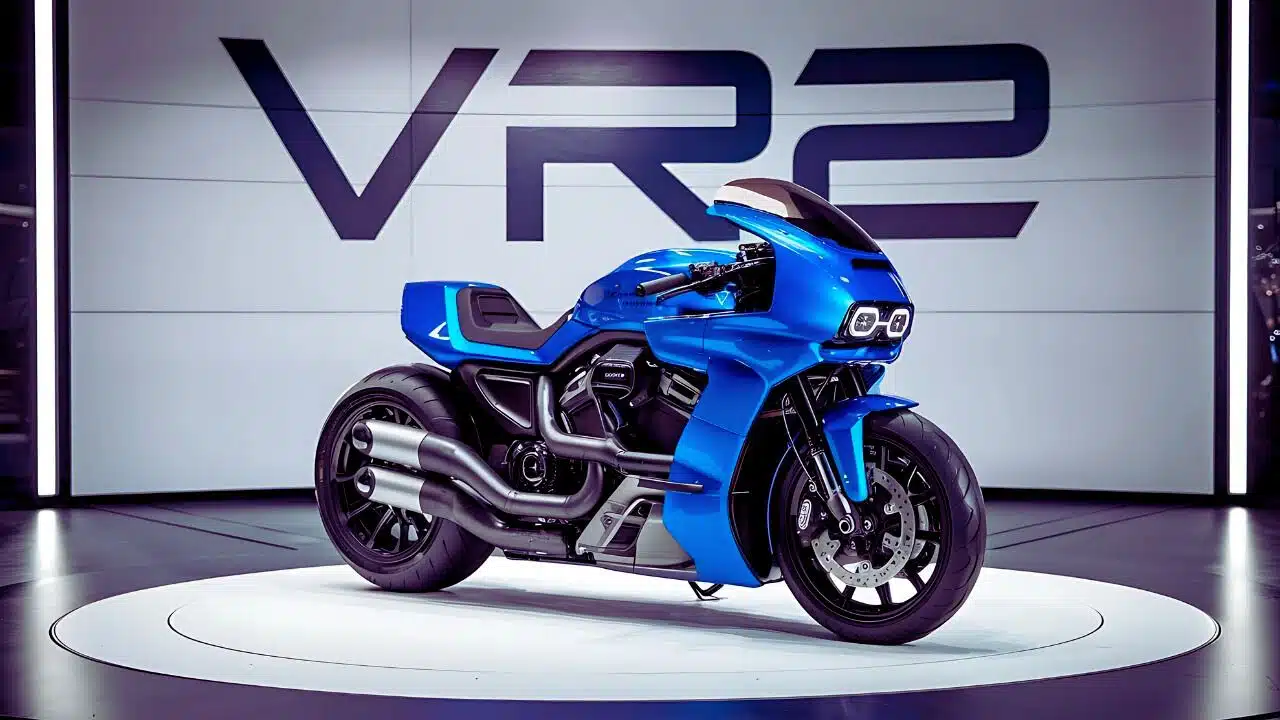
The motorcycle world is buzzing with speculation about a new performance model from Milwaukee: the Harley-Davidson VR2 2025. This rumored bike is envisioned as a spiritual successor to the legendary V-Rod, combining the raw, high-horsepower performance of the Revolution Max engine with a new suite of intelligent riding dynamics.
However, as of the official 2025 lineup announcement, the “VR2” name remains absent. This article explores the powerful rumor, the technology it promises, and how the spirit of this unannounced bike is actually the biggest story of Harley-Davidson’s entire 2025 model family. While the VR2 itself is a phantom, its DNA—raw power and smart tech—is very real and has been strategically injected across the new Cruiser, Touring, and Sport lineups.
To understand the 2025 strategy, we must look at the facts presented by Harley-Davidson themselves. The company’s official 2025 model reveal highlights a significant evolution. Instead of launching one “halo” bike like the rumored VR2, Harley-Davidson has chosen to elevate its entire core portfolio. This includes widespread adoption of its most powerful V-Twin engines and, crucially, a new generation of electronic rider aids.
This move is a direct reflection of the company’s “Hardwire” strategic plan, which aims to strengthen its position in its most profitable segments (Touring and Cruiser) while leveraging its newest technologies, as detailed in its official company news releases.
The “VR2” Myth: A Successor to the V-Rod?
For years, Harley-Davidson enthusiasts have clamored for the return of the V-Rod, the liquid-cooled muscle cruiser that broke the brand’s traditional mold from 2001 to 2017. The speculation around the Harley-Davidson VR2 2025 is the modern version of that desire. The “VR” likely stands for “V-Twin Racing” (like its V-Rod predecessor, the VRSC), and the “2” implies a new generation.
What the Rumors Claim
Online forums and speculative reports paint a consistent picture. The hypothetical VR2 would be a long, low, and aggressive power cruiser, but one built on a modern, lighter-weight chassis. The key components of this myth are:
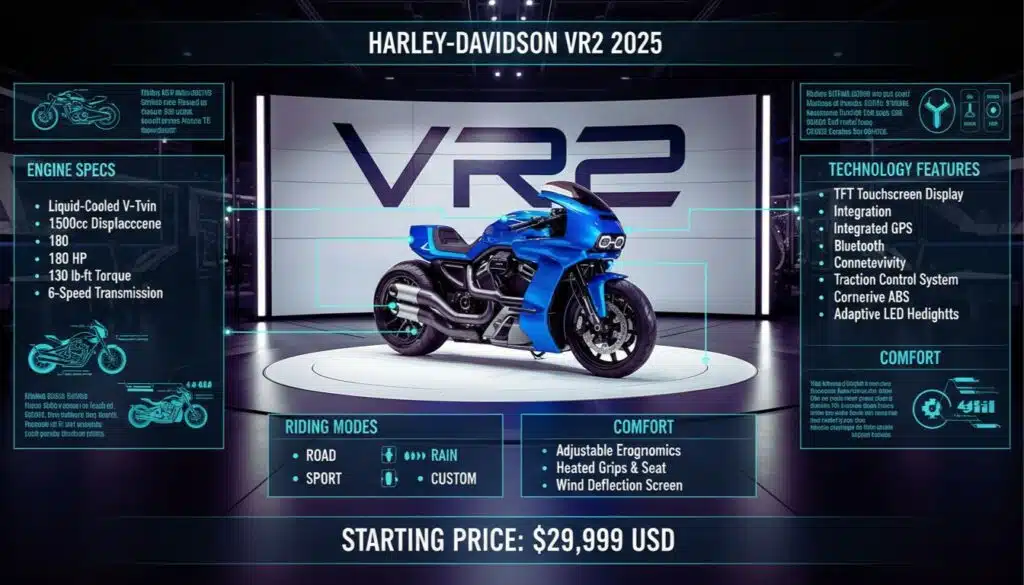
- The Engine: The heart would undoubtedly be the Revolution Max 1250T. This is the same 1,252cc, liquid-cooled, DOHC V-Twin that powers the critically acclaimed Pan America 1250 and Sportster S.
- The Power: In its Sportster S tune, this engine produces a formidable 121 horsepower and 94 lb-ft of torque. Rumors for a “VR2” spec push this even higher, with speculation pointing to a 145-150 horsepower tune, which would make it the most powerful production Harley-Davidson ever built, directly competing with bikes like the Ducati Diavel V4.
- The Tech: It wouldn’t just be a “drag bike.” The rumors insist it would feature a full-color TFT display (likely the new Skyline™ OS) and the complete suite of Harley-Davidson’s cornering-aware safety enhancements.
This combination of V-Rod attitude and Pan America-level technology is a compelling package. While this specific bike hasn’t materialized, the reason for the rumor is clear: Harley-Davidson already has all the necessary components. The question isn’t if they can build it, but where they have chosen to deploy that technology instead.
The 2025 Reality: Where “Raw Performance” Meets “Smart Dynamics”
The dream of the Harley-Davidson VR2 2025 is one bike. The reality of 2025 is that this dream has been split and infused into the models that form the brand’s core. Harley-Davidson has clearly focused on enhancing its existing, popular families with the very power and technology the VR2 was rumored to champion.
The New Heart of the Cruiser Line: The Milwaukee-Eight 117
The biggest news for the 2025 Softail (Cruiser) lineup is the democratization of power. The formidable Milwaukee-Eight 117 V-Twin is now the standard engine for iconic models like the Fat Boy, Low Rider S, Low Rider ST, and Heritage Classic.
Previously reserved for CVO (Custom Vehicle Operations) or “ST” models, this 1,923cc, air-and-oil-cooled V-Twin brings massive, traditional torque to the masses. It delivers a satisfying 125 lb-ft of torque at just 3,500 RPM, providing that “raw” V-Twin performance that riders expect from the brand. This move gives the entire cruiser line a significant performance bump, answering the market’s demand for more power straight from the factory. While it’s not the high-revving liquid-cooled power of the rumored VR2, it’s an undeniably potent and brand-appropriate upgrade.
The Brains: Harley’s “Rider Safety Enhancements” Go Mainstream
This is the “Smart Riding Dynamics” part of the equation and perhaps the most significant update for 2025. Harley-Davidson is rolling out its advanced electronic rider aids, previously found only on top-tier touring models, to its new cruisers.
According to Rider Magazine, the new 2025 cruiser models now include selectable ride modes (Road, Sport, Rain) and a new suite of standard Rider Safety Enhancements. This package is designed to match motorcycle performance to available traction during acceleration, deceleration, and braking, adding a massive layer of confidence and control.
Here’s a breakdown of what that technology actually does:
| Technology | Official Name | What It Does |
| Cornering ABS | Cornering Enhanced Antilock Brake System (C-ABS) | Prevents wheels from locking under braking, even when the bike is leaned over in a corner. It modulates brake pressure based on lean angle. |
| Cornering Traction Control | Cornering Enhanced Traction Control System (C-TCS) | Prevents the rear wheel from spinning (slipping) during acceleration, especially in a turn. It adjusts intervention based on lean angle. |
| Engine Brake Control | Cornering Drag-Torque Slip Control System (C-DSCS) | Manages rear-wheel slip during deceleration (like an aggressive downshift or rolling off the throttle on a wet surface), preventing a “skid.” |
| Ride Modes | Selectable Ride Modes (e.g., Road, Sport, Rain) | Electronically adjusts throttle response, power output, C-TCS intervention, and C-ABS settings to suit different riding conditions. |
This package is the “smart riding dynamics” the market has been waiting for. Instead of saving it for one exclusive Harley-Davidson VR2 2025 model, the company has wisely used it to modernize its most important and best-selling motorcycles.
The Revolution Max: The Other Performance King
While the cruisers get the M8-117, the liquid-cooled “VR” spirit lives on in the Revolution Max 1250T engine. For 2025, this engine continues to define Harley’s “Sport” category in the Sportster S. This bike is, in many ways, the VR2 that people are asking for, just in a different package.
The Sportster S delivers:
- 121 horsepower from the Rev Max engine.
- A low-slung, aggressive “muscle” stance.
- Fully adjustable front and rear suspension.
- The full suite of Rider Safety Enhancements, including C-ABS and C-TCS.
- Selectable Ride Modes (Sport, Road, Rain).
The official 2025 update for the Sportster S includes revised suspension, offering a 60% increase in rear wheel travel to improve rider comfort and handling without sacrificing its aggressive look. This demonstrates that Harley-Davidson is actively refining its high-performance platform. Anyone test-riding a 2025 Sportster S is, in effect, experiencing the heart and soul of the rumored VR2.
Market Performance and The “Hardwire” Strategy
This 2025 strategy of “more power, more tech, core models” isn’t happening in a vacuum. It’s a key part of Harley-Davidson’s “Hardwire” strategic plan, which is focused on profitability and strengthening its core demographic. By adding value (117 engines, safety tech) to its most popular bikes, H-D is aiming to solidify its customer base and attract new riders who demand modern technology.
The financial markets are watching this move closely. Harley-Davidson, Inc. (NYSE: HOG) is navigating a complex global market, and the success of this 2025 lineup is critical. According to financial news outlets like MarketBeat and Stock Titan, the company is scheduled to report its third-quarter 2025 financial results on November 4, 2025.
Analysts will be looking to see if the new, tech-rich 2025 models are driving sales and improving profit margins. Consensus estimates for the upcoming Q3 report anticipate an expected revenue of $1.01 billion and an earnings per share (EPS) of $1.45. This earnings call will be the first major indicator of whether the “tech and power” strategy is paying off and will provide clues as to whether H-D has the capital and market confidence to launch an all-new platform like a VR2 in the near future.
The Harley-Davidson VR2 2025 may not be sitting on showroom floors as a distinct model, but its essence is the most important story of the 2025 model year. The demand for a bike with “raw V-Twin performance and smart riding dynamics” has been answered, just not in the single package many expected.
Harley-Davidson has infused that very DNA across its entire family. The raw, thumping performance is delivered by the newly standard Milwaukee-Eight 117 in the Cruiser line. The high-revving, liquid-cooled performance lives in the Sportster S. And the “smart riding dynamics”—the cornering-aware ABS, traction control, and ride modes—are the new, intelligent brain connecting these powerful hearts to the road.
While we wait to see if a true V-Rod successor will ever emerge, the 2025 lineup proves one thing: Harley-Davidson is no longer just selling heritage. It’s selling high-performance, intelligent machines. The Harley-Davidson VR2 2025 isn’t a bike you can buy; it’s the philosophy that has redefined the entire brand.