
Many people worry that a hard inquiry will hurt their credit score. They skip new credit card applications or delay a car loan. They fear that a single credit check will stick. That worry can freeze their plans.
Credit bureaus list each hard inquiry on your credit report, but FICO scoring models group similar loan checks done within two weeks. You will learn six tips on rate shopping, credit monitoring, and fixing wrong pulls.
These steps will protect your credit history and boost your score. Keep reading.
Key Takeaways
- Hard inquiries occur when you apply for credit and stay on your report for two years; each can drop your FICO score by up to five points. Soft inquiries like checking your own report do not affect your score.
- FICO groups same-type loan pulls as one hit if you shop within 45 days for new models or 14 days for older ones and ignores pulls in the 30 days before scoring; VantageScore merges all pulls in 14 days into one inquiry.
- Rate shop auto, mortgage, or student loans within these windows to compare rates without extra score hits. Use pre-qualification soft pulls at banks like Chase or Capital One to test rates risk-free.
- Monitor your Experian, Equifax, and TransUnion reports for free at AnnualCreditReport.com or with tools like Credit Karma or Chase Credit Journey. Spot odd pulls, set up alerts, and dispute wrong inquiries with proof.
- Avoid six or more credit applications in a short span to prevent score dips and keep your credit utilization under 30 percent. Focus on on-time payments to boost your score more than skipping hard inquiries.
Understand the Difference Between Hard and Soft Inquiries

Lenders pull your file when you apply for new credit cards, an auto loan or a student loan. That triggers a hard inquiry at Experian, Equifax or TransUnion. That mark stays on your credit report for two years.
Scores such as FICO score may dip by a few points, no matter if you get approved or not.
Soft inquiries pop up when you check your own credit report. They also appear during employer credit checks or pre-qualification on a loan application. Those pulls do not affect your credit score at all.
Services like Credit Karma or MyFICO send alerts through credit monitoring tools.
Take Advantage of Rate Shopping Periods
Multiple auto, mortgage or student loan inquiries in a short span count as one hard inquiry. FICO groups same-type pulls in a 45-day window for newer score models or 14 days for older ones, and it skips any hard pull made within 30 days of scoring.
VantageScore merges all loan pulls into one inquiry if you shop within 14 days. This setup lets you compare interest rates at banks, credit unions or online lenders without hurting your credit score.
Shopping all at once helps you snag better rates on an auto loan or refinance offer. Experian, Equifax and TransUnion still list each pull on your credit report, but your FICO score only sees one.
Use a free credit report tool or a credit monitoring service to track hard inquiries and guard your credit history.
Open your free credit report at Experian and set up alerts for new hard inquiries. Boost your score with Experian Boost by adding utility, phone, video and rent payments; no credit card needed.
Chase Credit Journey gives free credit monitoring and shows ways to increase your FICO Score. Spot odd abbreviations or names on credit reports, they often flag fraudulent pulls. Then dispute suspect pulls with credit bureaus to fight identity theft.
Limit the Number of Credit Applications You Submit
A spike in hard inquiries can drop points off your FICO score on your credit report. Lenders treat six inquiries in a short span as too many. Each credit card application triggers a hard pull and adds to that count.
A soft inquiry tool like a free credit report service can preview offers without risk.
A credit scoring model links multiple new accounts to higher risk. A flood of loan applications, for auto loans or student loans, can spook lenders. Check your credit monitoring dashboard and space out requests to protect your credit score.
Remove Inaccurate Hard Inquiries From Your Credit Report
Errors in hard pulls can drag down credit scores. Consumers have the right to ask for removal of any wrong entry.
- Sign up for account alerts and download a free credit report from each consumer reporting agency.
- Spot any hard inquiries that list strange lender initials or odd abbreviations.
- Match each questionable pull to your own credit card applications or auto loan request dates.
- Dial Experian’s dispute line or send a letter to its mailing address to challenge the entry.
- Attach certified copies of your loan application or identity theft affidavit for proof.
- Watch your FICO score over the next 30 days to confirm the bureau removes the wrong inquiry.
Focus on Building a Strong Credit History
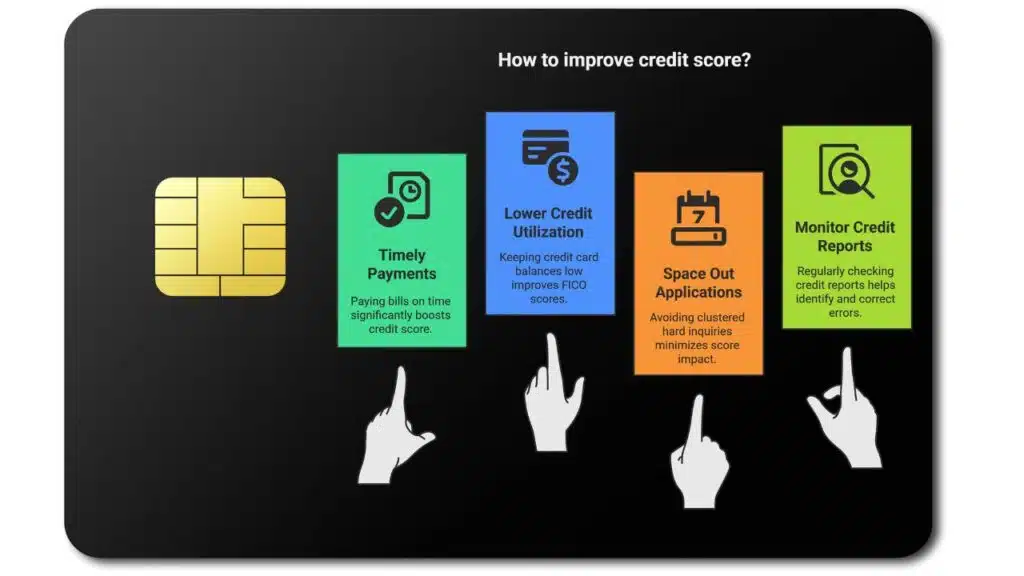
Payment history beats tiny inquiry hits. Paying bills on time drives bigger gains than skipping hard inquiries. Lower credit card balances also lifts FICO scores. Hard inquiries only dent your score by less than 5 points.
Use free credit report checks at AnnualCreditReport.com or via a bureau. Try the Chase Credit Journey tool for simple credit monitoring. Space out credit card applications and loan applications to avoid a cluster of hard pulls.
Keep your credit utilization ratio under 30 percent for steady climbs. Only hard pull records from the past 12 months still affect your score.
Use Pre-Qualification Options to Avoid Unnecessary Hard Inquiries
Pre-approval acts like a test drive for credit cards or loans. It runs a soft inquiry, not a hard pull. Soft inquiries do not affect your credit score, so you stay safe. Credit bureaus record these soft pulls, but lenders do not see them when you submit a loan application.
You compare interest rates on auto loans, student loans, and credit card applications without risk. A free credit report helps you track soft inquiries and spot errors fast.
Major banks, like Chase and Capital One, let you check pre-qualification online. They use a soft pull, so your FICO score sits still. You skip extra hard inquiries on your credit report, keeping your credit history intact.
This smart move helps you find the best rates and guard your credit score.
Takeaways
Try grouping auto loan or student loan pulls within two weeks, and get one count on your FICO score. Check your report for free, and set up account watch alerts with bureaus, to catch odd pulls fast.
Dispute wrong inquiries, if identity theft pops up, so you guard your credit history. Focus on payment history, and low utilization, to boost your score more than on inquiry counts.
Use rate shopping hacks, lock in low interest, without stress. Call on home cost tool or finance tech apps, and map your next moves. Mix smart habits with planful checks, and you keep that score in good shape.
FAQs
1. What is a hard inquiry and how does it differ from a soft inquiry?
A hard inquiry, or hard pull, happens when a lender fully checks your credit report. You may apply for an auto loan, student loan, or mortgage. The lender pulls data from Experian, Equifax, or TransUnion. It shows up on your credit history and can dip your FICO® score by a few points. A soft inquiry, or soft pull, happens when you check your own score or a card issuer looks for a preapproval offer. Soft pulls do not affect your score.
2. Will rate shopping for auto loans or mortgage loans hurt my credit?
No. Credit scoring models group multiple rate checks into one inquiry when done in a short window. It works like a price match at the store. You can compare interest rates from banks, credit unions, or fintech apps without extra dings.
3. Does applying for a credit card application lower my FICO® score?
Yes. Each credit card application triggers a hard pull. But one or two checks are like a scratch on a phone case, they do little harm. You can still earn cash back with a Mastercard or keep a debit card tied to your checking account.
4. How can I check my credit report or credit score without a hard pull?
Use AnnualCreditReport.com for a free credit report or try Chase Credit Journey from J.P. Morgan. These count as soft inquiries. You can track payment history, credit utilization ratio, credit lines, and spot identity theft without any drop in your FICO score.
5. Do student loan or home loan inquiries affect my credit the same way as auto loans?
Yes, all these apps trigger hard pulls. But you can shop around for mortgage or student loan rates in a short span. Lenders then treat it as one inquiry. That tactic helps you keep your credit history neat.
6. How do I track all my credit inquiries and spot identity theft?
Check your credit report’s credit inquiries section each month. Note the date, lender name, and interest rates. You can use a notebook or a fintech app. This log also helps you plan a safe credit limit increase or spot strange ATM or background check moves.