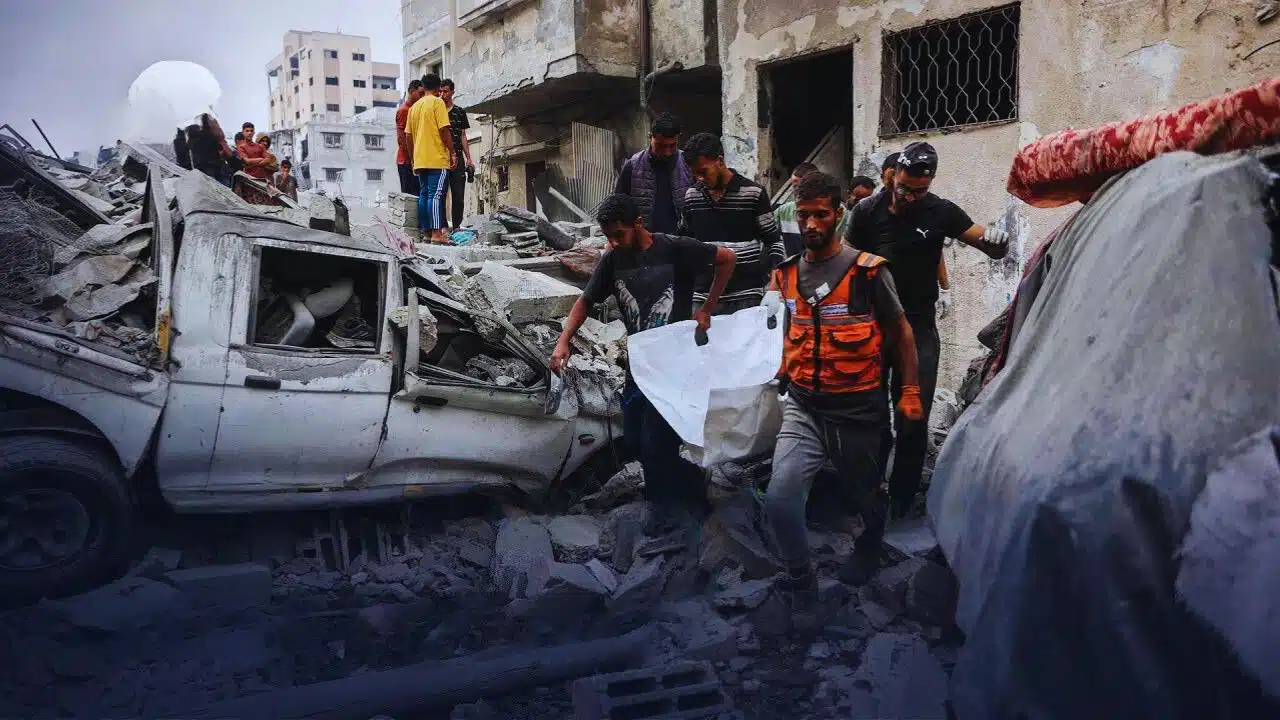
Hamas says Israel has committed 813 ceasefire violations in Gaza since a truce took effect on Oct. 10, warning the alleged breaches could jeopardize the agreement. Israel has previously said its forces have opened fire when Palestinians approached Israeli positions in violation of warnings, amid recurring mutual accusations over the truce’s implementation.
Lead
A senior Hamas official, Ghazi Hamad, has accused Israel of carrying out 813 violations of the Gaza ceasefire since Oct. 10, describing the situation as extremely dangerous. Hamad claimed the alleged violations include deadly attacks, targeted operations, and restrictions linked to humanitarian aid, and said Hamas has been submitting daily reports to mediators.
What Hamas is alleging
Hamad said nearly 400 Palestinians—mostly civilians, according to his statement—have been killed since the ceasefire began, and 991 people have been injured, including 334 children and 210 women. He alleged Israel’s actions include killings, executions, shooting civilians, bombardment, targeted attacks, and targeted assassinations, as well as breaches related to humanitarian aid. Some outlets reporting the Hamas figures noted the claims could not be independently verified.
Hamad also said Israel has expanded fire control zones (buffer areas) inside Gaza to varying depths by region, including up to about 1,300 meters in Gaza City. He further claimed Israel currently occupies more than half of the Gaza Strip, citing Palestinian authorities.
Key figures cited by Hamas
| Metric (Hamas claim) | Figure | Timeframe/Notes |
| Alleged ceasefire violations by Israel | 813 | Since Oct. 10 ceasefire took effect |
| Palestinians killed since ceasefire | Nearly 400 | Hamas says most were civilians |
| Palestinians injured since ceasefire | 991 | Includes children and women |
| Children among injured | 334 | Hamas breakdown |
| Women among injured | 210 | Hamas breakdown |
| Reported fire control zone depth (Gaza City) | About 1,300 meters | Hamas description of expanded zones |
| Reported fire control zone depth (North Gaza) | 700–1,000 meters | Hamas description of expanded zones |
| Reported fire control zone depth (Central areas) | About 1,150 meters | Hamas description of expanded zones |
| Reported fire control zone depth (Khan Younis) | About 1,100 meters | Hamas description of expanded zones |
| Reported fire control zone depth (Rafah) | About 1,000 meters | Hamas description of expanded zones |
Israel’s position and past responses
In recent ceasefire-related disputes, Israel has said some Palestinians disregarded warnings not to approach Israeli ceasefire positions, and that troops opened fire when individuals moved toward forces, describing those incidents as threat responses. In broader coverage of the current ceasefire period, multiple reports have documented repeated blame-trading between Israel and Hamas over compliance and delays tied to the truce’s next steps.
The Hamas statement reported by Anadolu did not include an Israeli on-the-record response to Hamad’s specific 813 violations allegation. In the same period, Hamas has argued that Israel has no right to target resistance members during a ceasefire and accused Israel of using unproven pretexts to justify attacks, a claim Israel disputes in other ceasefire contexts where it frames actions as defensive.
Humanitarian access and civilian impact
Hamad’s statement said alleged ceasefire breaches also involve clear violations connected to humanitarian aid, linking the truce’s durability to access and delivery on the ground. Separately, UN experts have warned publicly that continuing violations risk undermining Gaza’s fragile ceasefire, signaling sustained international concern over compliance and civilian protection.
The accusations come against the backdrop of mass casualties and widespread destruction in Gaza since the war began in October 2023, with Anadolu citing Palestinian figures of nearly 70,700 killed and more than 171,000 injured since then. Hamas and other sources have continued to argue that ceasefire implementation must reduce harm to civilians and enable assistance at scale, while Israel has repeatedly emphasized security imperatives in areas near its forces.
What happens next
Hamas says it has submitted detailed daily reports of alleged Israeli violations to mediators, and it is pressing those intermediaries to intervene to prevent further erosion of the ceasefire. Public reporting during this ceasefire period indicates negotiations over subsequent steps have been fragile, with both sides accusing the other of breaches and delays that complicate implementation.
If mediators cannot narrow disputes over enforcement zones, humanitarian access, and alleged attacks, the ceasefire could face intensified strain, according to the warnings cited by Hamas and UN experts. The immediate next signals to watch are whether mediators publicly acknowledge the claims, whether Israel issues a detailed response to the 813 figure, and whether reported incidents near the buffer areas decrease.