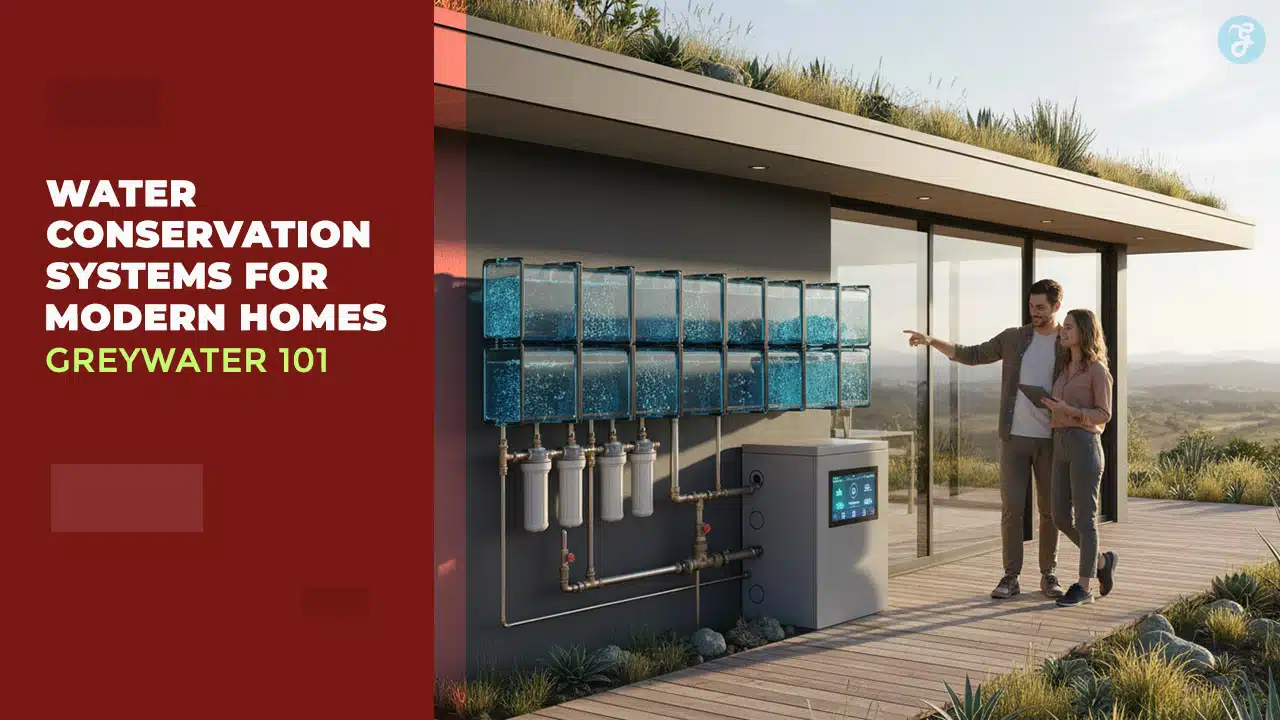
As climate patterns shift and urban populations swell, water scarcity has moved from a distant environmental concern to a daily reality for millions. For modern homeowners, sustainable design isn’t just about solar panels or smart thermostats anymore—it’s about how water is managed, used, and reused.
Enter greywater systems: a plumbing innovation that allows you to double the life of your water. Instead of flushing perfectly good water down the drain after a single shower, greywater systems capture, filter, and redirect it to irrigate your garden or flush your toilets.
This guide explores everything you need to know about residential greywater system for homes—from how they work and what they cost to the legalities of installing one in your home.
What Is a Greywater System?
A greywater system is a plumbing setup that diverts gently used water from bathroom sinks, showers, tubs, and washing machines for reuse on-site. It effectively “recycles” water that would otherwise be sent straight to the sewer or septic tank.
To understand greywater, you must first understand the three types of household water:
- Potable Water: Clean, drinkable water coming into your home.
- Greywater: Used water from showers, baths, bathroom sinks, and laundry. It contains traces of soap, hair, dirt, and bacteria but is free of fecal matter.
- Blackwater: Wastewater from toilets and kitchen sinks (which contains food scraps and oils). This is heavily contaminated and cannot be reused in a standard residential greywater system.
Common Household Sources of Greywater
- Showers & Bathtubs: The highest volume source; usually the cleanest greywater.
- Bathroom Sinks: Good for reuse, though toothpaste and soap residue require filtration.
- Washing Machines: Excellent source, provided you use biocompatible (low-sodium, phosphate-free) detergents.
Note: Water from kitchen sinks and dishwashers is usually classified as blackwater (or “dark greywater”) in many jurisdictions because of the high organic load from fats and food waste.
Why Greywater Systems Matter for Modern Homes

Growing Water Scarcity and Urban Living
In many regions, water prices are rising faster than inflation. Municipalities are enforcing stricter rationing, and “Day Zero” events (where cities run out of water) are becoming a genuine threat. Greywater systems decouple your home’s landscaping needs from the municipal supply, providing a buffer against drought restrictions.
Sustainability Goals in Modern Home Design
Modern eco-friendly homes aim for “net-zero” impact. While energy neutrality is common, water neutrality is the next frontier. By reusing greywater, a typical family of four can save 30,000 to 50,000 gallons of water per year.
Reducing Household Water Waste
Consider this: You use potable (drinking-quality) water to flush a toilet. This is an immense waste of energy and resources. A greywater system ensures that high-quality water is used for drinking and bathing, while lower-grade water handles irrigation and flushing.
How Greywater Systems Work in Residential Homes
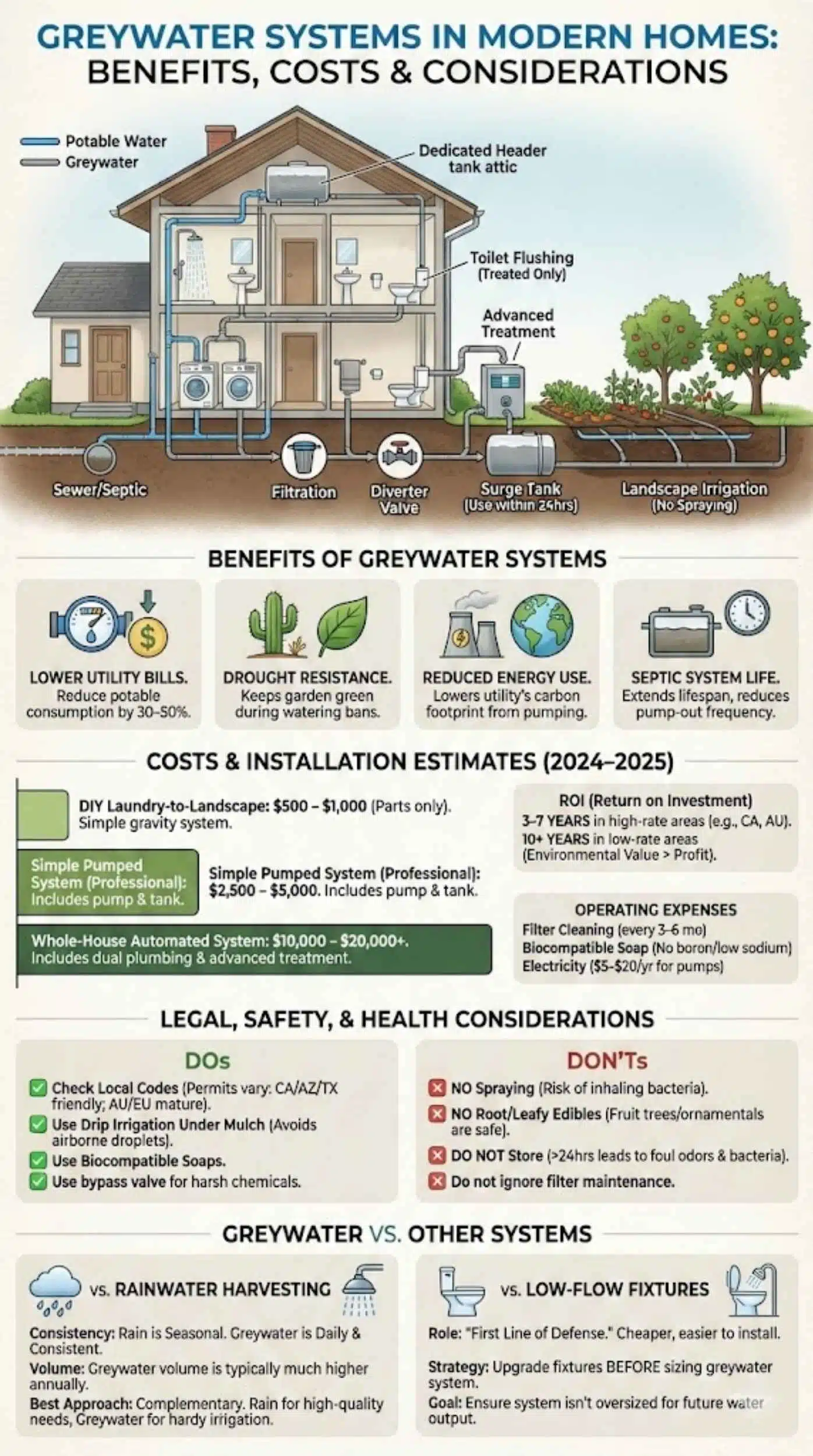
While systems vary in complexity, they all follow a similar four-step workflow:
1. Collection
Instead of draining into the main sewer line, pipes from approved fixtures (showers, laundry) are diverted into a separate plumbing loop. A 3-way valve is usually installed, allowing you to switch the flow back to the sewer if necessary (e.g., when using bleach or washing diapers).
2. Filtration and Treatment
Debris like hair and lint must be removed.
- Basic Systems: Use a simple mesh filter or nylon stocking to catch large particles.
- Advanced Systems: Use sand filters, biological filters, or UV light to sanitize the water, making it safe for toilet flushing.
3. Storage (Short-Term)
Crucial Rule: Greywater must be used within 24 hours. If stored longer, bacteria multiply, turning it into blackwater that smells and is unsafe. Advanced systems use aeration and treatment to allow for longer storage, but most residential units use a small “surge tank” to hold water briefly before pumping it out.
4. Distribution
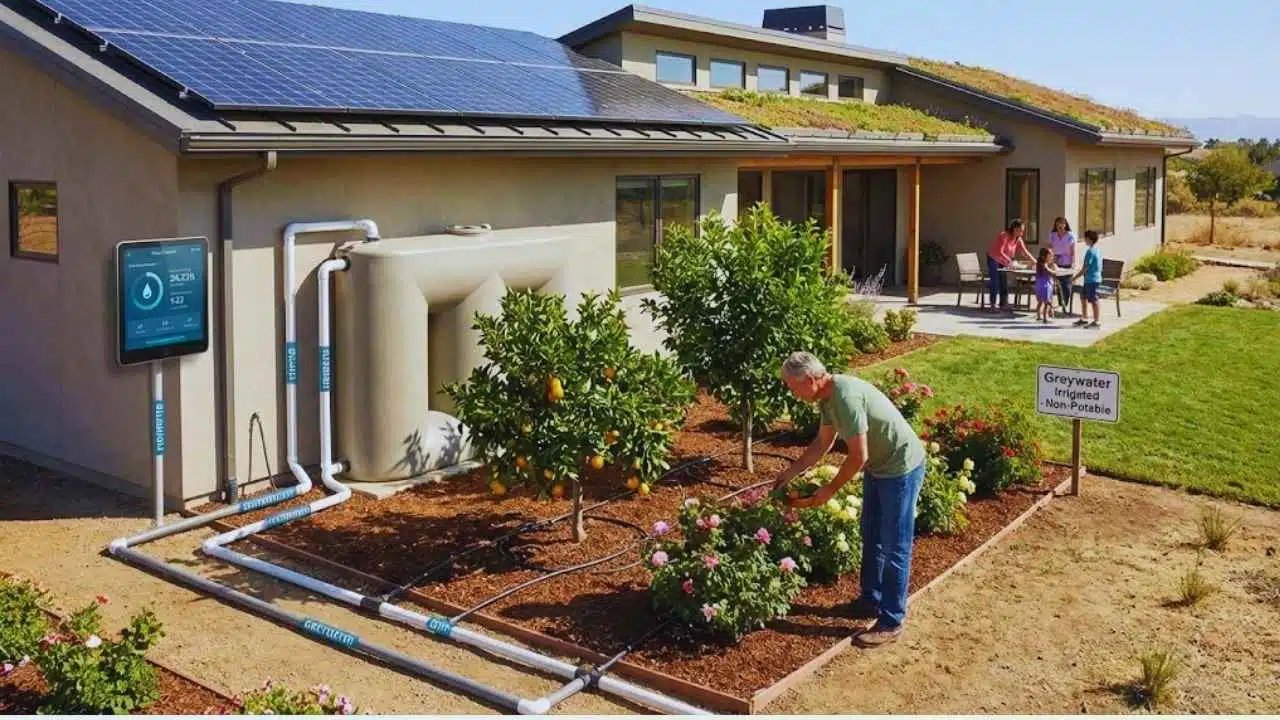
- Irrigation: Water is sent to sub-surface drip lines in the garden (keeping it underground prevents human contact and evaporation).
- Indoor Reuse: Treated greywater is pumped to a dedicated header tank to refill toilet cisterns.
Types of Greywater Systems for Homes
Simple Gravity-Based Systems
- Best for: Sloped properties and garden irrigation.
- How it works: Relies purely on gravity. The “Laundry-to-Landscape” system is the most popular DIY option. The washing machine’s internal pump pushes water out, and gravity takes it to the garden.
- Pros: No electricity required, low maintenance, cheap.
- Cons: Can only irrigate areas lower than the house; cannot be used for toilets.
Pump-Assisted Greywater Systems
- Best for: Flat properties.
- How it works: Greywater drains into a small surge tank. When the tank fills, a pump activates and pushes the water through irrigation lines.
- Pros: Can irrigate uphill or across flat yards.
- Cons: Requires electricity; pump needs occasional maintenance.
Fully Automated Greywater Recycling Systems
- Best for: New builds, luxury homes, and indoor reuse (flushing toilets).
- How it works: These are high-tech appliances (roughly the size of a refrigerator) that biologically treat and disinfect the water.
- Pros: Water is clean enough for toilets and washing machines; automated cleaning cycles.
- Cons: Expensive; requires professional maintenance.
Benefits of Greywater Systems in Modern Homes
| Benefit | Description |
| Lower Utility Bills | Can reduce household potable water consumption by 30–50%. |
| Drought Resistance | Keeps your garden green even during municipal watering bans. |
| Reduced Energy Use | Treating and pumping municipal water is energy-intensive. Reusing water on-site lowers the carbon footprint of your local water utility. |
| Septic System Life | Diverting greywater reduces the load on your septic tank, extending its lifespan and reducing pump-out frequency. |
Greywater System Costs and Installation Considerations
The cost of greywater systems varies wildly based on complexity.
Average Installation Costs (2024–2025 Estimates)
- DIY Laundry-to-Landscape: $500 – $1,000 (Parts only).
- Simple Pumped System (Professional): $2,500 – $5,000.
- Whole-House Automated System: $10,000 – $20,000+ (includes dual plumbing retrofitting).
Return on Investment (ROI)
Financial ROI depends on your local water rates. In areas with expensive water (like California, Australia, or parts of Europe), a system can pay for itself in 3–7 years. In areas with cheap water, the payback may take 10+ years, making the investment more about environmental values than immediate profit.
Maintenance and Operating Expenses
- Filter Cleaning: Most systems require you to rinse a filter every 3–6 months.
- Soap Choices: You must switch to biocompatible products (no boron, low sodium).
- Electricity: Pumped systems use minimal electricity (approx. $5–$20/year).
Legal, Safety, and Health Considerations
Local Building Codes
Regulations are the biggest hurdle.
- USA: States like California, Arizona, and Texas are greywater-friendly. Some allow simple systems without a permit. Others require strict permits and inspections.
- International: Australia and parts of Europe have mature regulations.
- The Golden Rule: Always check with your local planning department before cutting a pipe.
Health and Hygiene Guidelines
- No Spraying: Never use greywater in sprinklers. Airborne droplets can carry bacteria that you might inhale. Always use drip irrigation under mulch/soil.
- Edible Plants: Do not use greywater on root vegetables (carrots, potatoes) or leafy greens that are eaten raw. It is safe for fruit trees and ornamentals.
- The “Yuck” Factor: Treated greywater may look slightly cloudy but should not smell. Untreated greywater should never be stored.
Common Mistakes to Avoid
- Storing water too long: Leading to foul odors.
- Using the wrong mulch: Greywater needs coarse wood chips to absorb water quickly; bark or rocks can cause pooling.
- Ignoring the bypass valve: You must divert water to the sewer when using harsh chemicals (drain cleaners, hair dye).
Greywater vs. Other Water Conservation Systems
Greywater vs. Rainwater Harvesting
- Consistency: Greywater is generated every day you are home. Rainwater is seasonal.
- Volume: A family creates far more greywater annually than most residential roofs can capture in rain.
- Best Approach: They are complementary. Use rainwater for high-quality needs (vegetable gardens, pool filling) and greywater for hardy landscape irrigation.
Greywater vs. Low-Flow Fixtures
Low-flow fixtures (toilets, showerheads) are the “first line of defense.” They are cheaper and easier to install. You should upgrade to efficient fixtures before sizing a greywater system to ensure you don’t build a system larger than your future water output.
Is a Greywater System Right for Your Home?
Ideal Candidates
- Homes with a yard or garden that requires irrigation.
- Homes on a raised foundation (allows easy access to plumbing).
- New construction (easy to install dual plumbing).
- Households with 3+ people (ensures consistent water flow).
Questions to Ask Before Installation
- Do I have access to the plumbing pipes coming from my shower/laundry?
- Is my yard level, or does it slope away from the house?
- Am I willing to change my laundry detergent and soaps?
- Does my local municipality offer rebates or tax incentives? (e.g., Florida and California often do).
The Future of Water Conservation in Modern Homes
The home of the future is a “closed-loop” ecosystem. We are moving toward smart water management systems where a central computer monitors usage, detects leaks, and automatically decides whether to send water to the garden, the toilet, or the sewer.
As water becomes a premium resource, homes equipped with greywater systems will likely see higher property values, offering a unique selling point in a thirsty world.
Final Thoughts: Making Every Drop Count
Installing a greywater system is one of the most impactful upgrades you can make to a modern home. It transforms a passive waste stream into an active resource, aligning your daily living with the realities of our changing climate.
While the technical details and regulations might seem daunting at first, the path to water resilience is flexible. You don’t have to go “off-grid” overnight. You can start small with a simple laundry-to-landscape setup or plan a whole-house retrofit during your next renovation.
The key is simply to shift your mindset. By viewing water not as an infinite commodity but as a cycle to be managed, you protect your home from rising utility costs, keep your garden thriving during droughts, and contribute to a more sustainable future for your community. The best time to start conserving water was yesterday; the second best time is today.