


In a surprising twist in the competitive AI landscape, Google CEO Sundar Pichai expressed strong enthusiasm about a new partnership with OpenAI—despite the fact that OpenAI is one of Google’s biggest rivals in artificial intelligence. Speaking during Google’s Q2 2025 earnings call, Pichai confirmed that OpenAI is now using Google Cloud services to train and run its AI models.
“We are very excited to be partnering with them on Google Cloud,” said Pichai. “Google Cloud is an open platform… and we look forward to investing more in that relationship and growing that.”
This partnership means that OpenAI will rely on Google’s cloud infrastructure—including powerful GPUs and TPUs—to develop and deploy its models, including ChatGPT. Just two and a half years after ChatGPT disrupted the search engine market, Google is now both competing with and supplying resources to the very company that threatens its core business.
Why This Deal Matters: A Competitor Becomes a Customer
The collaboration is significant. OpenAI recently added Google Cloud to its list of official cloud service providers, alongside Microsoft (its main partner and investor) and Oracle. According to Reuters, OpenAI began considering Google Cloud in mid-2024 as it faced hardware shortages, particularly Nvidia GPUs, through Microsoft’s Azure platform.
With cloud compute demand soaring in the AI sector, Google’s ability to offer both Nvidia GPUs and its own custom TPU chips has made it a valuable provider for many AI labs. Other major names using Google Cloud include:
- Anthropic
- Safe Superintelligence (SSI) founded by Ilya Sutskever
- World Labs, created by Fei-Fei Li
These partnerships highlight Google’s strategic focus on building its cloud business around AI development—despite the irony that some of these clients directly compete with Google’s own AI products.
Record Growth in Google Cloud Revenue
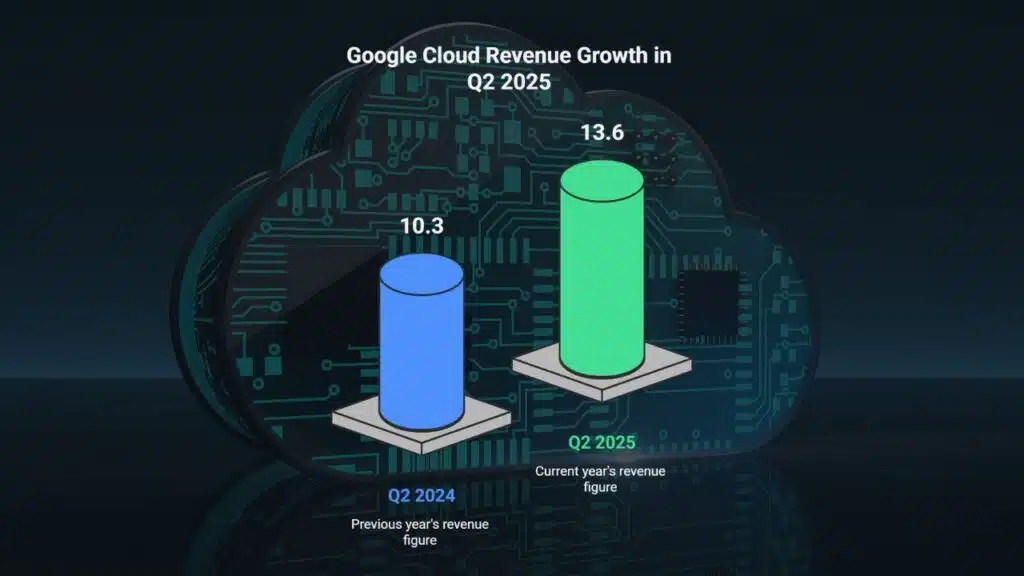
The partnership with OpenAI is just one part of a broader success story for Google Cloud in 2025. In Q2, the platform generated $13.6 billion in revenue—up from $10.3 billion in the same period last year. This 32% year-over-year growth underscores the rising demand for cloud services, especially from AI-focused companies.
Pichai credited this growth to deals with top AI firms and emphasized Google’s large-scale supply of GPUs and TPUs as a key advantage. Although Google Cloud still lags behind its parent company’s core business—Search—it’s quickly gaining ground in the era of AI.
A Risky but Strategic Partnership
While the partnership with OpenAI helps boost Google Cloud’s revenue, it also presents a complicated challenge. ChatGPT has rapidly become a serious competitor to Google Search, with millions of users turning to it for information instead of Googling it.
Allowing OpenAI to access Google’s cutting-edge cloud infrastructure could help the company improve its models—models that may end up taking even more traffic away from Google’s search engine. It’s a delicate situation: Google is earning from OpenAI while simultaneously trying to beat it in the race for AI dominance.
Tech observers have compared the situation to Google’s early days, when it partnered with Yahoo before overtaking it to become the default gateway to the web. Could OpenAI repeat that history?
Google’s Own AI Efforts: Promising but Still Maturing
On the product front, Google’s AI initiatives are gaining momentum. The company announced that:
- Gemini, its flagship chatbot, now has 450 million monthly active users.
- AI Overviews, the feature that summarizes web results using AI, now serves 2 billion users each month.
However, the revenue model for these services remains unclear. Analysts are still questioning how much these new products are affecting Google Search’s market share and advertising profits.
In the same earnings call, Pichai and other executives were asked why Google is increasing its capital expenditures by $10 billion in 2025. The answer appears to lie in infrastructure investments for AI—both to develop its own models and support external clients like OpenAI.
A Cloud Bet in a Competitive AI Market
The AI boom has forced every major tech company to make aggressive bets. For Google, this includes doubling down on cloud infrastructure, partnering with rivals, and pushing its own models to stay competitive.
OpenAI, backed primarily by Microsoft, has been strained by resource limitations as it attempts to scale ChatGPT and other products. Partnering with Google Cloud gives it an edge in the short term—but it could also create tension in the long run, especially if ChatGPT continues to eat into Google Search’s dominance.
Whether this partnership will last—and whether it will benefit Google in the long term—is uncertain. But for now, Pichai appears publicly optimistic, even if the underlying dynamics are filled with risk.
The Information is Collected from Digit and Tech Crunch.






























