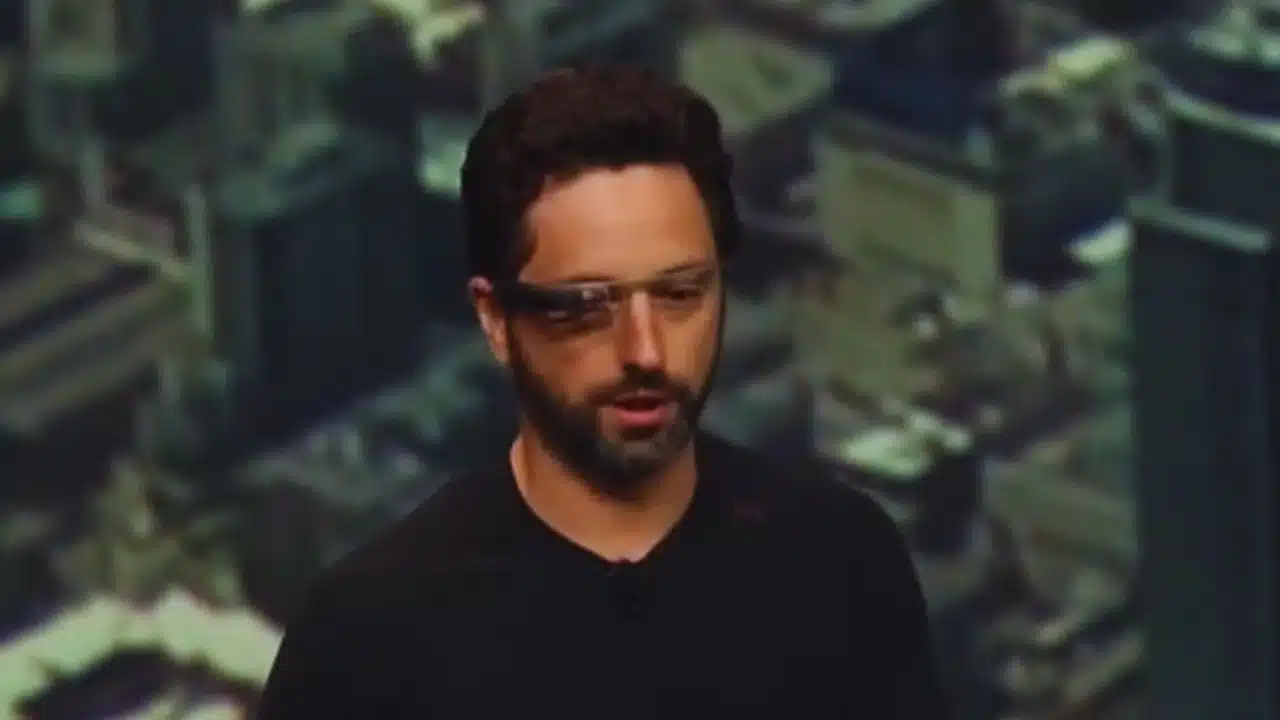
Google AI smart glasses are set for a 2026 launch as the company returns to consumer eyewear a decade after Google Glass, with Sergey Brin publicly acknowledging the early product’s rushed rollout and polish gaps.
Google’s second shot at smart eyewear, now powered by Gemini AI
Google says its next generation of smart eyewear will run on Android XR and lean heavily on Gemini, the company’s AI assistant, for hands-free control. The goal is to make glasses that feel more like normal eyewear—light enough for daily use—while offering “always-available” help such as voice commands, quick answers, and context-aware assistance.
This time, Google is not going it alone. The company has confirmed partnerships with Warby Parker, Samsung, and Gentle Monster to design and build consumer-facing devices. The approach signals a shift from Google’s earlier strategy with Glass, where the product’s look, price, and privacy concerns became as big a story as the technology itself.
Two versions: audio-first and display glasses
Google has outlined two product types:
- Screen-free, audio-first glasses: Built-in speakers and microphones, plus cameras and sensors to support voice interaction and “what you see” intelligence.
- Display glasses: An in-lens screen intended for discreet visual information—such as navigation cues and translation captions—without requiring a phone to be held up.
Google says the screen-free version will arrive first in 2026, while pricing, markets, and retail distribution have not been finalized publicly.
Sergey Brin’s message: don’t launch wearables half-baked
Soon after Google’s new push became public, co-founder Sergey Brin spoke to students during Stanford University’s engineering school centennial events and revisited what went wrong with Google Glass.
His central point was timing and readiness: wearable products need to be “fully baked” before they are marketed with dramatic demos. Brin also acknowledged he overestimated how much showmanship could compensate for a product that was not yet polished, affordable, or socially accepted.
In simple terms, Brin’s comments reflect the same lesson many consumer hardware teams learn the hard way: you only get one first impression, and face-worn technology amplifies every flaw—comfort, appearance, battery life, and especially trust.
Why Google Glass struggled with consumers
Google Glass drew attention for being futuristic, but the mainstream push ran into three recurring problems:
- Price: The early Explorer Edition was expensive for a product that felt experimental.
- Design and social acceptance: The form factor looked unusual and sparked stigma in public settings.
- Privacy fears: A visible camera on someone’s face led to concerns about recording without consent.
These issues turned Glass into a cultural flashpoint, not just a gadget, and limited adoption outside niche early adopters and later enterprise pilots.
Timeline: from Google Glass hype to Google AI smart glasses (2026)
| Year/Date | Milestone | What it meant |
| 2012 | Project Glass demos begin | Big AR promise, early hype cycle |
| 2013 | Explorer Edition ships (high price) | Developer-first approach, limited mainstream fit |
| 2014 | Wider public availability in the U.S. | Privacy backlash grows alongside awareness |
| 2015 | Consumer Glass effort halted | Google steps back from mainstream sales |
| 2023 | Glass Enterprise winds down | End of the original Glass era |
| May 2025 | Google expands Android XR vision | Partnerships signal a style-first reboot |
| Dec 2025 | Google previews 2026 roadmap | Publicly confirms 2026 timing for new glasses |
| 2026 | Google AI smart glasses launch window | Second attempt, now AI-centric and partner-led |
A tougher market: Meta made smart glasses mainstream (and competitors are piling in)
Google’s re-entry comes after smart glasses moved from “novelty” to a fast-growing category led by Meta’s Ray-Ban collaboration. Meta’s products helped normalize the idea that glasses can be a camera, headset, and AI interface—without looking like science fiction.
At the same time, the field is expanding beyond the U.S. tech giants. More companies are releasing AI-assisted eyewear with different positioning: fashion-forward frames, sports-focused models, and privacy-centered alternatives.
What Google is up against in 2026
- Consumer expectations are higher: People now expect good cameras, strong audio, reliable battery life, and smoother AI.
- Privacy debates haven’t gone away: A camera on glasses is still sensitive, even if the category is more accepted.
- Style is now non-negotiable: Partnerships with eyewear brands are becoming the standard playbook.
How Google is trying to avoid repeating Glass-era mistakes
Google’s public messaging suggests four clear changes versus the first Glass push:
1. Style partnerships from day one
Working with eyewear brands signals that “normal-looking” frames are a core requirement, not an accessory strategy added later.
2. AI is the product, not the add-on
In 2013–2014, Glass was often framed as a head-mounted display. In 2026, the pitch is that Gemini makes the glasses useful even without a screen, because voice and contextual AI can carry many tasks.
3. Two-tier product strategy
Launching an audio-first product before a display model can reduce cost and complexity while building consumer comfort with the form factor.
4. Android XR ecosystem
By building on Android XR, Google is positioning glasses as part of a broader platform that can support developers, app experiences, and cross-device integration (phones, headsets, and wearables).
Feature snapshot: Google’s 2026 plan vs. today’s mainstream smart glasses
| Category | Google AI smart glasses (planned) | Mainstream market baseline (today) |
| Core control | Gemini voice + multimodal AI | Voice assistants + AI features (varies by brand) |
| Product types | Audio-first + in-lens display model | Audio-first is common; display models emerging |
| Platform | Android XR | Mostly proprietary stacks today |
| Style approach | Multiple fashion/eyewear partners | Eyewear partnerships are now standard |
| Launch timing | Screen-free model first in 2026 | Multiple competitors already shipping |
What to watch next before 2026
Several unanswered questions will decide whether Google’s comeback becomes a mass-market hit or a niche product:
- Price and subscription strategy: Whether AI features require paid tiers could impact adoption.
- Privacy signals: Clear recording indicators, transparent policies, and on-device processing options may matter as much as specs.
- Battery life and comfort: Real-world wear time and weight will determine daily usability.
- Retail fit: Distribution through eyewear channels could be a major advantage if Google executes well.
Google’s comeback is real, but the bar is higher
Google’s 2026 return to the category is not just a retry of Google Glass—it’s a bet that AI assistants belong on the face because that’s where voice, vision, and instant context can meet. Sergey Brin’s candid remarks underscore how seriously the company is treating the original missteps: rushing, overhyping, and underestimating consumer readiness.
If Google can ship comfortable frames at a competitive price—while handling privacy with discipline—Google AI smart glasses could become one of the most important consumer launches of 2026.