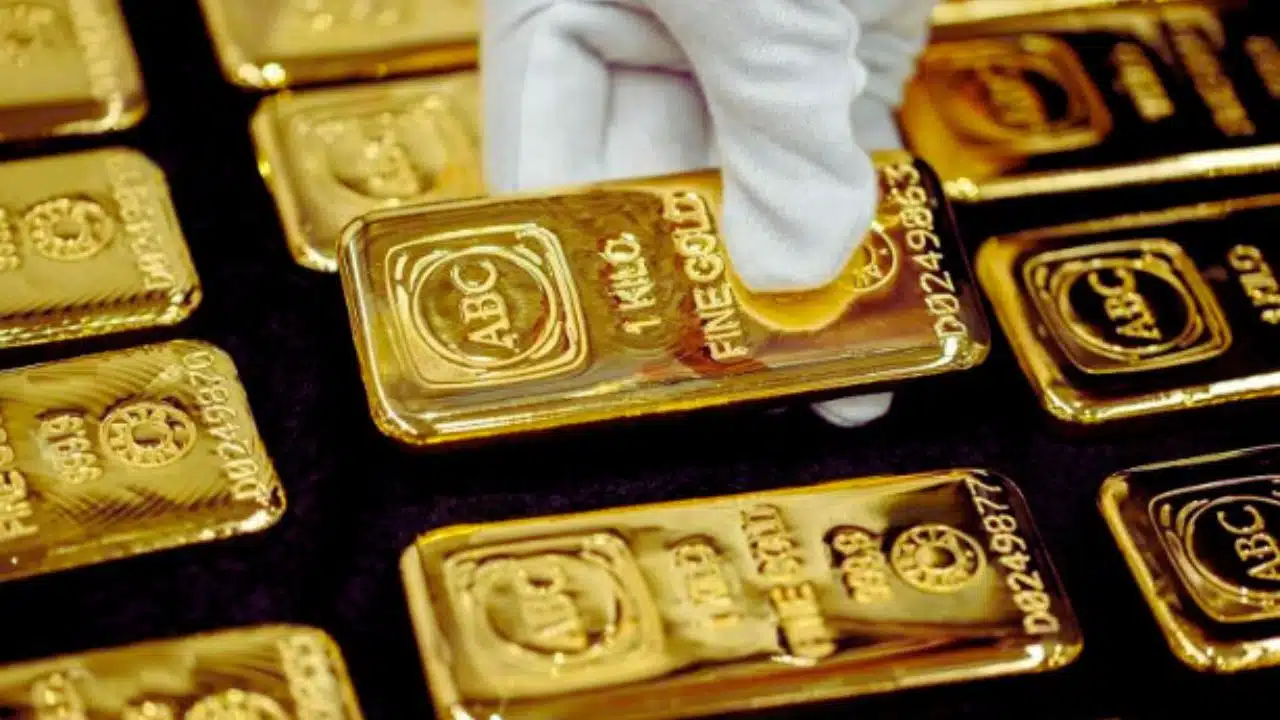
Gold holds near 4,200 dollars per ounce as global traders wait for the Federal Reserve’s December 9–10 policy meeting, where markets see a strong chance of a quarter‑point rate cut that could shape gold’s next big move.
The metal is trading just below recent record highs set in October, supported by expectations of easier U.S. monetary policy, a softer dollar, and steady safe‑haven demand.
Key market snapshot
Spot gold is fluctuating just under 4,200 dollars per troy ounce, with recent quotes around 4,189–4,202 dollars as U.S. and European trading sessions overlap. According to Trading Economics, gold stood near 4,191 dollars on December 8 and is up more than 57 percent compared with the same time last year, after hitting an all‑time high above 4,380 dollars in October 2025.
Futures prices tell a similar story, with the front‑month U.S. gold futures contract trading slightly above the spot market and consolidating near the 4,200 dollar level after a powerful rally this year. Despite some intraday dips below 4,200 dollars as Treasury yields edge higher, the broader uptrend remains intact, with traders reluctant to take large positions before the Fed’s final decision of 2025.
Fed expectations and recent data
The Federal Open Market Committee meets on December 9–10 for its last policy meeting of the year, and this decision is the main catalyst markets are waiting for. Futures pricing compiled by several data providers shows traders assigning roughly 85–90 percent odds to a 25‑basis‑point rate cut, which would lower the target range from 3.75–4.00 percent toward 3.50–3.75 percent, with the effective federal funds rate currently around 4 percent.
Recent U.S. data have supported the case for easier policy: employment figures have softened at the margin, and underlying inflation measures have moved closer to the Fed’s 2 percent target, reducing pressure to keep rates at restrictive levels. Investors will also focus on the updated “dot plot” and Fed Chair Jerome Powell’s press conference guidance on how many additional cuts might come in 2026, which could shift both bond yields and gold.
Recent gold prices and Fed context
| Date (2025) | Gold price (USD/oz) | Fed context / expectations | Source |
| October 2025 (high) | 4,381.58 (record) | Gold reached a new all‑time high as markets priced in future Fed easing and robust safe‑haven demand. | Trading Economics; Bloomberg |
| December 8 | 4,190.78 (CFD close) | Ahead of the December meeting, Fed funds rate near 4% with markets leaning toward a 25 bps cut. | Trading Economics |
| December 8 (p.m. ET) | 4,189.49 spot; 4,217.70 Feb futures | Investors cautious going into the two‑day Fed meeting, waiting for Powell’s comments and the new dot plot. | CNBC |
| Early week of Dec 8 | Around 4,200 spot | Probabilities for a 25 bps cut in the 3.75–4.00% range near 88–90%, based on futures and Fed‑watch tools. | Trading Economics; Investing.com |
Why gold is holding near $4,200
The main reason gold is steady near 4,200 dollars is the growing expectation that the Fed will move from a “higher for longer” stance to the start of an easing cycle, which reduces the opportunity cost of holding non‑yielding assets like bullion. Lower nominal and real interest rates typically weaken the return on cash and bonds, making gold relatively more attractive in diversified portfolios.
A softer U.S. dollar has also helped keep gold elevated by making the metal cheaper for buyers using other currencies. Several reports note that the dollar index has slipped as markets lean into the rate‑cut narrative, reinforcing cross‑border demand for physical gold, exchange‑traded funds, and futures contracts.
Safe‑haven flows remain another pillar of support, with ongoing geopolitical tensions—particularly the Russia‑Ukraine conflict and other regional flashpoints—keeping risk aversion in play. At the same time, central banks and institutional investors have continued to add gold to reserves and portfolios in 2025, a trend that major banks such as Morgan Stanley and others argue could sustain prices even if the Fed’s path turns slightly less dovish than expected.
Outlook and key sources
What happens next will depend heavily on the Fed’s tone: a straightforward 25‑basis‑point cut accompanied by signals of additional easing in 2026 would likely support further gains, with some analysts projecting a move toward 4,500 dollars per ounce over the next year. By contrast, a more cautious or hawkish message—emphasizing data dependence and the risk of persistent inflation—could push yields higher again and trigger a pullback from the 4,200 dollar area, at least in the short term.
For now, traders are watching three factors: the size and language of the Fed move this week, the trajectory of U.S. growth and inflation data into early 2026, and whether geopolitical and central‑bank‑buying support remains strong enough to keep gold near or above current record‑adjacent levels. Retail and institutional investors who follow gold closely will be looking for confirmation that the 4,000‑dollar mark has turned from a ceiling into a long‑term floor, something several major banks have highlighted in research this year.