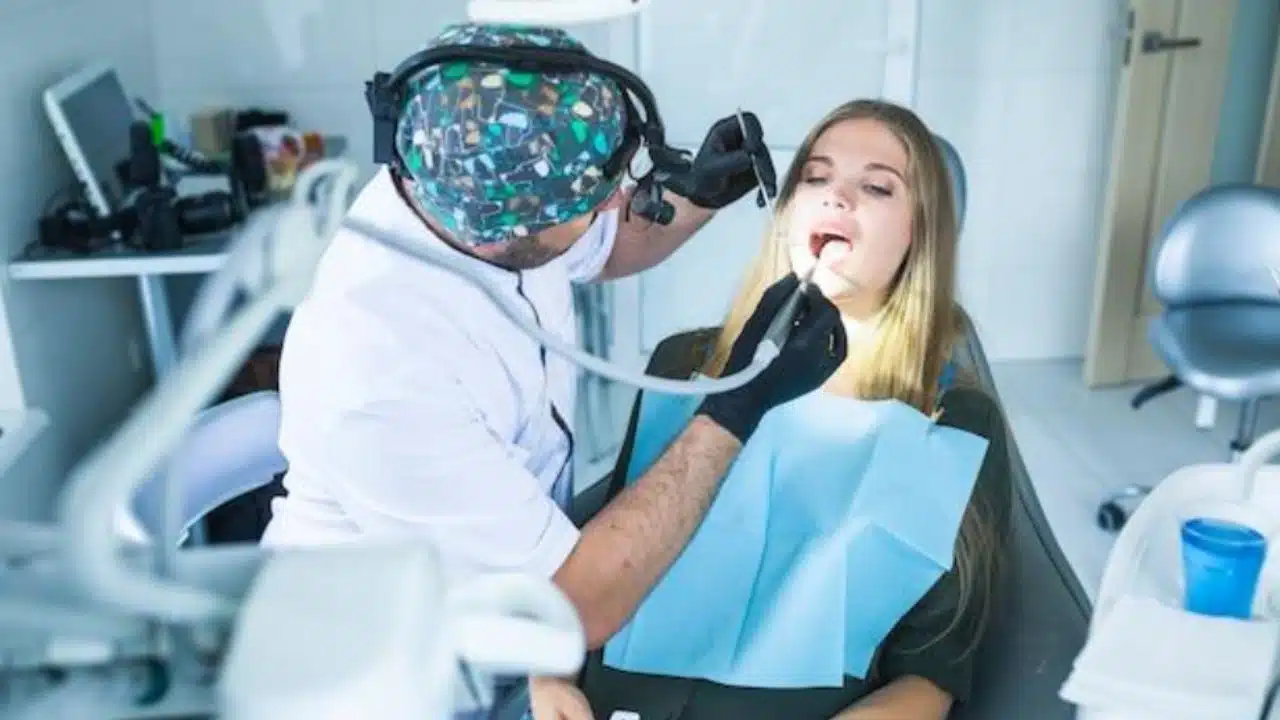
Generative AI systems are a specific application of AI that is designed to create new data from the raw information; they are gaining popularity across different sectors, including healthcare. Dentistry, which is correlated with oral health, is considered as one of the important branches of healthcare and now goes through systematic changes connected with the development of generative AI.
This technology is improving the diagnostic abilities, aiding in treatment planning, making individual attention to the patient, and also developing the whole realm of dental practice. The use of generative AI in dentistry also foresees augured for much more efficient, correctly informed personalized dental treatments.
Transforming Diagnostic Accuracy
This has been evident through the efficiency generated by generative AI in dentistry, by enhancing the accuracy of diagnosis. Most of the conventional methods of healthcare diagnostics require the understanding of radiography, mammograms, and CT scans among others by health practitioners including dentists. However, these methods are fairly slow compared to the computer, and there is always a risk of a miscalculation.
These images can be processed at a much higher speed and with more precision by the generative AI algorithms thereby finding features and inconsistencies that are often unnoticed by the beholder. To get more detailed information on the practical impact of generative AI in healthcare, please visit https://www.johnsnowlabs.com/generative-ai-healthcare/. Generative AI plays an efficient role in diagnosing the problem, but also enhances the general treatment of the patients. With the help of these algorithms healthcare professionals are also able to make improved decisions which consequently results in enhancement of patient care.
For instance, the AI is capable of interpreting x-ray, MRI or CT scans of dental figures in diagnosing signs of tooth decay, gum diseases or mouth cancer. Many of these early signals are useful for preventing more seriously pathologic process as well as to prepare for the corresponding interventions.
Streamlining Treatment Planning
Generative AI is also playing a dramatic role in enhancing treatment planning for dental patients. It may be necessary for plans of treating a patient to entail the use of numerous inputs of a patient such as the history of the patient, images of the patient and other clinical guidelines. Because generative AI can combine this learning and distill it to develop patient-specific as well as effective treatment plans.
For instance, using AI, we can develop models that predict how a tooth will move or the likely outcome of various treatments, which enable the orthodontist to design better braces or aligners. This technology can also do a treatment tryout of several treatment plans and give the dentist the best course of action to take for a specific patient.
Enhancing Personalized Patient Care
According to the current principles of patient-centered care, individual approach in the process of dental treatment is paramount and it is the application of generative AI that makes it possible to fulfill this concept to the greatest extent. Genetic profiles, daily routines, and health histories revealed by each patient make it easier for AI to recommend precise treatment plans that should suit each patient.
For example, generative AI is used in developing soothing personal dental implants. The methods that have previously been used involve multiple appointments and modifications to achieve proper fitting, but it can assess the morphology of a patient’s mouth through digital scans and created precise implant models for dental work, saving time, thus enhancing the satisfaction of the patients.
Improving Dental Practice Management
Generative AI is not only changing clinical aspects of dentistry but also assists with practice management. Working with patients can sometimes be challenging due to various tasks that the employees in the administrative section have to deal with; hence, making schedules, billing, and patient records management time-consuming and liable to errors. This creates a large need for automization of these processes which can be easily solved by implementing AI-powered systems as it can free dental professionals from large amounts of administrative work.
For instance, it can help to schedule an appointment through a survey of patients’ preferences, dental practitioners’ availability, and clinic availability. It also avoids the use of a lot of time by the patients while some are waiting for their turns and will also ensure efficient use of the available resources. Thirdly, AI can also handle the records of patients by compiling patient records and updating the records’ information continuously and correctly.
Revolutionizing Dental Research
Similarly, generative AI is also dominating the dental-related research more than any other field. Researchers are allowed the use of AI in creating synthetic datasets that look more like patient data. This capability is especially beneficial when identifying various rare dental diseases or while conducting clinical research since it enables researchers to obtain rich and diverse data not coupled with external ethical or privacy-related issues connected to using actual patient data.
It is also can be used to model the outcome of new treatments or materials and get the idea of how successful the treatments or materials will be and whether it is safe to use them for human body as a result of clinical trials. This in turn compels the acceleration of investigation and improvement of dental products in the market.
Enhancing Dental Education
The application of generative AI in dentistry or dentistry practice is also affecting dental learning. AI programmers and virtual trainings imitate the experience of interaction with the patients or at least give students a feel of what dental practice involves. These simulations may encompass a broad spectrum of dental operations and conditions that could be rehashed inside the objective, thereby letting the learners rehearse their skills.
For instance, where prior research indicated that one would require a real human body to learn about human anatomy, AI has the capability of creating 3D fake human anatomy which develops different dental conditions. With these models, students can practice, engage in roles and procedures which are simulated; they can even have feedback from the models in real time.
About Ethical and Privacy Issues
The overall finding shows that generative AI holds the potential to be surprisingly helpful in dentistry; however, there should be certain ethical and privacy considerations while deploying this approach. Dental data is personal information; any dealings with it thus have to meet set privacy standards. Increasingly, patient’s data is at risk of being compromised due to the advancement of AI systems; Therefore, privacy should be integrated into the design of AI projects as it is a fundamental element.
Overcoming Implementation Challenges
The advancement of generative AI, therefore, is not without a number of risks or obstacles as shown prior to its consideration in the dental field. Therefore, dental practices need to incorporate appropriate healthcare technology support that will accommodate the hardware and software necessary to support AI. Furthermore, it is equally challenging to incorporate the implementation the AI systems with other practice management applications for dentists.
Another one is an appropriate preparation of dental specialists for the utilization of AI instruments is another relevant activity. It has been established that dentists and the staff will require knowledge on how AI can be utilized to promote change in the manner care is provided and in operations.
Generative AI Possibilities in Dentistry
The emergence of generative AI in the future of dental treatment seems far more favorable. With technology, advances in AI will adapt to new technologies and spread across the dentistry industry.
Furthermore, the enhancement and integration of AI with other progressive technologies including augmented reality (AR) and virtual reality (VR) creates new horizons in performing dental diagnosis, treatment planning, as well as patient engagement.
Conclusion
The real-world application of generative AI is the future area in Dentistry where diagnostics, treatment planning, patient care, practice management, and even research and education in dentistry will have a positive influence.
That being said, it is vital to pinpoint that, despite certain difficulties, the advantages of applying AI in dental practice are tremendous, and the possibility of creating a new model of dentistry, where the knowledge and diagnosis accuracy would be combined with the patient’s need orientation, is very real.
As technology advances further, it has been clear that it is going to be more and more integrated into dental practices, thus giving birth to a new age of dental medicine.