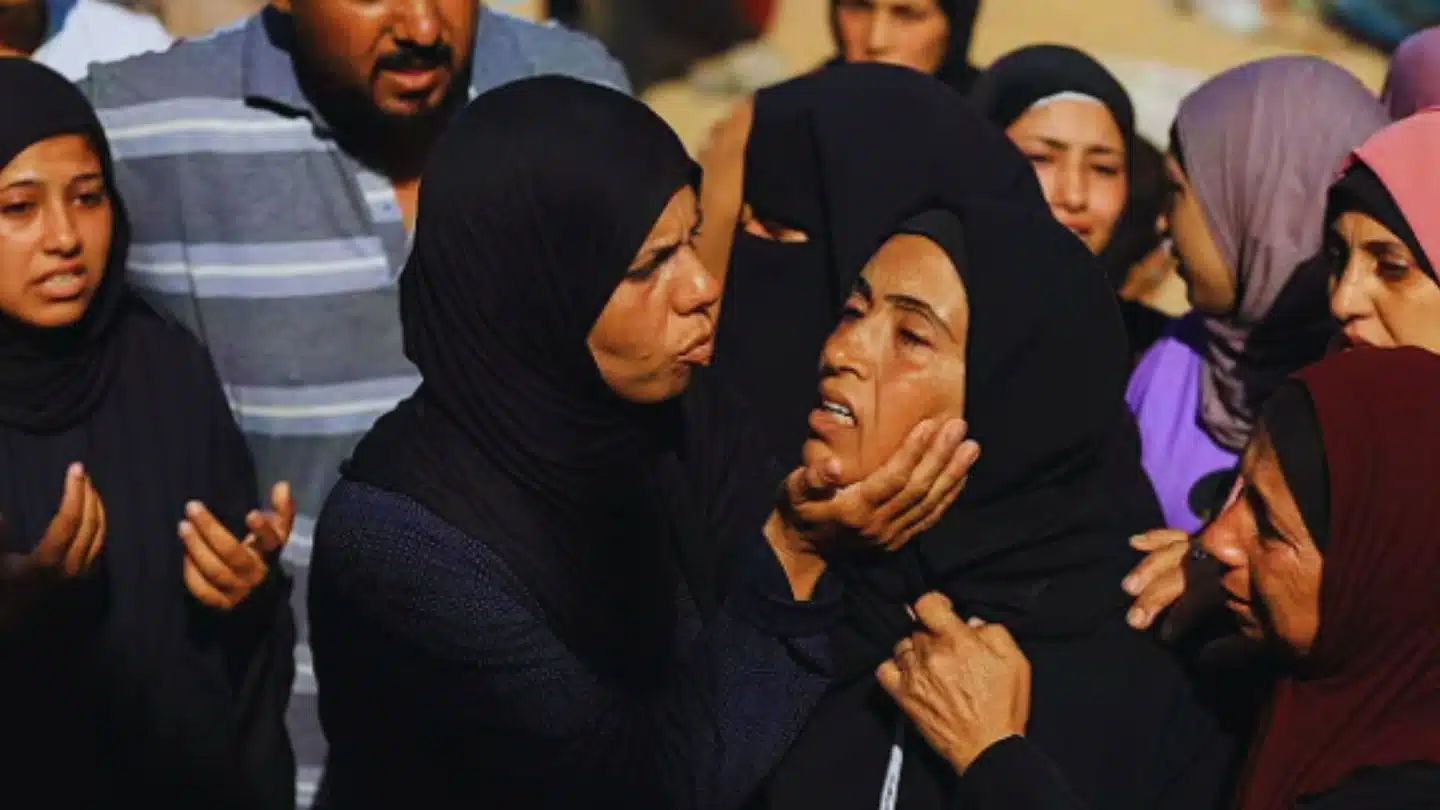
At least 33 Palestinians, including 11 civilians waiting for aid, were killed across Gaza on Wednesday, June 18, as Israeli military operations intensified. The most alarming reports came from central Gaza, where desperate residents queuing for food were reportedly fired upon by Israeli forces. Gaza’s civil defence officials, operated under Hamas administration, confirmed the deaths and said dozens more were wounded in incidents involving Israeli gunfire and airstrikes throughout the territory.
The Salah al-Din Road, a key humanitarian route that runs the length of the Gaza Strip, was the site of one of the deadliest encounters that day. Thousands of people had gathered in the hope of receiving urgently needed food supplies. According to eyewitnesses and local rescuers, Israeli tanks and drones opened fire on the crowd. Many were forced to flee, leaving behind flour sacks and belongings.
Israeli Response: Warning Shots or Lethal Force?
The Israeli military confirmed that troops were operating in the Nuseirat area of central Gaza overnight. In its initial statement, the military said that a group of people approached its forces in a manner it deemed threatening, prompting warning shots to be fired. However, it denied knowledge of any injuries or deaths from that particular incident and stated that the situation was under review.
This incident has drawn significant scrutiny, especially in light of multiple similar deadly events over the past few weeks involving civilians gathering at food distribution centers.
Airstrikes Across Gaza: 19 More Killed, Including Children and Families
In addition to the deaths on Salah al-Din Road, the Hamas-run Gaza Civil Defence Agency reported that Israeli airstrikes claimed at least 19 more lives in different parts of Gaza on Wednesday. These strikes occurred in northern and southern regions, including Zeitoun, a neighborhood in Gaza City, where eight people were killed when their home was directly hit.
Israel’s military confirmed that it was carrying out strikes as part of its ongoing campaign to “dismantle Hamas military capabilities.” However, many of the fatalities reported by local health officials included non-combatant civilians, including women and children.
The Gaza Health Ministry, which compiles casualty data from hospitals and emergency responders, said that over the previous 24 hours, at least 140 Palestinians had been killed in total across various regions of the Strip.
Aid Collection Turns Deadly: Another 7 Killed in Gaza City
The day before, on Tuesday, another tragic incident occurred in the northwest of Gaza City, along Rashid Street. There, seven civilians were reportedly killed while also attempting to collect aid. According to civil defence sources, they were struck by Israeli fire, and many others were injured in the chaos that followed.
Medical staff at al-Shifa Hospital told Reuters that the injuries and deaths were caused by a combination of Israeli airstrikes and live gunfire, confirming the increasing danger facing aid-seekers.
One mother, Umm Fida Masoud, recounted the trauma of seeing her son injured during the attempt to fetch flour:
“He went to bring a bag of flour and came back [injured] in a bag.”
Eyewitness Testimonies and Harrowing Survival Stories
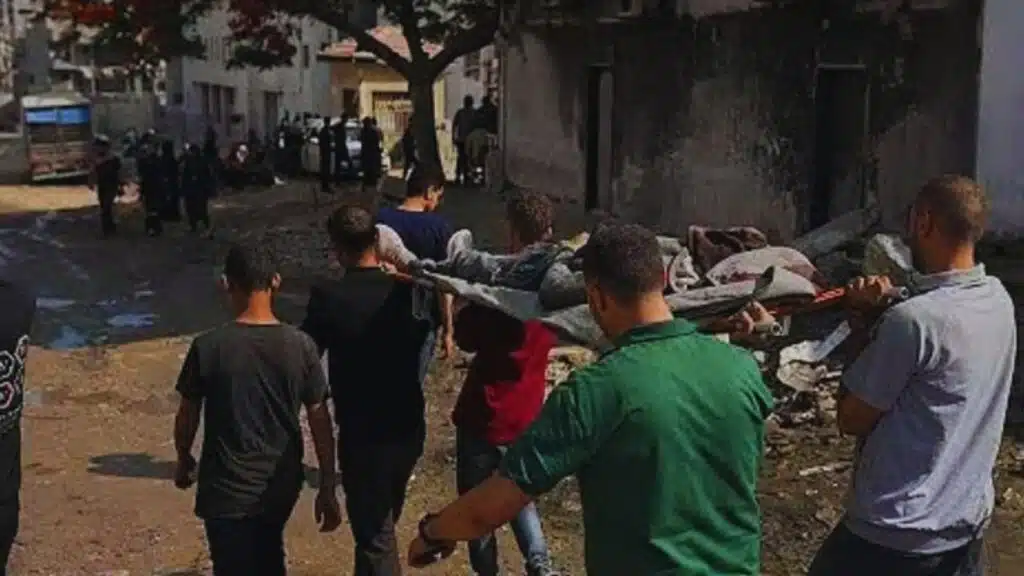
Video footage posted by local journalists on social media further highlighted the desperation of Gaza’s population. In one widely shared clip, a man—identified as a journalist’s cousin—celebrated having retrieved a 50kg bag of flour.
“I pulled it out from under the truck, inches from death,” he said, visibly emotional and clutching the precious resource.
Such moments underscore the human toll and desperation in a region where food is becoming more dangerous to access than ever before.
Gaza Humanitarian Foundation (GHF): New Aid System Under Fire
Since May 26, when the Gaza Humanitarian Foundation (GHF)—a U.S. and Israeli-backed initiative—opened three private distribution centres in the Strip, nearly 400 Palestinians have reportedly been killed while attempting to obtain aid. The GHF is operated by U.S.-based private security contractors and aims to bypass the traditional UN-led system, claiming this method is more secure and prevents aid from being diverted by Hamas.
However, the new system has faced sharp criticism from the UN and other humanitarian agencies, which refuse to cooperate with GHF due to violations of international humanitarian principles of neutrality, impartiality, and independence.
UN Condemns “Lethal” Aid Model: “A Stain on Our Collective Conscience”
On Wednesday, Philippe Lazzarini, the Commissioner-General of the UN Relief and Works Agency (UNRWA), issued a scathing condemnation of the GHF system, calling it:
“Lame, medieval, and lethal. Inviting starving people to their death is a war crime. Those responsible must be held accountable. This is a disgrace and a stain on our collective conscience.”
Despite these concerns, the GHF claims its operations are functioning effectively. In a press release, it said it had delivered 30 million meals across its three centres “without incident.” The group emphasized its sole mission: “to feed the people of Gaza.”
WFP: Desperation Mounts, Food Aid Still Inadequate
The World Food Programme (WFP) added that while 9,000 tonnes of food aid had entered Gaza in the past four weeks, this amount remains “a tiny fraction” of what is truly needed. The WFP warned that starvation is rapidly becoming a critical issue, and that large crowds are forming spontaneously along aid routes in hopes of intercepting trucks.
“Only a massive scale-up in food distributions can stabilize the situation, calm anxieties, and rebuild trust,” said a WFP spokesperson.
Aid Movement and Blockades: What’s Entering Gaza?
According to Israel’s COGAT (Coordinator of Government Activities in the Territories):
- On Tuesday alone, 85 lorry loads of aid entered via the Kerem Shalom and Erez West crossings.
- Out of these, 66 were collected by aid organizations.
- However, another 380 lorry loads remained uncollected, mainly due to the volatile security situation and reluctance from humanitarian groups to cooperate with GHF distribution logistics.
The Bigger Picture: War’s Ongoing Toll on Gaza
The latest wave of killings and clashes comes amid the broader context of Israel’s military campaign in Gaza, launched after the Hamas-led attack on southern Israel on October 7, 2023. That assault resulted in 1,200 Israeli deaths and 251 hostages being taken—many of whom are still unaccounted for.
In response, Israel’s bombardment and ground operations in Gaza have killed at least 55,637 Palestinians, according to the latest figures from the Gaza Health Ministry. The overwhelming majority of casualties are believed to be civilians, including thousands of children.
A Humanitarian Crisis Reaching Breaking Point
As aid seekers continue to risk their lives for sacks of flour and bottles of water, humanitarian officials warn that Gaza is now on the brink of full-scale famine, with malnutrition rising, public health collapsing, and trust in international aid systems eroding rapidly.
Unless a dramatic scale-up in safe, neutral aid access is implemented soon, experts say the number of civilian casualties related to hunger—not just warfare—may soon surpass combat fatalities.
The Information is Collected from BBC and MSN.