Gas cars, diesel cars, electric cars, those foot-powered cars from the Flintstones… aside from the last one how do these things work? Well, for the first two, gasoline-powered cars and diesel cars, the answer is actually pretty straightforward and simple.
Gasoline (and diesel) powered cars are what is known as internal combustion engines, which, at the end of the day, just means they are glorified air pumps. There’s a small explosion, it pushes the air outwards, the air pushes other things to make it work and ultimately works its way around to cause another small explosion. This happens again and again, ultimately keeping the entire beast of a car to be kept perpetually in motion from a series of small continuous explosions. Well, that’s the super generalised, completely non-technical description anyway. Let’s go a bit deeper.
The Internal Combustion Engine
The internal Combustion engine is a type of engine that generally – but not always – operates on a four-stroke cycle known as the Otto cycle. This cycle, named after Nikolaus Otto who perfected it over the course of thirty years or so from the 1860s onwards, is performed as follows. Intake, compression, power, exhaust. By following these four “strokes” the engine is able to function in a continuous, cyclical manner until either the fuel for the explosions runs out, or an outside force causes it to stop.
Intake
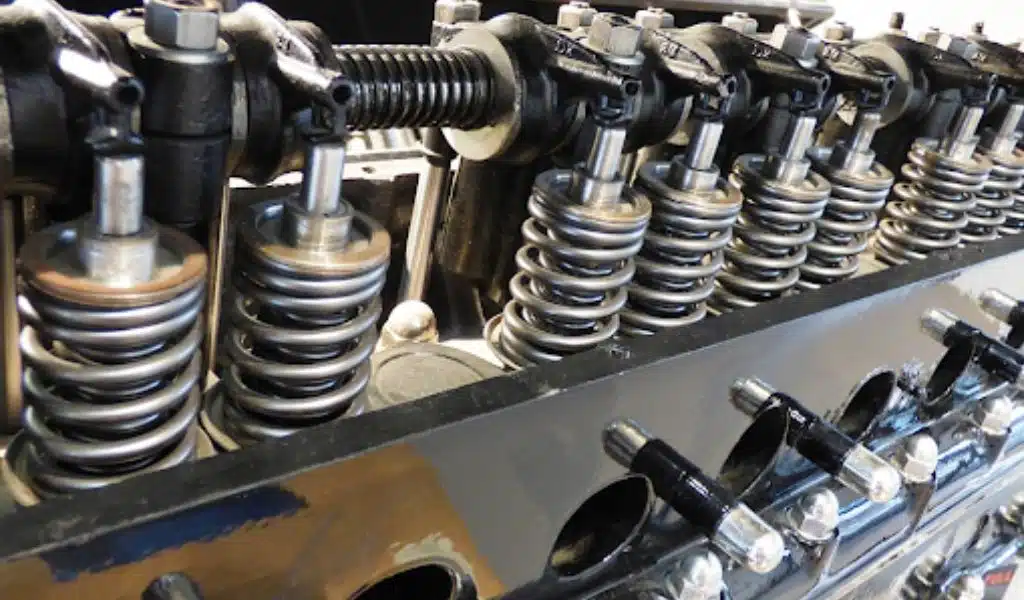
The intake is the first stroke of the process and involves the addition of the components required to create the explosion. First, the engine draws air and fuel into the combustion chamber, this works by a valve opening in the engine. A partial vacuum is formed by a piston inside the engine moving to increase internal volume. This draws in a precise amount of air and fuel due to the relationship between the amount of space created by the moving piston, the valve flow rate and stoichiometry. Once the fuel and air have entered and filled the space created by the partial vacuum, this stroke is completed.
Compression
The second stroke is the closing of the valve. The piston moves back up into the cylinder and the valves close. The result of this closing is that the air and fuel mixture is compressed. This increases cylinder pressure and makes the mix of fuel and air much more volatile than it was a movement before. This increased explosive potential is precisely what the engine needs to move on to the next stroke.
Power
Then the explosion. When the piston reaches the top of its stroke a spark plug fires an electrical spark into the combustion chamber, igniting the air-fuel mix. As the mix burns it rapidly expands, forcing the piston away from the explosion and generating energy by converting chemical energy into kinetic energy. This forceful push of the piston then acts in a manner similar to how a clockwork device might work – through a series of precise physical interconnections this piece of energy making the first thing move can be used to make the next thing move which then makes the next thing move and so on. However, although the movement has been achieved, the strokes are not yet done.
Exhaust
Finally, the chamber has to be emptied. The cylinder exhaust valve opens and as the piston pushes back up it pushes the expended gases out of the cylinder. This allows for the cycle to begin again with an empty cylinder
Types of Fuel
So like we said, at the end of the day all internal combustion engines are just glorified air pumps. But you might be asking if that’s all there is, why gasoline in particular? And what precisely are the differences between gasoline and diesel?
The first question is simple to answer, and that is that there is only a small handful of liquids that can be used in an engine to combust safely at such a small scale. A lot of testing into hundreds and thousands of different fuels and fuel combinations went into discovering not only what works but what is available at a low enough price that regular people can afford.
Well, there are a few differences but ultimately it comes down to costs and economics. Diesel and gasoline cost different amounts of money, and when one is up sometimes the other is down. Between the two, diesel is often more expensive, but it fluctuates in price far less, meaning that there are often times when gasoline is not merely “cheaper” but immensely cheaper, but the trade-off is that there are also times when it is more expensive. So, to a certain extent, diversity and the potential for cheap prices is the key here and having both benefits everyone in the long run.
The second is fuel economy. a 20-gallon gas tank on a car has about an average fuel economy of 20 miles per gallon, most other engines – including hybrid engines – are far less efficient than that and purely electrical cars are much weaker than hybrids. Diesel engines are generally more rugged than gasoline engines, as they have to withstand higher compression ratios; this means better longevity. However, with greater power comes pollution and both gasoline and diesel engines must contend with both.
But perhaps the greatest advantage of gasoline is that the particulars of a gasoline engine are cheaper to repair and replace than those of diesel engines. This is for a variety of reasons – a combination of overall popularity, predictability of warranty and the general outcomes of the strength of the explosions – but the fact is that diesel engines are more expensive to build, repair and maintain than gasoline. Furthermore, many of the advantages of diesel simply aren’t noticeable on smaller vehicles that aren’t carrying heavy loads, or driving long distances.
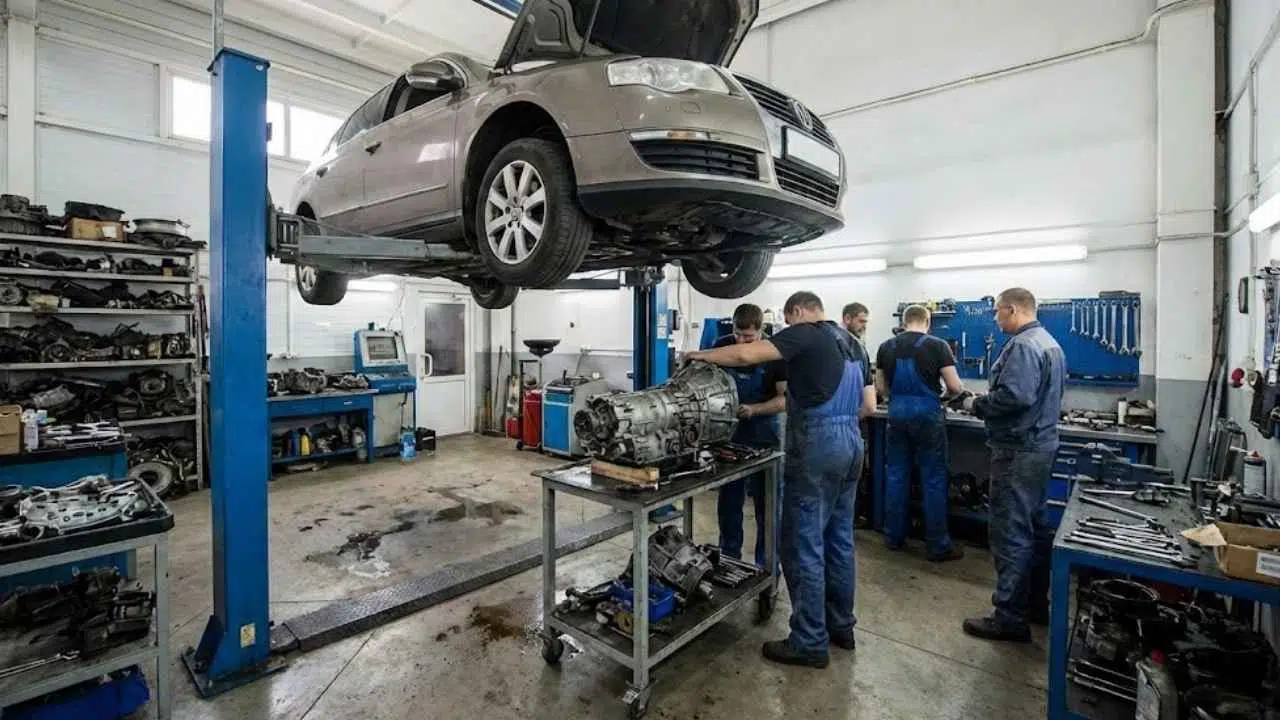
Mechanics in Bundaberg see car engines of both types every day and from experience, they can tell you that while diesel engines are more expensive for a number of good reasons, for the most part, those good reasons just don’t apply to people who mostly only drive to and from work or only drive short distances such as to and from their children’s school. Overall, gasoline still provides the most meaningful benefits to most consumers, but in another ten or twenty years? Who knows?
So, that’s it. That’s how gasoline-powered cars work, and also a little bit extra on why we use gas cars rather than diesel or other equivalents. The information for this article was gathered by questioning far more qualified car mechanics and having them dumb it down for a rookie like me so that I could translate it for you.