Many parents worry their children might not learn how to manage money. Kids often find finance boring, hard, or just plain confusing. Parents and teachers look for new ways to teach kids important money skills that stick.
One fun fact is this: Studies show games help kids remember what they learn about money better than old-school lessons. The right game can turn a dull topic into an exciting challenge.
This post shares simple steps and smart tools to make money or gamified finance education for kids with fun at home also in class. Keep reading for tips, the best games, and clever ways to boost your child’s financial knowledge!
Why Financial Literacy is Important for Kids
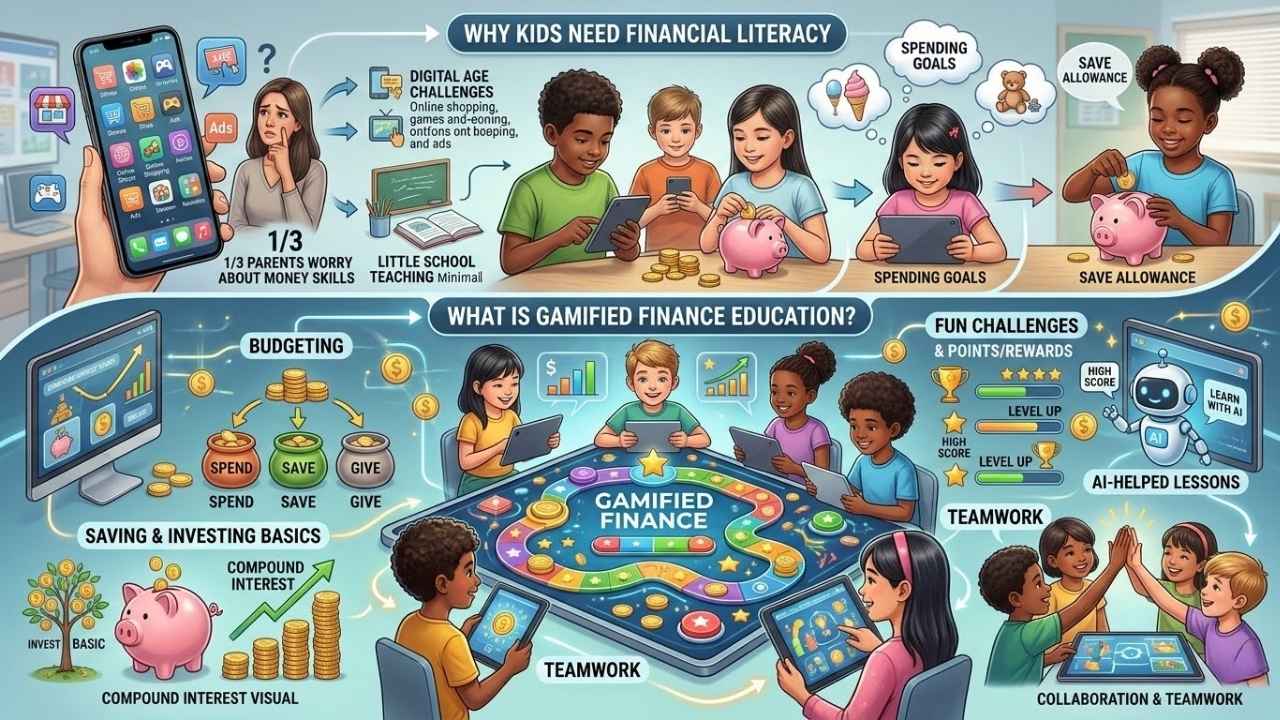
Kids need strong financial literacy to handle the challenges of growing up in a digital age. One out of three parents worries about their child’s money skills, yet schools rarely teach much about budgeting or saving.
With online shopping just a click away and ads everywhere, children face big choices earlier than ever before. Early financial education helps kids build good habits like saving part of their allowance or setting spending goals.
Games can make lessons more memorable and enjoyable. Children learn real money concepts like compound interest through simple activities, not long lectures. For example, interactive learning games use points and rewards to show how small savings grow over time.
Researchers have found game-based finance activities help students remember what they learned better than traditional methods. Teaching these basic ideas early gives kids an easier path to smart decisions later in life, whether it’s buying ice cream today or planning for college tomorrow.
What is Gamified Finance Education?
Gamified finance education means teaching money skills using games and play. Interactive learning tools make topics like budgeting, saving, and investment basics feel less scary for children.
These digital resources can turn boring lessons into fun challenges, so kids want to learn more each time they play. For example, Banzai teaches real-world money concepts through simple online activities while Peter Pig’s Money Counter helps young students count coins in a playful way.
Research shows this kind of game-based learning has become very popular over the years, especially since AI began helping with lesson plans. Even parents worry about their children’s financial literacy—about one third think it is a problem—but games help ease those fears by making tough ideas stick.
Some games even show how compound interest grows or why smart choices matter later on in life. Teachers use these platforms because kids feel excited by rewards, high scores, and teamwork during each session.
It makes practicing good money habits something to look forward to after school!
Benefits of Gamified Finance Education
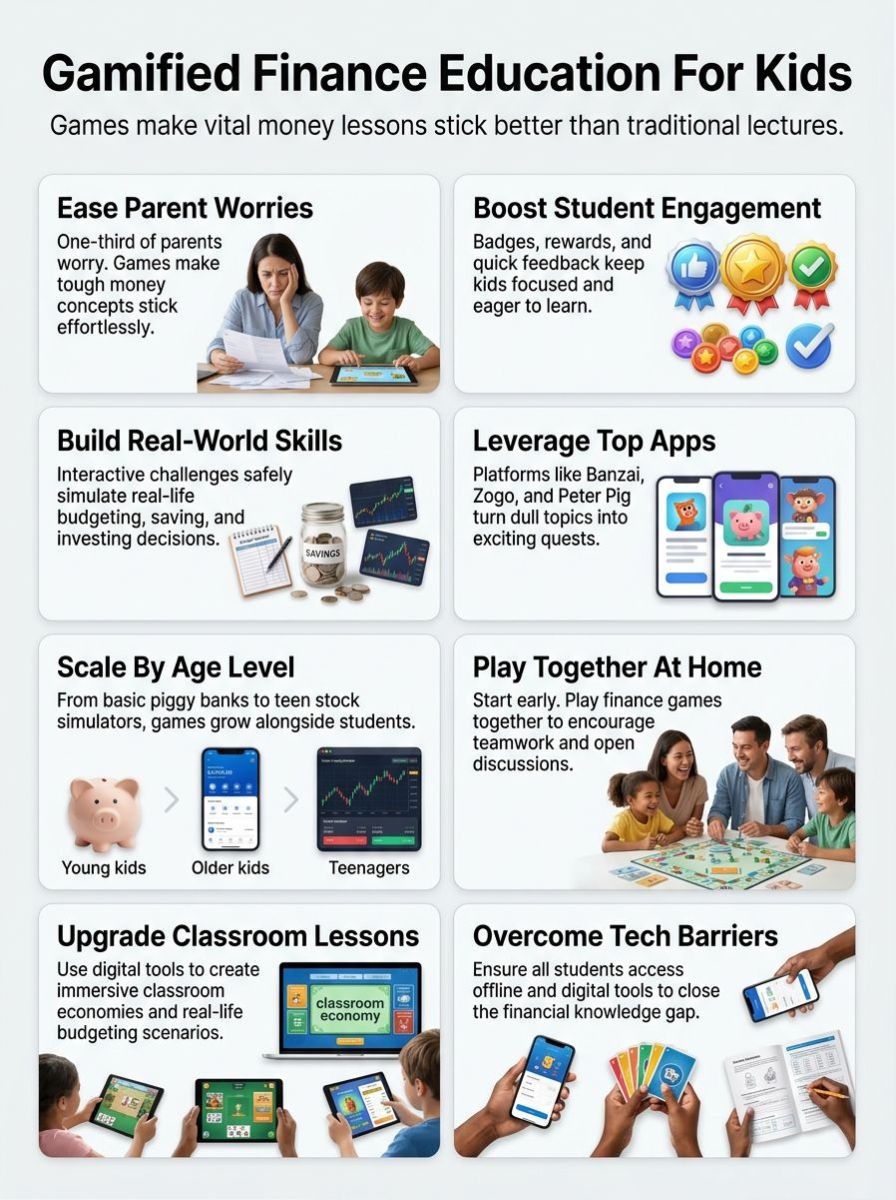
Gamified finance education makes learning fun and exciting for kids. It boosts their interest in money management. Children learn skills they can use in real life. They also gain confidence to make financial choices on their own.
Ready to discover more about how this works?
Increased Engagement
Kids light up when learning feels like play. Game based finance lessons keep their eyes on the prize, with badges, fun sound effects, and quick feedback. Kids outsmart dragons to budget coins or solve puzzles about saving money.
Studies show that using interactive games makes students remember what they learn longer.
Teachers see more smiles in class as kids race to finish money management quests instead of tuning out during long talks. Apps like Banzai and Zogo add rewards into every lesson. Nearly a third of parents feel worried about children’s financial literacy; yet, gamification draws them in and helps close this skill gap quickly without long lectures or yawns along the way.
Real-World Application of Skills
Gamified finance education assists kids in applying their skills in real life. They learn about money management through enjoyable games. This makes lessons memorable for them. Students take pleasure in playing, and they retain what they learned.
Kids get to witness how budgeting functions in daily life. They comprehend concepts like saving and investing as well. One-third of parents are concerned about their children’s financial literacy, but gamification can enhance it.
Games can transform dull topics into engaging ones, helping kids understand the value of money effortlessly.
Encourages Independent Learning
Gamified finance education helps kids learn on their own. They get to explore financial concepts through fun games. These games let children set goals and make choices about money management.
Kids can try different strategies without fear of failure. This freedom allows them to think critically and solve problems.
Many parents worry about their child’s financial literacy, with a third expressing concern. Gamification offers a way to build knowledge in a safe environment. It makes learning enjoyable and encourages kids to take charge of their finances.
By playing games, they develop budgeting skills and investment basics naturally, turning lessons into habits they will use later in life.
Popular Platforms for Gamified Finance Education
Kids can learn about money in fun ways through popular platforms. Games like Banzai and Zogo make learning enjoyable, while Peter Pig’s Money Counter teaches kids how to manage their own finances.
Banzai
Banzai is a great platform for kids to learn about money. It uses games to teach financial literacy. This makes learning fun and engaging. Kids can play while they learn real-world finance skills.
With Banzai, children can explore budgeting skills and investment basics through interactive games. Parents often worry about their kids’ financial knowledge, but tools like Banzai help ease those fears.
Gamified education helps students grasp important money concepts in a simple way.
Zogo
Zogo is a fun way for kids to learn about money. It uses games to teach important financial skills. Kids can earn points by completing tasks and answering questions. This makes learning feel like playing, which keeps them engaged.
Many parents worry about their kids’ financial literacy. About one-third of them have these concerns. Zogo aims to change that with its interactive approach. The platform helps kids understand concepts like saving, budgeting, and even compound interest in a simple format that’s easy to grasp.
Gamified finance education has the power to make learning about money enjoyable and effective for young minds.
Peter Pig’s Money Counter
Peter Pig’s Money Counter is a fun game for kids. It helps them learn about money management. Kids can play and learn at the same time, which makes finance exciting. The game teaches important ideas like saving and spending smartly.
Kids can track their money using this tool. They see how choices affect their savings. Many parents worry about their kids’ financial literacy; games like Peter Pig’s Money Counter help ease these worries.
It’s a great way to build budgeting skills while having fun!
Age-Appropriate Financial Literacy Games
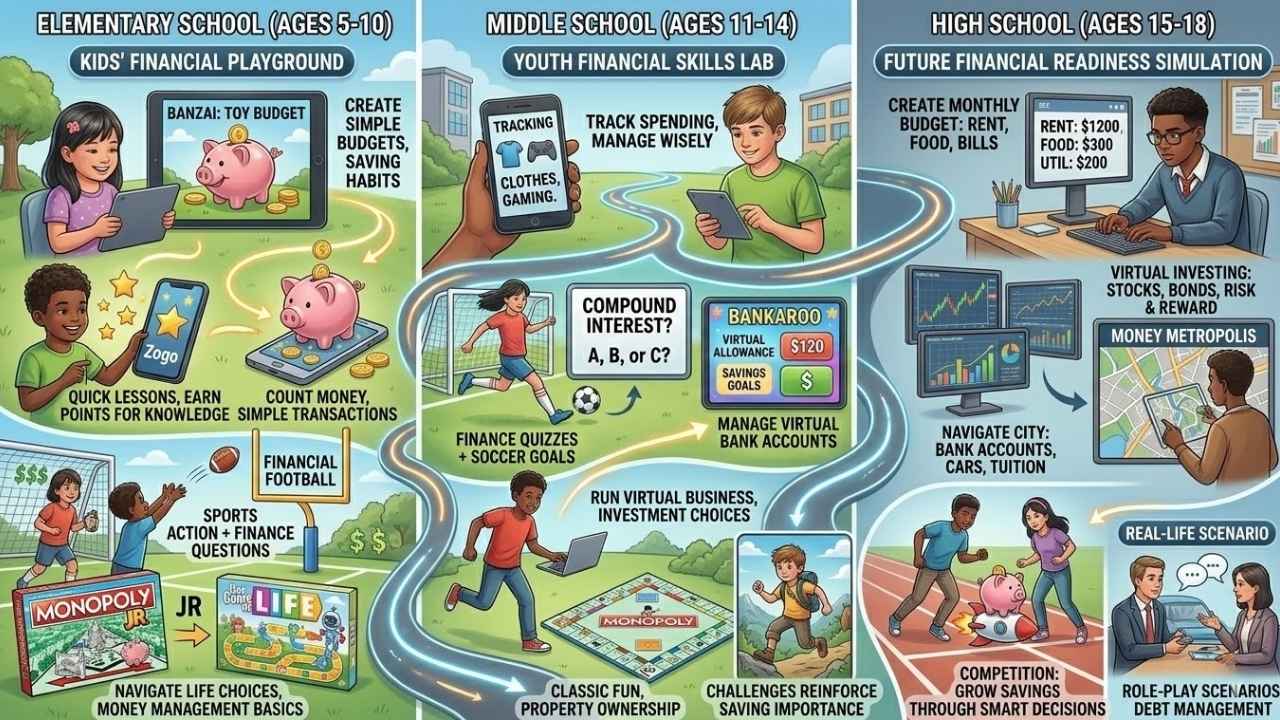
Kids grow and learn at their own pace. Age-appropriate financial literacy games help them grasp money concepts that fit their stage of life. From fun apps for little ones to more complex challenges for teens, there’s something for every age group.
These games make learning about money feel less like school and more like playtime!
Games for Elementary School Kids
Games can make learning about money fun for young children. Here are some great games designed for elementary school kids.
- Banzai: This game teaches kids about budgeting and saving. Players can create a budget for different activities, like going to the movies or buying toys.
- Zogo: This app gives rewards for learning about finance topics. It covers savings, spending, and more through quick lessons and quizzes.
- Peter Pig’s Money Counter: Kids learn to count money using this fun piggy bank game. They can also practice making simple transactions.
- Financial Football: This action-packed game combines football with finance questions. Kids tackle financial concepts while scoring points!
- The Game of Life: Players navigate life choices like careers and expenses in this classic board game. Kids see how budgeting impacts their journey.
- Monopoly Junior: A kid-friendly version of Monopoly introduces basic money management skills, like buying properties and counting cash.
- Savings Quest: In this online game, kids aim to save money for different goals while facing challenges along the way.
- Money Magic: This card game teaches kids about making smart spending choices through fun scenarios.
- Snack Attack!: Players learn to keep track of their snack budgets while enjoying yummy treats in this interactive game.
- Treasure Hunt Money Game: Kids follow clues to find virtual coins, teaching them about earning and saving while having a blast!
These games help instill budgeting skills early on, boosting financial literacy in a fun and engaging way!
Games for Middle School Students
Middle school is a fantastic time for kids to learn about money. They can grasp financial concepts while having fun.
- Banzai teaches students budgeting and saving skills. Users create budgets, track spending, and learn to manage money wisely.
- Zogo offers bite-sized lessons on finance. Kids earn points by completing tasks and quizzes, making learning engaging and rewarding.
- Peter Pig’s Money Counter is perfect for younger teens. It introduces basic money management concepts through fun activities and cartoons.
- Financial Soccer helps players learn as they play soccer. Each goal scored requires answering finance questions correctly, joining fun with knowledge.
- Bankaroo lets students manage virtual bank accounts. They handle allowances, expenses, and savings goals in a playful way.
- Cash Crunch Games puts kids in charge of a virtual business. They make choices that affect their earnings, teaching them about investments and the value of money.
- The Game of Life: Adventures Edition shows how choices impact finances over time. Players face real-life scenarios like job changes or unexpected bills while enjoying the game.
- Savings Quest involves challenges where players save for a goal like a bike or video game; it reinforces the importance of saving smartly.
- Off to See the Wizard combines storytelling with finance lessons as players work through problems that involve budgeting and wise investments.
- Monopoly offers classic fun while teaching kids about property ownership, investment, and managing resources; it’s an entertaining way to understand business basics!
These games not only entertain but also teach vital budgeting skills for life ahead! Gamified finance education can spark interest in money matters during these formative years!
Games for High School Students
High school students can benefit greatly from gamified finance education. These games make learning about money management engaging and practical.
- Budgeting Challenge: This game lets students create a budget for a month. They must plan for food, entertainment, and bills. It teaches them how to manage money wisely, preparing them for real life.
- Investing Game: Players invest virtual money in stocks, bonds, or other assets. They learn about risks and rewards while trying to grow their portfolio. Students get a hands-on experience with the basics of investing.
- Money Metropolis: In this interactive game, players navigate a city while making financial decisions. They open bank accounts, apply for loans, and save for goals like cars or college tuition. It shows how everyday choices impact finances.
- The Great Piggy Bank Race: This fun competition challenges students to save money over time. Each player starts with a piggy bank and tracks savings growth through smart decisions and investments. It reinforces saving habits in a playful way.
- Financial Literacy Quiz Show: A quiz format makes learning enjoyable as students answer questions about financial concepts. Working in teams encourages collaboration while they deepen their knowledge of budgeting skills and economic concepts.
- Simulated Marketplace: Players run their own businesses within a simulated economy. They learn pricing strategies, marketing basics, and customer service skills through trial and error in a fun environment.
- Debt Management Adventure: In this game, students face different scenarios involving loans and debts. They must choose how to handle each situation responsibly or deal with the consequences of poor choices.
- Compounding Interest Simulator: Players see how savings grow due to compound interest over time by entering different amounts and rates into the game; it visually demonstrates the value of saving early.
- Real-Life Scenarios Role Play: Students role-play various economic situations such as buying a car or renting an apartment; they approach these tasks with limited budgets to explore decision-making under constraints.
- Community Investment Project: High schoolers team up to identify local needs; they propose solutions that involve budgeting or funding projects within their community; it fosters teamwork along with real-world applications of finance concepts.
How to Integrate Gamified Finance Education at Home and School
You can mix fun games with lessons about money at home and in class. Set up game nights where kids learn budgeting skills while playing. Teachers can use apps to make learning exciting and interactive.
Show kids how to save, spend, and plan their money wisely. Want to know more ways to get started? Read on!
Tips for Parents
Parents play a key role in teaching kids about money. Here are some tips to help guide them.
- Start early. Teaching financial literacy to children can build a strong foundation for the future. Games can make learning fun and interactive.
- Use gamified finance tools. Apps like Banzai or Zogo make money management engaging for kids. They provide practical lessons through games.
- Make games a family activity. Play educational games together. This encourages teamwork and creates learning moments.
- Set up a savings challenge at home. Kids can learn about budgeting skills by saving for a toy or outing they want, making it real and exciting.
- Discuss money openly with your child. Share simple concepts like saving, spending, and investing basics during everyday conversations.
- Encourage independent learning through fun resources. Let kids explore finance-related websites or educational videos that fit their interests.
- Lead by example; show good money habits yourself, such as budgeting or saving regularly, to inspire your kids to follow suit.
- Create financial goals with your child’s input; this gives them ownership of their learning journey while understanding the value of setting targets.
- Celebrate small wins together when they achieve their financial goals; positive reinforcement keeps them motivated on their path to financial literacy.
- Stay curious; explore new trends in gamification in education together so you both can stay informed on methods that engage younger learners most effectively.
Strategies for Teachers
Teaching kids about finance can be fun and effective with the right strategies. Here are some ways teachers can make finance education engaging.
- Use games in lessons. Games capture students’ attention. They help kids learn by doing, which makes concepts stick.
- Create real-life scenarios. Give students situations where they have to budget or save money for a goal, like buying a bike or going on a trip.
- Incorporate digital tools. Many platforms offer gamified finance education, like Banzai and Zogo. These resources make learning interactive and enjoyable.
- Encourage group activities. Group projects allow students to work together to solve money problems or create budgets, promoting teamwork and engagement.
- Offer rewards for achievements. Acknowledge when students reach milestones in their learning journey. This boosts motivation and shows that hard work pays off.
- Invite guest speakers from the community. Local bankers or entrepreneurs can share their experiences with money management and investment basics, bringing real-world insights into the classroom.
- Make it relevant to their lives. Teach kids about economic concepts that relate to their everyday experiences, like savings accounts or using allowances wisely.
- Use storytelling to explain complex ideas. Engaging stories about characters dealing with financial decisions can help kids relate better to concepts like budgeting skills or saving money.
- Set up a classroom economy system where students manage fake money for classroom jobs or rewards; this gives them hands-on experience with finances in a safe space.
- Regularly assess knowledge through quizzes or fun competitions; this helps track progress while keeping it light-hearted and entertaining for everyone involved.
Challenges and Barriers to Gamified Finance Education
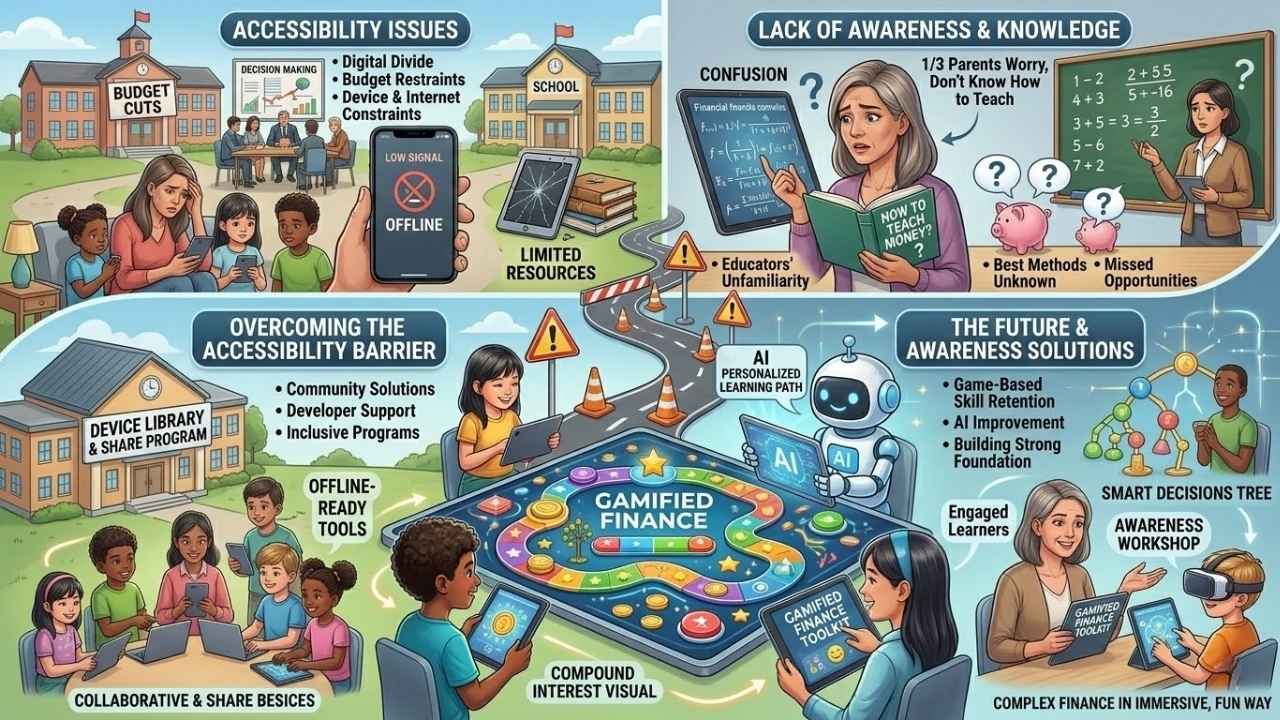
Gamified finance education faces some bumps in the road. Many kids may not have easy access to technology, which can limit their learning. Some parents and teachers might not know about these fun tools yet.
This keeps children from gaining the money skills they need. Want to learn more about how we can overcome these challenges?
Accessibility Issues
Many kids can’t access gamified finance education due to limited resources. Not all schools have the budget for good programs, leaving some students behind. This lack affects their financial literacy and future skills.
A third of parents worry about this issue, but there are ways to help.
Some digital tools may work only on certain devices or require a strong internet connection. Families without these things miss out on valuable learning experiences. It’s important to find solutions that make these resources available for everyone, so all kids can learn money management effectively.
Lack of Awareness
A third of parents worry about their kids’ financial literacy. Many do not know the best ways to teach money skills. This lack of awareness can hurt children in the long run. Without basic knowledge, kids may struggle with budgeting and saving.
Gamified finance education can help solve this problem.
By using fun games, children learn valuable lessons about money management. They discover concepts like compound interest through interactive play. This type of learning is effective for teaching important financial skills that kids need for their future.
With more resources available, raising awareness could change how families approach finance education at home and in school.
The Future of Gamified Finance Education
Gamified finance education will change how kids learn about money. It makes financial literacy fun and engaging. Studies show that game-based learning helps students keep important skills and concepts in mind.
AI can also play a big role here, helping to improve kids’ understanding of money management.
Parents worry about their children’s financial knowledge. Gamification could be the answer to this worry. Using interactive games, kids can grasp tough topics like compound interest without feeling overwhelmed.
This approach builds a strong foundation for their financial future while keeping them entertained and eager to learn more!
Final Thoughts
Learning about money is vital for kids. Gamified finance education makes this fun and engaging. It uses games to teach budgeting, saving, and investing skills. Parents and teachers can easily adopt these tools at home or in school.
Resources like apps and interactive games help bring financial concepts to life.
These strategies will help kids build strong money habits early on. By using gamification, we prepare them for a brighter future with smarter financial choices. Every small step counts in their journey toward financial literacy!