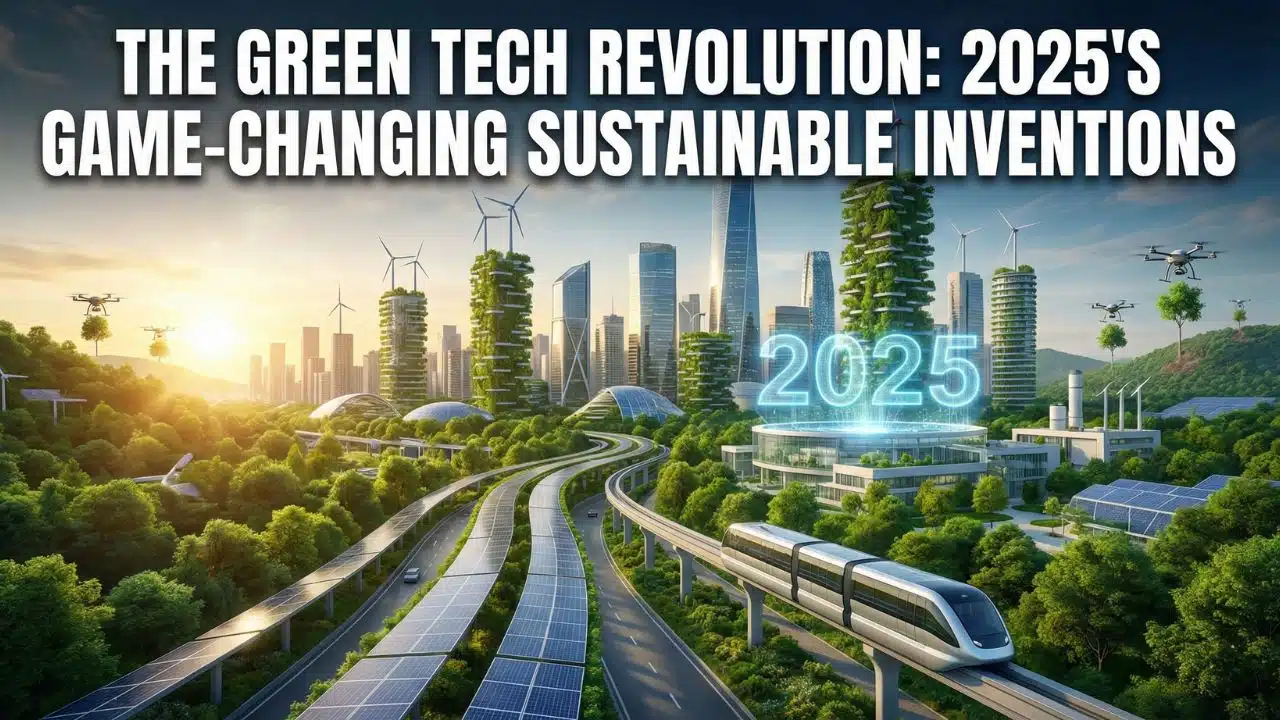
If historians look back at the 2020s as the decade humanity finally woke up to the climate emergency, they will likely pinpoint 2025 as the year we stopped hitting the snooze button and finally started brewing the coffee.
For years, “green technology” felt like a niche sector—expensive alternatives accessible only to the wealthy or theoretical breakthroughs perpetually “five years away” from viability. We were promised jetpacks and got better paper straws. The cynicism was understandable.
But 2025 was different. As we close the book on this tumultuous year, the narrative has shifted from desperate mitigation to aggressive, technology-driven adaptation. Driven by a convergence of necessity, the maturity of AI-driven materials science, and the fully realized impact of global green subsidies, this year saw sustainable tech leap from the laboratory bench to the mass market.
We didn’t just see incremental improvements in solar panel efficiency or slightly longer-range electric vehicles this year. We witnessed foundational shifts in how we generate energy, grow food, manage waste, and scrub the atmosphere.
As we head into 2026, we are by no means out of the woods—global temperatures remain critically high. But for the first time in a long time, the tools to fight back feel commensurate with the challenge. Here is a review of the five game-changing sustainable inventions that defined 2025.
1. The Death Knell for Range Anxiety: Commercial Solid-State Batteries
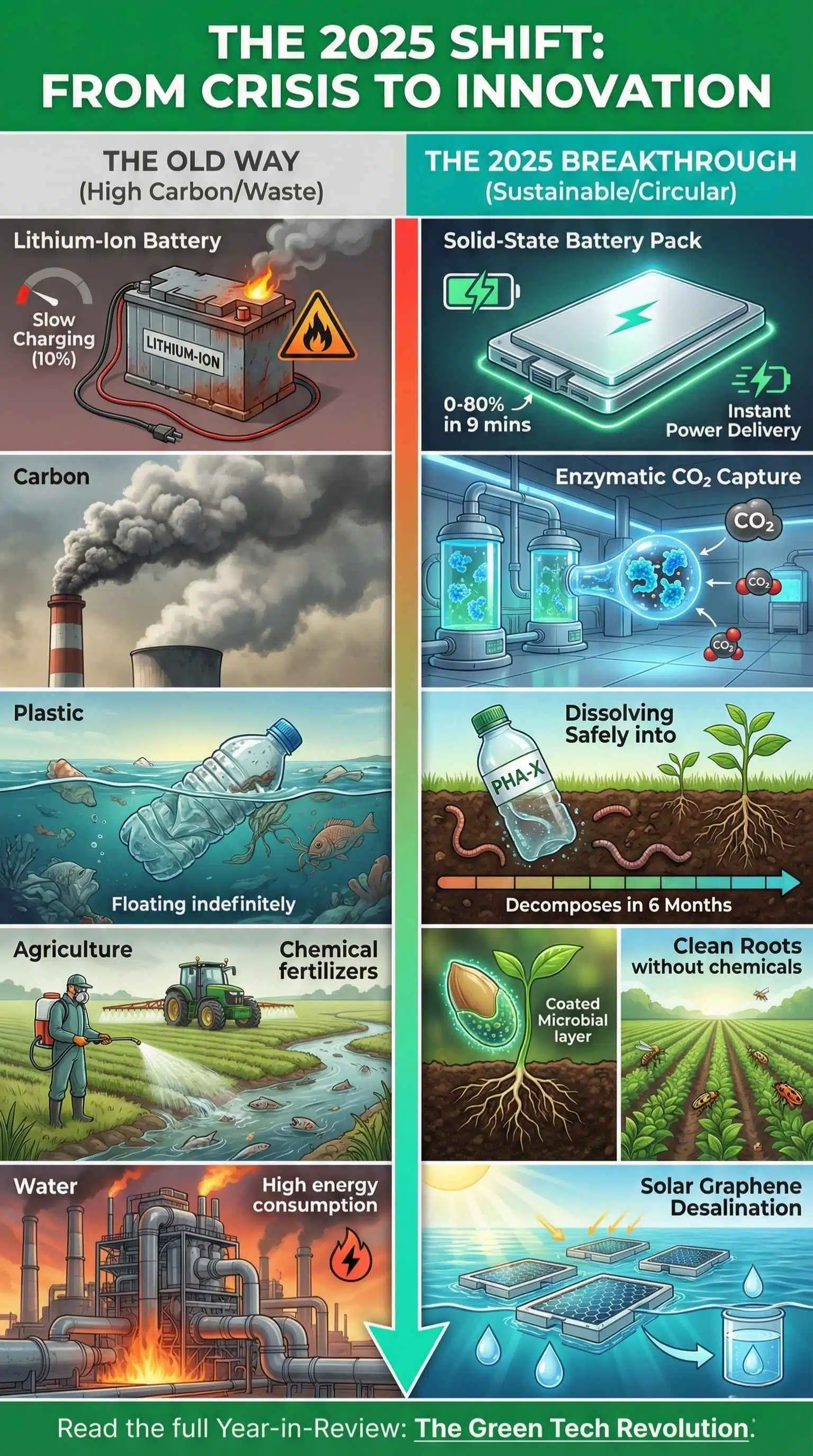
For fifteen years, the lithium-ion battery was the workhorse of the energy transition. It powered our phones and launched the EV revolution. But it was flawed: heavy, prone to thermal runaway (fires), and slow to charge.
We knew solid-state batteries (SSBs)—which replace the liquid electrolyte with a solid material—were the answer. They promised double the energy density and incredible safety. The problem was always manufacturing them at scale without microscopic cracks forming after a few uses.
The 2025 Breakthrough
In February, a consortium of researchers perfected a ceramic-polymer composite electrolyte that is both highly conductive and flexible enough to withstand charging swelling. By Q3 2025, the first commercial EVs utilizing these “Gen-1 SSB” packs rolled off assembly lines.
Why It’s a Game-Changer
This isn’t just about convenience; it’s about adoption velocity. The primary psychological barriers for consumers switching to electric—range anxiety and charging time—evaporated in 2025. These new batteries allow vehicles to travel 800+ miles on a charge and refill from 10% to 80% in under nine minutes. In 2025, the internal combustion engine didn’t just get beat; it got lapped.
2. Atmosphere Scrubbing: Enzymatic Carbon Capture
Direct Air Capture (DAC)—sucking CO₂ directly out of the sky—has always been controversial. Critics rightly pointed out that early technology was energy-intensive, often requiring vast amounts of heat to release the captured carbon. It felt like trying to bail out a sinking boat with a teacup that leaked.
The 2025 Breakthrough
This year saw the debut of “Bio-mimetic Enzymatic Scrubbing.” Instead of using brute-force heat and harsh chemicals, this new generation of DAC facilities uses engineered enzymes—inspired by the way human lungs process CO₂—to capture carbon at ambient temperatures.
Why It’s a Game-Changer
The energy cost of capturing a ton of CO₂ plummeted by nearly 60% this year. This made DAC economically viable for the first time. We are no longer just talking about “net zero”; these enzymatic facilities, now breaking ground in Texas and Iceland, are providing a realistic pathway to “net negative” emissions.
3. The End of “Forever Chemicals”: PHA-X Bioplastics
The plastic crisis reached a breaking point in the early ’20s. Recycling was largely a myth, and alternatives like paper were often impractical. Enter PHA-X, the breakthrough material of 2025.
Polyhydroxyalkanoates (PHAs) are polyesters produced in nature by microorganisms. They were known for years but were brittle and expensive. This year, synthetic biology allowed scientists to engineer bacteria that gorge on agricultural waste (like corn stalks) to produce a highly durable, flexible form of PHA—dubbed PHA-X.
Why It’s a Game-Changer
PHA-X looks, feels, and acts like traditional PET plastic used in soda bottles. But the revolution is in its disposal: if it ends up in the ocean or soil, bacteria naturally recognize it as food. It fully biodegrades into harmless water and CO₂ within 6-12 months in ambient conditions, leaving no microplastic residue. By the 2025 holiday season, three major beverage giants had already committed to switching to PHA-X.
4. Healing the Soil: Nitrogen-Fixing Microbial Coatings
Agriculture has long been the silent giant of greenhouse gas emissions, largely due to synthetic nitrogen fertilizers. Producing these fertilizers releases vast amounts of CO₂, and their runoff creates “dead zones” in our oceans.
Nature has its own way of creating fertilizer: plants like legumes host bacteria in their roots that pull nitrogen from the air. Cereal crops—like wheat and corn, which feed the world—cannot do this. Until now.
The 2025 Breakthrough
This year saw the wide-scale field application of “ProBio-N.” It’s not a genetic modification of the plant itself but rather a sophisticated seed coating containing gene-edited microbes. As the seed germinates, these microbes form a symbiotic relationship with the crop’s roots, essentially giving corn the nitrogen-fixing superpowers of a soybean.
Why It’s a Game-Changer
Farmers testing ProBio-N reported reducing synthetic fertilizer application by 40-50% without sacrificing yield. This represents a monumental decrease in the carbon footprint of agriculture and a massive victory for local water ecosystems.
5. Decentralized Water: Graphene-Oxide Solar Desalination
By 2024, water scarcity had become a critical crisis. Traditional desalination was a lifeline for wealthy nations but was too energy-intensive for the developing world. 2025 changed the equation by scaling down.
The 2025 Breakthrough
The “Hydra-G” membrane utilizes graphene oxide layered into a precise nanostructure. This material is highly absorptive of solar heat. When placed in a simple, floating device on the ocean surface, sunlight heats the graphene, creating localized steam that passes through the membrane, condensing as pure, fresh water—no electricity required.
Why It’s a Game-Changer
In 2025, pilot programs deployed these modular units to island nations and disaster zones. A unit the size of a mattress can now provide enough drinking water for a small village daily. This democratizes water access, decoupling humanity’s most basic need from fossil fuel energy grids.
6. The “Cooling” Paint: Radiative Cooling Coatings
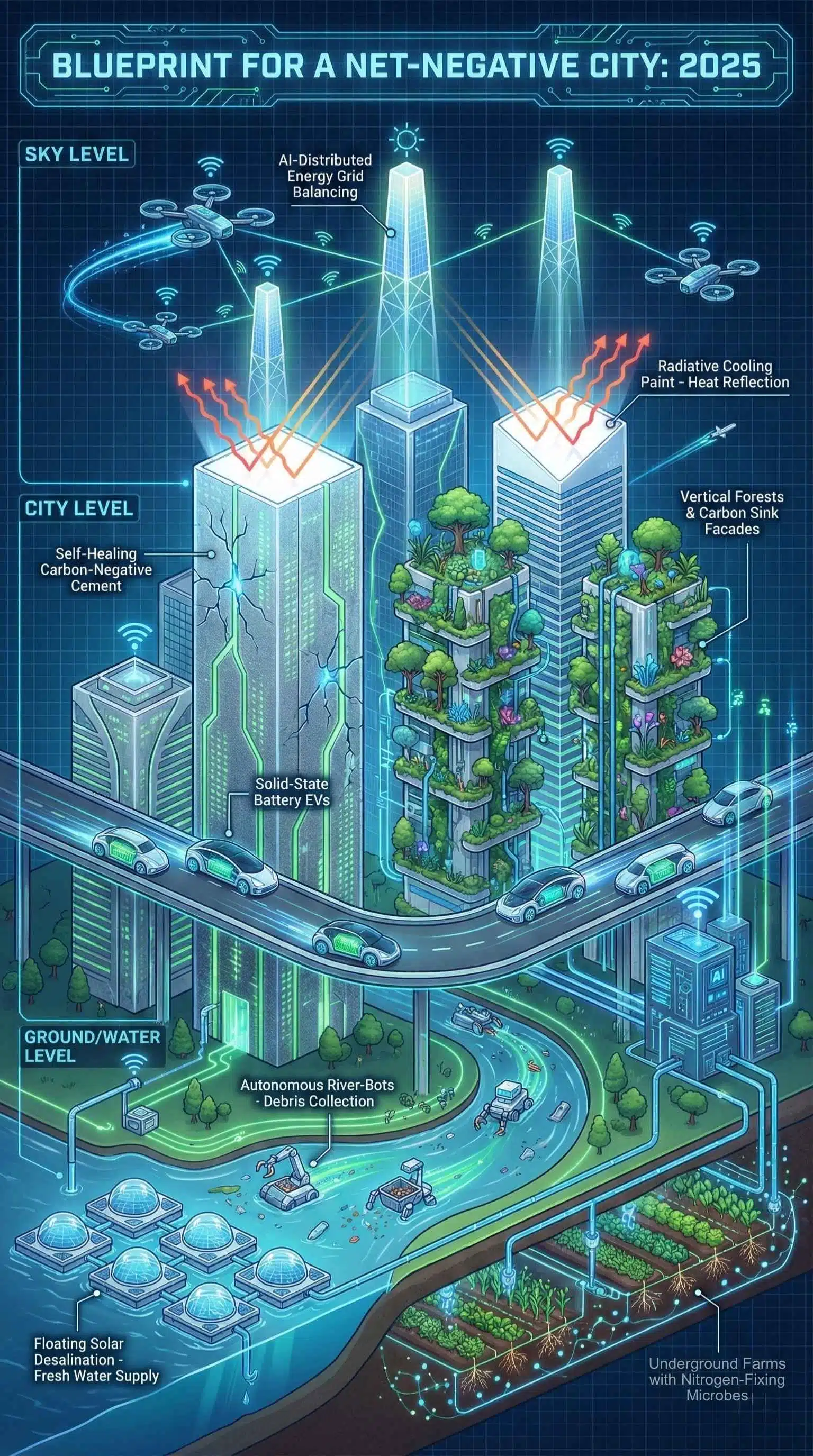
As global temperatures spiked, air conditioning use skyrocketed, creating a vicious cycle: AC units cool indoors but dump massive heat outdoors while consuming fossil fuel electricity. In 2025, we finally broke the cycle with the commercial rollout of “Ultra-White” radiative cooling paints.
The 2025 Breakthrough
Scientists developed a scalable acrylic paint infused with high concentrations of barium sulfate particles of varying sizes. This specific mixture reflects 98.1% of sunlight and, crucially, radiates infrared heat away from the surface and out into deep space through the “atmospheric window.”
Why It’s a Game-Changer
Buildings coated with this material in 2025 remained up to 8°F (4.5°C) cooler than the ambient air temperature without using any electricity. Cities like Phoenix and Dubai mandated its use on municipal roofs this year, slashing peak energy demand for cooling by nearly 30% in pilot districts. It is passive climate control at a massive scale.
7. Concrete That Breathes: Carbon-Negative Cement
Concrete is the most consumed material on Earth after water, and its production is responsible for 8% of global CO₂ emissions—more than the aviation industry. For decades, “green concrete” was too weak or too expensive for skyscrapers.
The 2025 Breakthrough
This year marked the industrial scaling of “bio-mineralized cement.” Rather than baking limestone at massive temperatures (which releases CO₂), this process uses cyanobacteria to grow cement bricks at ambient temperatures, similar to how coral grows reefs. Furthermore, the curing process actually absorbs CO₂ from the air to harden.
Why It’s a Game-Changer
In 2025, the first high-rise in Singapore was completed using this structural bio-cement. It turned the construction industry from a carbon emitter into a carbon sink. With new building codes adopted in the EU this year favoring these materials, the era of “grey pollution” is ending.
8. The Smart Grid’s Brain: AI-Distributed Energy Resources (DERs)
The problem with renewable energy like wind and solar is intermittency—the sun doesn’t always shine. We used to rely on dirty “peaker plants” (gas or coal) to fill the gaps. In 2025, we replaced those plants with software.
The 2025 Breakthrough
The “Hive-Mind Grid” went live in California and Germany this year. This AI-driven software aggregates millions of small batteries—from parked EVs to home Powerwalls and smart thermostats—into a single Virtual Power Plant (VPP).
Why It’s a Game-Changer
When a cloud passed over a solar farm in 2025, the AI instantly discharged power from 50,000 parked cars to stabilize the grid, paying the car owners for the service. It proved that we don’t need to build more power plants; we just need to use the storage we already have more intelligently.
9. Fashion’s Reset: Lab-Grown Cotton and Leather
The fashion industry is a water-guzzling, pesticide-heavy ecological disaster. In 2025, the “cellular agriculture” revolution moved from expensive steaks to affordable sneakers.
The 2025 Breakthrough
Biotech firms successfully scaled the production of lab-grown cotton and collagen-based leather. By fermenting plant cells in bioreactors, they created fibers identical to cotton without growing the plant and leather hides without raising a cow.
Why It’s a Game-Changer
This year’s “Bio-Fabric” collection released by a top luxury brand used 97% less water and zero pesticides compared to traditional agriculture. It signaled a shift where “luxury” is defined by scientific sustainability rather than resource scarcity.
10. Ocean Cleanup 2.0: Autonomous River Interceptors
Cleaning the Great Pacific Garbage Patch is noble, but stopping the plastic before it gets there is effective. 80% of ocean plastic comes from just 1,000 rivers.
The 2025 Breakthrough
2025 saw the global deployment of the “River-Bot Swarm.” Unlike previous massive barges, these are fleets of small, autonomous, solar-powered drones that patrol river mouths. They use computer vision to identify floating trash, scoop it up, and return to a docking station, all while avoiding fish and boat traffic.
Why It’s a Game-Changer
Scalability. Because they are small and cheap to mass-produce, thousands were deployed this year in high-polluting waterways across Southeast Asia and Africa. Early data from the Mekong Delta pilot shows a 60% reduction in plastic outflow reaching the ocean in just six months.
Final Words: The Year of Cautious Optimism
As we ring in 2026, it is vital to temper our excitement with reality. The existence of these technologies is not the same as their universal implementation. We still face massive hurdles in infrastructure rollout, political pushback, and financing gaps in the Global South.
Yet, the psychological shift of 2025 cannot be overstated. For decades, the environmental movement felt like a holding action—a desperate attempt to slow the bleeding. This year, we were handed tourniquets and sutures.
The Green Tech Revolution of 2025 didn’t save the world overnight. But it gave us a credible, tangible toolkit with which we might just be able to save ourselves. The question for 2026 is no longer “Can we do it?” but rather, “How fast can we build it?”
Frequently Asked Questions (FAQs)
Q: Are solid-state batteries really available in 2025?
Yes. While they were experimental for years, 2025 marked the release of “Gen-1” solid-state batteries in select high-end electric vehicles. They are not yet in every budget car, but the commercial rollout has officially begun, offering faster charging and longer ranges.
Q: What is the difference between carbon neutral and net negative?
“Carbon neutral” means you balance out your emissions (e.g., planting trees to offset a flight). “Net negative” means you are actively removing more CO₂ from the atmosphere than you emit. Technologies like the new Enzymatic Carbon Capture plants are critical because they help reverse historical emissions, not just stop new ones.
Q: Is “Cooling Paint” expensive to use on homes?
No. One of the biggest breakthroughs of 2025 was the scalability of radiative cooling paints. While slightly more expensive than standard exterior paint, the cost is offset by electricity savings (lower AC bills) within 1–2 years.
Q: Can I buy clothes made from lab-grown cotton yet?
It is currently a luxury. In 2025, lab-grown cotton and leather appeared primarily in high-end designer collections. However, like most technologies, prices are expected to drop significantly over the next 3–5 years as manufacturing scales up for mass-market brands.
Q: How does the “Hive-Mind Grid” work for regular people?
If you opt-in, software manages your smart devices (like EVs or home batteries). It might briefly pause your car’s charging for 10 minutes during peak demand to lower grid stress or discharge a small amount of power back to the grid. In exchange, utility companies pay you or give you credits on your energy bill.