
Success is rarely a straight line. For Dr Aurobindo Ghosh, it began in the musical lanes of South Kolkata. It moved through the rigorous halls of the Indian Statistical Institute. Eventually, it found a home in the high-stakes world of Singaporean finance. Today, he is a leading academic at Singapore Management University. Yet his story is less about spreadsheets and more about the human impact of financial literacy in Singapore.
Says Dr Ghosh with a signature smile on his face: ‘True success is about leaving the path smoother for those who follow. Numbers gain value only when they serve a human purpose.’
The Kolkata Catalyst
South Calcutta is a place of deep culture. It is known for its legendary music conferences and intellectual rigour. This was the backdrop of Aurobindo’s youth. His father was an engineer for a multinational firm. His homemaker mother was a commerce graduate. On the surface, it was a typical upbringing for a professional family in Kolkata. However, circumstances demanded more from him than most children his age.
 His father’s job required frequent transfers. While his father moved for work, Aurobindo stayed in Kolkata. He lived with his mother and his younger brother. They also cared for his ageing grandmother. By the age of six, Aurobindo was already a guide. He helped his brother navigate the maze of childhood. He took on leadership roles out of necessity.
He did not seek this responsibility. It was thrust upon him. Yet this early independence became his foundation. He learned to be self-guided. He learned that his actions had consequences for those he loved. This grit would later define his career. He often wonders how life might have differed if he had moved with his father in Grade 2. Instead, he stayed and grew into a leader before he was even a teenager.
The Statistical Pivot
In a family of engineers, the path for the eldest son seemed set. Aurobindo had a natural knack for problem solving. He loved physics. He could take a complex theory and strip it to its core. One of his teachers even nicknamed him Rishi. This was a nod to his scholarly focus and perhaps his slightly untidy hair.
But a different path beckoned. In Grade 11, he made a pivotal choice. He stepped away from engineering and chose statistics. He realised that subjects are merely tools. The goal is the outcome. He found inspiration in the words of P.C. Mahalanobis, the founder of the Indian Statistical Institute. Mahalanobis believed that statistics must have a clear purpose.
Aurobindo took this to heart. He was one of only thirteen students to earn a BStat (Hons) in 1992. He followed this with an MStat in 1994. Both were awarded with first class honours from ISI. He was no longer just a student of numbers. He was becoming a seeker of truth through data. He saw that statistics could explain the world in ways that physics could not.
The American Lab
The next chapter took him to the University of Illinois at Urbana Champaign (UIUC). This was the birthplace of the modern web browser. It was an environment of pure innovation. Here, Aurobindo pursued his PhD in Economics.
Under the guidance of Professor Anil Bera, he tackled the Neyman Smooth Test. This was classical economic theory, but Aurobindo saw a way to make it better. He reworked the models. He wanted to do more than just see if two sets of data were different. He wanted to know how they differed. His work looked into higher order moments of distribution. It was a level of precision that caught the attention of the academic world.
While his research grew, so did his interest in technology. As Head Teaching Assistant at UIUC, he developed a program funded by the Sloan Center for Asynchronous Learning Environment (SCALE) that generated randomized exam questions, automatically graded statistics papers and tracked common student errors. He was already thinking like a social entrepreneur, using technology to make assessment fairer and more efficient.
A Scholarly Fairytale
Long before the lecture halls of Singapore, there was the playground of the school. It was here that Aurobindo met Swastika. It was a classic schoolhouse romance, a fairytale affair that blossomed amidst books and exams. They grew up together, navigating the challenges of youth as a team.
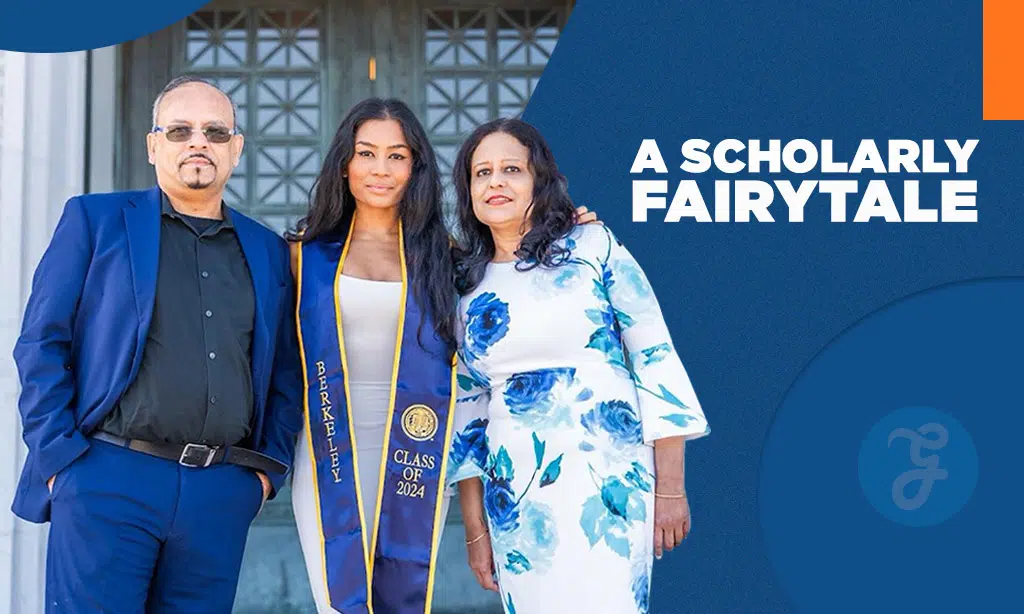
This early bond provided a steady anchor through their years of global study. From the streets of Kolkata to the plains of Illinois, their partnership remained constant. What began as a childhood friendship evolved into a lifelong journey of mutual support, proving that true success is best shared with a kindred spirit.
The Singapore Anchor
Life in the United States was productive, but the pull of family was stronger. After their daughter Debora was born, Aurobindo and his wife Swastika made a choice. They looked towards Singapore.
The Little Red Dot became their home twenty-three years ago. It was a perfect fit. Singapore is a place where education and merit are valued. Aurobindo joined Singapore Management University. He brought a global perspective and a deep desire to give back.
Swastika is an archaeologist by training. She completed her Masters in Anthropology at UIUC. Their daughter Debora grew up in the local system. She eventually headed to UC Berkeley for her honours in Molecular and Cell Biology. For Aurobindo, this was the ultimate success. He believes that the prosperity of future generations is the true measure of a person’s life. Generational sacrifice and success are deeply linked.
The Inflation Architect
At SMU, Aurobindo did not stay confined to the classroom. He wanted his research to touch the lives of everyday Singaporeans. He conceptualised the DBS–SKBI Singapore Index of Inflation Expectations (SInDEx) Project.
This was a massive undertaking. In collaboration with the Monetary Authority of Singapore and DBS, he created a way to measure public sentiment. Inflation is not just a number on a spreadsheet. It affects how families buy groceries and plan for their future.
His work became a vital tool for policymakers. It provided a window into the public psyche. Because of SInDEx, leaders could better understand the economic pressures facing the nation. Aurobindo had fulfilled the Mahalanobis creed. He had given statistics a very clear, human purpose. He helped bridge the gap between high-level theory and kitchen table economics.
The Social Entrepreneur
Aurobindo often says that educators are social entrepreneurs. He lives this every day. He has raised over S$6 million for research and outreach. This money does not just fund papers. It funds impact.
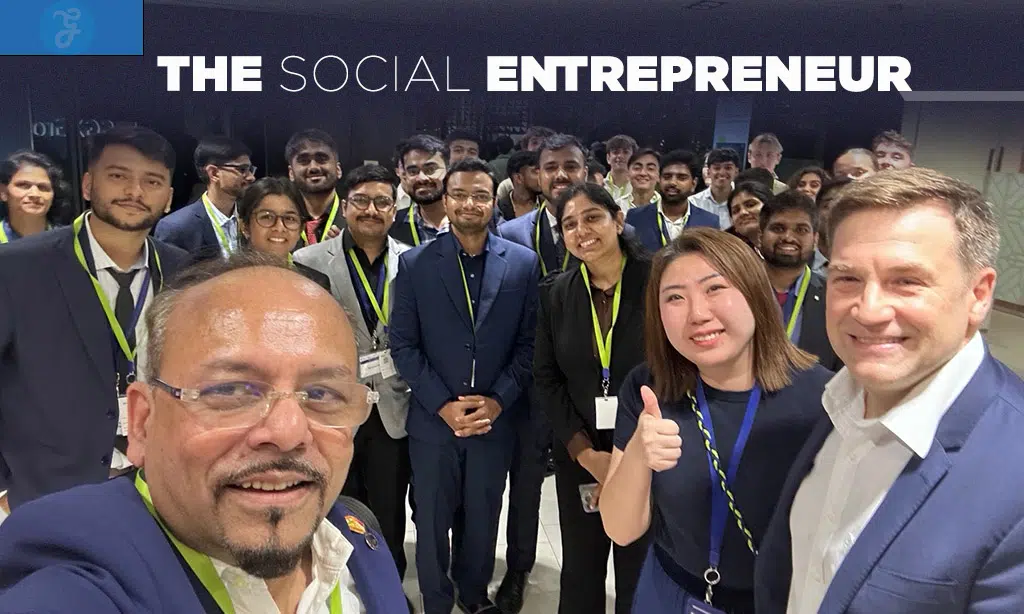
He is the Founding Director of the SMU Financial Literacy, Inclusion and Technology (FinLIT) Program. He is also the Founding Director of the Inclusive and Immersive Experiential Learning (I2XL) Program. His goal is simple. He wants to empower young adults. To date, his initiatives have reached over 100,000 people.
He teaches them about financial freedom. He shows them how to navigate a world of digital finance and complex markets. He believes that financial literacy is a right, not a privilege. By giving young people the tools to manage their money, he is giving them the keys to their own lives. He is preparing them for a world where traditional safety nets are changing.
The Educator’s Creed
Despite his many titles, Aurobindo remains a teacher at heart. He moves between undergraduate lectures and PhD seminars with ease. He has supervised students who now hold positions at prestigious institutions. These include the National University of Singapore and Fudan University.
His teaching style is active and conversational. He avoids fluff. He wants his students to see the real world applications of their studies. Whether he is teaching Corporate Finance or Applied Econometrics, he keeps it grounded. He knows that these students will one day shape the global economy. He wants them to do so with both skill and empathy.
He also serves as the Secretary of the SMU Faculty Senate. This role allows him to influence the direction of the university. He works to ensure that the faculty remains a vibrant part of the Singaporean community. He is an advocate for his peers and a mentor to his students.
A Legacy of Inclusion
Today, you can often find Dr Ghosh in the media. He is a frequent commentator on the cost of living. He speaks on sustainability and fintech innovation. As a MasterCard Fellow, he led research on financial inclusion in Vietnam. His research spans corporate governance, asset pricing, macroeconomic policy and financial technology, examining how regulation, markets and innovation intersect in the real economy.
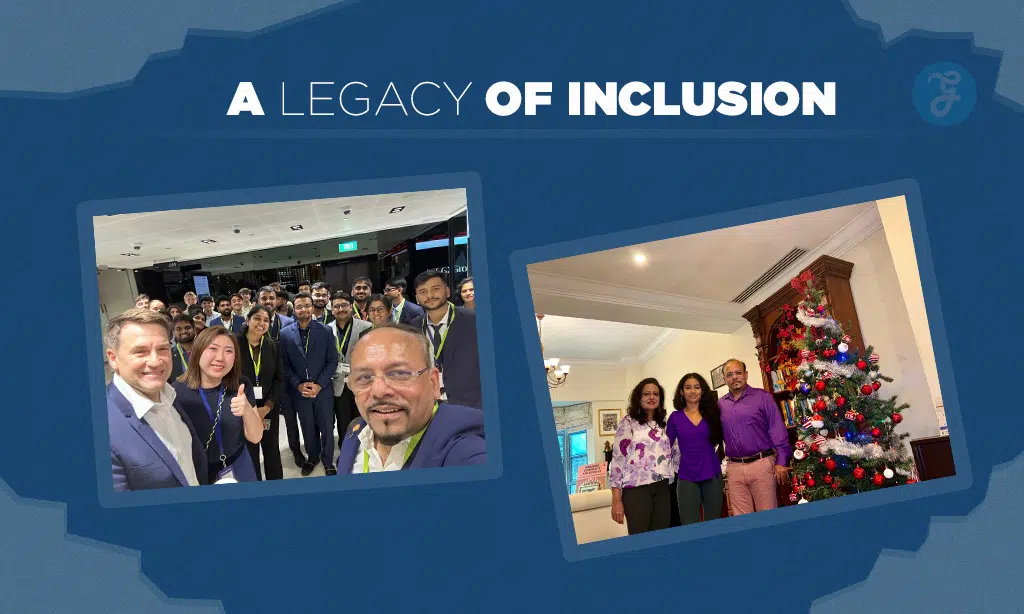 His journey from South Kolkata to the pinnacle of Singaporean academia is a success story for the modern age. It is a story of how a young boy’s sense of duty turned into a global mission. He stands at the intersection of science and society. He is proof that high-level finance can have a heart.
As he continues to innovate at SMU, his focus remains on the people behind the numbers. He is not just an economist. He is a builder of a more inclusive and literate world. He has redefined what it means to be an educator in the 21st century. He is a man who knows that wealth is not just about what you have. It is about what you give back to the next generation.
Redefining Financial Freedom
For Aurobindo, financial literacy is more than just balancing a bank account. It is about dignity. It is about making sure that a young person starting their career does not fall into debt traps. It is about ensuring that a family can weather an economic storm.
His work with the Deep Tech ERL Project is another example of this. He works with SGInnovate to look at how emerging technologies can change the world. He is always looking forward. He wants to know how AI and blockchain will affect the average person. He wants to make sure that technology serves humanity, not the other way around.
His life is a series of fortunate accidents that led to a purposeful career. From the biology books he once loved to the complex algorithms he now creates, everything has a place. He has used his expertise to create a legacy that will last long after he leaves the classroom.
The Human Side of Data
Aurobindo’s story is a reminder that data is human. Every statistic represents a person, a family, or a dream. When he looks at inflation indices, he sees the retiree worried about the price of rice. When he looks at financial literacy rates, he sees the student trying to fund their education.
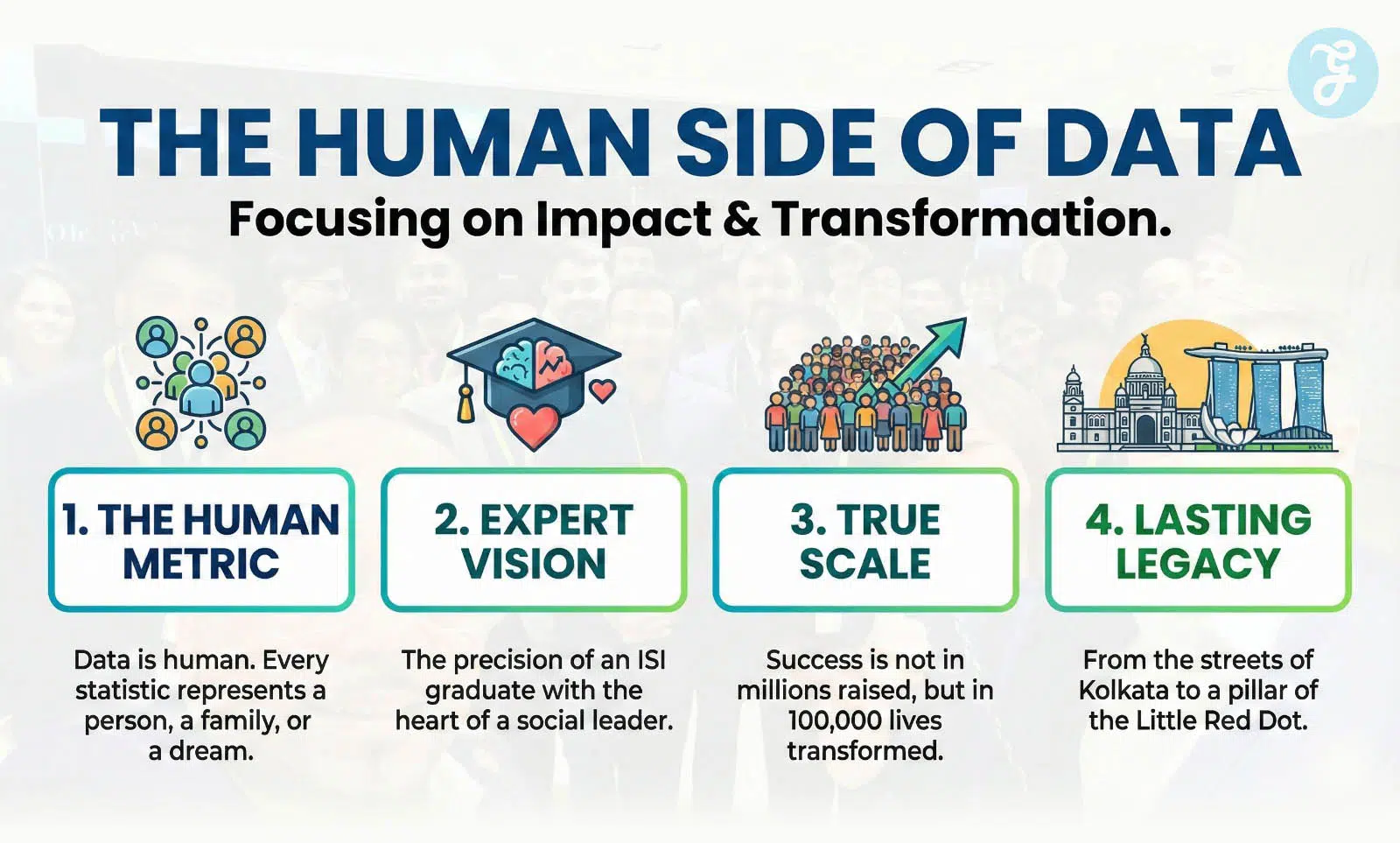
This empathy is what sets him apart. He has the technical skill of an ISI graduate and the vision of a social leader. He has spent over two decades in Singapore, contributing to its growth and its stability. He is a true son of Kolkata who became a pillar of the Little Red Dot.
His success is not measured in the millions of dollars he has raised. His success is not measured in the millions of dollars he has raised. It is measured in the countless lives he has transformed. It is measured in the students who now lead their own research teams. It is measured in the quiet confidence of a young adult who finally understands how to manage their future.
Looking Ahead
As he moves forward, Dr Ghosh remains committed to his mission. Alongside supervising the next generation of scholars, he frequently speaks out on issues that matter to the public, remaining a voice of reason in a complex financial world.
He is a man of science who believes in the power of stories. He knows that his own story can inspire others, much like other profound stories of personal transformation featured on our platform. He wants young people to know that they can guide themselves through life’s maze. He wants them to know that responsibility is a gift.
Dr Aurobindo Ghosh stands as a mentor, a researcher, and a pioneer. He is the economist who decided that numbers should belong to the people, particularly to the younger generation. His journey is a testament to the power of purpose. It is a success story that is still being written, one calculation at a time.