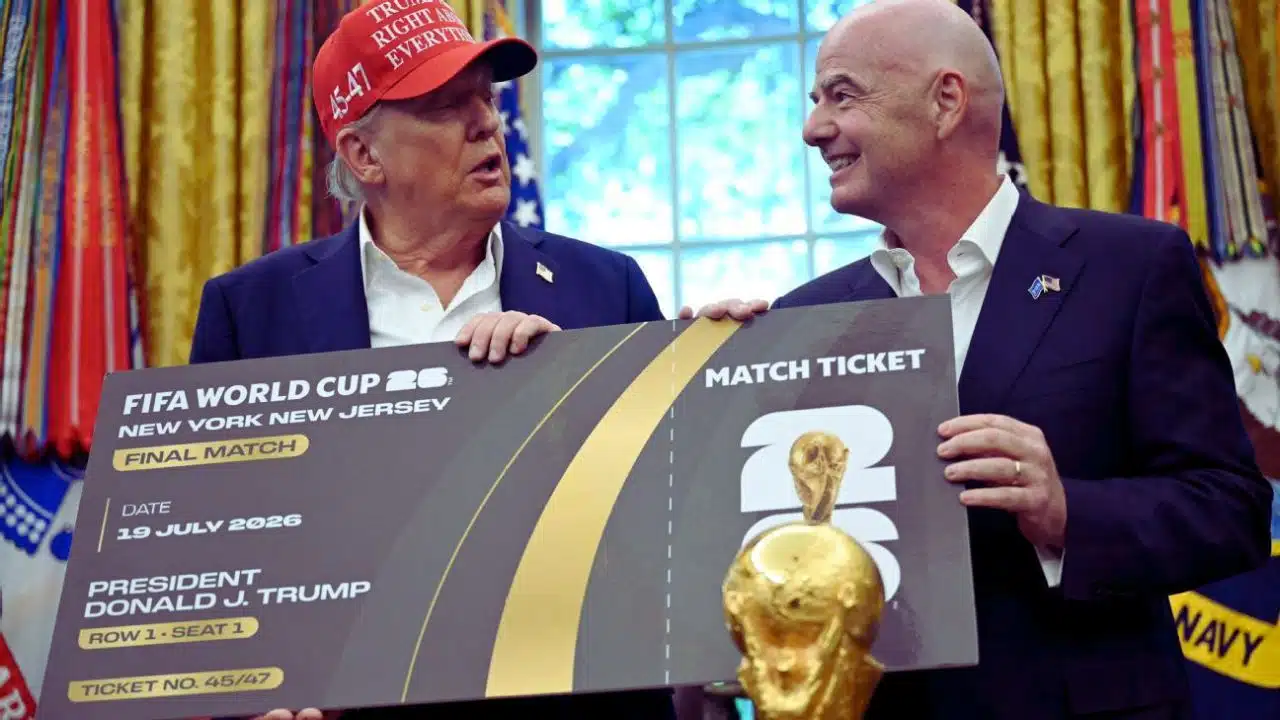
The countdown to the largest sporting event in human history has entered its most critical phase. FIFA has officially confirmed that the highly anticipated “Random Selection Draw” sales phase for FIFA World Cup 2026 tickets will launch on Thursday, December 11, 2025, at 11:00 ET (17:00 CET).
Coming just six days after the Final Draw determines the group matchups in Washington D.C., this window represents the most significant opportunity for the general public to secure seats at face value. With nearly two million tickets already allocated to early adopters and commercial partners, the window for the remaining inventory is expected to see fierce global competition.
This is not just a ticket sale; it is a logistical puzzle. For the first time, fans must navigate a tournament spread across three nations, 16 cities, and four time zones.
At a Glance: Key Dates & Data
-
Match Schedule Draw: Dec 5, 2025 (Miami/Washington D.C.) – Know your team’s path.
-
Ticket Application Window: Opens Dec 11, 2025; Closes Jan 13, 2026.
-
Notification of Results: Mid-February 2026.
-
Total Matches: 104 (Expanded from 64).
-
Teams: 48 (Expanded from 32).
-
Official Platform:
FIFA.com/ticketsis the only valid source.
The “Random Selection” Mechanism: Why Speed Doesn’t Matter
Unlike the chaotic “first-come, first-served” windows that often crash servers within minutes, the December 11 phase operates as a lottery (ballot).
How it Works
-
Application Phase (Dec 11 – Jan 13): Fans can submit ticket requests at any time during this period. It makes zero difference if you apply on the first minute of December 11 or the final minute of January 13.
-
The Shuffle: Once the window closes, FIFA acts as a clearinghouse. If demand for a specific match (e.g., the Final in New York/New Jersey) exceeds supply, a random draw is conducted to allocate tickets.
-
Payment: If successful, applicants are notified by email in February. In previous years, users had to manually pay; for 2026, FIFA is increasingly moving toward automatic deduction from the card stored on file to prevent “cart abandonment.”
Senior Analyst Note: “The lottery system is designed to be equitable,” explains sports economist Dr. Aris Vlahos. “However, it favors those who apply for lower-profile matches. Applying exclusively for the Opening Match at Estadio Azteca or the Final at MetLife Stadium is a high-risk strategy with a low probability of success.”
The “Super” World Cup: Understanding the Scale
To understand the ticketing demand, one must understand the sheer scale of the 2026 edition. This is the first 48-team World Cup, resulting in a 50% increase in participants and a massive jump in fixtures.
The Scale of 2026 vs. Qatar 2022
| Metric | Qatar 2022 | North America 2026 | Impact on Fans |
| Teams | 32 | 48 | More nations involved = wider global demand. |
| Matches | 64 | 104 | More inventory, but diluted across a continent. |
| Venues | 8 (within 50km) | 16 (spread by 4,000km) | Travel logistics are now the #1 challenge. |
| Duration | 29 Days | 39 Days | Longer stays required for visiting fans. |
Strategic Buying: The “Regional Cluster” Factor
The most crucial advice for fans applying on December 11 is to respect the geography. Unlike Qatar 2022, where fans could attend two matches in one day, the 2026 tournament covers a continent.
FIFA has organized the Group Stage into three regional clusters to minimize team travel. Fans should apply for tickets within one cluster to avoid impossible travel costs.
-
West Region: Vancouver, Seattle, San Francisco, Los Angeles, Guadalajara.
-
Central Region: Kansas City, Dallas, Houston, Atlanta, Monterrey, Mexico City.
-
East Region: Toronto, Boston, Philadelphia, Miami, New York/New Jersey.
The Trap: A fan applying for a match in Vancouver (West) on June 15 and Miami (East) on June 17 faces a 6-hour flight and a 3-hour time difference.
The Pro Tip: Wait for the Dec 5 Draw. Once your team is seeded, they will likely play 2-3 group games within a specific cluster. Target that cluster.
The Digital Twist: “FIFA Collect” and the Right to Buy
A fresh, controversial element of the 2026 sales cycle is the integration of blockchain technology. FIFA has introduced the “Right to Buy” (RTB) via its FIFA Collect platform.
This system allows fans to collect digital assets (NFTs) representing specific host cities or iconic World Cup moments. Completing a specific collection can reward the user with a guaranteed opportunity to buy tickets, bypassing the lottery entirely.
-
The Pros: It rewards engaged, tech-savvy fans and provides a guaranteed seat.
-
The Cons: It requires navigating a digital wallet and purchasing digital collectibles, which some traditional fan groups criticize as “pay-to-play” access.
-
Status: As of Nov 27, several “drops” for the Right to Buy tokens have sold out instantly, indicating that the digital market is just as heated as the traditional one.
Pricing Breakdown & Categories
FIFA attempts to balance accessibility with revenue. While hospitality packages (Suite/Box seats) are selling for upwards of $5,000, the general admission prices remain tiered.
Detailed Price Scenarios (General Public)
Based on preliminary Phase 1 data. Subject to dynamic adjustment.
| Category | Description | Group Stage Price (Est.) | Final Match Price (Est.) |
| Category 4 | Reserved for residents of the host country (USA/CAN/MEX). Cheapest option. | $20 – $40 | N/A |
| Category 3 | Behind the goals; upper tiers. | $60 – $85 | $600+ |
| Category 2 | Corners and upper sidelines. | $165+ | $1,500+ |
| Category 1 | Prime sidelines; lower/mid tiers. | $250+ | $3,000+ |
Warning on Dynamic Pricing:
FIFA reserves the right to adjust prices based on demand. A match featuring Argentina (Lionel Messi) or Portugal may see higher base prices than a match between lower-ranked nations, even within the same category.
Step-by-Step Guide: How to Apply on Dec 11
To maximize your chances and avoid technical errors, follow this protocol:
-
Pre-Registration (Do it Now): Ensure you have a verified account on
FIFA.com/tickets. Update your personal details and passport info before Dec 11. -
Payment Method: Link a Visa card. As the official payment services partner, Visa cardholders often get exclusive presale windows or smoother processing.
-
The “Supporter” Option: On the application, you can usually identify yourself as a “Supporter” of a specific team (e.g., “England Supporter”).
-
Benefit: If your team fails to qualify (unlikely at this stage) or gets knocked out, some ticket products allow for conditional refunds or transfers.
-
Access: This pools you with other fans of that team, creating the “Red Wall” or “Orange Sea” effect in stadiums.
-
-
Guest Allocation: You can typically apply for up to 6 tickets per match. You will need the names and passport details of your guests.
Official Voices & Market Sentiment
Heimo Schirgi, FIFA’s Chief Operating Officer, emphasized the historic nature of this specific window:
“With 42 teams already qualified, we are witnessing huge global interest. The Random Selection Draw allows fans worldwide to have an equal chance, regardless of their time zone or internet speed.”
Meanwhile, Alan Rothenberg, former president of US Soccer, noted the commercial explosion:
“The 1994 World Cup in the US still holds the attendance record. 2026 will shatter that. We are seeing demand from corporate America that dwarfs the Super Bowl, and global demand from fans treating this as a ‘bucket list’ trip to North America.” (Paraphrased from The Athletic interview).
What If You Miss Out? (The Resale Safety Net)
If you receive the dreaded “Unsuccessful” email in February, all is not lost.
-
First-Come, First-Served Phase (Spring 2026): Any unpaid or unclaimed tickets from the lottery are dumped back into the system for a frantic live sale.
-
Official Resale Platform (April/May 2026): This is the only safe way to buy secondhand. Fans who bought tickets but can no longer travel can resell them at face value.
-
Avoid Scalpers: Tickets bought on Viagogo, StubHub, or Craigslist prior to the official transfer window opening are extremely high risk. FIFA tickets are digital and tied to mobile devices; transfer mechanics are strict.