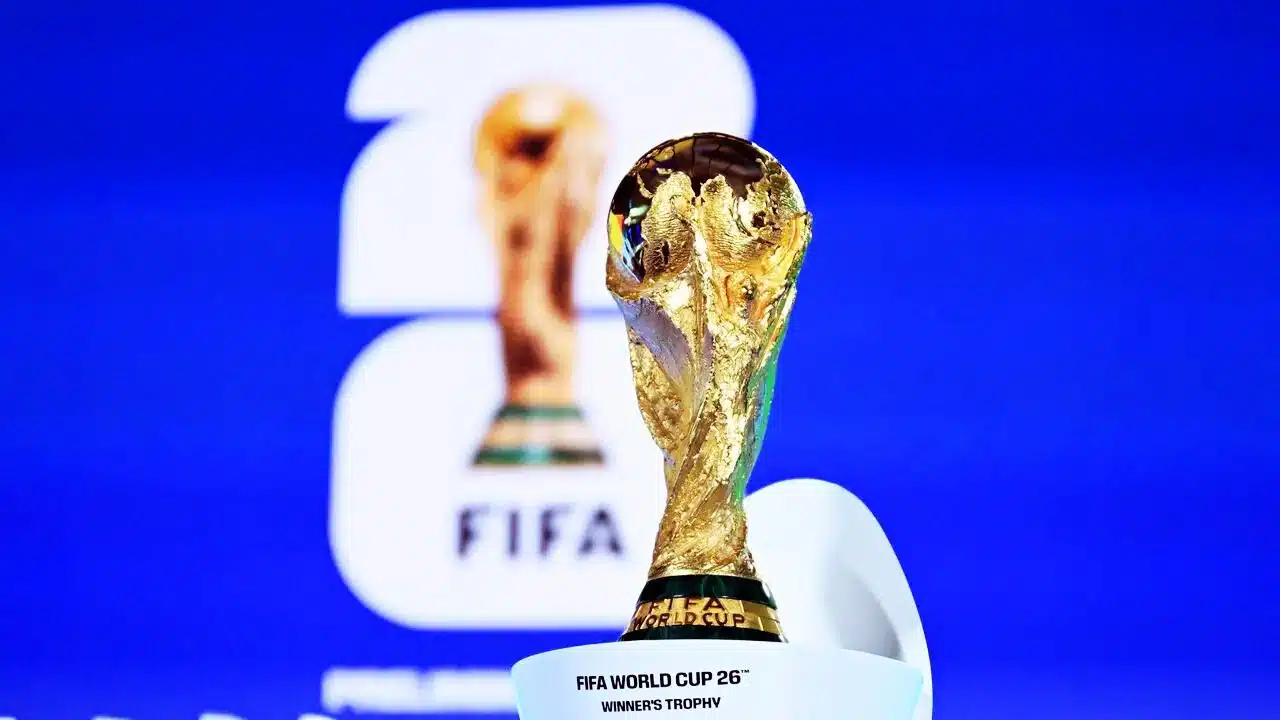
The FIFA World Cup 2026 final draw will be held on Friday, 5 December 2025, in Washington, D.C., and will allocate the 48 qualified and placeholder teams into 12 groups that will shape the entire tournament in Canada, Mexico and the United States. Here is a detailed look at the teams, pots, schedule and how fans around the world can watch it all unfold.
When and where is the draw
The final draw takes place at the John F. Kennedy Center for the Performing Arts in Washington, D.C., with proceedings scheduled to start at 12:00 Eastern Time (17:00 GMT, 18:00 CET) on Friday, 5 December 2025. FIFA has chosen the iconic arts venue as the stage for the first-ever 48‑team World Cup draw, underscoring the showpiece nature of the event in the co‑host nation’s capital.
The draw will involve 48 teams or placeholders, as six berths will still be decided via play‑offs in March 2026 but will already appear in the draw as “winner” slots. This means that by the end of the ceremony, every team will know its group opponents, host city pathway and potential crossover route in the knockout phase.
How the draw system works
For 2026, FIFA will use four seeding pots of 12 teams each, based on the November 2025 FIFA Men’s World Ranking. Pot 1 contains the three host nations – Canada, Mexico and the United States – along with the nine highest‑ranked teams in the world, while Pots 2, 3 and 4 are filled in descending order of ranking, with the six play‑off winners going into Pot 4.
The draw begins with Pot 1, assigning one top seed to each of the 12 groups (A to L), with those teams automatically placed in position 1 of their respective groups for scheduling purposes. FIFA has already pre‑allocated the hosts: Mexico will head Group A, Canada Group B and the USA Group D, while the remaining nine seeded heavyweights will be distributed across the other groups.
To maintain geographic balance, FIFA’s confederation rules limit each group to a maximum of one team from any confederation other than UEFA, which can have up to two European sides per group. Pre‑set patterns then determine the position (2, 3 or 4) that each team from Pots 2, 3 and 4 occupies once its group is drawn, locking in venues and matchdays immediately.
Teams and seeding pots
Heading into the draw, 42 of the 48 spots have been clinched through continental qualifying, leaving six places to be decided in March 2026 play‑offs but already represented as placeholders in Pot 4. The tournament will therefore feature a full global spread on draw day, even though some nations will not yet be known by name.
Pot 1 is headlined by hosts Canada, Mexico and the USA alongside leading powers such as Spain, Argentina, France and England, together with other top‑ranked sides including Belgium, Brazil, Germany, the Netherlands and Portugal. Pot 2 features high‑performing contenders like Morocco, Colombia, Switzerland, Senegal, Iran, South Korea, Ecuador, Austria and Australia, underlining how deep the field now is beyond the traditional elite.
Pot 3 and Pot 4 are expected to include a mix of ambitious qualifiers from Africa, Asia, CONCACAF and emerging European outfits, as well as the six intercontinental and European play‑off winners. For many of these nations, landing a favourable top seed or avoiding a stacked group with two European giants could be the difference between a historic knockout run and an early exit.
Tournament format and key dates
The 2026 edition is the first World Cup expanded to 48 teams, arranged into 12 groups of four. The top two in each group plus the eight best third‑placed teams will move on to a new round of 32, creating an extended knockout bracket and raising the total number of matches to 104.
The group stage will run from 11 to 27 June 2026 across the three host countries. The new round of 32 is scheduled from 28 June to 3 July, followed by the round of 16 from 4 to 7 July, quarter‑finals from 9 to 11 July, semi‑finals on 14 and 15 July, the third‑place game on 18 July and the final on 19 July 2026.
How to watch the draw and World Cup
The draw will be available live worldwide through a combination of traditional broadcasters and FIFA’s own platforms. In the United Kingdom it will air on BBC and BBC iPlayer, in the United States on Fox and Fubo, in Australia on SBS and SBS On Demand, and globally via FIFA+ and FIFA’s official YouTube and website streams.
For the tournament itself, broadcast plans give fans multiple options: in the US, games will be carried by FOX and Telemundo with streaming via platforms such as Peacock and Fox Sports’ digital services, while in the UK coverage will be shared between BBC and ITV. Networks including TSN in Canada, Univision in Mexico, beIN Sports across the Middle East and North Africa, and major rights‑holders in large markets such as India are expected to provide comprehensive live and streaming coverage, ensuring global access to the first 48‑team World Cup.