Many people feel lost when they see gdp growth numbers for brazil’s economy and ask which industries will rise next. For example, data from the Instituto Brasileiro de Geografia e Estatística show the agricultural sector helped Brazil hit a gross domestic product of over $2 trillion in 2023.
This 1. Introduction shows eight fast-growing fields, from renewable energy to the manufacturing sector, and guides you to new opportunities. You will not want to miss it.
Key Takeaways
- IBGE data show Brazil’s GDP passed $2 trillion in 2023 thanks to farms. Coffee exports hit 35 percent of the world market and soybeans 44 percent. Ranchers send 20 percent of global beef abroad. The farm sector makes 7 million jobs. Many farmers use drones, sensors, and maps to boost yields.
- Vale mines about 300 million metric tons of iron ore each year, making Brazil second after Australia. Mining added 0.5 percent to GDP in 2022, and exports jumped 12 percent in 2023. Brazil also taps gold, bauxite, and nickel for steel and batteries.
- Factories churn out more cars, trucks, and machines using robots and software. PETROBRAS and private firms invest billions in petrochemical plants. Brazil ranks among the top five countries for wind power and solar farms. In 2022, investors launched $2 billion in green hydrogen projects.
- Fintech startups raised $3.6 billion in venture capital in 2022, and Pix reached 100 million users by mid-2023 to speed payments. ANVISA approved dozens of new drugs in 2023. Private health plans grew 5 percent in 2022, and telemedicine calls rose 80 percent from 2019 to 2022.
- The government backed R$40 billion in bonds for new rail lines, roads, and 200,000 social homes by 2025. Eco-tourism grew 25 percent in 2022 with $1.2 billion in investments in 2023, and domestic trips rose by 45 million in 2023.
Agriculture and Agribusiness

Brazil’s Arabica coffee, beef, and soybean farms sell to China, Europe, and the U.S., while they roll out soil moisture probes and DJI Phantom quad-copter drones to boost crop yields.
Growers across Minas Gerais and Mato Grosso rely on John Deere 8R tractors and drip irrigation lines, driving a green leap in export revenue.
Brazil’s leadership in coffee, soybeans, and beef exports
Coffee growers in Minas Gerais and São Paulo supply beans to over 100 markets. Farmers use geographic info systems and space photos to track crop health. The nation leads global coffee exports at about 35 percent market share.
It also ships 44 percent of soybeans, boosting foreign exchange reserves. This surge helps cut the primary deficit. The labor market gains 7 million jobs in the agricultural sector.
Cattle ranchers send roughly 20 percent of world beef abroad each year. They use trade credit and commodity futures to fund herd growth. Beef ranks among top agricultural exports by value.
Rising demand in China and the European Union lifts GDP per capita. Public investments in cold storage improve the supply chain. Meat plants hire thousands, lowering the unemployment rate in rural areas.
Investments in sustainable farming and modern technology
Farmers plant cover crops and rotate soy and maize. This cuts carbon emissions and saves topsoil. Banks and public funds pour millions into no-till gear and biofertilizers. Inter-American Development Bank loans help small farms adopt these practices.
Such grants boost fiscal sustainability and help the agricultural sector.
Satellite sensors and drones scan fields for dry spots. Soil moisture sensors link to mobile apps that track water needs. Farmers tap data to guide fertilizer and water use. Yield rises drive stronger agricultural exports.
This boost in productivity feeds higher household consumption and retail sales. The move lifts Brazil’s GDP and strengthens the brazilian economy. It also trims the current account deficit.
Mining
Brazil’s crews drill deep with giant drills and seismic sensors. They use drone surveys and heavy excavators to boost output.
Dominance in iron ore production with companies like Vale
Vale pumps about 300 million metric tons of iron ore each year from mines like Carajás. This flow places Brazil second in global supply, just behind Australia. Such volume swells gross domestic product, backs hundreds of mines, and boosts the workforce in the southeast region.
Royalty payments fuel public spending on roads, ports, and schools.
Rail links such as the Estrada de Ferro Carajás haul ore to Ponta da Madeira terminal, shaping transport in Brazil. Traders at the B3 stock exchange watch Vale’s performance as a gauge of the economy of Brazil and trading economics.
Mining revenues help shrink the fiscal deficit and steer fiscal policy on debt-to-GDP ratio and tax reform. Demand for iron ore also shifts the exchange rate and nudges private consumption by altering industrial costs.
Growth in gold, bauxite, and nickel mining
Brazil taps rich reserves of gold, bauxite, and nickel. Miners use geographic information system mapping and drill rigs to find high-grade ore. That mining branch added 0.5 percent to the industry of Brazil’s gross domestic product (gdp) in 2022.
Exports jumped by 12 percent in 2023, boosting economic growth and lifting local services in northern regions. A recent geological survey named Goiás and Pará top spots for new sites.
New processing facilities now handle bauxite faster than before. Battery makers fight to secure nickel from Brazil, fueling a green energy push. A mining leader once quipped that drills hum like busy bees underground.
Central bank reports show stable interest rates as mining revenue swells export coffers.
Manufacturing
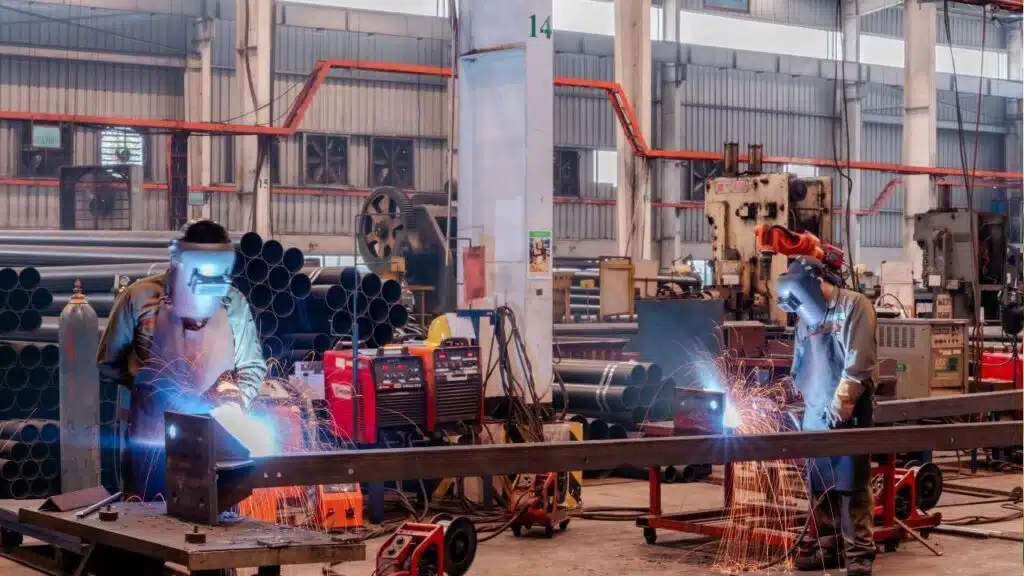
Car makers roll out new engines and fine-tune production with automated arms. They link ERP systems and machine learning to speed assembly and cut costs.
Expansion in automotive, transport equipment, and machinery production
Brazil’s automotive industry runs plants that churn out cars, trucks, buses, and agricultural machines. Machinery production jumped in the past three years. Factories use robots and software to speed assembly, cut costs, and boost quality.
The manufacturing sector now draws more investment. Value chain upgrades help firms win export markets. Trading economics data show a rise in transport equipment exports. Supply chain management cuts delays, economies of scale lower unit costs.
Import substitution drives local tool and part makers to grow.
Rising importance of the petrochemical industry
Feedstock flows from the pre-salt layer under the coast. The petrochemical industry gains traction in global markets. State group PETROBRAS and private firms invest billions. They build distillation towers, cracking furnaces and storage tanks.
Chemicals power the manufacturing sector and boost value chain links. Some products get exported to South America and Asia. Higher output eases public finances and tames public debt.
Companies add wind farms and solar plants to cut emissions in plants.
Energy
Brazil plants solar farms across the savanna and spins offshore wind farms along its coast, turning sun and sea breeze into clean power. Find out how green hydrogen and capacity factors fuel new investment from the International Bank for Reconstruction and Development.
Advancements in renewable energy sources like wind and solar
Strong Atlantic winds feed giant propeller machines along Brazil’s coast. The country ranks among the top five globally in installed wind power capacity. Farmers, fishermen and city dwellers all cheer the stable, low-carbon energy.
Government grants and bank loans pour into new sites, lifting capacity factors to higher levels.
Bright sunlight covers vast fields of sun collectors in the northeast. Investors have pumped billions into photovoltaic projects since 2020, thanks to falling unit costs. These projects drive renewable energy uptake and fuel household consumption of green power.
Investments in green hydrogen and bioenergy
In 2022, Brazil launched $2 billion in green hydrogen projects. Investors built alkaline electrolyzers at ports in Pernambuco and paired proton exchange membranes with wind farm power.
Hydrogen stacks now drive truck fleets on highways in São Paulo. These moves tie into the national renewable energy goals, slash carbon in the automotive industry, and boost output in the manufacturing sector.
Bioenergy taps sugarcane bagasse, wood chips, and organic waste. Authorities run over 50 biomass plants today, and they feed 18 percent of the energy matrix. This power cuts household consumption bills, supports fiscal sustainability while fueling social spending for the poor.
Growth in this area aids poverty reduction and helps stabilize primary surpluses.
Technology and Innovation

Tech hubs pick up speed with digital wallets and AI tools that shake up banks. Venture capital funds cloud networks and coding labs, lighting a fuse under Brazil’s app scene.
Growth of fintech and digital transformation initiatives
Brazil’s fintech firms drew $3.6 billion in venture capital in 2022. That haul topped the previous year by 67 percent. They rolled out Pix, the instant payment app from the central bank, reaching 100 million users by mid-2023.
Pix handled billions of daily transactions, cutting fees for shops and boosting retail sales and consumer spending.
Financial services firms tapped major cloud services, data analytics platforms, and open interfaces to speed up loans and accounts. Grain traders in the agricultural sector now use digital portals to track soy exports in real time.
Hospitals built online booking and telemedicine platforms so patients could book tests with one tap. Monetary tightening by the central bank drove more savers to mobile wallets with higher yields, making small shops smile at low fees.
Expansion of Brazil’s startup ecosystem
Investors back more tech startups than ever. The startup ecosystem in Brazil expands fast. Venture funds flow into fintech, health tech, and green energy apps. Digital bank Nubank and wallet app PicPay launched big funding rounds.
Cloud computing and artificial intelligence tools aid small teams. Apps for consumer spending and private consumption track daily buys. New roles spring up, and the labor force participation rate ticks up.
Regional hubs go beyond São Paulo and Rio. Cities like Belo Horizonte and Porto Alegre host hackathons. Venture capital reaches Minas Gerais and Paraná. Services sector startups enter retail sales with digital marketplaces.
Simple platforms link farmers to buyers, boosting agricultural exports.
Healthcare and Life Sciences
Labs map genomes with portable sequencers and bring care into living rooms through video platforms. Clinics tap AI to spot illness on the fly, and robotic arms samba through surgery suites.
Increased demand for pharmaceuticals and medical devices
ANVISA approved dozens of new drugs in 2023. Regional labs scaled up work on vaccines, pills, and diagnostic kits. Hospitals bought ventilators, MRI, and CT scanners fast. Rising demand for medical devices and pharmaceuticals is clear.
Government expenditure on health rose sharply. Private clinics in southeast regions added new imaging gear. Investors funneled funds into telemedicine, biotech startups, and lab tech.
Consumer spending on care now rivals retail sales in the services sector. Officials tie this surge to fiscal sustainability plans.
Growth in private healthcare services and telemedicine
Clinics in Brazil see more patients in private care every month. Many families spend more on health now. Private plans rose by 5 percent in 2022. Operators added digital records to speed up visits.
That cut red tape and eased claims. The services sector grew, as household consumption climbed. Firms balance care quality with fiscal sustainability.
Telemedicine calls jumped by eighty percent from 2019 to 2022. Doctors use video apps and health trackers to check blood pressure. Patients in rural towns phone experts in big cities.
The tax system eased rules, so more doctors join online services. Cloud servers store all Electronic Health Records. Remote monitoring tools send alerts fast. Startups in fintech build new links, they boost private consumption and consumer spending.
Construction and Infrastructure
Heavy diggers and cranes push forward Brazil’s new highways and housing blocks while big budgets test the tax base and fiscal sustainability. Grab a glance at World Bank data or hop onto Trading Economics for charts that map these huge builds.
Large-scale projects in transportation and housing
Agencies lead rail corridor expansions across south america. They apply mapping technology and modeling system to track each mile. Work crews cut freight fees by 15 percent. Investors poured R$ 40 billion in bonds last year.
Pension funds joined under a public private partnership. This move secures the tax base and boosts fiscal sustainability.
Contractors build 200,000 social housing units near main ports by 2025. They source steel and cement from local plants in the manufacturing sector. The world bank advises on structural reforms to ease credit lines.
Improved roads help the automotive industry and cut transport fees. Plans aim to raise household consumption and employment.
Focus on modernizing logistics infrastructure
Brazil runs 30,000 kilometers of railways, plus big ports and roads. Firms in the manufacturing sector move parts faster now. Farmers ship coffee and soybeans in record time. That boosts agricultural exports and retail sales.
The automotive industry sees simpler freight rules too.
Companies use smart sensors on trains and trucks. They track goods in real time with satellite links. This cuts delays and lets private consumption rise. The services sector gains from more goods on shelves.
Economists note a lift in trading economics data.
Tourism and Services

Tourists hit the road to the Amazon rainforest, driving growth in travel apps and financial services that handle quick currency swaps. Local guides pore over Trading Economics charts to set smart rates and keep travelers smiling.
Growth in eco-tourism and domestic travel
Eco-guides lead hikes in the Amazon Rainforest, they show hidden waterfalls. Bird watchers spot toucans near Manaus. Park fees channel money into local pensions and small shops. Operators use GIS mapping to craft new routes.
Carbon accounting tools log offset data for each guest. The sector saw a 25 percent growth rate in 2022, with $1.2 billion in investments in 2023.
Maria grinned, “We hit the road, not the runway.” She booked a farm stay in Amazonas. That choice drove private consumption and lifted household consumption in small towns. Domestic trips jumped by 45 million in 2023.
Lodges roll out solar showers and orange juice bars. Agencies tap into services sector trends to boost retail sales. This wave lifts fiscal sustainability and curbs deforestation in the amazon.
Expansion of service industries catering to the middle class
Services sector in Brazil added thousands of outlets, as new shoppers join the middle class. The sector now leads GDP contributions at over 70% of total output. Rising minimum wage lifts household consumption and spurs private consumption.
Retail sales rose by 15% last year, says Trading Economics. Consumer spending in financial services and leisure fuels job growth.
Tech groups use cloud tools and mobile apps to meet client demands. Tour operators register under cnaaa codes to serve local travelers. Fiscal sustainability drives city councils to fund training for service staff.
This push helps reduce poverty for Brazil’s growing population.
Takeaways
This look at eight fast growing fields shows Brazil’s growth beat, like a samba drum. Analysts use GDP data and PPP charts to track gains. They run Excel sheets, plus GIS maps, to spot shifts.
Every sector funds jobs, raises pay, and brightens daily life.
FAQs
1. What are Brazil’s 8 fastest growing sectors?
Brazil leads in eight fast growing sectors. They include the farming area, the citrus drink trade, the industrial hub, renewable energy, the auto segment, retail sales, the services sector, and financial services.
2. Why is the farming area, including the citrus drink trade, booming?
Farming area growth shoots up, it shows on trading economics charts like a rocket. More land enters cultivation, that lifts agricultural exports and drives the citrus drink trade.
3. How does renewable energy add to fiscal sustainability and progressivity?
Renewable energy cuts fuel bills and fills budget gaps. It plugs fiscal holes and powers future gains. It feeds stability into indexation systems.
4. How do private consumption and household consumption fuel consumer spending?
Brazilian households buy more goods and book more trips, they fill shops and feed retail sales. This private consumption keeps the economy bubbling, across South American markets.
5. What role do the nuclear plant unit, the auto segment, and the industrial hub play in an economic crisis?
Central Nuclear Almirante Álvaro Alberto unit one fires up power, it keeps the lights on. The auto segment rolls out cars, it saves jobs. The industrial hub crafts tools and gear, it supports steady growth rates.