Do you struggle to get your building projects approved fast in Australia? Many developers face long waits that slow down affordable housing and residential development. It feels like pushing a boulder uphill, especially with urban design rules and environmental assessments piling on.
Imagine waiting months or years while costs rise and opportunities slip away. We get it, that frustration hits hard when you want to build homes or infrastructure that people need right now.
Take Victoria’s Great Design Fast Track, for example. It speeds up approvals for apartments and townhouses that show top-notch design. This program, run by the Victorian Planning Authority, uses seven key principles to make sure new builds are sustainable and fit for living.
It even lets the Minister for Planning tweak rules if the project shines in quality.
This blog post breaks down 10 fast-track schemes across all states and territories. You’ll learn about priority projects in New South Wales, streamlined paths for critical infrastructure in Queensland, and more.
We cover everything from mixed-use developments to environmental impact assessments under the EPBC Act. Think of it as your roadmap to cut through red tape and boost climate resilience in construction.
Ready to speed things up?
Key Takeaways
- Victoria’s Great Design Fast Track uses seven key principles to speed approvals for apartments and townhouses, run by the Victorian Planning Authority.
- NSW Planning System Acceleration Program cuts red tape under the Environment Protection and Biodiversity Conservation Act 1999, shortening waits like priority reviews that reduce medicine assessments by up to three months.
- Queensland Priority Development Areas streamline builds for affordable housing, drawing from ideas like Auckland’s Fast-track Approvals Act 2024.
- Western Australia’s Major Projects Facilitation Framework boosts clean energy projects, with early government advice to reduce delays for wind farms and solar setups.
- Tasmania’s Major Projects Legislation speeds major infrastructure, tying into national efforts and including community consultations on housing design.
Fast‑Track Approval Schemes in New South Wales (NSW)
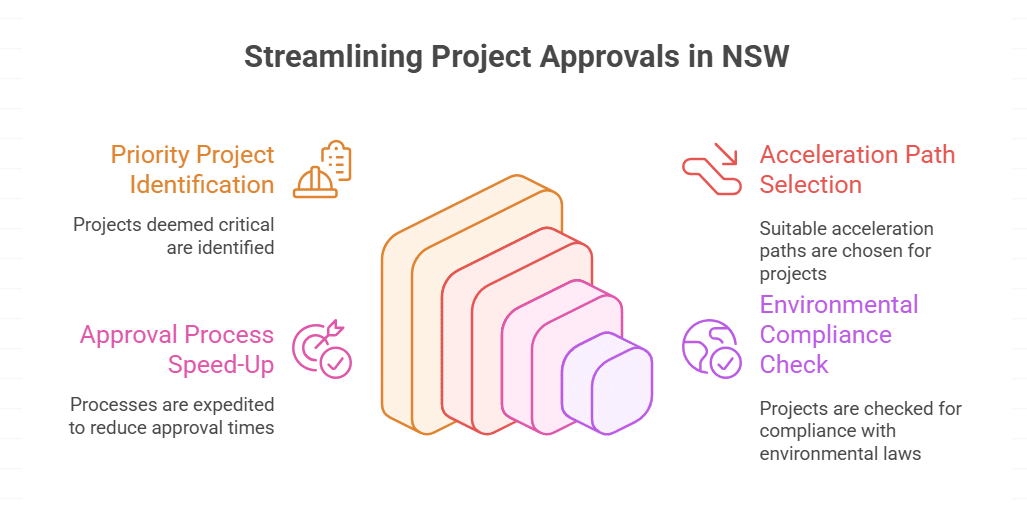
Fast-Track Approval Schemes in New South Wales (NSW):.
Hey, imagine cutting through red tape like a hot knife through butter, that’s what NSW offers with its priority projects and acceleration paths for big builds, including affordable housing and residential development pushes.
The NSW Planning System Acceleration Program speeds up approvals for critical stuff, from construction sector jobs to environmental protection under laws like the Environment Protection and Biodiversity Conservation Act 1999, making sure your ideas don’t get stuck in the mud.
Priority projects and acceleration
Australia speeds up key projects to build homes and boost health care fast. These efforts cut red tape for builders and doctors alike.
- Fast-track approval schemes in New South Wales push priority projects forward, like those in the Western Sydney Aerotropolis, by slashing wait times for planning permits and linking to affordable housing goals.
- Builders gain from reduced bureaucracy in the NSW Planning System Acceleration Program, which mirrors how the Expedited Specialist pathway by the Australian Health Practitioner Regulation Agency quickens medical registration for internationally qualified specialists, such as general practitioners or physiotherapists.
- Priority review shortens medicine assessment times by up to three months for serious conditions, much like acceleration for residential development under state significant developments, helping with urban renewal and infrastructure fast-tracking.
- Provisional approval lets new treatments reach patients up to two years earlier while final trials go on, a setup that echoes streamlined assessments for critical infrastructure, including health profession hubs or renewable energy projects.
- Key features cut down on paperwork and speed up checks with strict eligibility rules, tying into environmental laws like the Environment Protection and Biodiversity Conservation Act 1999, especially for matters of national environmental significance in places like the Western Sydney International (Nancy-Bird Walton) Airport.
- A podiatrist from overseas jumps through fewer hoops to practice, thanks to occupational licensing tweaks; it’s like fast-tracking leases for construction sector sites to dodge evictions or rent hikes for tenants.
- These schemes tackle risks in workers’ compensation and cybersecurity for major projects, while supporting health practitioners like chiropractors, midwives, or optometrists through quicker Ahpra pathways.
- Developers face less detrimental reliance on slow approvals, avoiding issues like breach of trust or promissory estoppel in contracts, much as doctors sidestep procedural fairness delays in jurisdiction matters.
- A physiotherapist gets registered fast under the program, just as Queensland Priority Development Areas speed up resource sector growth, blending in elements from federal parliament initiatives like the water trigger for environment protection.
- Eligibility often demands proof of need, say for emergency health care or ESG-focused builds, preventing misleading or deceptive conduct in targeted advertising for pharmacy or primary care services.
- Contractors benefit from security of payment rules, dodging liquidated damages in disputes at bodies like the Victorian Civil and Administrative Tribunal or Supreme Court, while fast tracks aid clean energy under Western Australia’s Major Projects Facilitation Framework.
- If you’re a psychologist or paramedic eyeing Australia, these paths reduce wait times like South Australia’s accelerated housing delivery programs cut through red tape for renters and affordable homes.
- Environmental legislation gets a boost too, with streamlining for appeals and sentencing in cases tied to the Gillard government or Albanese government policies, even touching on the Greens’ input for trusts and remedies.
- Fast approval serves as a quick remedy for civil liability in medicine, rescinding slow processes to prevent repudiation of deals in the construction sector or podiatry fields.
- Internationally trained medical practitioners, from osteopathy to chiropractic, find doors open faster, aligning with Tasmania’s Major Projects Legislation for renewable energy approvals and Northern Territory’s Strategic Project Facilitation Program.
- Consumer law protections weave in, guarding against cyber risks in health data or construction ads, while Safework NSW oversees workplace safety in these sped-up ventures.
- Duty of care stays key, ensuring no breach in fast-tracked leases or interest calculations for offenders in the system, much like federal streamlining for critical infrastructure under the House of Representatives’ watch.
- A friend, a pharmacist, got her registration in record time; it felt like dodging an eviction notice, speeding her into primary care just as ACT’s Priority Development Review Process hustles urban renewal.
- These initiatives draw from the Abbott government era but evolve, incorporating cookies for online tracking in health ads or environmental checks, all while boosting the economy through quicker judgments and rescission options.
NSW Planning System Acceleration Program
The NSW Planning System Acceleration Program speeds up planning approvals across New South Wales. It cuts through red tape, like a sharp knife through butter, to make things quicker for builders and developers.
This setup simplifies checks and assessments, focusing on priority projects that boost growth. Developers face fewer delays, thanks to its push for fast decisions on key builds. It ties into affordable housing efforts, where residential development gets a real lift.
Imagine a midwife helping deliver a project on time, that’s the program’s vibe. It also respects environment laws and administrative law, keeping things legal and green.
Stakeholders, grab this chance to jump in and engage. The program matches up with fast-track ideas in other states, all aiming for smoother sails in planning. It slashes bureaucratic hurdles, much like clearing a cluttered path for a physiotherapy session to heal quicker.
This reflects NSW’s drive to spark development and jobs. Think of it as insurance against slow approvals, even linking to workers’ compensation needs in construction. Jacqui Lambie might cheer this on for its no-nonsense approach.
Contractual deals flow better here, and estopped issues drop off. Adverts for new sites pop up faster too.
Fast‑Track Approval Schemes in Victoria (VIC)
Victoria speeds up big builds with its priority projects setup under the Victorian Planning Authority, cutting red tape like a hot knife through butter for stuff that really matters.
Developers love how streamlined checks for key bridges and power grids slash wait times, making dreams turn into dirt-moving action faster than you can say “permit approved.
Priority projects under the Victorian Planning Authority
Priority projects help speed up big builds in Victoria. They target things like affordable housing and residential development to cut red tape.
- Folks often pursue these projects to get quick nods for tall buildings that push past normal height limits, but applications must line up with GDFT principles and fit the city’s vibe, or they flop like a bad joke at a party.
- The Office of the Victorian Government Architect checks every bid against seven key design rules, making sure the plan shines in quality as well as speed.
- A developer eyes fast approval for residential development; they use this scheme to dodge long waits, and they tie in workers’ compensation rules to keep site crews safe and sound.
- These projects zoom through for critical spots like affordable housing hubs, where the authority spots needs and green-lights them quick as a flash, saving months of hassle.
- Builders love how this setup acts like a shortcut in a maze, focusing on urban fit while the architect’s office weighs in on those seven principles to boost the whole area’s appeal.
- One tale from a recent project shows a team exceeding setback rules; they nailed it by matching GDFT ideas, turning a plain lot into lively residential development without the usual drag.
Streamlined assessment for critical infrastructure
Victoria speeds up approvals for key projects like bridges and power plants. Officials cut red tape to build them fast. Imagine a city needing a new hospital; this system jumps the queue.
It focuses on stuff that keeps communities running, like roads and utilities. The GDFT process strips away third-party appeal rights. This move quickens choices and boosts housing construction.
Teams review plans in weeks, not months. Developers love it, as it dodges delays.
Folks in residential development chase affordable housing goals here. You get a planning permit first, then snag a building permit. That step checks safety rules. Critical setups, say for workers’ compensation offices, fit this streamlined path too.
Picture builders racing to meet deadlines; it feels like a well-oiled machine. Victoria’s approach helps big ideas turn real quick. Teams assess risks early, spotting issues before they balloon.
This keeps projects on track for everyone.
Fast‑Track Approval Schemes in Queensland (QLD)
Queensland speeds up big builds, like those Priority Development Areas that cut red tape for new homes and jobs, making sure affordable housing pops up quicker than a kangaroo’s hop.
Imagine dodging delays on infrastructure projects, yeah, their fast-track moves help with residential development, even.
Queensland Priority Development Areas
Folks often seek ways to speed up building projects in Queensland. These areas make that happen by cutting red tape, much like a shortcut through a busy city.
- Priority Development Areas in Queensland act as key initiatives that streamline development approvals across the state, helping folks get things built faster without all the usual hassles.
- These PDAs fit into broader fast-track approval schemes, and they aim to simplify the application process, so you can imagine chatting with a friend over coffee instead of drowning in paperwork.
- Fast-track approval schemes inside PDAs work hard to minimize bureaucratic obstacles, picture it like clearing out clutter from your garage to make space for new tools.
- Developers love how these schemes reduce the time taken for development approvals in Queensland, turning what could be a year-long wait into something quicker, like a fast food drive-thru.
- The main goal of PDAs pushes to expedite decision-making for development projects, and hey, that means more affordable housing pops up sooner for families who need it.
- PDAs in Queensland help promote timely access to essential services and infrastructure, think of it as delivering a pizza right when you’re hungry, not hours later.
- All in all, these PDAs prove essential for enhancing development efficiency in Queensland, supporting residential development that includes safe sites where workers’ compensation covers any mishaps on the job.
- Builders find that PDAs cut down delays, linking directly to workers compensation needs by ensuring projects move swiftly and safely for everyone involved.
Infrastructure fast-tracking initiatives
Queensland speeds up big builds with smart infrastructure fast-tracking initiatives. These plans cut red tape for key projects, like roads and power lines. They aim to simplify and expedite application processes for infrastructure projects.
Fast-track initiatives facilitate quicker assessments, reducing bureaucratic delays in infrastructure approvals. Imagine a bridge that pops up faster than you can say “traffic jam relief” – that’s the goal here.
Such moves promote timely responses and implementation of critical infrastructure needs. Streamlined processes under fast-track initiatives contribute to addressing urgent infrastructure requirements more effectively.
Officials draw ideas from places like Auckland’s Fast-track Approvals Act 2024, which enhances the approval process for significant infrastructure projects. In Queensland, these efforts tie into affordable housing and residential development goals.
Think of it as giving builders a green light to create homes folks can afford, without endless waits. Local groups get a say, much like councils consult on similar setups elsewhere, adding community input to decisions.
This approach helps turn ideas into real streets and structures, fast.
Major Projects Facilitation Framework
Western Australia pushes big developments forward with smart plans. Folks there, like builders chasing affordable housing dreams, love how this framework cuts red tape.
- This framework acts like a speedy highway for major projects in WA, guiding them through approvals without the usual roadblocks, and it often helps turn ideas into reality faster for things like affordable housing complexes.
- Government teams step in early, offering advice and connections to make sure projects, say a new affordable housing neighborhood, get the green light without endless waits.
- Imagine your big idea as a ship sailing rough seas; this setup provides a calm channel, coordinating with agencies to dock it smoothly, especially for job-creating ventures including affordable housing builds.
- Clean energy gets a boost here too, with fast lanes for wind farms or solar setups that tie into broader goals like affordable housing powered by green tech.
- Developers chat with experts right away, like having a buddy in the know, to spot issues early and keep affordable housing projects on track without nasty surprises.
- It covers mining, infrastructure, and yes, housing pushes, making sure affordable housing efforts don’t drown in paperwork but rise up quick to meet community needs.
- Picture a puzzle where pieces fit just right; this framework assembles them fast, linking state and federal help for seamless progress on affordable housing and more.
- Teams review plans with a keen eye, but in a helpful way, speeding up nods for projects that promise jobs and homes, including those focused on affordable housing.
- Critics say it’s like giving VIP treatment to big players, yet it really helps everyday folks by getting affordable housing built sooner rather than later.
- At its core, this approach fosters growth, turning WA into a hotspot for innovative builds, from tech hubs to affordable housing spots that families can call home.
Fast-tracking for clean energy projects
Australia speeds up approvals for clean energy projects. These schemes cut through red tape, like a hot knife through butter. They simplify applications and boost speed for wind farms and solar setups.
Officials in Western Australia lead the charge. They quicken assessments for these key initiatives.
The main goal hits bureaucratic hurdles hard. It streamlines the whole process. You see faster times and less hassle. Ministers or top boards make the calls. They target projects with big national or regional impact.
This setup reduces obstacles and drives clean power forward.
State Significant Developments process
South Australia speeds up big projects with its State Significant Developments process. This setup cuts red tape for key builds that matter a lot.
- Folks love how the State Significant Developments process aims for efficient planning and development outcomes, like getting a green light faster on stuff that boosts the local scene.
- It fits right into fast-track approval initiatives, you know, those plans that simplify and expedite application processes so builders don’t drown in paperwork.
- The main goal here pushes to enhance assessment speed and reduce bureaucratic barriers, making it feel like a breath of fresh air for developers stuck in the mud.
- Builders need to meet specific criteria to grab that expedited process, sort of like earning a VIP pass to skip the line at a busy event.
- They designed this for significant projects that pack a substantial impact on the community or environment, think of it as spotlighting the heavy hitters that shape neighborhoods or nature spots.
- It opens doors for quicker decision-making to facilitate essential developments, almost like hitting the fast-forward button on projects that can’t wait.
- In the end, the State Significant Developments process contributes to economic growth and development in South Australia, fueling jobs and progress like a well-oiled machine.
Fast‑Track Approval Schemes in Tasmania (TAS)

Major Projects Legislation
Tasmania speeds up big builds with its Major Projects Legislation. This law cuts red tape and boosts key developments, fitting into Australia’s wider push for quicker approvals.
- Lawmakers in Tasmania created the Major Projects Legislation to streamline approval processes and encourage significant developments, like a shortcut through a busy city that gets you home faster.
- This setup forms part of various fast-track approval schemes across Australian states to simplify application processes, imagine it as oiling a rusty gate so it swings open with ease.
- Fast-track schemes cut bureaucratic hurdles and speed up assessment times for major projects, much like a green light at every intersection for urgent deliveries.
- Folks in the community play a big role through consultations in these fast-track schemes, gathering input on housing design and sustainability, hey, it’s like chatting with neighbors over coffee to shape the neighborhood park.
- Developers find relief in Tasmania’s approach, where the legislation reduces delays, picture a chef whipping up a meal without hunting for ingredients in a messy kitchen.
- Public voices matter here, with consultations ensuring thoughts on eco-friendly features get heard, sort of like a town hall meeting where everyone grabs the mic.
- Tasmania’s law ties into national efforts, making big projects move quicker while keeping checks in place, think of it as a fast river that still has safe banks.
Renewable energy approvals
Australia speeds up renewable energy projects with fast-track approval schemes. These plans simplify and quicken project applications, you know, like cutting through red tape to get things moving.
Imagine a solar farm that once took years to approve; now it zips along faster. Folks in the industry cheer this change, as it tackles the main goal: expedite assessment and decision-making for renewable energy applications.
Fast-track schemes slash the time for getting approvals, often by months or more. Applicants need to hit specific criteria to join these quick paths, but boy, does it pay off when they do.
Direct ministerial calls often drive these schemes, speeding responses to renewable energy bids like a boss calling the shots. In Tasmania, they link renewable energy approvals to fast-track setups from other states, creating a smooth flow across borders.
Picture developers high-fiving over quicker nods for wind turbines. This boom in fast-track options shows the urgent call for faster steps in renewable energy fields, especially with clean power demands soaring.
States team up on this, making sure critical projects don’t drag.
Strategic Project Facilitation Program
The Northern Territory speeds up big projects with its Strategic Project Facilitation Program. This setup helps key developments move fast, like a rocket blasting off without the usual red tape.
- Developers love this program because it cuts through bureaucracy, making sure vital projects in mining and energy get quick nods from the government.
- Take a mining company eager to dig in, they apply here and boom, experts review plans in weeks instead of months, saving time and cash.
- Officials act as guides, offering tips on permits and rules, almost like a friendly coach cheering you on to the finish line.
- It focuses on resource sectors, think gold or gas digs, where fast approvals mean jobs pop up quicker for locals.
- One cool part, they assign a case manager to each project, someone who chats with you directly, answering questions and smoothing out bumps.
- For clean energy pushes, like solar farms, this program greases the wheels, helping the Territory lead in green power without endless waits.
- Businesses share stories of how it turned slow slogs into swift wins, imagine waiting years but getting green lights in half the time.
- It ties into bigger goals, boosting the economy by fast-tracking builds that create steady work for families up north.
- Even for tricky setups, like remote area projects, the program offers specific advice, making sure nothing falls through the cracks.
- Folks in the industry say it’s a game-changer, turning what could be a headache into a smooth ride with fewer surprises.
Resource sector development fast-tracking
Australia speeds up resource projects with fast-track schemes. These plans cut red tape for mining and energy work. Picture a miner dodging slow paperwork like a kangaroo hops over fences.
In the Northern Territory, leaders push these quick paths to boost growth in resources. They slash hurdles and make applications flow smooth.
Fast-track ways mean less forms and quicker reviews for key projects. Approval waits drop a lot from old methods. A minister or top group decides the end call for tight control. You need to fit set rules to join this fast lane.
It helps big digs and drills move ahead without endless delays.
Fast‑Track Approval Schemes in Australian Capital Territory (ACT)
Hey, imagine speeding up those big city makeovers in Canberra, where the Priority Development Review Process cuts through red tape like a hot knife through butter, making urban renewal projects zoom ahead.
Dive deeper into how this setup, with its focus on quick nods for key builds, turns slow planning into a fast lane for growth, and you’ll see why developers love it here.
Priority Development Review Process
The Priority Development Review Process speeds up approvals in the Australian Capital Territory. It helps key projects move forward without endless delays, like a shortcut through red tape.
- Developers use this process to get quick nods for big urban projects, cutting wait times from months to weeks, and it feels like hitting the fast-forward button on city growth.
- Officials review plans with a sharp eye, focusing on community needs, so your neighborhood gets better spots without the usual hold-ups.
- This scheme targets urban renewal, turning old areas into fresh, lively spaces, imagine transforming a rundown block into a buzzing hub full of shops and parks.
- Applicants submit clear details early, which lets teams spot issues fast, kind of like chatting over coffee to sort problems before they grow.
- It covers things like housing and transport upgrades, making sure Canberra stays modern and easy to live in, with everyone pulling in the same direction.
- Environmental checks happen alongside, blending green ideas right in, so projects don’t just build up but also protect the land around them.
- Local voices get heard through simple feedback steps, hey, it’s like inviting neighbors to weigh in and shape the outcome.
- Once approved, work starts sooner, boosting jobs and economy, picture folks getting back to work on sites that matter most to the community.
- The process skips some standard hurdles for priority items, but it still demands high standards, ensuring nothing slips through the cracks.
Urban renewal fast-tracking
Australia speeds up urban renewal with fast-track approval schemes. These plans simplify application processes. They accelerate approvals for city makeovers. Take Victoria’s Great Design Fast Track, or GDFT, it pushes quicker checks on home building projects.
This setup boosts city growth, you see.
GDFT projects need two to eight floors. They must.
Federal Government Initiatives for Fast‑Track Approvals
The Australian federal team prioritizes key bridges and power grids, speeding up their green lights to keep the nation moving. They also trim red tape on nature checks for wind farms, making sure clean power rolls out fast, so dig into more details if this sparks your interest.
Critical infrastructure projects prioritization
Australia speeds up big projects that keep the country running. Federal leaders focus on critical infrastructure to cut red tape and boost growth.
- Key roads, ports, and energy grids get top priority under federal rules, like when a major highway needs fast nods to ease traffic jams, dodging delays that feel like waiting for paint to dry.
- Water supply systems, yeah, those vital ones for cities and farms, zip through reviews, think of it as giving a green light to pipes that prevent dry spells, my friend once joked it’s like fast-forwarding a boring movie.
- Telecom networks for better internet and phones receive quick checks, because who wants spotty signals in this connected world, it’s like upgrading from a slow bike to a speedy car on the approval highway.
- Airports and rail lines, essential for travel and trade, jump the queue with streamlined processes, a new runway gets approved in months instead of years, saving everyone from endless hold-ups.
- Power plants, especially renewable ones like solar farms, gain rapid federal backing, hey, it’s all about keeping the lights on without the usual drag, as if the government says, let’s not dilly-dally on clean energy.
Environmental approval streamlining
Fast-track approval schemes across Australia cut red tape in environmental checks for things like planning permits. They speed up decisions and assessments to get projects moving. Take Victoria’s Great Design Fast Track, or GDFT, it rushes planning for home building while boosting green rules.
Officials check GDFT plans against rules that push for lasting eco-friendliness. This helps smooth out environmental nods without skipping key steps.
The Office of the Victorian Government Architect leads reviews of these GDFT bids to stick to green building norms. Homes in this program need at least an 8.0-star NatHERS score on average, which pumps up energy savings in approvals.
Folks in the community can share thoughts during the ad stage of GDFT, keeping things open and fair. These setups aim to slash paperwork snags in eco reviews and choices, like clearing a jammed path for quicker walks.
Takeaways
You’ve seen how each Australian state speeds up big projects, from NSW’s acceleration program to Victoria’s priority paths for housing like apartments and townhouses. These schemes cut red tape, making it simple for developers to get started without endless waits.
They matter a lot, they spark growth in clean energy, homes, and jobs, fixing real problems like housing shortages. Check your state’s planning website for more details, or chat with local experts to get involved.
Go ahead, use these tools to build a brighter future, you won’t regret getting started.
FAQs on Fast‑Track Approval Schemes Across Australian States
1. What exactly are these fast-track approval schemes in Australian states?
Hey, imagine cutting through red tape like a hot knife through butter, these schemes speed up nods for big projects across places like New South Wales and Victoria. They help builders and planners skip the usual long waits, getting things moving quicker for everyone involved.
2. How do fast-track approval schemes help folks in different Australian states?
Picture this, you’re a developer staring at a mountain of paperwork; these programs in states such as Queensland flatten that hill fast. They focus on key areas like housing or business growth, making sure your ideas turn into reality without endless delays. And yeah, it’s a game-changer for keeping communities thriving.
3. Which Australian states offer the top fast-track approval schemes?
States like Tasmania and South Australia roll out these quick paths for approvals. They target stuff from infrastructure to environmental nods, linking up to make national progress smoother.
4. Why should I care about fast-track approval schemes across Australian states?
Listen, if you’re knee-deep in a project, these schemes in spots like Western Australia act as your shortcut to success, dodging slow bureaucracy. They boost jobs and growth, but remember, not every idea qualifies, so check the details first to avoid a wild goose chase.