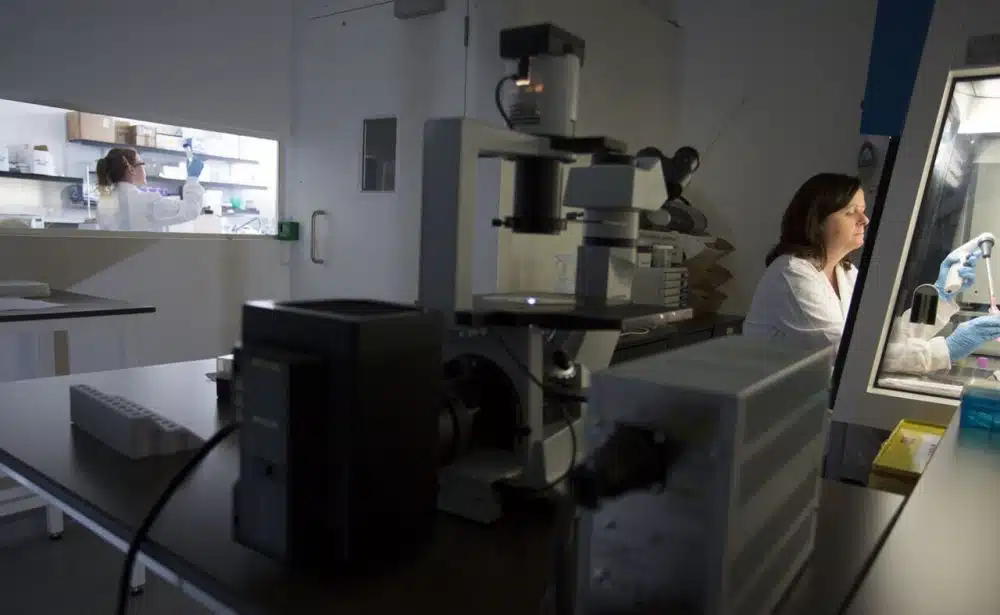
The presence and spread of microorganisms in textiles during their use or storage can adversely affect the fabrics and the health of the people who use them. This situation can be combated by using antimicrobial agents to activate textiles. This article includes a bibliographic review of the antimicrobial compounds used in the operation of various materials, which inhibit the growth and development of microorganisms.
Test microorganisms are prepared by growing in a liquid culture medium.
The suspension of the microorganism for the test is standardized by diluting it in a nutrient broth (this gives the possibility of growth of the microorganism during the test). The level of nutrition present in the nutrient broth is essential and is determined by the method. The organism must grow in control tissue for the test to be valid.
The control and test tissues are inoculated with the microorganisms three times, ensuring that the vaccine is in contact with the tissues only. The additional inoculated test and control tissues were allowed to incubate in airtight containers at body temperature for 18 hours.
After incubation, the final microbial concentrations are determined. Microorganism reduction is calculated based on reference concentrations and control tissues.
Controls are performed to ensure that the neutralization/rinse method effectively neutralizes the antimicrobial agent in the test tissues.
The strengths of the JIS L 1902 test
The parameters of the method are described more carefully than the alternative tissue antimicrobial method called AATCC 100. In quantitative methods, the results are usually reproducible. The method tests a specific antimicrobial tissue’s bactericidal (anti-growth) and bactericidal (bactericidal) properties.
Microbial concentrations are standardized, and nutrients are provided to the bacteria during the incubation period, giving them ample opportunity to grow if the test tissue is not sufficiently antimicrobial.
The jis l 1902 test method requires a triple trial, which helps researchers estimate the accuracy of individual tests and improve overall experimental accuracy.
The testing method comprises a ‘pass/fail’ decisive factor for the calculated antimicrobial activity levels experiential in test samples, making antimicrobial activity decisions less not obligatory.
Weaknesses of the JIS L 1902 test
The method is generally not accepted by the US Environmental Protection Agency for “health claims.”
It can be challenging to test hydrophobic fabrics in this way. The JIS L 1902 standard provides three test methods, one qualitative and two quantitative. The qualitative testing method, mostly known as the Halo method, is similar to the site inhibition method. The absorption method, one of the quantitative methods, is identical to the test method provided by AATCC100, which is another standard method for testing antibacterial fibers.
The JIS L 1902 test standard was published by the International Organization for Standardization, and there are almost no changes as in testing methods of the ISO 20743 standard.
The bacterial (growth-inhibiting) and bacteriostatic (germ-killing) properties are tested on specific antibacterial tissues. On the other hand, this testing method helps researchers estimate the accuracy of single tests and provides triple tests that improve the accuracy of the overall experiment.
On the other hand, the US Environmental Protection Agency (EPA) generally does not accept this testing method for health claims.
The JIS L 1902 Antibacterial Tissue Testing Service is also offered as part of our laboratory testing service.
This test will be conducted according to/as a change from the JIS L1902 International Standards Association test method. Sample tissues are compared to control tissues at 0 and 24 h contact times. A deferment of live bacteria in a somewhat nutrient solution is applied at different points in every sample. Incubate the tissue sample at 37 °C for 24 hr. The remaining viable bacteria from each piece are then harvested using neutral broth and seeded in a nutrient medium to obtain a quantitative number of CFUs per gram of tissue sample compared to the control.
Each test contains one of the microbial strains.
- Escherichia coli (ATCC 25922): Standard Bacteria
- Methicillin-resistant Staphylococcus aureus (MRSA) (ATCC 33591)
- Staphylococcus aureus (ATCC 6538)
- Klebsiella pneumonia (ATCC 4352)
- Clostridium difficile (ATCC 43598)
- Candida Auris (CDC B11903)
- The test contains a total of 24 data points for each bacterial strain.
- 2 items (1 tissue test and one internal negative display/control)
Note: Offer at least 10 grams of each substance at all times.
- 2-time points (0 hours and 24 hours)
- 3 replicates per sample in each test condition
- Two independent tests
- Note: The optional LPG service is available at an additional cost of 25%.
- Note: Volume reductions are available for four or more specimens (3 or more for C. difficile or C. Auris).
Adaptation of technical test methods to reduce
The financial burden associated with the disposable materials used. In its place of the 50ml tapering tube used in this testing method make use of a 6-well plate as the incubation container device (for this version, the control sample, Cotton, was used exclusive of adding antibacterial agents). Immediately after the bacterial count was evaluated, Samples were inoculated (0.0 hours) and inoculated after a 24-hour incubation period.
Using a conical tube as an incubation device, the number of cells recovered after 24 hours (2.51 x 10⁹) Cells/ml) were much higher than those present after the incubation period (0.0 hours) (2.5 x 10⁵) of the reference sample Cells / mL). On the other hand, when using a 6-well plate, 2.5 x 10⁵ cells/ml were recovered from the tissue of the 6-well plate well immediately after inoculation. Still, no bacteria were recovered from the sample after this incubation period. The results obtained strongly suggested that the incubation device should allow a stirring step. Without this step, the microorganisms would remain attached to the fibrous material, making growth assessment difficult, if not impossible.
For the remaining conditions, two antibacterial agents
Already available on the market. The diffuser used exhibits a broad spectrum based on the activity of Silver, Strong antibacterial action with diffusive movement (i.e.) Silver is from textiles as Ag (I) ions skin). This antibacterial activity. The ability of ions to complex and denature various extracellular proteins bind to essential bimolecular such as DNA and RNA and disrupt their function. 26 Other drugs used have non-diffusive activity. It is based on a functional silicon tetraalkylammonium Compound.
In this case, functional quaternary ammonium
- Because the group is covalently bonded to the textile
- Its durability and resistance to repeated washing episodes
- The antibacterial finish is exposed. Nevertheless,
- Antibacterial agents cannot be transferred from the fiber
- Surrounding environment.
The sample was prepared by increasing the concentration of both antibacterial agents and adding the influence of the model.
The weight of its activity (0.1 g or 0.4 g) was evaluated. It was observed that the dough’s importance was not Inter<UNK> with the sample’s ability to kill bacteria, which 1.25 g / mL diffuser was sufficient to destroy both. Similar behavior was detected with non-bacterial non-diffusing agents but at lower concentrations (0.41). G / mL) was needed to kill all the bacteria. Therefore, reducing the sample size has economic benefits given the low amount of textiles and reagents.
Necessary for evaluation of their antibacterial activity, Therefore, the total cost of the procedure is reduced.